
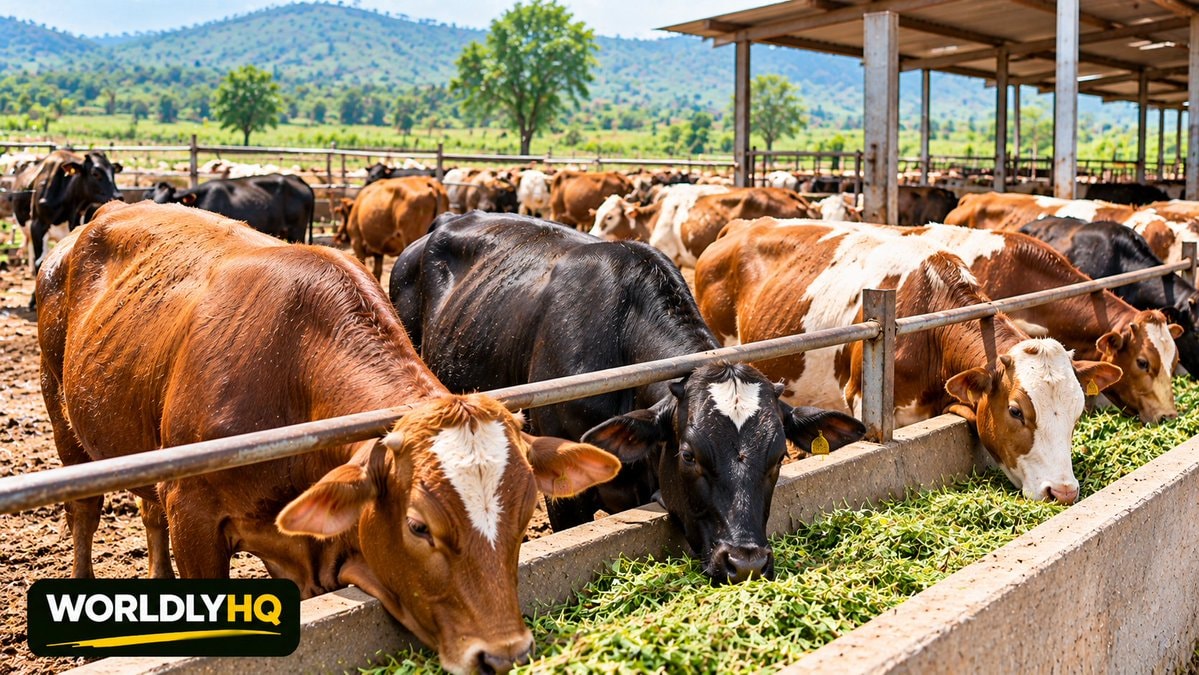
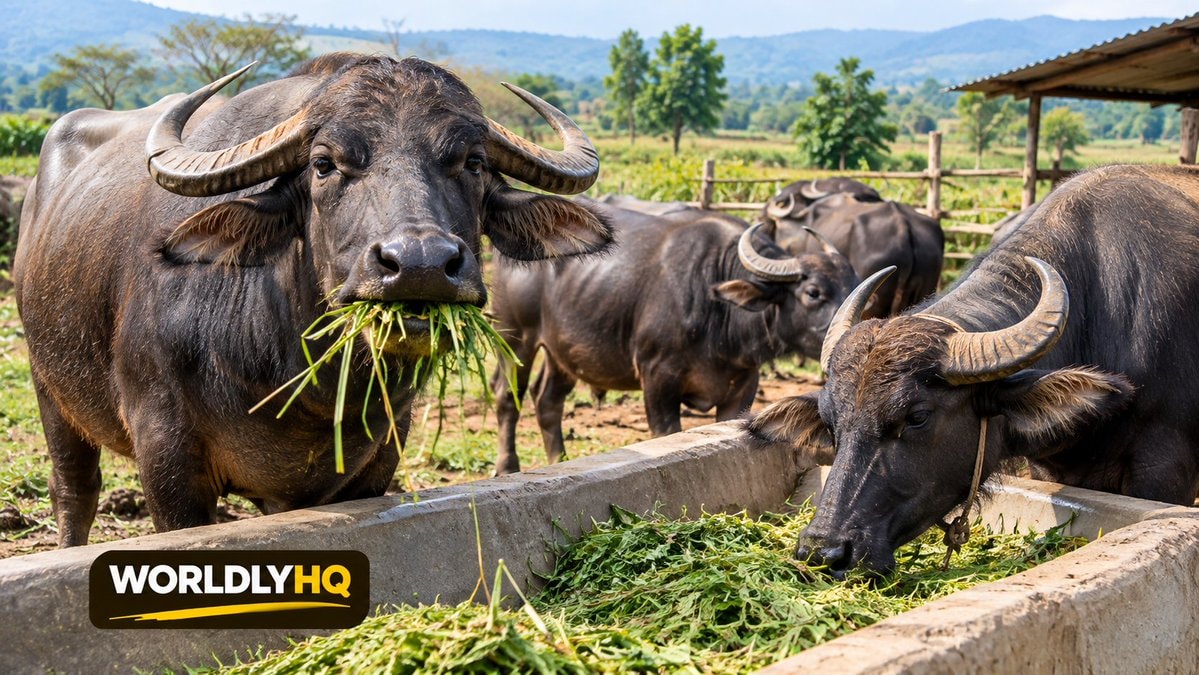
@timofeyTwenty countries, 69.58 million tonnes of cattle meat, 189 nations reporting in the 2024 FAOSTAT series. That's the landscape. Tanzania holds the last spot on this particular board with 666,200 tonnes. At the front of the pack, the numbers look like this: United States at 12.29 million tonnes, Brazil at 10.24 million tonnes, China at 7.01 million tonnes. Stack those three together and they're responsible for over 42% of what got reported globally. Individually, the US share works out to about 17.7%, Brazil about 14.7%, China about 10.1%. The middle of the table runs deep. Argentina sits fourth with 3.18 million tonnes, Australia fifth at 2.59 million tonnes, Mexico sixth at 2.25 million tonnes, Russia seventh at 1.69 million tonnes, Türkiye eighth at 1.48 million tonnes, Pakistan ninth at 1.37 million tonnes, France tenth at 1.30 million tonnes, Canada eleventh at 1.29 million tonnes, Uzbekistan twelfth at 1.16 million tonnes, South Africa thirteenth at 1.10 million tonnes, Germany fourteenth at 1.02 million tonnes. Down at the bottom half you've got the United Kingdom fifteenth at 934,300 tonnes, Zimbabwe sixteenth at 755,200 tonnes, New Zealand seventeenth at 741,800 tonnes, Colombia eighteenth at 731,600 tonnes and Spain nineteenth at 718,500 tonnes. One thing worth flagging: this ranking tracks a specific category, fresh or chilled bone-in cattle meat, measured by weight. Not live animal counts. Different metric entirely. Beef keeps a lot of people working, from farmers and pastoralists to processors and everyone downstream in the food chain. Source: FAOSTAT 2024, with calculations and presentation by Terra Cultiva.
Ver publicação original




Ainda não há comentários. Seja o primeiro!