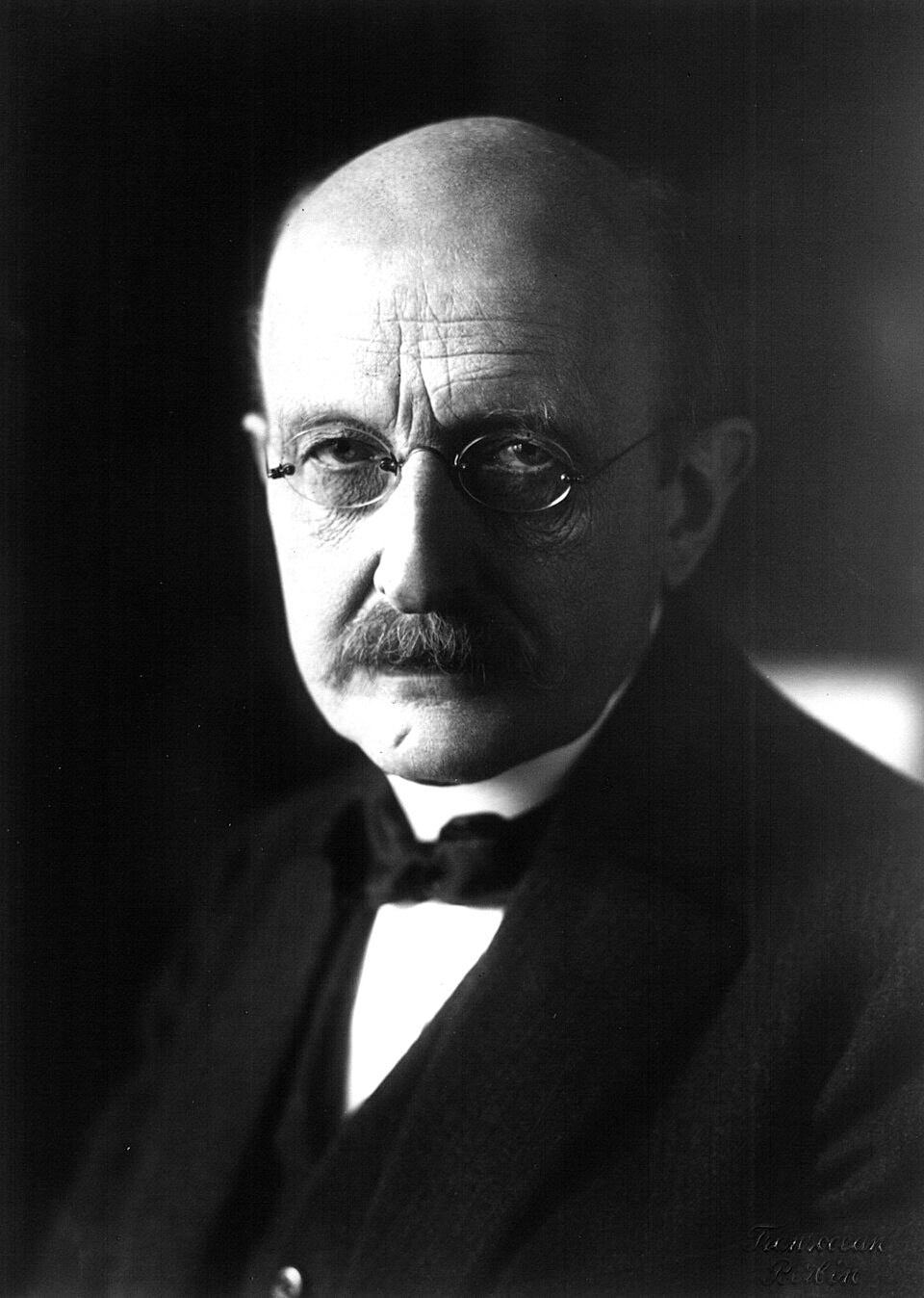
Max Planck
 Germany
theoretical physicist•university teacher•physicist
Data de nascimento
April 23, 1858
Signo
Taurus
Local de nascimento
Kiel, Duchy of Holstein, German Confederation
Idade
Faleceu aos 89
Altura
5 ft 10 in (178 cm)
Sobre
Max Planck foi um físico teórico alemão que fundou a teoria quântica, reformulando nossa compreensão do mundo atômico e subatômico. Ele é mais conhecido por descobrir os quanta de energia e introduzir a constante de Planck (h), uma constante física fundamental. A relação E = hν, que afirma que a energia de um fóton é proporcional à sua frequência, permanece um pilar da física moderna. Planck recebeu o Prêmio Nobel de Física de 1918 por essa descoberta, que abriu as portas para a mecânica quântica, a tecnologia de semicondutores e a cosmologia.
Planck serviu como Presidente da Kaiser Wilhelm Society de 1930 a 1937, e a organização foi renomeada para Max Planck Society em 1948, operando hoje 83 institutos em todo o mundo. Ele também foi um educador dedicado na Universidade de Berlim. Sua vida pessoal foi marcada por profunda tragédia, incluindo a perda de seu filho Erwin em 1945. Planck faleceu em 4 de outubro de 1947, em Göttingen, Alemanha, aos 89 anos. Seu legado perdura através da Max Planck Society e do papel fundamental que seu trabalho desempenha em toda a física moderna.
Início da vida e origens
Nascido em Kiel, filho de Johann Julius Wilhelm Planck, professor de direito constitucional, e Emma Patzig, Max cresceu em um lar rigoroso, religioso e intelectual. Ele mostrou talento musical precoce, tocando piano, órgão e violoncelo, e considerou seriamente uma carreira como músico de concerto antes de escolher a física. Frequentou o Maximiliansgymnasium em Munique, onde o professor Hermann Müller despertou seu interesse pelo princípio da conservação da energia.
Um momento crucial ocorreu quando o físico Philipp von Jolly o aconselhou de que a física era uma ciência quase acabada, com pouco a descobrir. Planck respondeu que não desejava descobrir coisas novas, apenas entender os fundamentos conhecidos. Estudou na Universidade de Munique e, posteriormente, na Universidade de Berlim, obtendo seu doutorado em 1879, aos 21 anos, com uma tese sobre a segunda lei da termodinâmica. Tornou-se professor associado na Universidade de Kiel em 1885 e sucedeu Gustav Kirchhoff como professor na Universidade de Berlim em 1889.
Crescimento na carreira
A descoberta que mudou o mundo de Planck ocorreu em 1900. Ao tentar resolver o problema da catástrofe ultravioleta da radiação de corpo negro, ele propôs que a energia é emitida e absorvida em pacotes discretos, ou quanta. Ele introduziu a constante de Planck (h) e a relação E = hν em 14 de dezembro de 1900, uma data considerada hoje o nascimento da física quântica. Por essa descoberta, ele ganhou o Prêmio Nobel de Física de 1918.
Sua carreira então mudou para liderança e advocacia. Ele serviu como Presidente da Kaiser Wilhelm Society de 1930 a 1937, usando sua influência para proteger a ciência alemã durante a era nazista. Ele também recebeu a Medalha Lorentz (1927), a Medalha Copley (1929) e a primeira Medalha Max Planck (1929). Após sua morte, a Kaiser Wilhelm Society foi renomeada para Max Planck Society em sua homenagem em 1948. Hoje, os institutos da sociedade continuam pesquisas inovadoras em áreas que vão da computação quântica à astrofísica, construindo diretamente sobre seu legado.
Linha do tempo da carreira
Imagem pública e estilo
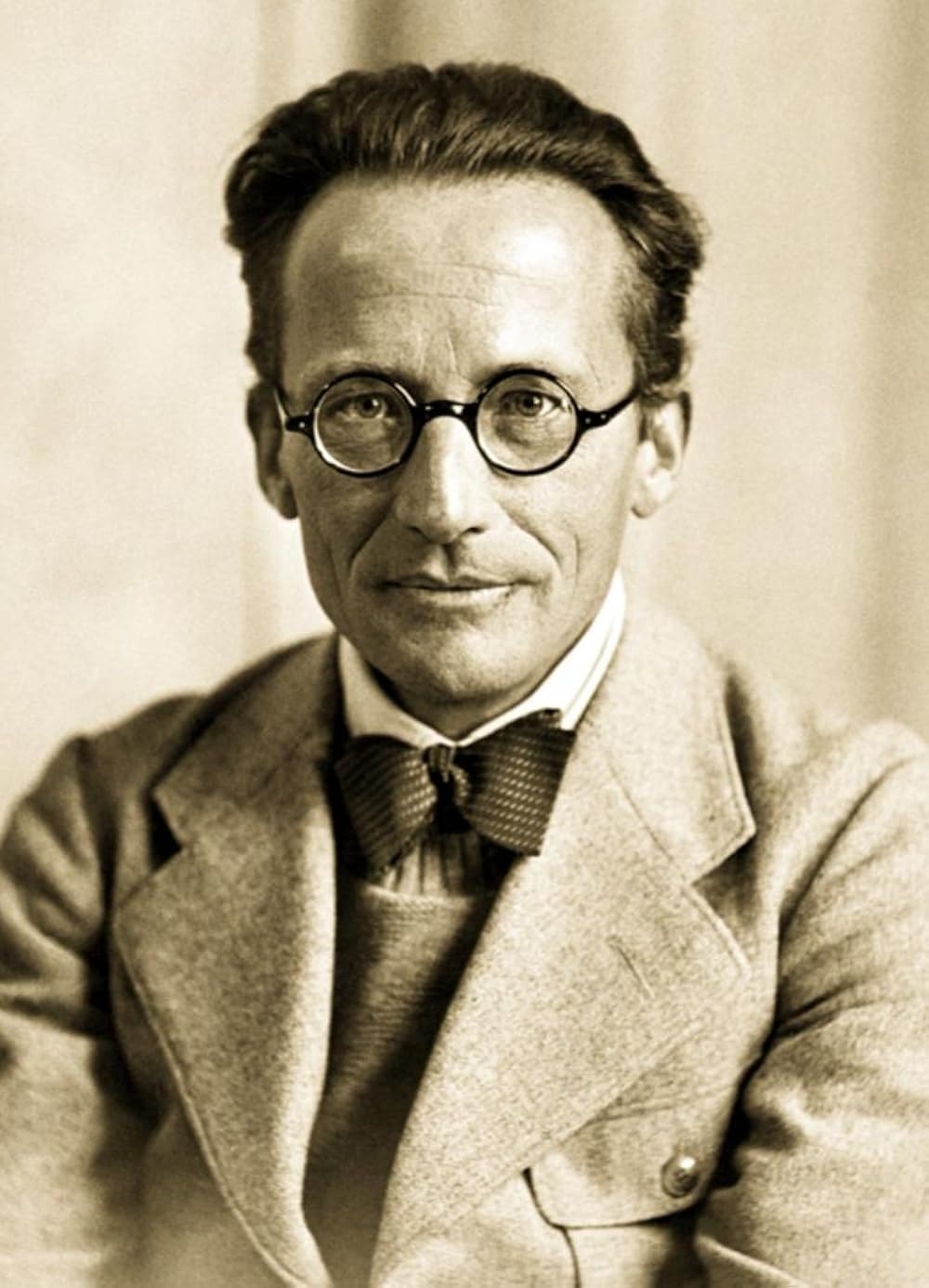
Planck é lembrado como o revolucionário estoico e relutante que acidentalmente destruiu os fundamentos da física clássica ao resolver um problema técnico. Sua imagem pública é a de um professor alemão digno e conservador e um herói trágico que perdeu tudo pessoalmente, mas cujo legado mudou o mundo. Ele é frequentemente retratado em trajes formais com barba e óculos, personificando o acadêmico do século XIX. Entusiastas da física e historiadores da ciência o têm em altíssima consideração. Não há um fandom oficial, mas seu nome é sinônimo da Max Planck Society, uma das organizações de pesquisa mais prestigiadas do mundo. Seu trabalho é frequentemente referenciado na mídia de divulgação científica, e ele foi nomeado uma das 100 Pessoas do Século da TIME em 1999.
Fama e fandom (iFAMOUS Rankings)
Max Planck commands a global attention that transcends the boundaries of his era, maintaining a steady presence in historical and scientific discourse across media coverage, search activity, and consumption signals worldwide. According to the iFANN Global Fame Rankings, he is currently the 41st most famous person in Germany, a position holding steady from the previous cycle. Within the specific domain of historical science, he ranks as the 14th most famous person in Classical, also maintaining his standing without fluctuation. These placements reflect a consistent, enduring legacy rather than a fleeting cultural moment. Regarding his audience, there is no formal fandom name documented for Max Planck; the concept of a celebrity fanbase does not apply to a theoretical physicist who passed away in 1947. His supporters are not organized into clubs or campaigns but exist as the broader scientific community and the Max Planck Society, which preserves his institutional work. While some might imagine adoring crowds, the reality is one of academic reverence and historical study, with no fan rituals or unofficial names attached to his memory.
Fatos interessantes e lendas
Max Planck was an accomplished pianist who frequently performed chamber music alongside Albert Einstein. He held deep religious convictions, believing in a non-personal, omnipotent God revealed through nature's harmony, and engaged in notable debates on this topic with Einstein. During the Nazi regime, he attempted to intervene personally by meeting Adolf Hitler to protest the mistreatment of Jewish physicists, though the encounter yielded no positive results. The tragedy of his later years was compounded when his Berlin home was destroyed by Allied bombing in 1944, resulting in the loss of all his personal scientific papers. His theoretical contributions gave rise to Planck time and Planck length, representing the smallest theoretically measurable units of time and distance respectively. In 2026, a significant controversy erupted when two papers from the 1940s were retracted by journals such as Springer Nature, raising questions about their authenticity. This situation was resolved by July 2026 when the publisher reinstated the works after further review, confirming their validity. A previously unpublished manuscript of Planck's was also discovered in a private archive in 2024, adding new material to the historical record. The story of his musical talent remains widely retold, illustrating his early promise as a composer before he dedicated himself entirely to physics.
Frases notáveis
“A new scientific truth does not triumph by convincing its opponents and making them see the light, but rather because its opponents eventually die, and a new generation grows up that is familiar with it.”
“I regard consciousness as fundamental. I regard matter as derivative from consciousness. Everything that we talk about, everything that we regard as existing, postulates consciousness.”
“An experiment is a question which science poses to Nature, and a measurement is the recording of Nature's answer.”
Família e vida pessoal
Planck casou-se com sua namorada de infância, Marie Merck, em 1887. Eles tiveram quatro filhos: Karl (1888), os gêmeos Emma e Grete (1889) e Erwin (1893). Marie faleceu de tuberculose em 1909. Em 1911, Planck casou-se com a prima dela, Marga von Hoesslin, com quem teve um filho, Hermann. Sua vida pessoal foi marcada por imensa tragédia: Karl foi morto na Primeira Guerra Mundial em 1916; Emma e Grete morreram no parto; e Erwin foi executado pela Gestapo em 1945 por seu envolvimento no complô de 20 de julho para assassinar Hitler. Planck viveu mais que todos os seus filhos, exceto Hermann. A família morou em Berlim até que os bombardeios destruíram sua casa em 1944.
Conexões notáveis
Albert Einstein foi um amigo e colega próximo; eles tocavam música juntos e correspondiam-se extensivamente sobre teoria quântica. Niels Bohr expandiu o conceito quântico de Planck. Ernst Mach foi um contemporâneo cuja filosofia positivista Planck contestava. Hermann von Helmholtz foi um dos professores de Planck em Berlim. Gustav Kirchhoff foi o professor que Planck sucedeu na Universidade de Berlim.
Relacionamentos e história amorosa
Planck casou-se com sua namorada de infância, Marie Merck, em 1887. Eles tiveram quatro filhos juntos: Karl, as gêmeas Emma e Grete, e Erwin. Marie morreu de tuberculose em 1909. Em 1911, ele se casou com a prima dela, Marga von Hoesslin, com quem teve um filho, Hermann. Marga sobreviveu a Planck, falecendo em 1949. Os relacionamentos de Planck foram marcados por profunda tragédia pessoal, pois ele sobreviveu à primeira esposa e a todos os filhos, exceto um.
- Casado(a)Marie Merck1887 - 1909Primeira esposa de Planck e amiga de infância; tiveram quatro filhos juntos. Ela morreu de tuberculose.
- Casado(a)Marga von Hoesslin1911 - 1947Casou-se com a prima de Marie após a morte desta; tiveram um filho, Hermann. Ela sobreviveu a Planck.
Morte e repercussões
Morte
October 4, 1947 (aos 89 anos)
Local da morte
Göttingen, Lower Saxony, Germany
Causa da morte
Causas naturais relacionadas à velhice
The Kaiser Wilhelm Society was renamed the Max Planck Society in his honor shortly after his passing, a transformation that cemented his legacy as the father of quantum mechanics within Germany's premier research organization. This institutional tribute, established in 1948, stands alongside the biennial Max Planck Medal awarded by the German Physical Society for outstanding achievements in theoretical physics. The scientific community responded to his loss with profound respect from peers and institutions rather than public gatherings, recognizing him as the recipient of the 1918 Nobel Prize in Physics.
Max Planck died on October 4, 1947, in Göttingen, Germany, at the age of 89. He had spent his final years in this city after being forced out of Berlin by the Nazi regime in 1944 due to his son Erwin's involvement in the plot against Hitler. Historical records indicate he passed peacefully due to natural causes related to old age without any acute illness, accident, or foul play. His funeral was held shortly after his death in Göttingen as a private affair attended by family members, colleagues, and university officials.
He was buried in the Göttingen Old Cemetery, a site that has since become a landmark for physicists visiting the city. The estate was handled by his surviving wife Marga von Hoesslin and his children, who managed his intellectual property and personal archives without public dispute. While no films or books specifically detailing his final days were produced, his manuscripts remain preserved in academic archives and his early work continues to be studied following the reinstatement of two papers originally published in Naturwissenschaften in the 1940s.
Patrimônio (valor do espólio)
$500 Thousand
Estimativa da equipe editorial do iFANN
As a historical figure who died in 1947, Max Planck did not accumulate significant wealth from his discoveries. He lived on a university professor's salary and held administrative roles as President of the Kaiser Wilhelm Society. His estate consisted of personal effects, letters, and manuscripts, most of which are held in academic archives. There is no commercial revenue from his work; his papers are in the public domain. Per iFANN's editorial analysis, the estimated net worth of his estate is negligible, around $500 Thousand when adjusted for historical value and the worth of his personal archives. The Max Planck Society manages his intellectual legacy, but it generates no income for his descendants.
Prêmios conquistados (6)
Max Planck recebeu o Prêmio Nobel de Física de 1918 por sua descoberta dos quanta de energia. Ele também ganhou a Medalha Lorentz (1927), a Medalha Copley (1929), a primeira Medalha Max Planck (1929), o Prêmio Goethe (1945) e a Medalha Harnack (1933). Essas honrarias refletem suas contribuições monumentais à física teórica e sua liderança na ciência alemã.
1945 · Artes e Ciências
1933 · Ciência
Conhecido por
Quantum Theory
1900 · Fundador
Planck Constant (h)
1900 · Descobridor
Planck Relation (E = hν)
1900 · Formulador
Nobel Prize in Physics
1918 · Laureado
Palavras-chave
Dados rápidos
- Profissão
- theoretical physicist, university teacher, physicist
- Nascimento
- +1858-04-23
- Local de nascimento
- Kiel
- Morte
- +1947-10-04
- Local da morte
- Göttingen
- Gênero
- Masculino
- Cônjuge
- Marie Merck, Marga von Hoesslin
- Signo
- Taurus
Dados pessoais
- Nome completo
- Max Karl Ernst Ludwig Planck
- Altura
- 5 ft 10 in (178 cm)
- Cônjuge
- Marie Merck, Marga von Hoesslin
- Filhos
- Karl Planck, Emma Planck, Grete Planck, Erwin Planck, Hermann Planck
- Formação
- University of Munich, University of Berlin
Perguntas frequentes
Como Max Planck morreu?
O que Max Planck descobriu?
Max Planck teve filhos?
Max Planck era religioso?
O que é a Sociedade Max Planck?
Pessoas semelhantes
Junte-se à comunidade
fãs comentando