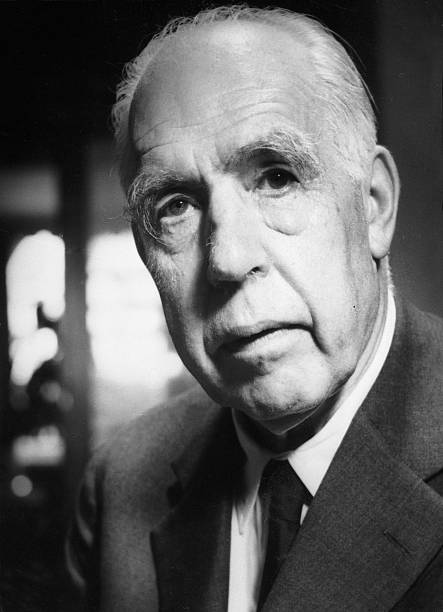
Niels Bohr
 Denmark
university teacher•nuclear physicist•philosopher of science
Data de nascimento
October 7, 1885
Signo
Libra
Local de nascimento
Copenhagen, Denmark
Idade
Faleceu aos 77
Altura
5 ft 10 in (178 cm)
Sobre
Niels Bohr foi um físico teórico e filósofo da ciência dinamarquês que reformulou nossa compreensão do átomo. Ele é mais famoso pelo modelo atômico de Bohr, que propôs que os elétrons orbitam o núcleo em níveis discretos de energia. Seu trabalho fundamental sobre estrutura atômica e teoria quântica lhe rendeu o Prêmio Nobel de Física em 1922. Bohr também introduziu o princípio da complementaridade, influenciando tanto a física quanto a filosofia. Ele fundou o Instituto de Física Teórica da Universidade de Copenhague, hoje chamado Instituto Niels Bohr, onde orientou uma geração de físicos. Ele previu o elemento háfnio e o elemento sintético bóhrio foi nomeado em sua homenagem. Após a Segunda Guerra Mundial, Bohr defendeu o controle internacional de armas nucleares e ajudou a fundar o CERN. Seu legado continua a inspirar físicos e filósofos em todo o mundo.
Início da vida e origens
Niels Henrik David Bohr nasceu em 7 de outubro de 1885, em Copenhague, Dinamarca, em um lar repleto de curiosidade intelectual e discurso científico. Seu pai, Christian Bohr, era um distinto professor de fisiologia na Universidade de Copenhague, enquanto sua mãe, Ellen Adler Bohr, vinha de uma proeminente e rica família judia de banqueiros. Esse ambiente doméstico vibrante fez com que o jovem Niels fosse exposto a discussões científicas sofisticadas desde cedo, muitas vezes acompanhando seu pai às reuniões da Academia Real Dinamarquesa. Ele frequentou a Escola Latina Gammelholm, onde sua aptidão natural para física e matemática rapidamente se tornou evidente. Embora ele se destacasse nessas disciplinas rigorosas, demonstrando um talento precoce para o pensamento analítico, diz-se que ele achava a redação de ensaios uma tarefa mais desafiadora.
Em 1903, Bohr ingressou na Universidade de Copenhague, iniciando uma carreira acadêmica rápida e distinta. Obteve seu bacharelado em 1907, seguido pelo mestrado em 1909 e, finalmente, concluiu seu doutorado em 1911. Sua tese de doutorado, que explorava a complexa teoria eletrônica dos metais, foi reconhecida como inovadora nos círculos acadêmicos. No entanto, sua apresentação em prosa dinamarquesa densa fez com que recebesse atenção internacional limitada de imediato, atrasando o reconhecimento mais amplo de suas ideias inovadoras.
Um período crucial para as contribuições futuras de Bohr começou logo após a conclusão de seu doutorado. Em 1911, ele viajou para Cambridge, Inglaterra, buscando aprofundar sua pesquisa no renomado Laboratório Cavendish sob a orientação de J.J. Thomson, o descobridor do elétron. Essa colaboração inicial, no entanto, mostrou-se improdutiva para Bohr. Intimorato, ele fez uma mudança crucial em 1912, mudando-se para Manchester para trabalhar com Ernest Rutherford. Foi sob Rutherford, cujo modelo nuclear revolucionário do átomo havia recentemente proposto um núcleo pequeno e denso orbitado por elétrons, que Bohr encontrou o terreno fértil para suas próprias ideias revolucionárias. O modelo atômico de Rutherford tornou-se a estrutura fundamental sobre a qual Bohr construiria suas teorias inovadoras sobre estrutura atômica e mecânica quântica .
Crescimento na carreira
Em 1913, Bohr publicou sua trilogia histórica de artigos sobre estrutura atômica, propondo que os elétrons orbitam o núcleo em níveis de energia quantizados. Esse modelo de Bohr explicou com sucesso o espectro do hidrogênio e lhe rendeu reconhecimento internacional imediato. Em 1916, foi nomeado Professor de Física Teórica na Universidade de Copenhague. Quatro anos depois, fundou o Instituto de Física Teórica, que se tornou um centro global para a mecânica quântica, atraindo jovens físicos de todo o mundo.
Bohr recebeu o Prêmio Nobel de Física em 1922 aos 37 anos. Em 1927, introduziu o princípio da complementaridade na Conferência de Como, uma pedra angular da Interpretação de Copenhague da mecânica quântica. Ao longo da década de 1930, desenvolveu o modelo da gota líquida do núcleo atômico, que mais tarde ajudou a explicar a fissão nuclear. Em 1943, após escapar da Dinamarca ocupada pelos nazistas, Bohr juntou-se ao Projeto Manhattan em Los Alamos. Embora tenha trabalhado na bomba atômica, ele consistentemente defendeu o controle internacional de armas nucleares após a guerra. Ajudou a fundar o CERN em 1954 e tornou-se o primeiro presidente do Instituto Nórdico de Física Teórica em 1957.
Linha do tempo da carreira
Imagem pública e estilo
Bohr era conhecido por seu cachimbo, comportamento pensativo e estilo de ensino gentil e socrático. Ele falava em voz suave e deliberada e era descrito como infinitamente paciente com os alunos. Nas representações da mídia, ele é consistentemente mostrado como a figura paterna sábia da mecânica quântica, diplomático, profundamente filosófico e humanitário. Seus debates com Albert Einstein sobre mecânica quântica são lendários, com a provocação de Einstein "Deus não joga dados" direcionada à interpretação probabilística de Bohr. O fandom de Bohr é principalmente acadêmico, consistindo de físicos, historiadores da ciência e entusiastas da filosofia. As Palestras Anuais Niels Bohr no Instituto Niels Bohr são um grande evento, e os debates Bohr-Einstein continuam sendo um assunto popular para simpósios e palestras públicas.
Fama e fandom (iFAMOUS Rankings)
Niels Bohr commands a legacy defined not by the chaotic adoration of pop culture, but by the enduring reverence of the scientific community and historians. While he lacks an organized fanbase with official monikers or ritualistic campaigns, his intellectual influence persists through academic institutions like the Niels Bohr Institute and the global study of quantum mechanics. The stories that surround him are those of verified historical milestones rather than viral moments; the debates with Albert Einstein remain the central pillar of his mythology, recently reignited by experimental confirmations in 2025 and 2026 that validated his probabilistic interpretations decades after his death. His status as a figure of immense historical weight is quantified by the iFANN Global Fame Rankings. Within this framework, he holds a steady position as the 10th most famous person from Denmark, a ranking anchored in his national significance. Furthermore, his standing within the broader historical landscape places him as the 23rd most famous person in Classical studies, reflecting the timeless nature of his contributions to physics and philosophy. These placements underscore his transition from a contemporary scientist to a foundational figure in human history.
Fatos interessantes e lendas
Niels Bohr's first scientific paper on water jets secured the Royal Danish Academy's gold medal in 1907. During his dramatic escape from occupied Denmark in 1943, he nearly perished when the oxygen system failed on the Mosquito bomber transporting him to Britain; he passed out and survived only because the pilot descended to a lower altitude. He designed his own coat of arms featuring the yin-yang symbol accompanied by the motto "Contraria sunt complementa" (Opposites are complementary). The Danish government granted him an honorary residence at Carlsberg Mansion, a privilege traditionally reserved for the nation's most distinguished citizens. Beyond these facts, the scientific community often recounts the legendary series of debates between Bohr and Albert Einstein from 1927 to 1935, where Einstein famously declared that God does not play dice against Bohr's Copenhagen Interpretation. This rivalry was so pivotal that recent experiments in late 2025 and early 2026 by Chinese scientists have been cited as finally validating Bohr's position over Einstein's objections. Another recurring anecdote involves his brother Harald Bohr, an Olympic gold medalist in football, highlighting the athletic prowess of the Bohr family alongside their scientific genius.
Frases notáveis
“An expert is a person who has made all the mistakes that can be made in a very narrow field.”
“The opposite of a correct statement is a false statement. But the opposite of a profound truth may well be another profound truth.”
“We are all agreed that your theory is crazy. The question that divides us is whether it is crazy enough to have a chance of being correct.”
“Never express yourself more clearly than you are able to think.”
“Everything we call real is made of things that cannot be regarded as real.”
Família e vida pessoal
Bohr nasceu de Christian Bohr, professor de fisiologia na Universidade de Copenhague, e Ellen Adler Bohr, que vinha de uma rica família judia de banqueiros. Ele tinha um irmão mais novo, Harald Bohr, que se tornou um distinto matemático e jogador de futebol olímpico. Bohr casou-se com Margrethe Nørlund em 1º de agosto de 1912. Eles tiveram seis filhos: Christian (que morreu em um acidente de barco aos 18 anos), Harald (morreu na infância), Hans (médico), Erik (engenheiro químico), Aage (laureado com o Nobel de Física) e Ernest (advogado). A família viveu na residência honorária da Mansão Carlsberg em Copenhague a partir de 1932. A casa de Bohr incluía sua esposa e filhos, e ele era conhecido por ser um pai dedicado, apesar de sua intensa agenda de trabalho.
Conexões notáveis
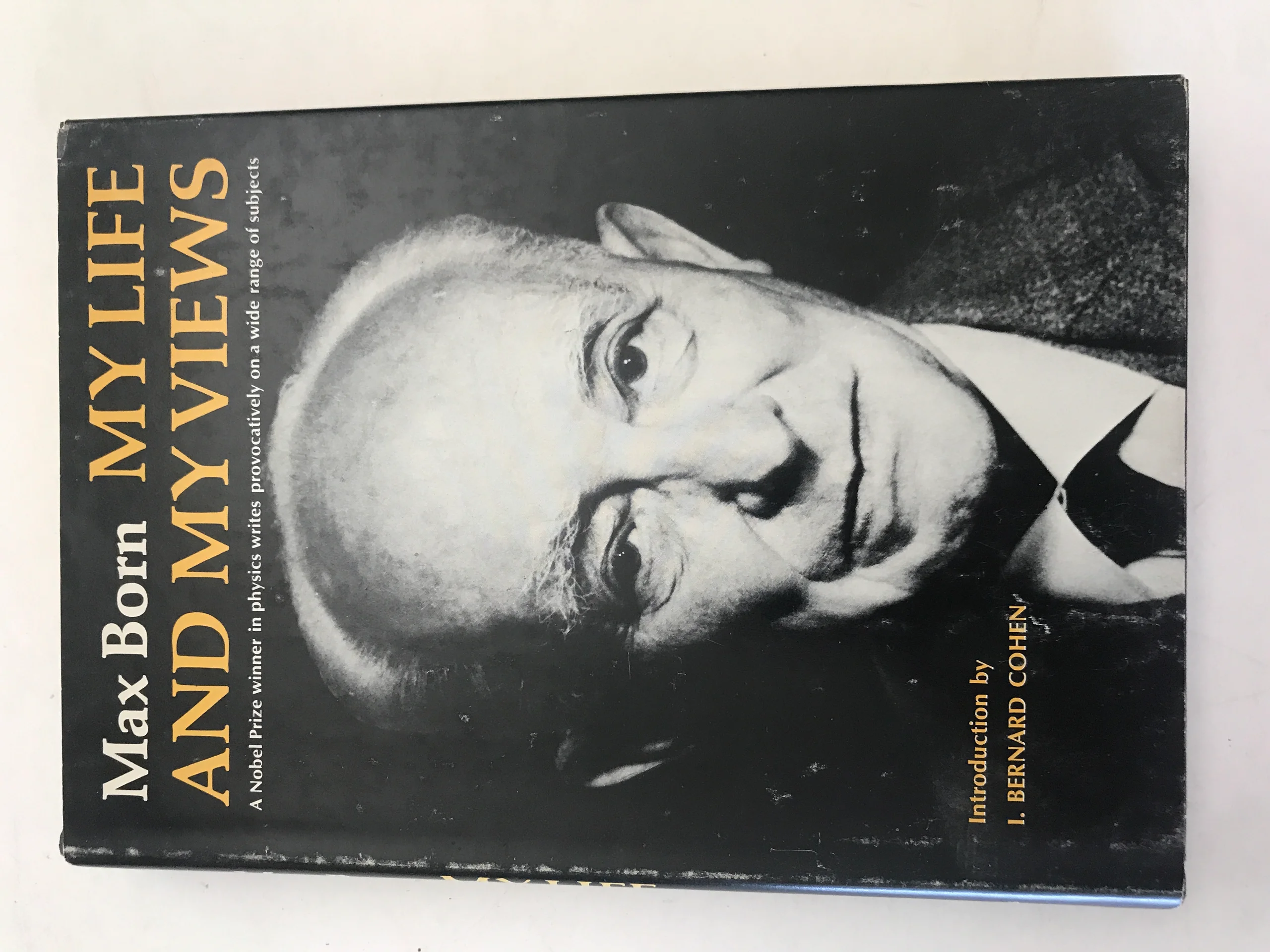
Os colaboradores mais próximos de Bohr incluíram Ernest Rutherford, que o orientou em Manchester; Werner Heisenberg, seu aluno e depois colega; e Albert Einstein, com quem teve debates famosos ao longo de décadas sobre a mecânica quântica. Ele também trabalhou estreitamente com Max Born, Wolfgang Pauli, Oskar Klein, Hans Kramers, George de Hevesy, John Wheeler e James Franck. Seu filho Aage Bohr tornou-se laureado com o Nobel de Física em 1975.
Relacionamentos e história amorosa
Bohr casou-se com Margrethe Nørlund em 1º de agosto de 1912, em uma cerimônia civil. Ela era irmã do matemático Niels Erik Nørlund. Margrethe foi companheira, confidente e parceira intelectual de Bohr por toda a vida; ela datilografou seus manuscritos, acompanhou-o a conferências e administrou a casa. Tiveram seis filhos juntos: Christian (que morreu em um acidente de barco aos 18 anos), Harald (morreu na infância), Hans, Erik, Aage (que ganhou o Prêmio Nobel de Física em 1975) e Ernest. O casamento durou 50 anos até a morte de Bohr em 1962. Nenhum outro relacionamento romântico documentado publicamente foi relatado de forma credível. Sua correspondência pessoal e biografias descrevem consistentemente um casamento devotado e monogâmico.
- Casado(a)Margrethe Nørlund1912 - 1962Companheira e parceira intelectual por toda a vida; datilografou seus manuscritos e administrou a casa.
Morte e repercussões
Morte
November 18, 1962 (aos 77 anos)
Local da morte
Copenhagen, Denmark
Causa da morte
Heart failure due to coronary artery disease
Tributes poured in from world leaders and the global scientific community following the passing of Niels Bohr, with King Frederik IX presiding over a state funeral that drew high-ranking Danish officials and leading physicists from around the world. Albert Einstein, who had died just three months prior, was among the prominent scientists whose loss was noted alongside Bohr's, while Werner Heisenberg and Enrico Fermi issued formal statements honoring his contributions to quantum mechanics and atomic theory. The scientific community observed moments of silence and saw an immediate surge in academic citations and reprints of his work, reflecting the profound impact of his death on international physics. Bohr passed away peacefully in his sleep at his home at Blegdamsvej 17 in Copenhagen on November 18, 1962, at the age of 77.
His final days followed a gradual decline in health after a heart attack earlier that year, culminating in his last public appearance in late October when he delivered a speech at the opening of the new Niels Bohr Institute building despite his deteriorating condition. The official cause of death was determined to be heart failure resulting from long-standing coronary artery disease by his personal physician, who attended him during his final days. The funeral service took place five days later on November 23, 1962, at the Church of Our Lady in Copenhagen before burial at the Assistens Cemetery in the Nørrebro district. Eulogies emphasized his role as a mentor to the generation of physicists who shaped modern physics, featuring traditional church hymns appropriate for a state funeral of his stature.
Posthumous honors included the establishment of the Niels Bohr Medal by the International Union of Pure and Applied Physics in 1963 and the naming of element Bohrium in his honor by the IUPAC in 1997. His legacy remains anchored by the continued operation of the Niels Bohr Institute as a premier research center and the preservation of his papers and correspondence within the Niels Bohr Library & Archives and the Royal Danish Academy of Sciences. The family estate was handled privately, ensuring the maintenance of his intellectual property rights and archival holdings managed by the institute.
Patrimônio (valor do espólio)
$5 Million
Estimativa da equipe editorial do iFANN
Niels Bohr died in 1962, and per iFANN's editorial analysis, his estate is valued at approximately $5 million as of 2026. This figure reflects intellectual property rights, book royalties, and archival holdings managed by the Bohr family through the Niels Bohr Archive and the Niels Bohr Institute. Bohr lived modestly as a university professor and Nobel laureate. He donated much of his Nobel Prize money to scientific causes and refugee relief. His collected works, published in multiple volumes, continue to generate royalties. The Niels Bohr Institute receives ongoing funding and donations in his honor. The estate's primary revenue sources include licensing of his image and name for educational materials, research grants to the Niels Bohr Archive, and steady book royalties from his philosophical and scientific writings.
Prêmios conquistados (8)
Bohr ganhou o Prêmio Nobel de Física em 1922 por sua investigação da estrutura atômica. Ele também recebeu a Medalha Hughes (1921), Medalha Matteucci (1923), Medalha Franklin (1926), Medalha Max Planck (1930), Medalha Copley (1938) e o primeiro Prêmio Átomos pela Paz (1957). Recebeu a Ordem do Elefante, a mais alta honraria real da Dinamarca, em 1947.
1957 · Paz
1947 · Ordem Real
Conhecido por
Bohr Model of the Atom
1913 · Desenvolvedor
Principle of Complementarity
1927 · Formulador
Copenhagen Interpretation
1927 · Cofundador
Liquid-Drop Model of the Nucleus
1936 · Desenvolvedor
Manhattan Project
1943 · Contribuidor
Palavras-chave
Fontes
Dados rápidos
Dados pessoais
- Nome completo
- Niels Henrik David Bohr
- Altura
- 5 ft 10 in (178 cm)
- Cônjuge
- Margrethe Bohr
- Filhos
- 6 sons: Christian, Harald, Hans, Erik, Aage, Ernest
- Formação
- University of Copenhagen (B.A. 1907, M.A. 1909, Ph.D. 1911)
Perguntas frequentes
Pelo que Niels Bohr é famoso?
Niels Bohr trabalhou na bomba atômica?
Quantos anos Niels Bohr tinha quando morreu?
Niels Bohr teve filhos?
Qual era o QI de Niels Bohr?
Pessoas semelhantes
Junte-se à comunidade
fãs comentando