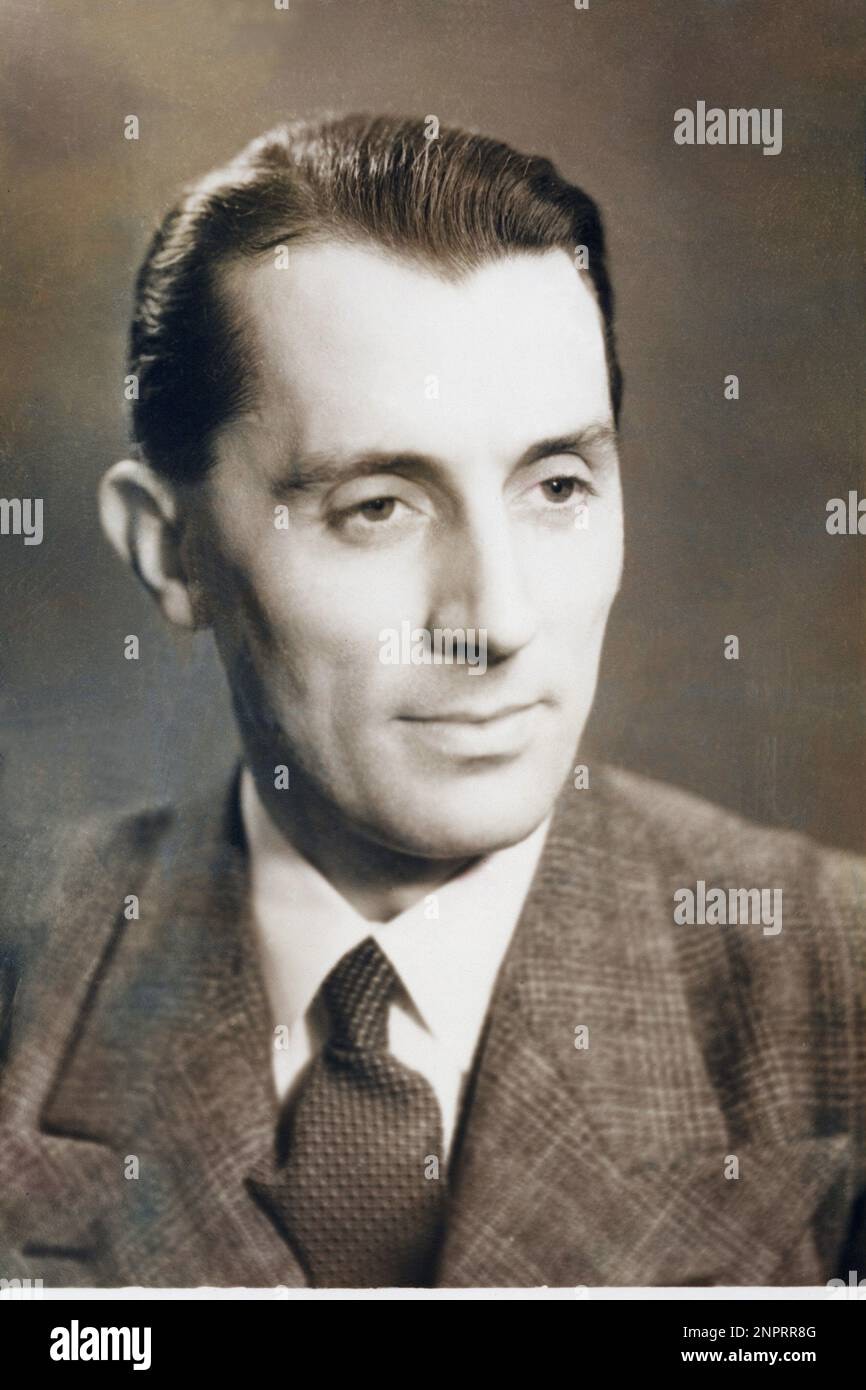
Frédéric Joliot-Curie
 France
nuclear physicist•chemist•professor
Also known as: Jean Frédéric Joliot
Data de nascimento
March 19, 1900
Signo
Pisces
Local de nascimento
Paris, France
Idade
Faleceu aos 58
Sobre
Frédéric Joliot-Curie foi um físico e químico francês que, junto com sua esposa Irène Joliot-Curie, descobriu a radioatividade artificial. Por esse avanço, eles dividiram o Prêmio Nobel de Química de 1935, tornando-se o segundo casal a ganhar um Nobel depois dos pais de Irène, Marie e Pierre Curie. Hoje, seu legado vive através do nome Joliot-Curie na ciência, do centro de pesquisa em Orsay que ele ajudou a fundar e da influência contínua de seu trabalho em física nuclear. Ele é lembrado como um cientista que combinou pesquisa brilhante com um forte senso de responsabilidade social, opondo-se às armas nucleares enquanto avançava a energia atômica para usos pacíficos.
Início da vida e origens
Nascido em Paris em uma família protestante da Alsácia, Frédéric Joliot mostrou talento precoce para a ciência. Ele entrou na École Municipale de Physique et de Chimie Industrielles em 1919, onde Pierre Curie já havia lecionado, e se formou em primeiro lugar na turma em 1923 como engenheiro físico. Seu professor Paul Langevin o orientou para a pesquisa fundamental.
Em dezembro de 1924, Joliot conheceu Marie Curie e se tornou seu assistente pessoal no Instituto do Rádio. Lá conheceu sua filha Irène Curie, e eles se apaixonaram. Marie insistiu que ele buscasse mais qualificações acadêmicas, então Joliot obteve um segundo bacharelado, um diploma de bacharel e um doutorado em 1930 com uma tese sobre a eletroquímica dos radioelementos. Ele se casou com Irène em 4 de outubro de 1926, e adotaram o sobrenome conjunto Joliot-Curie.
Crescimento na carreira
Em janeiro de 1934, os Joliot-Curie bombardearam boro, alumínio e magnésio com partículas alfa e criaram novos isótopos radioativos de nitrogênio, fósforo e silício, a primeira radioatividade artificial. A descoberta rendeu-lhes o Prêmio Nobel de Química de 1935.
Joliot-Curie tornou-se professor no Collège de France em 1937. Durante a Segunda Guerra Mundial, juntou-se à Resistência Francesa, usando seu laboratório para fabricar explosivos e equipamentos de rádio. Após a guerra, foi nomeado diretor do Centro Nacional de Pesquisa Científica (CNRS) em 1945 e tornou-se o primeiro Alto Comissário da França para a Energia Atômica. Supervisionou a construção do primeiro reator atômico francês em 1948. Em 1955, assinou o Manifesto Russell-Einstein contra as armas nucleares.
Linha do tempo da carreira
Imagem pública e estilo
Joliot-Curie era visto como um cientista brilhante e dedicado, profundamente comprometido com as aplicações pacíficas da energia nuclear. Seu trabalho na Resistência durante a guerra acrescentou uma dimensão heroica à sua imagem pública. Ele também foi uma figura política, com sua filiação ao Partido Comunista gerando controvérsia durante a Guerra Fria. Hoje é lembrado como um pioneiro que equilibrou excelência científica com consciência social.
Fama e fandom
Frédéric Joliot-Curie's enduring recognition rests on his scientific achievements and his role in the wartime resistance, rather than on any organized fan base. There is no documented fandom name, no coordinated fan community, and no fan-driven campaigns or rituals associated with him. His legacy is preserved through institutions such as the Institut Curie and the Joliot-Curie laboratory, as well as through Nobel Prize archives and historical foundations. The Picasso portrait from 1959 and the continued scholarly interest in the Curie family dynasty reflect a diffuse, institutional admiration rather than a modern fandom.
As of August 2026, iFANN's Global Fame Engine has evaluated Frédéric Joliot-Curie, but he does not currently hold a placement in the published rankings. This means he is not listed among the Global Top 1,000 most famous people, nor does he appear on any Top-100 scope list. The evaluation acknowledges his historical significance, yet his fame, while considerable, does not currently meet the threshold for a ranked position within iFANN's frameworks.
Fatos interessantes e lendas
Frédéric Joliot-Curie played the piano and enjoyed landscape painting. He was an avid reader of Rudyard Kipling, and during the German occupation of France, he coordinated the production of Molotov cocktails for the Resistance. He was a commander of the Legion of Honour and received the Croix de Guerre. In 1942, he joined the French Communist Party, a decision that would later define his public life.
A widely retold story from his wartime activities involves the secret shipment of France's heavy water supply, which was smuggled to England in 1940 to prevent it from falling into German hands. Accounts describe the heavy water being hidden in containers disguised as sardine tins, though the specific details may have been embellished over time. The core event is documented and has become part of his heroic wartime legend.
Another iconic moment is the discovery of artificial radioactivity with his wife Irène in 1934, which earned them the 1935 Nobel Prize in Chemistry. This breakthrough transformed nuclear physics and led to advances in medical imaging and cancer treatment. The Nobel ceremony itself, where they followed in the footsteps of Irène's parents, Marie and Pierre Curie, holds a special place in scientific lore.
Família e vida pessoal
Frédéric Joliot-Curie casou-se com Irène Curie em 1926. Tiveram dois filhos: Hélène, nascida em 1927, que se tornou física, e Pierre, nascido em 1932, que se tornou biólogo. A família morava em Paris e no Instituto do Rádio. Irène morreu em 1956 de leucemia relacionada à exposição à radiação. Frédéric nunca se casou novamente.
Conexões notáveis
Relacionamentos e história amorosa
Frédéric Joliot conheceu Irène Curie no Instituto do Rádio em 1925, onde ela trabalhava ao lado de sua mãe Marie. Casaram-se em 4 de outubro de 1926 e adotaram o sobrenome conjunto Joliot-Curie. A parceria foi tanto pessoal quanto profissional; colaboraram na descoberta da radioatividade artificial. Irène morreu de leucemia em 1956. Frédéric não se casou novamente, permanecendo devoto à memória dela até sua própria morte em 1958.
- Casado(a)Irène Joliot-Curie1926 - 1956Casados em 4 de outubro de 1926. Colaboraram em pesquisa premiada com o Nobel. Irène morreu em 1956.
Morte e repercussões
Morte
August 14, 1958 (aos 58 anos)
Local da morte
Paris, France
Causa da morte
Desconhecido
A lithograph portrait drawn by Pablo Picasso in February 1959 stands as a notable cultural artifact commemorating the intersection of two giants of the 20th century, created specifically as an homage following the scientist's passing. This posthumous tribute from a fellow icon preceded any formal state recognition, reflecting the deep respect held for Joliot-Curie among peers in both the scientific and political spheres who noted his contributions to nuclear physics and his engagement with the World Peace Council. The man known for opposing nuclear weapons while advancing atomic energy for peaceful uses passed away on August 14, 1958, in Paris, France, at the age of 58, concluding a life that had seen him serve as a professor at the Collège de France and a director of the National Centre for Scientific Research.
While his wife Irène had died in 1956 from leukemia linked to radiation exposure, Frédéric continued his work until his final days without an official hospital statement detailing the immediate circumstances or last public appearance being released. Consequently, the exact cause remains unconfirmed in public documentation, with no disputed accounts regarding foul play or accident reported in the search results. Public reaction centered on tributes from scientific and political institutions rather than commercial surges or fan vigils, acknowledging a prominent figure whose legacy extended beyond the laboratory into the realm of international peace advocacy. He was buried in the family plot consistent with Curie family tradition, though specific details regarding eulogies or attendees were not widely digitized in general biographical summaries compared to the more publicized events surrounding Marie Curie.
Posthumously, his intellectual property and estate were managed by his family, including his daughter Hélène Langevin-Joliot, who later became a nuclear physicist herself, ensuring the continuation of the family's scientific lineage.
Patrimônio (valor do espólio)
Prêmios conquistados (2)
Frédéric Joliot-Curie ganhou o Prêmio Nobel de Química de 1935 conjuntamente com Irène Joliot-Curie pela descoberta da radioatividade artificial. Ele também recebeu a Medalha Hughes da Royal Society em 1947 por suas contribuições à física nuclear.
1935 · Química
Discovery of artificial radioactivity
1947 · Física
Contributions to nuclear physics
Conhecido por
Discovery of artificial radioactivity
1934 · co-discoverer
Nobel Prize in Chemistry
1935 · laureate
Palavras-chave
Fontes
Dados rápidos
- Profissão
- nuclear physicist, chemist, professor
- Nascimento
- March 19, 1900
- Local de nascimento
- Paris, França
- Morte
- August 14, 1958
- Local da morte
- Paris, França
- Gênero
- Masculino
- Cônjuge
- Irène Joliot-Curie
- Signo
- Pisces
Dados pessoais
- Nome completo
- Jean Frédéric Joliot
- Cônjuge
- Irène Joliot-Curie
- Filhos
- Hélène Joliot-Curie, Pierre Joliot-Curie
- Formação
- École Supérieure de Physique et de Chimie Industrielles de Paris
Perguntas frequentes
Quem foi Frédéric Joliot-Curie?
O que Frédéric Joliot-Curie descobriu?
Quando Frédéric Joliot-Curie ganhou o Prêmio Nobel?
Qual foi o papel de Frédéric Joliot-Curie na Segunda Guerra Mundial?
Qual era o patrimônio de Frédéric Joliot-Curie?
Pessoas semelhantes
Junte-se à comunidade
fãs comentando