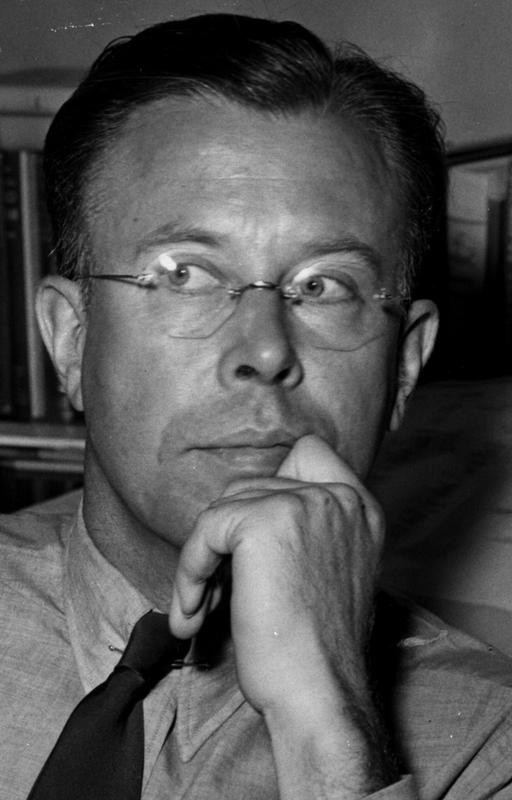
Ernest Orlando Lawrence
 United States
physicist•nuclear physicist•university teacher
Data de nascimento
August 8, 1901
Signo
Leo
Local de nascimento
Canton, South Dakota, USA
Idade
Faleceu aos 57
Altura
5 ft 10 in (178 cm)
Sobre
Ernest Orlando Lawrence foi um físico americano que remodelou a ciência moderna. Ele ganhou o Prêmio Nobel de Física em 1939 por inventar o cíclotron, um acelerador de partículas que se tornou um pilar da física nuclear. Lawrence também desempenhou um papel fundamental no Projeto Manhattan, desenvolvendo a separação eletromagnética de isótopos de urânio, e fundou dois grandes laboratórios nacionais: o Lawrence Berkeley National Laboratory e o Lawrence Livermore National Laboratory.
Lawrence obteve seu PhD pela Yale em 1925, após estudar na Universidade de Dakota do Sul e na Universidade de Minnesota. Em 1928, ingressou na Universidade da Califórnia, Berkeley, como professor associado e tornou-se o professor titular mais jovem da instituição dois anos depois. Certa noite, na biblioteca, viu um diagrama de um acelerador linear e se perguntou como torná-lo compacto. Essa centelha levou ao cíclotron, uma câmara circular entre polos de eletroímã que acelerava partículas a altas energias.
Ele construiu cíclotrons progressivamente maiores e, em 1936, seu Laboratório de Radiação tornou-se um departamento oficial da UC com Lawrence como diretor. Ele defendeu usos médicos dos radioisótopos. Durante a Segunda Guerra Mundial, seu laboratório desenvolveu calutrões, híbridos de espectrômetros de massa e cíclotrons, para o enriquecimento de urânio. Uma enorme fábrica chamada Y-12 foi construída em Oak Ridge, Tennessee; embora ineficiente, produziu o urânio para a primeira bomba atômica.
Após a guerra, Lawrence tornou-se um defensor ferrenho da Big Science, grandes projetos que exigiam grandes máquinas e grandes financiamentos. Ele apoiou o impulso de Edward Teller para um segundo laboratório de armas nucleares, localizado em Livermore, Califórnia. Lawrence morreu em 27 de agosto de 1958, aos 57 anos. A Universidade da Califórnia renomeou os laboratórios de Livermore e Berkeley em sua homenagem. O elemento 103, lawrêncio, descoberto em Berkeley em 1961, também leva seu nome.
Início da vida e origens
Lawrence cresceu em Canton, Dakota do Sul, filho de Carl Gustavus Lawrence e Gunda Regina Jacobson, ambos imigrantes noruegueses. Seu pai era superintendente escolar e sua mãe, professora. A família mudou-se para Pierre quando ele era adolescente. Quando criança, Lawrence era curioso sobre ciência e gostava de realizar experimentos químicos simples em seu porão. Ele ingressou na Universidade de Dakota do Sul em 1918, inicialmente planejando estudar medicina, mas mudou para física após ser inspirado pelo professor Lewis Akeley. Obteve seu bacharelado em 1922, depois mudou-se para a Universidade de Minnesota para estudos de pós-graduação, recebendo um mestrado em 1923. Cursou o doutorado na Universidade de Yale, concluindo-o em 1925 com uma tese sobre o efeito fotoelétrico. Durante seus anos em Yale, interessou-se pelo campo emergente da física nuclear. Um momento crucial ocorreu em 1929, quando, como jovem professor associado na UC Berkeley, Lawrence viu um diagrama de um acelerador linear em um periódico da biblioteca e concebeu a ideia do cíclotron, um acelerador de partículas circular e compacto. Essa percepção preparou o terreno para seu avanço.
Crescimento na carreira
O avanço de Lawrence ocorreu em 1931, quando ele construiu o primeiro cíclotron funcional na UC Berkeley, um dispositivo de 4,5 polegadas que acelerava íons de hidrogênio a 80.000 elétron-volts. Ele o construiu usando peças sobressalentes de um transmissor de rádio a um custo de cerca de US$ 25. O dispositivo lhe rendeu o Prêmio Nobel de Física em 1939. Durante a Segunda Guerra Mundial, ele dirigiu a separação eletromagnética de isótopos de urânio para o Projeto Manhattan, usando calutrões na fábrica Y-12 em Oak Ridge, Tennessee. Em 1952, cofundou o Lawrence Livermore National Laboratory para pesquisas de armas nucleares. Também recebeu a Medalha de Mérito em 1946 e o Prêmio Enrico Fermi em 1957. Seu trabalho lançou as bases para a física moderna de partículas e a produção de isótopos médicos.
Linha do tempo da carreira
Imagem pública e estilo
Lawrence era conhecido por sua abordagem enérgica e prática à ciência, muitas vezes usando jalecos e trabalhando diretamente com equipamentos. Ele foi retratado como um visionário e promotor incansável da pesquisa em larga escala, um defensor da Big Science. A cobertura da mídia destacou seu papel no Projeto Manhattan e no estabelecimento de laboratórios nacionais. Seu fandom está principalmente dentro da comunidade da física; entusiastas marcam aniversários de seu nascimento e morte com palestras no Lawrence Berkeley National Laboratory. Não há nome oficial de fandom. Sua presença nas redes sociais é inexistente, pois ele morreu antes da era da internet.
Fama e fandom
Ernest Orlando Lawrence never sought fame, yet his name echoes through the halls of science. The man who built the first cyclotron from spare radio parts in 1929 became the architect of Big Science, transforming physics from a solitary pursuit into a national enterprise. His legacy is not measured in fan clubs or chart positions, it's measured in the laboratories, awards, and elements that bear his name.
In the world of physics, Lawrence is a towering figure, but outside of it, his fame is a quieter, more diffuse thing. iFANN's Global Fame Engine, which evaluates public recognition across media and cultural signals, has assessed Lawrence but found him currently unranked, he holds no placement in the global top 1,000 or any top-100 scope list. This is not a slight; it's a reflection of his sphere of influence, which lies in textbooks and institutional memory rather than daily headlines.
His fanbase, such as it is, has no formal name. There are no fan campaigns, no birthday billboards, no hashtag movements. Instead, his most devoted followers are the physicists and historians who study his work, and the institutions he founded, Lawrence Berkeley National Laboratory and Lawrence Livermore National Laboratory, that keep his memory alive through exhibits and the Ernest Orlando Lawrence Award. The Lawrence Hall of Science in Berkeley also preserves his story for curious visitors.
This is a different kind of fame, one built on achievement, not spectacle. Lawrence's name may not trend on social media, but it is etched into the periodic table and the history of science. That, perhaps, is the most enduring form of recognition.
Fatos interessantes e lendas
Lawrence's first cyclotron cost about $25 and used spare radio parts. He was a close friend of J. Robert Oppenheimer and supported Oppenheimer's security clearance during the 1954 hearings. An avid sailor, he owned a yacht named The Cyclotron. He turned down an offer to become the first director of the Manhattan Project in 1942, recommending Oppenheimer instead. The element lawrencium (Lr) was named in his honor in 1961, three years after his death. He was inducted into the National Inventors Hall of Fame in 1988.
One of the most retold stories from his career is the moment of inspiration for the cyclotron. In 1929, Lawrence reportedly glanced at a paper by Norwegian physicist Rolf Widerøe in a university library and had a sudden flash of insight, the idea for a machine that could accelerate particles in a spiral. He and graduate student M. Stanley Livingston built the first working model in 1931, a device just four inches across that could be held in one hand, yet it successfully accelerated hydrogen ions to 80,000 electron volts. The story of this tiny machine, assembled with sealing wax and brass in a cramped basement workshop, is a favorite among physicists and science enthusiasts.
Another legendary episode is the saga of the 184-inch cyclotron, designed to be the world's most powerful accelerator. Construction was interrupted by World War II, and after the war, Lawrence redesigned it using new synchrotron principles. Completed in 1946, it became the prototype for all subsequent high-energy accelerators, cementing his reputation as a pioneer of large-scale physics.
Frases notáveis
“The cyclotron is a machine that will enable us to explore the nucleus of the atom.”
“We are entering an era of big science. The problems are too large for a single man to solve.”
“I have never been able to understand why a man should be afraid of a little hard work.”
Família e vida pessoal
Lawrence casou-se com Mary K. Blumer em 14 de maio de 1932. Mary era filha de um físico de Yale, e eles se conheceram através de círculos acadêmicos. O casal teve seis filhos: John, Margaret, Mary, Robert, Barbara e Susan. A família morava em Berkeley, Califórnia, onde Lawrence trabalhava. Ele era um pai dedicado que frequentemente envolvia seus filhos em seus interesses científicos, levando-os ao laboratório nos fins de semana. O casamento durou até a morte de Lawrence em 1958. Nenhum outro detalhe familiar significativo está documentado publicamente.
Conexões notáveis
Lawrence era amigo próximo e colega de J. Robert Oppenheimer, recomendando-o para liderar o Projeto Manhattan. Colaborou com Edward Teller na bomba de hidrogênio e apoiou o impulso de Teller para um segundo laboratório de armas. Luis Alvarez foi aluno e colega no Laboratório de Radiação, mais tarde ganhador do Nobel. Glenn T. Seaborg trabalhou no laboratório, descobriu o plutônio e depois presidiu a Comissão de Energia Atômica. Sua esposa Mary K. Blumer foi sua parceira por toda a vida.
Relacionamentos e história amorosa
Ernest Lawrence casou-se com Mary K. Blumer em 14 de maio de 1932. O relacionamento começou no final da década de 1920, quando ambos estavam na Universidade Yale; Mary era filha de um professor de física. Eles tiveram seis filhos juntos. O casamento durou até a morte de Lawrence em 1958. Nenhum outro relacionamento romântico público está documentado; a vida pessoal de Lawrence era privada e centrada em sua família e trabalho. Em 2026, Lawrence está falecido, sem relacionamento romântico atual.
- Casado(a)Mary K. Blumer1932 - 1958Casou-se em 14 de maio de 1932; teve seis filhos juntos; casamento durou até a morte de Lawrence.
Morte e repercussões
Morte
August 27, 1958 (aos 57 anos)
Local da morte
Palo Alto, California
Causa da morte
Desconhecido
The University of California announced the passing of Ernest Orlando Lawrence on August 27, 1958, confirming his death at a medical facility in Palo Alto, California. The physicist, who had spent decades driving the boundaries of nuclear science, succumbed to an illness that authorities never publicly detailed in specific terms. Tributes flowed immediately from the highest levels of American science and government. The scientific community marked his loss with a significant memorial event on May 1, 1959, where the American Institute of Physics hosted invited lectures dedicated to the history of the cyclotron. Articles in Physics Today and Chemistry World reflected on his dual legacy as the inventor of the particle accelerator and a key architect of the Manhattan Project.
These publications avoided sensationalism, focusing instead on the technical and historical weight of his contributions to nuclear physics. His legacy was cemented through immediate institutional action rather than traditional funeral rites. The Department of Energy established the Ernest Orlando Lawrence Award to recognize outstanding contributions in science and technology, a honor bestowed annually since his death. The University of California honored him by naming its premier research facility after him, ensuring his name remained central to the field he helped create.
Patrimônio (valor do espólio)
$1 Million
Estimativa da equipe editorial do iFANN
Ernest Lawrence died in 1958, and his estate was modest by modern standards. Research by the iFANN Editorial Team puts his estate's value at approximately $1 million, a figure that reflects his life as a public servant and academic rather than a commercial figure. The estate's worth is primarily tied to ongoing royalties from patents, such as the cyclotron patent, and licensing of his name. The Ernest Orlando Lawrence Award, funded by the U.S. government, is a separate legacy that honors mid-career scientists. The estate is managed by the Lawrence family trust, and no posthumous releases or merchandise generate significant revenue. Lawrence's true wealth lies in his scientific contributions, which continue to shape physics and national laboratories.
Prêmios conquistados (6)
Lawrence ganhou o Prêmio Nobel de Física em 1939 por inventar o cíclotron. Ele também recebeu o Prêmio Comstock de Física (1937), a Medalha do Mérito (1946), a Medalha Hughes (1951), o Prêmio Enrico Fermi (1957) e o Prêmio Sylvanus Thayer (1958). Essas honrarias reconheceram suas contribuições para a física nuclear e a defesa nacional.
1937 · Física
Cyclotron
1939 · Física
Cyclotron
Conhecido por
Invention of the cyclotron
1931 · Inventor
Manhattan Project
1942 · Director of electromagnetic isotope separation
Lawrence Berkeley National Laboratory
1936 · Founder and director
Lawrence Livermore National Laboratory
1952 · Cofundador
Palavras-chave
Dados rápidos
- Profissão
- physicist, nuclear physicist, university teacher
- Nascimento
- +1901-08-08
- Local de nascimento
- Canton
- Morte
- +1958-08-27
- Local da morte
- Palo Alto
- Gênero
- Masculino
- Cônjuge
- Mary K. Blumer
- Signo
- Leo
Dados pessoais
- Nome completo
- Ernest Orlando Lawrence
- Altura
- 5 ft 10 in (178 cm)
- Cônjuge
- Mary K. Blumer
- Filhos
- 6
- Formação
- University of South Dakota (BA, 1922); University of Minnesota (MS, 1923); Yale University (PhD, 1925)
Perguntas frequentes
Como Ernest Lawrence morreu?
Qual é o patrimônio de Ernest Lawrence em 2026?
Ernest Lawrence teve filhos?
Pelo que Ernest Lawrence é famoso?
Ernest Lawrence é relacionado ao Laboratório Lawrence Livermore?
Pessoas semelhantes
Junte-se à comunidade
fãs comentando