
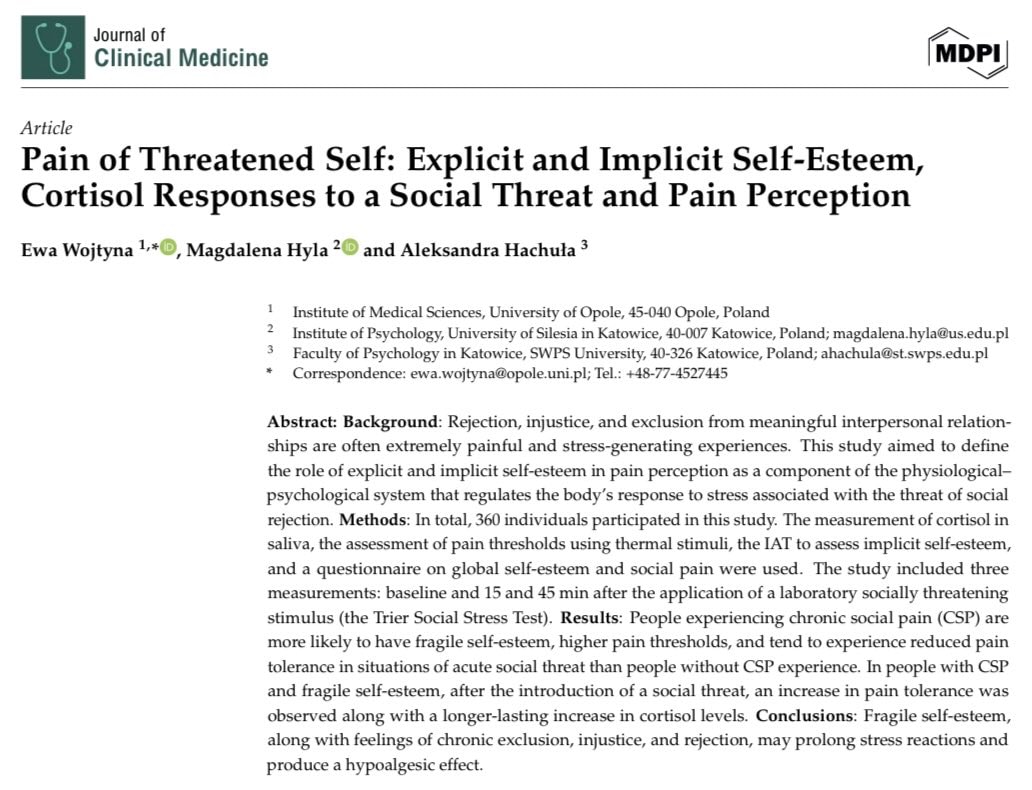
@katrina.karanShaming yourself to force change actually blocks the ability to learn and make that change happen
Ver publicação original@katrina.karanShaming yourself to force change actually blocks the ability to learn and make that change happen
Ver publicação originalFoto de @katrina.karan· Nov 2, 2026· Foto 1 de 2· Science
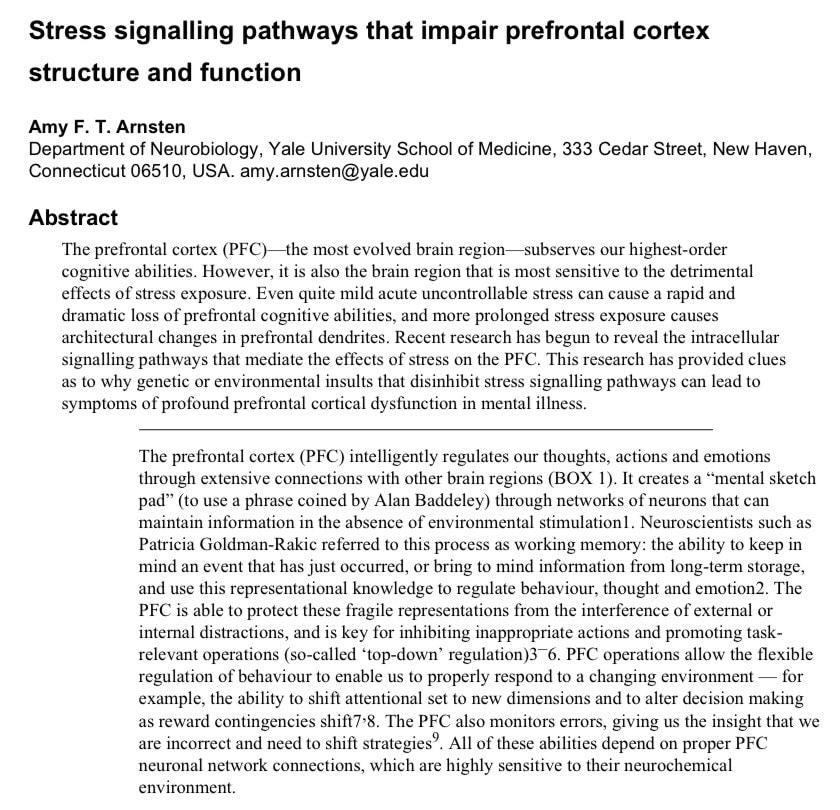
The image is a screenshot of a scientific paper. The focus is on the title and abstract of the paper. The title is "Stress signalling pathways that impair prefrontal cortex structure and function". The abstract discusses the prefrontal cortex and its role in cognitive abilities and stress response. The mood is academic and informative. The author's name and affiliation are clearly visible. ON-SCREEN TEXT: Stress signalling pathways that impair prefrontal cortex structure and function Amy F. T. Arnsten Department of Neurobiology, Yale University School of Medicine, 333 Cedar Street, New Haven, Connecticut 06510, USA. [email protected] Abstract The prefrontal cortex (PFC)—the most evolved brain region—subserves our highest-order cognitive abilities. However, it is also the brain region that is most sensitive to the detrimental effects of stress exposure. Even quite mild acute uncontrollable stress can cause a rapid and dramatic loss of prefrontal cognitive abilities, and more prolonged stress exposure causes architectural changes in prefrontal dendrites.
 4Daily multivitamin and brain aging study
 M87* black hole retest confirms Einstein
 human nervous system infographic
 Euler's Identity
 Albert Einstein imagination quote
 Planet X2 beyond Neptune
 Dark matter wormhole in the Milky Way
 Human brain and cosmos quantum link
 2Octopus editing its own DNA
 2Saturn-sized rogue planet discovered
 2Black holes as tunnels theory
 Brazil coral rescue and global heat record
 Giant wood moth found in Queensland
 4NASA strange objects on Mars
 2Germany fusion reactor grid by 2030s
 Mars rover photo of Earth Jupiter Venus
 Fibonacci Day 11/23
 2Elon Musk on the technological Singularity
@katrina.karanShaming yourself to force change actually blocks the ability to learn and make that change happen
Ver publicação originalFoto de @katrina.karan· Nov 2, 2026· Foto 1 de 2· Science
The image is a screenshot of a scientific paper. The focus is on the title and abstract of the paper. The title is "Stress signalling pathways that impair prefrontal cortex structure and function". The abstract discusses the prefrontal cortex and its role in cognitive abilities and stress response. The mood is academic and informative. The author's name and affiliation are clearly visible. ON-SCREEN TEXT: Stress signalling pathways that impair prefrontal cortex structure and function Amy F. T. Arnsten Department of Neurobiology, Yale University School of Medicine, 333 Cedar Street, New Haven, Connecticut 06510, USA. [email protected] Abstract The prefrontal cortex (PFC)—the most evolved brain region—subserves our highest-order cognitive abilities. However, it is also the brain region that is most sensitive to the detrimental effects of stress exposure. Even quite mild acute uncontrollable stress can cause a rapid and dramatic loss of prefrontal cognitive abilities, and more prolonged stress exposure causes architectural changes in prefrontal dendrites.
4Daily multivitamin and brain aging studyM87* black hole retest confirms Einsteinhuman nervous system infographicEuler's IdentityAlbert Einstein imagination quotePlanet X2 beyond NeptuneDark matter wormhole in the Milky WayHuman brain and cosmos quantum link2Octopus editing its own DNA2Saturn-sized rogue planet discovered2Black holes as tunnels theoryBrazil coral rescue and global heat recordGiant wood moth found in Queensland4NASA strange objects on Mars2Germany fusion reactor grid by 2030sMars rover photo of Earth Jupiter VenusFibonacci Day 11/232Elon Musk on the technological Singularity