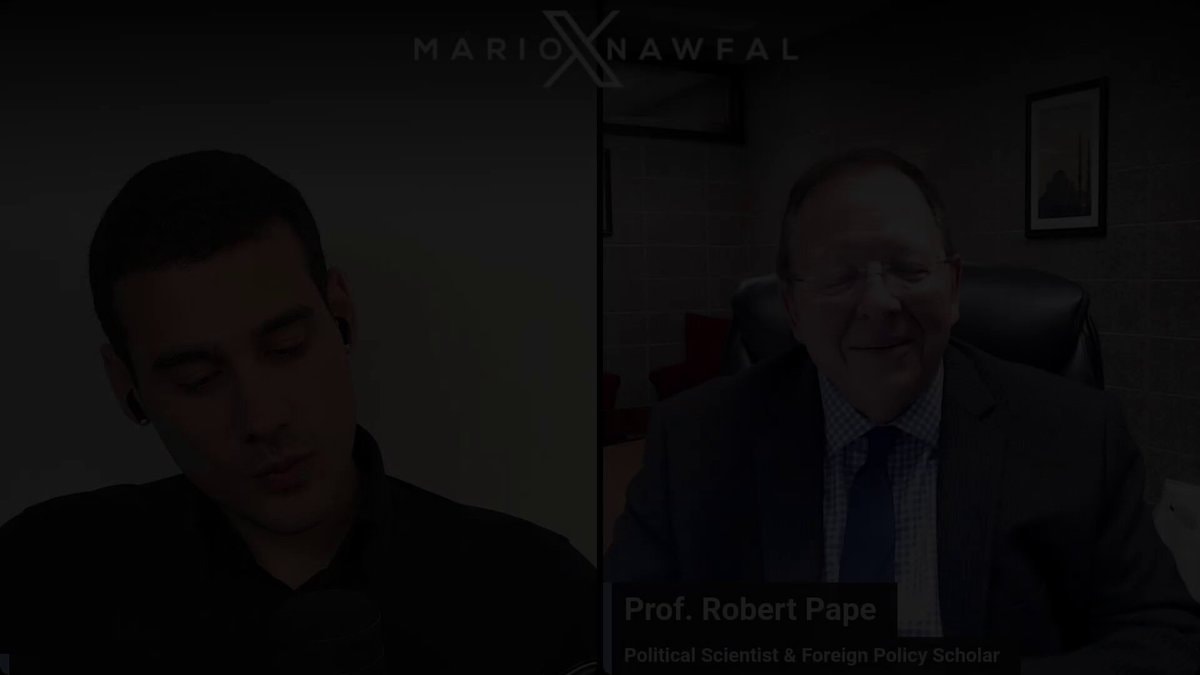
@jolyonWhat if the whole thing hinges on day four rather than day one? That's roughly where I ended up after hearing Robert Pape out. He's spent decades on military strategy and the way conflicts grow, so I asked him whether Trump could order one last strike on Iran, frame it as a win, and step back. Pape's answer pushed me to rethink the shape of the problem. He says the setup we're drifting toward looks a lot like what existed before World War I, and not because the alliances match up. The parallel is the pressure: when countries build up their militaries, they start to feel like striking first beats waiting to be struck. Four players sit inside this one. America, Iran, Saudi Arabia, and the Houthis. Run the scenario. A three-day US bombing campaign against Iran. Iran answers. The Houthis, reasoning that Washington may come for them next, hit an American warship. Sailors are killed. Walking away stops being simple for Trump at that point, at least politically. Saudi Arabia may also spot a window to go after the Houthis before they strike again. What began as something limited is a regional war, and the gap between the two could be days. Pape's warning is that every individual call can look sensible to whoever is making it while the total adds up to something disastrous. He also raised a longer worry. If the fighting restarts, militant groups in Yemen and Pakistan could end up stronger, and the security fallout would outlast the original conflict. The part I keep sitting with is how little any of this depends on a leader actually wanting a bigger war. Trump might plan a three-day operation. What he can't plan is what everyone else does on day four. #RobertPape #DonaldTrump
Ver publicação original