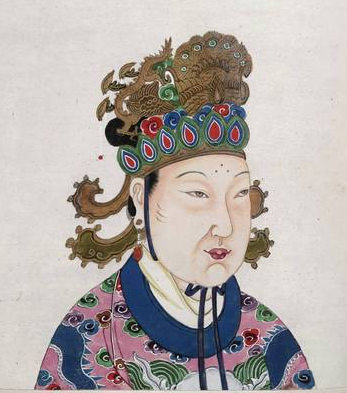
Wu Zetian
 China
Chinaempress consort•poet•empress regnant
Also known as: Empress Wu, Wu Zhao, Wu Hou, Empress Zetian
Data de nascimento
February 17, 624
Signo
Aquarius
Local de nascimento
Guangyuan (disputed), Tang China
Idade
Faleceu aos 81
Sobre
Wu Zetian was the only woman in the long history of China to rule as emperor in her own right. Born Wu Zhao in 624, she rose from being a teenage concubine to the most powerful person in the realm, eventually founding her own Zhou dynasty and ruling for fifteen years. Her ascent shattered the deepest conventions of a deeply patriarchal society, and her reign remains a subject of fierce debate.
As emperor, Wu Zetian was both ruthless and capable. She employed a network of informants, eliminated rivals with brutal efficiency, and was long portrayed by Confucian historians as a villainess. But modern scholarship paints a more complex picture. She reformed the civil service examination system to favor talent over aristocratic birth, expanded China's territory, and patronized Buddhism, commissioning the giant Buddha at Longmen Grottoes. Her reign brought stability and prosperity that helped set the stage for the later golden age of the Tang.
Wu Zetian was also a poet and a creator of her own Chinese character. Her blank tombstone at Qianling Mausoleum symbolizes the enduring controversy around her legacy. She remains one of the most fascinating and studied figures in Chinese history, a woman who wielded absolute power in a world that told her she could not.
Início da vida e origens
Wu Zhao nasceu em uma família bem relacionada. Seu pai, Wu Shihuo, era um comerciante de madeira que se tornou apoiador da rebelião que fundou a dinastia Tang, ascendendo a Ministro das Obras. Sua mãe, Senhora Yang, vinha do poderoso clã Yang. Ao contrário da maioria das meninas da época, Wu foi incentivada a ler e estudar. Ela aprendeu história, política, caligrafia, música e poesia, desenvolvendo uma inteligência afiada e ambição.
Quando Wu tinha cerca de catorze anos, o Imperador Taizong a selecionou como concubina de baixa patente. Sua mãe chorou na partida, mas Wu supostamente respondeu: "Como você sabe que não é minha sorte?" Na corte, ela serviu como secretária, absorvendo o funcionamento do poder imperial. Segundo a lenda, o adivinho Yuan Tiangang havia previsto em seu nascimento que ela um dia governaria o reino. Quando Taizong morreu em 649, Wu e outras concubinas sem filhos foram enviadas para o Templo Ganye para se tornarem freiras budistas, um destino convencional que teria encerrado sua história, mas ela tinha outros planos.
Crescimento na carreira
O retorno de Wu do convento foi arquitetado pelo novo imperador, Gaozong, que a conhecia desde que seu pai estava vivo. Com a ajuda da Imperatriz Wang, que via Wu como uma aliada útil contra uma consorte rival, Wu foi trazida de volta à corte por volta de 651. Ela rapidamente superou ambas as mulheres. Em 655, após a morte suspeita de sua filha bebê, da qual foi acusada de orquestrar para incriminar a Imperatriz Wang, Wu tornou-se imperatriz consorte.
A partir de 660, Gaozong sofreu de doenças debilitantes, e Wu começou a governar em seu lugar. Ela efetivamente controlou o império, ordenando campanhas militares e emitindo leis. Quando Gaozong morreu em 683, ela tornou-se imperatriz viúva e regente de seu filho. Mas ela queria mais. Em 684, ela o depôs após apenas 44 dias, substituindo-o por outro filho, e em 690 também o afastou, proclamando-se imperadora de uma nova dinastia Zhou.
O reinado de Wu como imperadora durou até 705. Ela promoveu oficiais por meio de exames baseados em mérito, expandiu o território e patrocinou o budismo. Ela também empregou informantes e medidas severas para suprimir a oposição. Em 705, um golpe a forçou a abdicar em favor de seu filho Zhongzong, restaurando a dinastia Tang. Wu morreu mais tarde naquele ano aos 81 anos.
Linha do tempo da carreira
Imagem pública e estilo
Por séculos, Wu Zetian foi retratada como uma vilã implacável e ávida por poder por historiadores confucionistas masculinos, uma narrativa que dominou sua imagem. Ela foi descrita como sexualmente desviante, assassina e antinatural, uma mulher que desafiou a ordem adequada. Nos tempos modernos, essa imagem foi complicada. Estudiosos feministas e historiadores reexaminaram seu reinado, reconhecendo-a como uma governante capaz que operou em um sistema impossível. Ela é agora vista como uma política astuta, reformadora e patrona das artes e do budismo. A cultura popular abraçou sua complexidade: ela aparece em filmes e dramas de TV tanto como vilã quanto como heroína trágica. Não há fandom oficial, mas ela é amplamente discutida em fóruns de história, Reddit e Quora, onde os debates sobre seu legado permanecem vivos.
Fama e fandom
Wu Zetian stands as a singular figure in the annals of history, her legacy transcending the centuries to command attention in the modern digital landscape. She is currently the 51st most famous person in China, holding steady from the previous cycle, and the 12th most famous person from China, also holding steady. These placements reflect a global fascination that tracks cultural memory across media coverage and consumption signals worldwide, proving that a ruler who died over a millennium ago still commands the spotlight. Her fame is not driven by contemporary celebrity culture or social media campaigns but by an enduring mythos that captivates historians, gamers, and fiction writers alike. While she possesses no formal fandom with organized rituals or a specific name like those found among pop stars, her audience engages deeply with her story through interactive media and academic discourse. The surge of interest in titles like *Road to Empress* and *Iron Widow* demonstrates how her narrative fuels creative reinterpretation, blending historical fact with sci-fi and mecha genres. Modern readers often view her life through the lens of gender dynamics, challenging ancient biases that once painted her as a villainess. This retrospective engagement acts as a form of passive fandom, where audiences consume biographies, documentaries, and games to explore her complex rise from concubine to emperor. The iFANN Global Fame Rankings capture this unique blend of historical reverence and modern curiosity, placing her firmly among the most significant figures of her origin nation.
Fatos interessantes e lendas
Wu Zetian created her own Chinese character "曌" (Zhao) for her name, ingeniously combining the symbols for sun, moon, and sky to signify her divine authority. Her tomb features a blank stone marker, an unusual choice for an emperor that later historians left empty to avoid either praising or condemning her controversial legacy. A persistent legend claims she murdered her own infant daughter to frame Empress Wang, though many modern scholars view this account as propaganda designed to vilify a woman who broke patriarchal rules. She actively promoted Buddhism over Daoism, utilizing texts that prophesied a female ruler to legitimize her unprecedented reign. Accounts also suggest she kept male concubines, including the Zhang brothers, which caused scandal in her time. Beyond these facts, a recent archaeological discovery in May 2025 revealed a gold strip offering new secrets about her life, reinforcing her image as a complex power broker. Another iconic moment involves her death in 705 CE; she requested burial beside her husband, accepting the title of Empress rather than Emperor to preserve ancestral order, a final political compromise. Today, her story serves as a focal point for discussions on historical "slut-shaming," reframing her personal life not as moral failure but as a weaponized narrative used against female authority.
Frases notáveis
“How do you know that it is not my fortune?”
“Women are to be led and to follow others... A woman ruler would be as unnatural as having a hen crow like a rooster at daybreak.”
“I am the son of heaven, and I will do as I please.”
“The empire is my family. If I do not rule it, who will?”
Família e vida pessoal
O pai de Wu, Wu Shihuo, era um comerciante de madeira que se tornou oficial da dinastia Tang e serviu como Ministro das Obras. Sua mãe, Senhora Yang, vinha da poderosa família Yang. Após a morte de seu pai quando ela tinha cerca de doze anos, a fortuna da família declinou, e ela foi supostamente intimidada por seus meio-irmãos e primos mais velhos. Wu tinha dois meio-irmãos mais velhos, duas irmãs legítimas e vários primos. Ela teve seis filhos com o Imperador Gaozong: quatro filhos (Li Hong, Li Xian, Li Zhe e Li Dan) e duas filhas. Uma filha morreu na infância em circunstâncias suspeitas. Sua filha sobrevivente, Princesa Taiping, tornou-se uma figura política poderosa por direito próprio. Wu nunca se casou novamente após a morte de Gaozong em 683.
Conexões notáveis
A vida de Wu Zetian esteve entrelaçada com a família imperial Tang. O Imperador Taizong foi seu primeiro marido e imperador. O Imperador Gaozong, seu filho, tornou-se seu segundo marido e pai de seus filhos. A Imperatriz Wang e a Consorte Xiao foram rivais que ela depôs e mandou matar. Seus filhos Li Hong e Li Xian morreram jovens em circunstâncias suspeitas. Seu filho Li Zhe tornou-se Imperador Zhongzong brevemente antes de ela o depor, e Li Dan tornou-se Imperador Ruizong sob sua regência. Sua filha Princesa Taiping foi uma figura política importante. Os irmãos Zhang, Zhang Yizhi e Zhang Changzong, foram seus favoritos masculinos nos últimos anos.
Relacionamentos e história amorosa
Wu Zetian teve dois relacionamentos conhecidos. O primeiro foi com o Imperador Taizong de Tang (Li Shimin), que a tomou como concubina em 638, quando ela tinha catorze anos. Ela serviu como consorte de quinto escalão, e eles tiveram conversas intelectuais sobre história e política. Taizong a chamava de "Mei-Nang" (garota bonita). Não tiveram filhos juntos. O relacionamento terminou com a morte de Taizong em 649, após a qual Wu foi enviada para um convento budista.
Seu segundo e mais significativo relacionamento foi com o Imperador Gaozong de Tang (Li Zhi), filho de Taizong. Eles provavelmente iniciaram um relacionamento enquanto Wu ainda era concubina de Taizong. Após a morte de Taizong, Gaozong a trouxe de volta do convento por volta de 651. Eles se casaram, e Wu se tornou imperatriz consorte em 655. Tiveram seis filhos juntos. A partir de 660, Wu efetivamente governou devido à doença de Gaozong. O casamento durou até a morte de Gaozong em 683. Wu nunca se casou novamente. Em 2026, Wu Zetian está falecida, tendo morrido em 705.
- NamoraramEmperor Taizong of Tang638 - 649Wu foi concubina (cairen) do Imperador Taizong; eles tiveram conversas intelectuais, mas nenhum filho.
- Casado(a)Emperor Gaozong of Tang651 - 683Wu casou-se com Gaozong após ser trazida de volta do convento; eles tiveram seis filhos e ela governou de fato a partir de 660.
Morte e repercussões
Morte
December 16, 705 (aos 81 anos)
Local da morte
Luoyang
Causa da morte
Natural causes following long illness
Inside the Qingshan Palace in Luoyang, the capital of her Zhou dynasty, Wu Zetian lay ill as the political winds shifted violently around her. For months she had been isolated from her son and court officials by favored concubines Wei Anshi and Yu Yanqing, a barrier that crumbled when conspirators led by Zhang Jianzhi stormed the palace on February 20, 705 to force her abdication. The aging empress, now effectively sidelined from active rule, passed away on December 16, 705, at the age of 81 following a long decline in health consistent with natural causes.
Imperial chronicles and the testimony of attending physicians established this cause, dismissing later legends of poisoning as unconfirmed speculation. The immediate aftermath was defined not by mourning but by a fierce political recalibration. While her son Emperor Zhongzong initially granted her the title "Shengshen Huanghou," Confucian scholars quickly moved to condemn her memory, removing her spirit tablet from the ancestral temple and erasing inscriptions to paint her as a cautionary tale of female ambition. Her funeral proceeded as a state burial alongside Emperor Gaozong at the Qianling Mausoleum in Shaanxi, though the ceremony remained subdued amidst the turmoil of the Tang restoration.
Her legacy was sealed by the enigmatic No Stone Inscription erected by her son, a blank stele allowing history to judge her merits and faults without official bias. Over centuries, the narrative shifted from villainy to recognition of her capability as a statesman who expanded the civil service examination system, yet her personal property was absorbed back into the imperial treasury upon the dynasty's return.
Patrimônio (valor do espólio)
$0
Estimativa da equipe editorial do iFANN
As a historical figure who passed away in 705 CE, Wu Zetian has no contemporary net worth. During her reign, she controlled the imperial treasury of the Tang and Zhou dynasties, funding massive military campaigns, construction projects, and the lavish imperial court. No reliable estimates of her personal wealth exist, and there is no posthumous estate to be valued in monetary terms. Her legacy remains strictly historical and cultural rather than financial. Per iFANN's editorial analysis, the total value attributed to her personal fortune is $0.
Prêmios conquistados (5)
Como figura histórica dos séculos VII–VIII, Wu Zetian antecede as cerimônias modernas de premiação. Durante sua vida, ela deteve os títulos imperiais de cairen, imperatriz consorte, imperatriz viúva e imperador. Ela recebeu o título póstumo de Imperatriz Zetian. Não existem prêmios contemporâneos.
638 · Título Imperial
Service to Emperor Taizong
655 · Título Imperial
Marriage to Emperor Gaozong
Conhecido por
Only female emperor in Chinese history
690–705 · Imperador
Zhou dynasty
690–705 · Founder and ruler
Reform of civil service examination system
7th century · Patron
Patronage of Buddhism
7th century · Patron
Poetry
7th century · Poet
Palavras-chave
Fontes
Dados rápidos
- Profissão
- empress consort, poet, empress regnant
- Nascimento
- February 17, 624
- Local de nascimento
- Guangyuan (disputed)
- Morte
- December 16, 705
- Local da morte
- Luoyang
- Gênero
- Feminino
- Cônjuge
- Emperor Gaozong of Tang
- Signo
- Aquarius
Dados pessoais
- Nome completo
- Wu Zhao
- Cônjuge
- Emperor Gaozong of Tang
- Filhos
- Li Hong, Li Xian, Li Zhe (Emperor Zhongzong), Li Dan (Emperor Ruizong), Princess Taiping, and one daughter who died in infancy
- Formação
- Educated at home in literature, history, politics, calligraphy, music, and poetry
Perguntas frequentes
Wu Zetian realmente matou sua própria filha?
Como Wu Zetian se tornou imperador?
O que aconteceu com os filhos de Wu Zetian?
Wu Zetian foi uma boa governante?
Onde Wu Zetian está enterrada?
Pessoas semelhantes
Junte-se à comunidade
fãs comentando