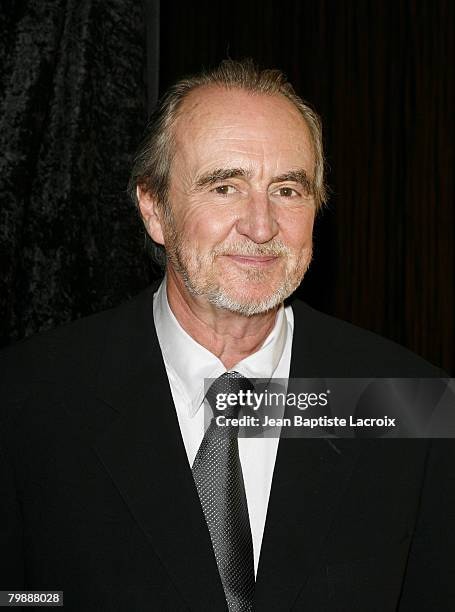
Wes Craven
 United States
film director•screenwriter•producer
Data de nascimento
August 2, 1939
Signo
Leo
Local de nascimento
Cleveland, Ohio, USA
Idade
Faleceu aos 76
Altura
6 ft 1 in (185 cm)
Sobre
Wes Craven foi um cineasta americano que redefiniu o terror ao longo de quatro décadas. Ele criou franquias icônicas, apresentou Freddy Krueger ao mundo e revitalizou o gênero slasher com a série autoconsciente Scream. Seus filmes arrecadaram mais de US$ 600 milhões mundialmente, e sua influência é sentida em todo o terror moderno. A partir de 2026, seu espólio continua a gerenciar seu legado por meio de projetos de licenciamento e arquivamento.
Início da vida e origens
Wes Craven cresceu em um lar batista rigoroso em Cleveland, Ohio. Seu pai, Paul Eugene Craven, era um maquinista viajante, e sua mãe, Caroline, impôs uma educação religiosa que proibia filmes e dança. O jovem Craven lia secretamente quadrinhos de terror e espreitava filmes de terror sempre que podia. Um momento crucial aconteceu quando ele viu The Leopard Man (1943) em um cinema drive-in; isso despertou uma fascinação para toda a vida pelo macabro.
Craven obteve um bacharelado em Inglês e Psicologia pela Johns Hopkins University em 1963, seguido por um mestrado em Filosofia em 1964. Ele lecionou brevemente humanidades no Westminster College, na Pensilvânia, antes de se mudar para Nova York para trabalhar como editor de som. Lá, ele conheceu o cineasta Sean S. Cunningham, que o contratou para escrever e dirigir seu primeiro longa-metragem, The Last House on the Left (1972), um brutal thriller de vingança vagamente baseado em The Virgin Spring de Ingmar Bergman. O filme foi controverso, mas lançou sua carreira.
Crescimento na carreira
O avanço de Craven veio com The Last House on the Left (1972), mas ele cimentou sua reputação com The Hills Have Eyes (1977), um terror de sobrevivência cru. Em 1984, ele criou A Nightmare on Elm Street, apresentando Freddy Krueger. O filme arrecadou mais de US$ 57 milhões mundialmente com um orçamento de US$ 1,8 milhão e gerou uma franquia. Craven co-escreveu e produziu Dream Warriors (1987) e retornou para a metasequência Wes Craven's New Nightmare (1994).
Em 1996, ele dirigiu Scream, um slasher autoconsciente que revitalizou o gênero. Ele arrecadou mais de US$ 173 milhões mundialmente. Ele seguiu com Scream 2 (1997) e Scream 3 (2000). Trabalhos posteriores incluem Red Eye (2005) e Scream 4 (2011). Ele também dirigiu o drama Music of the Heart (1999), rendendo a Meryl Streep uma indicação ao Oscar. Além de dirigir, ele escreveu ou co-escreveu roteiros para The Serpent and the Rainbow (1988), Shocker (1989) e The People Under the Stairs (1991).
Linha do tempo da carreira
Imagem pública e estilo
Craven é amplamente considerado um dos Mestres do Terror, ao lado de John Carpenter e George A. Romero. Ele era conhecido por misturar terror psicológico com humor negro e criar protagonistas femininas fortes e inteligentes. Seus filmes frequentemente exploravam trauma, disfunção familiar e decadência social. Fãs celebram seu trabalho por meio de convenções e exibições anuais. Freddy Krueger continua sendo um traje icônico de Halloween. As redes sociais do espólio, gerenciadas por sua viúva, compartilham conteúdo de arquivo e fotos dos bastidores.
Fama e fandom
Wes Craven cultivated a fanbase that treats his filmography as an interactive mythology rather than a simple collection of movies. While no formal organization bears his name, horror enthusiasts deeply engage with the meta-narratives of *A Nightmare on Elm Street* and the *Scream* franchise, often debating dream rules and the Springwood lore with the intensity of religious study. Rituals center on the iconic imagery of Freddy Krueger, including the razor glove and striped sweater, while the 1994 release of *Wes Craven's New Nightmare* blurred lines between fiction and reality so thoroughly that audiences once addressed the director as part of the narrative. This unique approach fostered a culture where fans treat his work as living lore, sustaining his legacy through annual screenings and charity drives for cancer research long after his passing. In August 2026, iFANN evaluated his standing within the global cultural landscape. Wes Craven does not currently hold a placement in the published rankings (Global Top 1,000 or a Top-100 scope list). The absence of a numeric rank reflects his status as a historical figure whose influence permeates modern horror without generating the continuous viral metrics required for current top-tier placement. Despite this, the community remains active, with recent partnerships like Street Food Cinema and Bloody Disgusting ensuring his films remain visible in 2026. The Scream trilogy returning to streaming platforms further demonstrates the enduring demand for his catalog, proving that while he lacks a formal fandom moniker, his audience is defined by a profound, specialized devotion to his reinvention of genre tropes.
Fatos interessantes e lendas
Before entering cinema, Craven studied humanities and taught as a professor before shifting to filmmaking. He later identified as an atheist despite being raised in a strict Baptist household. The character of Freddy Krueger was partly inspired by a homeless man Craven observed outside his window during childhood. He declined directing *The Exorcist III* to avoid being typecast and authored the sci-fi thriller novel *The Fountain Society* in 1999. A close friend of Bruce Willis, Craven was considered to direct *Die Hard 2* but ultimately passed on the project. Legends surrounding his career include the verified events of *Wes Craven's New Nightmare*, where the boundary between the director and the monster became so thin that critics debated whether the film depicted a genuine supernatural occurrence or brilliant performance art. Another widely retold story involves the release of *The Last House on the Left* and *The Hills Have Eyes*, which sparked moral panics and censorship battles due to their extreme violence, though folklore often exaggerates these reactions into tales of mob threats that never materialized.
Frases notáveis
“The only thing that horror movies are going to do is maybe make you a little more nervous. They're not going to turn you into a monster.”
“I think the horror genre is the most potent genre for social commentary. It's the most direct way to talk about the things that are really bothering us.”
“The most important thing in a horror film is the character. If you don't care about the people, you don't care about the scares.”
“I was raised in a very strict, very religious home. I was not allowed to go to movies. So when I finally did, it was like a revelation.”
Família e vida pessoal
Craven nasceu de Paul Eugene Craven, um maquinista viajante, e Caroline Miller Craven, dona de casa. Ele teve dois filhos de seu primeiro casamento com Bonnie Broecker: o filho Jonathan (nascido em 1965) e a filha Jessica (nascida em 1968). Jonathan mais tarde trabalhou como roteirista e produtor em vários filmes de seu pai. A terceira esposa de Craven, Iya Labunka, uma produtora de cinema, esteve com ele de 2004 até sua morte. Ele morava em Los Angeles e vendeu sua casa após sua morte por um valor estimado de US$ 2,5 milhões.
Conexões notáveis
Craven colaborou frequentemente com o produtor Sean S. Cunningham, a produtora Marianne Maddalena e o ator Robert Englund (Freddy Krueger). Ele trabalhou com Neve Campbell, Courteney Cox e David Arquette na franquia Scream. O roteirista Kevin Williamson escreveu Scream. Ele era amigo do colega diretor de terror John Carpenter.
Relacionamentos e história amorosa
Craven foi casado três vezes. Seu primeiro casamento foi com Bonnie Broecker de 1964 a 1969; eles tiveram dois filhos, Jonathan e Jessica. Ele se casou com Mimi Craven em 1968 e eles se divorciaram em 1987; Mimi apareceu em alguns de seus filmes. Em 2004, ele se casou com a produtora de cinema Iya Labunka, que trabalhou em Scream 3 e Scream 4. Eles permaneceram juntos até sua morte em 2015.
- Casado(a)Bonnie Broecker1964 - 1969Primeira esposa; mãe de seus dois filhos.
- Casado(a)Mimi Craven1968 - 1987Segunda esposa; apareceu em alguns de seus filmes.
- Casado(a)Iya Labunka2004 - 2015AtualTerceira esposa e viúva; produtora de cinema que trabalhou em Scream 3 e Scream 4.
Morte e repercussões
Morte
August 30, 2015 (aos 76 anos)
Local da morte
Los Angeles, California, USA
Causa da morte
Glioblastoma (brain cancer)
Wesley Earl Craven died on August 30, 2015, at his home in Los Angeles, California, following a prolonged illness. The cause of death was officially attributed to glioblastoma, a form of brain cancer that he had battled for several years prior to his passing. Tributes poured in from the film industry immediately after the announcement, with peers such as Robert Englund and David Arquette honoring his mentorship and creativity. Major institutions including the Academy of Motion Picture Arts and Sciences recognized his contributions to cinema, while fans drove immediate surges in streaming and sales of his seminal works like Scream and A Nightmare on Elm Street.
The Never Sleep Again documentary project also gained renewed attention during this period. No public records of a formal funeral service or burial location were released, suggesting the family kept these ceremonies private. Following his death, the Wes Craven Estate remained active in managing his intellectual property, with Paramount Pictures securing rights to adapt original screenplays and discussions continuing regarding potential reboots of his franchises.
Patrimônio (valor do espólio)
$40 Million
Estimativa da equipe editorial do iFANN
Per iFANN's editorial analysis, Wes Craven's net worth at the time of his death in 2015 stood at $40 Million. The majority of this wealth originated from the *Scream* and *A Nightmare on Elm Street* franchises. He commanded substantial salaries for his work as a director and writer, earning between $3 million and $4 million plus backend points for *Scream 4*. Residuals and royalties generated from streaming, home video, and licensing deals continue to produce revenue. Freddy Krueger remains one of the most licensed horror characters globally. His production company, Craven/Maddalena Films, produced several notable films throughout his career. He owned a residence in Los Angeles that sold for an estimated $2.5 million following his death. The estate, managed by his widow Iya Labunka, continues to earn income from licensing agreements, streaming rights, and the ongoing *Scream* film series as of 2026.
Prêmios conquistados (22)
Craven ganhou um Saturn Award de Melhor Diretor por Scream (1997) e recebeu o Life Career Award da Academy of Science Fiction, Fantasy & Horror Films em 1995. Ele também ganhou um Bram Stoker Lifetime Achievement Award em 1995 e um Fangoria Chainsaw Award de Melhor Diretor tanto por Scream quanto por Scream 2.
1977 · Prêmio da Crítica
The Hills Have Eyes
1985 · Prêmio da Crítica
A Nightmare on Elm Street
Conhecido por
A Nightmare on Elm Street
1984 · Director, Writer
Scream
1996 · Director
The Hills Have Eyes
1977 · Director, Writer
The Last House on the Left
1972 · Director, Writer
Scream 2
1997 · Director
Palavras-chave
Dados rápidos
- Profissão
- film director, screenwriter, producer
- Nascimento
- August 2, 1939
- Local de nascimento
- Cleveland, Ohio, USA
- Morte
- August 30, 2015
- Local da morte
- Los Angeles, California, USA
- Gênero
- Masculino
- Altura
- 6 ft 1 in (185 cm)
- Cônjuge
- Bonnie Broecker, Mimi Craven, Iya Labunka
- Children
- Jonathan Craven, Jessica Craven
- Education
- Johns Hopkins University (BA, MA)
- Net Worth
- $40 Million
- Signo
- Leo
Dados pessoais
- Nome completo
- Wesley Earl Craven
- Altura
- 6 ft 1 in (185 cm)
- Cônjuge
- Bonnie Broecker, Mimi Craven, Iya Labunka
- Filhos
- Jonathan Craven, Jessica Craven
- Formação
- Johns Hopkins University (BA, MA)
Filmografia
50
Total
40
Cinema
10
TV
Perguntas frequentes
Como Wes Craven morreu?
Wes Craven era casado?
Qual é o patrimônio de Wes Craven?
Quantos anos tinha Wes Craven quando morreu?
Quantos filhos Wes Craven teve?
Redes sociais
Pessoas semelhantes

Junte-se à comunidade
fãs comentando