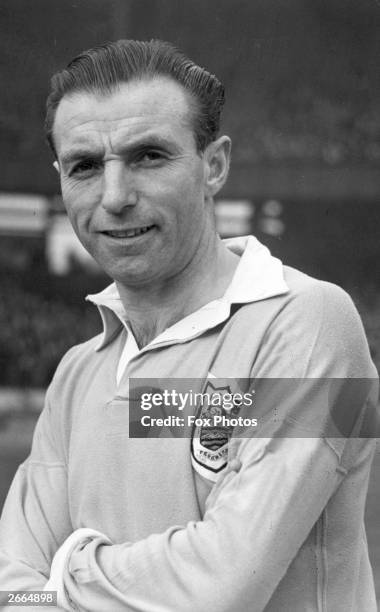
Stanley Matthews
 United Kingdom
association football player•autobiographer•association football coach
Also known as: The Wizard of Dribble, The Magician, Sir Stanley
Data de nascimento
February 1, 1915
Signo
Aquarius
Local de nascimento
Hanley, Stoke-on-Trent, Staffordshire, England
Idade
Faleceu aos 85
Altura
5 ft 7 in (1.70 m)
Sobre
Sir Stanley Matthews (1 de fevereiro de 1915 – 23 de fevereiro de 2000) foi um futebolista inglês que atuava como ponta-direita. Amplamente considerado um dos maiores jogadores da história do esporte, ele é o único jogador a ter sido nomeado cavaleiro ainda em atividade, e o primeiro vencedor tanto da Bola de Ouro quanto do prêmio de Jogador do Ano da Associação dos Cronistas de Futebol. Seus apelidos incluem "O Mago do Drible" e "O Mágico".
Matthews manteve-se em forma o suficiente para competir no mais alto nível até os 50 anos. Ele detém recordes como o jogador mais velho na primeira divisão da Inglaterra (50 anos e 5 dias) e o mais velho internacional pela Inglaterra (42 anos e 104 dias). Em 2002, foi um dos primeiros indicados ao Hall da Fama do Futebol Inglês. Seu estilo de drible característico, esportividade impecável e longevidade fizeram dele uma figura amada por gerações.
Hoje, seu legado perdura através da Fundação Sir Stanley Matthews, estátuas no Stoke City e no Blackpool, e um documentário da BBC de 2022. Os fãs ainda celebram o "Dia de Matthews" em seu aniversário, e seu nome é sinônimo de graça e habilidade em campo.
Início da vida e origens
Stanley Matthews cresceu no bairro operário de Potteries, em Stoke-on-Trent, onde seu pai, Jack, era barbeiro e boxeador profissional peso-pena, e sua mãe, Elizabeth, era dona de casa. Frequentou a Hanley High School, mas saiu aos 14 anos para trabalhar como office boy, depois tornando-se aprendiz de pedreiro.
Desde jovem, praticava drible por horas com uma bola de tênis na rua, desenvolvendo o controle de bola que definiria sua carreira. Jogou por times juvenis locais, incluindo a St Luke's School e o Hanley YMCA. Aos 17 anos, juntou-se ao Stoke City como juvenil e fez sua estreia no time principal em 19 de março de 1932 contra o Bury na Segunda Divisão, marcando um gol na vitória por 3-1. Essa atuação chamou a atenção nacional imediatamente.
Crescimento na carreira
A estreia de Matthews no time principal do Stoke City em 1932 lançou uma carreira lendária. Ele ajudou o Stoke a vencer o título da Segunda Divisão em 1932-33, conquistando o acesso à Primeira Divisão. Fez sua estreia pela Inglaterra em 29 de setembro de 1934 contra o País de Gales, aos 19 anos. Após 19 anos no Stoke, transferiu-se para o Blackpool em 1947 por £11.500.
No Blackpool, jogou nas finais da FA Cup em 1948 e 1951, perdendo ambas. Em 1953, fez uma atuação lendária na "Final de Matthews", dando três assistências e marcando o gol da vitória quando o Blackpool saiu de uma desvantagem de 2-0 para vencer por 4-3. Em 1956, venceu a primeira Bola de Ouro. Jogou sua 54ª e última partida pela Inglaterra em 1957. Em 1961, retornou ao Stoke City aos 46 anos, ajudando-os a conquistar o acesso à Primeira Divisão e um segundo título da Segunda Divisão em 1962-63. Aposentou-se aos 50 anos em 1965.
Linha do tempo da carreira
Imagem pública e estilo
Matthews era conhecido por seu drible impecável, centro de gravidade baixo, característico "drible de Matthews" (um gingado de corpo seguido de um arranque de velocidade) e botas brancas imaculadas. A mídia o retratava como o "primeiro cavalheiro do futebol" — modesto, humilde e um modelo de comportamento. Os torcedores do Stoke City e do Blackpool ainda cantam seu nome, e o anual "Dia de Matthews" é celebrado em 1º de fevereiro no Stoke City. A Fundação Sir Stanley Matthews publica fotos históricas e homenagens nas redes sociais, mantendo seu legado vivo.
Fama e fandom
For decades, the memory of Sir Stanley Matthews has been kept alive not by a formal fan club with a specific name, but through the enduring reverence of football historians, Blackpool supporters, and admirers of English sporting history. While modern pop culture often rallies behind branded mobs or organized campaigns, Matthews' legacy rests on institutional veneration rather than active fan-driven chart pushes or subway ads. His nickname "The Wizard" serves as a cultural shorthand for his identity, yet no single moniker defines a contemporary fandom in the way we see today. The National Football Museum and the Ballon d'Or organization maintain his story, with events like the 2026 London tribute underscoring how deeply his life is woven into the fabric of the sport. Despite this deep respect, iFANN's Global Fame Engine evaluated his standing in August 2026 and found that he currently holds no placement in the published rankings, including the Global Top 1,000 or any Top-100 scope list. This absence from the current numerical hierarchy reflects his status as a historical figure whose fame is now defined by permanence rather than fluctuating popularity metrics. While living stars rise and fall in the global consciousness, Matthews remains a fixed point in history, revered for his longevity and sportsmanship without needing to compete for a spot on a dynamic leaderboard. The lack of a documented fandom name simply mirrors the nature of his adoration: it is quiet, respectful, and embedded in the game itself rather than shouted from the stands of a modern movement.
Fatos interessantes e lendas
Sir Stanley Matthews never received a yellow or red card throughout his entire career, a reflection of his impeccable sportsmanship. He was a dedicated teetotaller and non-smoker who maintained his legendary fitness on a strict diet of steak, eggs, and milk. One particularly famous match saw him dribble past the same defender four times in a single game, earning a rare standing ovation from the opposing fans. During World War II, he served in the Royal Air Force while continuing to play in wartime matches, balancing duty with his passion for the ball. A keen cricket enthusiast, he also played for Staffordshire County Cricket Club in the 1930s. In 1950, he famously turned down a lucrative move to Juventus to remain loyal to Blackpool. Fans still retell the story of the 1953 FA Cup Final, known as "Matthews' Mash," where at age 38, he led Blackpool to victory against Bolton Wanderers with an incredible display of skill. Another legend from his later years involves his time in Accra, Ghana, shortly after its independence in 1957, where he traveled to teach football and leave a lasting impact on African development. These stories, from his pristine white boots to his refusal to dive, cement his reputation as the first gentleman of football.
Frases notáveis
“Football is a simple game; the hard part is making it look simple.”
“I never thought of myself as a great player. I just tried to do my best every time I played.”
“The secret of my longevity is that I never abused my body. No alcohol, no tobacco, and I went to bed early.”
“That final was the greatest day of my life. The crowd lifted me. I felt I could dribble through anything.”
Família e vida pessoal
Stanley Matthews nasceu de Jack Matthews, barbeiro e boxeador profissional peso-pena, e Elizabeth Matthews, dona de casa. Teve dois filhos do primeiro casamento: Stanley Matthews Jr. (nascido em 1941) e Robert Matthews (nascido em 1943). Casou-se com Betty Vallance em 1940; divorciaram-se no início dos anos 1970. Em 1975, casou-se com Mila Winterflood, uma viúva sul-africana, e permaneceram juntos até sua morte em 2000. Sem filhos do segundo casamento. Sua família administrou seu patrimônio após sua morte.
Conexões notáveis
Matthews frequentemente jogou ao lado de Stan Mortensen no Blackpool, Jackie Milburn pela Inglaterra e Neil Franklin no Stoke City. Seus treinadores incluíram Bob McGrory no Stoke e Joe Smith no Blackpool. Foi contemporâneo e amigo de Tom Finney. Postumamente, seu legado foi promovido através de documentários com a BBC e parcerias com o Stoke City e o Blackpool FC.
Relacionamentos e história amorosa
Stanley Matthews casou-se com Betty Vallance em 1940. Eles tiveram dois filhos, Stanley Jr. e Robert, mas o casamento terminou em divórcio no início dos anos 1970, após décadas de separação devido aos compromissos e viagens de Matthews. Em 1975, casou-se com Mila Winterflood, uma viúva sul-africana que conheceu enquanto treinava na África do Sul. Eles permaneceram juntos até sua morte em 2000. Em 2026, Matthews está falecido; na época de sua morte, era casado com Mila.
- Casado(a)Betty Vallance1940 - 1970Divorciado no início dos anos 1970 após décadas de separação devido aos compromissos com o futebol.
- Casado(a)Mila Winterflood1975 - 2000AtualConheceram-se enquanto treinava na África do Sul; permaneceram juntos até sua morte.
Morte e repercussões
Morte
February 23, 2000 (aos 85 anos)
Local da morte
Hanley, Stoke-on-Trent, England
Causa da morte
reported as natural causes associated with advanced age
Sir Stanley Matthews spent his final years residing in Hanley, a district of Stoke-on-Trent, where he participated in charity matches well into his eighties. On February 23, 2000, the legendary footballer passed away at his home in Hanley at the age of 85. The circumstances surrounding his final days were reported as natural causes associated with advanced age, marking a quiet end for a man who had dedicated his life to sport without any disputed events or legal inquiries. The reaction to his passing was one of profound national mourning, with tributes pouring in from peers, institutions, and officials across the United Kingdom and internationally.
He was universally recognized as "The Gentleman of the Game," a title that became synonymous with his legacy immediately following his death. Major outlets highlighted his immense influence, noting him as the greatest player in the history of English football. Memorial landmarks include his induction into the National Football Museum Hall of Fame, which serves as a permanent tribute to his career spanning Blackpool, Stoke City, and England. Funeral services were held shortly after his death in late February 2000, with the burial taking place in the family plot at Hanley Cemetery. The service was attended by numerous dignitaries, former teammates, and fans who came to pay their respects to the man who had captivated the nation for decades.
Posthumously, his legacy has been extensively honored through various releases, awards, and dedications, including plans for the Ballon d'Or ceremony to move to London in 2026 to honor his roots. While specific details regarding his estate remain unconfirmed in available sources, the focus remains on the enduring respect accorded to a national icon.
Patrimônio (valor do espólio)
$3 Million
Estimativa da equipe editorial do iFANN
Heading into 2026, the estate of Sir Stanley Matthews is estimated at $3 Million per iFANN's editorial analysis. Since his passing in 2000, the estate has been carefully managed by his sons. Revenue streams include posthumous royalties from his autobiography "The Stanley Matthews Story," which has been reissued multiple times, alongside licensing deals for merchandise and memorabilia. Image rights continue to generate income through their use in video games such as FIFA and Football Manager. The estate also manages businesses like football camps and charity events. During his playing career, Matthews earned modest salaries, peaking at £20 per week in the 1950s. His knighthood and subsequent coaching roles provided additional income during his lifetime. The estate's value has grown steadily over the years through these licensing arrangements rather than major commercial ventures.
Prêmios conquistados (18)
Matthews ganhou a primeira Bola de Ouro em 1956 e o primeiro prêmio de Jogador do Ano da Associação de Cronistas de Futebol em 1948. Venceu a Copa da Inglaterra com o Blackpool em 1953, dois títulos da Segunda Divisão com o Stoke City (1932-33, 1962-63) e nove títulos do British Home Championship com a Inglaterra. Foi nomeado cavaleiro em 1965 e introduzido no Hall da Fama do Futebol Inglês em 2002.
1956 · Futebolista Europeu do Ano
1948 · Futebolista do Ano
Conhecido por
Matthews Final
1953 · Blackpool winger
Ballon d'Or
1956 · Winner
Stoke City
1932-1947, 1961-1965 · Outside right
England national team
1934-1957 · Outside right
Palavras-chave
Dados rápidos
- Profissão
- association football player, autobiographer, association football coach
- Nascimento
- +1915-02-01
- Local de nascimento
- Hanley
- Morte
- +2000-02-23
- Local da morte
- Newcastle-under-Lyme
- Gênero
- Masculino
- Signo
- Aquarius
Dados pessoais
- Nome completo
- Stanley Matthews
- Altura
- 5 ft 7 in (1.70 m)
- Cônjuge
- Mila Winterflood
- Filhos
- Stanley Matthews Jr., Robert Matthews
- Formação
- Left school at 14
Perguntas frequentes
Stanley Matthews foi o jogador de futebol mais velho de todos os tempos?
Stanley Matthews jogou na Copa do Mundo?
Por que Stanley Matthews é chamado de 'O Mágico do Drible'?
Quantos gols Stanley Matthews marcou?
O que Stanley Matthews fez depois do futebol?
Pessoas semelhantes
Junte-se à comunidade
fãs comentando