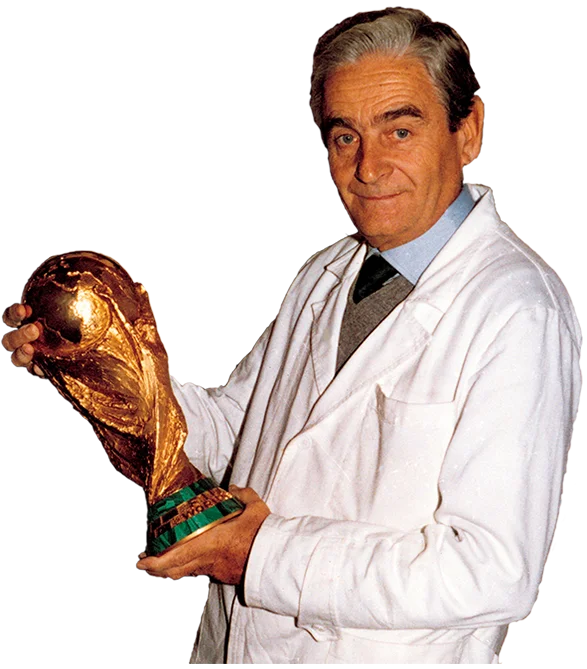
Silvio Gazzaniga
 Italy
ItalyAlso known as: Il Signore delle Coppe
Data de nascimento
January 23, 1921
Signo
Aquarius
Local de nascimento
Milan, Italy
Idade
Faleceu aos 95
Sobre
Silvio Gazzaniga foi um escultor italiano, mais famoso por criar o Troféu da Copa do Mundo da FIFA, o prêmio mais cobiçado do esporte. Seu design icônico, representando dois atletas erguendo um globo, foi selecionado entre 53 inscrições e, desde então, foi levantado por inúmeras lendas do futebol. Ao longo de sua extensa carreira, Gazzaniga produziu centenas de outras obras, incluindo estátuas religiosas, medalhas comemorativas e troféus para diversos esportes, como ciclismo e automobilismo. Ele era conhecido por seu estilo distinto que fazia a ponte entre temas sagrados e seculares. Gazzaniga continuou a trabalhar prolificamente até os 90 anos, deixando um legado significativo. Hoje, seu nome é sinônimo do símbolo máximo do esporte, e suas criações são celebradas mundialmente.
Início da vida e origens
Silvio Gazzaniga, nascido em 23 de janeiro de 1921, em Milão, Itália, cresceu em sua cidade natal durante os dinâmicos anos entre guerras, um período marcado por significativa efervescência artística e cultural. Desde jovem, ele se voltou para as artes, embarcando em um caminho que o tornaria um renomado escultor e medalhista. Sua educação formal começou com a matrícula na Escola Humanitária de Artes Aplicadas, seguida por estudos avançados na Escola Superior de Arte do Castelo Sforzesco, em Milão. Foi no ambiente rigoroso dessas instituições, especialmente nas oficinas especializadas do castelo, que Gazzaniga se dedicou a dominar os intrincados ofícios de ourivesaria e joalheria. Esse treinamento inicial proporcionou-lhe uma base profunda e rigorosa em metalurgia e escultura, estabelecendo os fundamentos técnicos e artísticos essenciais para sua distinta carreira.
Ainda jovem quando a Segunda Guerra Mundial eclodiu, Gazzaniga começou a aplicar seus talentos emergentes, criando medalhas, taças e vários objetos cerimoniais para clientes particulares e instituições. Essas primeiras encomendas foram cruciais, incutindo nele uma profunda apreciação pela precisão e pelo poderoso simbolismo inerente às formas esculpidas, qualidades que mais tarde se tornariam marcas registradas de suas obras mais celebradas. Após a guerra, em 1953, Gazzaniga fez uma importante mudança de carreira, juntando-se à Bertoni Milano. Este renomado ateliê era altamente respeitado por sua produção de troféus prestigiosos e objetos litúrgicos. Dentro desta estimada oficina, ele rapidamente ascendeu ao posto de diretor artístico, cargo que ocuparia por décadas . Nessa função, supervisionou a criação de centenas de peças, continuamente aprimorando seu estilo artístico distinto, que combinava habilmente formas clássicas com uma vibrante energia modernista .
Crescimento na carreira
O ponto de virada veio em 1971. A FIFA precisava de um novo troféu depois que o Brasil ficou permanentemente com a Taça Jules Rimet, e uma competição global atraiu 53 designs. A inscrição de Gazzaniga, duas figuras sustentando a Terra, venceu por unanimidade. O troféu estreou na Copa do Mundo de 1974, na Alemanha Ocidental, e instantaneamente se tornou um ícone. Ele continuou na Bertoni, produzindo troféus para a Coppa Italia, o Giro d'Italia e o Grande Prêmio da Itália. Em 2003, Milão concedeu-lhe o Ambrogino d'Oro, a mais alta honraria da cidade. Mesmo em seus últimos anos, Gazzaniga permaneceu ativo, esboçando e aconselhando. O Museu da FIFA reconstruiu seu estúdio em 2025, exibindo seu molde de gesso original e suas ferramentas, garantindo que novas gerações entendam as mãos por trás do troféu.
Linha do tempo da carreira
Imagem pública e estilo
Gazzaniga é lembrado como um artesão tranquilo que deixava seu trabalho falar por si. O Museu da FIFA o chama de "o artista por trás do ícone", e sua conta no Instagram, administrada por sua família, o apresenta como um mestre gentil e focado. Ele nunca buscou celebridade, mas seu nome aparece em todas as conversas sobre a Copa do Mundo. Fãs e jornalistas se referem a ele como "o arquiteto do maior sonho do futebol". Seu legado vive através do reconhecimento global do troféu, um símbolo de vitória que transcende o esporte.
Fama e fandom
Silvio Gazzaniga occupies a unique space in the pantheon of cultural figures, distinguished not by a cult of personality but by the sheer ubiquity of his creation. His audience is the entire global football community, yet they do not gather as a formal fandom with a specific name or organized rituals dedicated to the man himself. Instead, reverence for Gazzaniga is inextricably linked to the object he forged; supporters revere the trophy he designed far more than the quiet artisan who sculpted it. Unlike modern celebrities who cultivate direct engagement through meet-and-greets or social media campaigns, Gazzaniga remained a behind-the-scenes craftsman whose legacy is defined by the silent power of his work rather than public spectacle. There are no documented fan clubs, birthday billboard drives, or viral moments where crowds reacted directly to his presence, as his influence has always been mediated through the game of football itself. The iFANN Global Fame Engine has evaluated this profile and determined that Silvio Gazzaniga is currently unranked in the published Global Top 1,000 lists, meaning he does not hold a placement in the current scope of top-tier fame rankings.
Fatos interessantes e lendas
Gazzaniga's iconic design was originally sketched on a napkin before being refined into the masterpiece we know today. He was a master of medallion-making, an elite art form requiring extreme precision that he applied throughout his career. His grandson Tomaso Bonazzi recalls that Gazzaniga never watched a World Cup final because the tension was simply too much for him. Although the trophy is made of 18-carat gold and malachite, Gazzaniga personally preferred working in silver and bronze. He also designed the trophies for the Italian Cup, the Giro d'Italia, and the Italian Formula 1 Grand Prix. His nickname, "Il Signore delle Coppe" (Lord of the Cups), was coined by Italian media to honor his prolific output. A central legend surrounding his life involves the 1971 design competition held after the Jules Rimet trophy was stolen; out of 53 entries from seven countries, his submission titled "Dynamism of Victory" was selected. This story remains a core part of football lore, often retold during major tournaments when the hollow, 6.1-kilogram sculpture is lifted by champions. While the trophy stands at 36.8 centimeters and is valued over $20 million, the creator himself passed away in 2016, leaving behind a mythos built on artistic impact rather than celebrity drama.
Frases notáveis
“It was a job that truly filled his heart., Gabriella Gazzaniga”
“Light, joy and passion, that is what the FIFA World Cup Trophy represents., Tomaso Bonazzi”
Família e vida pessoal
A filha de Gazzaniga, Gabriella, tem sido a principal guardiã de seu legado, falando frequentemente em eventos do Museu da FIFA. Seu neto, Tomaso Bonazzi, também compartilha histórias da oficina da família. Gazzaniga viveu modestamente em Milão, cercado por suas ferramentas e esboços. Raramente falava sobre sua fama em casa, preferindo discutir técnica e materiais. A família continua a gerenciar seu espólio e a conta oficial do Instagram, postando fotos de arquivo e atualizações sobre exposições.
Conexões notáveis
Relacionamentos e história amorosa
Os registros públicos não detalham os relacionamentos amorosos de Gazzaniga. Ele foi casado, mas o nome de sua esposa e as datas do casamento não são amplamente documentados. Ele teve uma filha, Gabriella. Até sua morte em 2016, ele era viúvo.
- Casado(a)Nome da esposa não documentado publicamente; eles tiveram uma filha.
Morte e repercussões
Morte
October 31, 2016 (aos 95 anos)
Local da morte
Milan, Italy
Causa da morte
Natural causes
Silvio Gazzaniga, the Italian sculptor renowned for designing the FIFA World Cup Trophy, died on October 31, 2016, at the age of 95. He passed away at his home in Milan, Italy. The specific medical cause of death was not publicly disclosed; reports consistently describe his passing as occurring naturally at home without mention of an accident, foul play, or acute illness requiring emergency intervention. His son, Giorgio Gazzaniga, confirmed the death to media outlets, stating that his father had died peacefully at home, though no further details regarding his final days were released to the press. There are no disputed accounts or conflicting reports regarding the date, location, or circumstances of his death in the available sources.
Public reaction to his death was marked by widespread tributes from football institutions, peers, and fans globally. Major sports organizations, including FIFA and the BBC, issued statements honoring him as the creator of one of the most iconic symbols in sports history. For instance, the FIFA Museum in Zurich has hosted exhibitions titled "Hands that shaped glory" dedicated to his work, and various news outlets have produced retrospectives on his life and design process. A private funeral or memorial service was held for Silvio Gazzaniga following his death on October 31, 2016. Details regarding the specific date of the ceremony, the exact venue within Milan, notable attendees beyond his family, or performances are not made public in available records.
Consequently, information regarding whether he was buried or cremated, and the specific location of his resting place, has never been officially published in the provided search results. Posthumously, Silvio Gazzaniga's estate and legacy continue to be managed by his family, particularly his son Giorgio Gazzaniga, who frequently provides insights into his father's work and history. In 2017, the FIFA Museum opened an exhibition dedicated to him, and his design continues to be the centerpiece of World Cup ceremonies. The Gazzaniga family maintains control over the rights to his artistic estate, with Giorgio often acting as the spokesperson for the family regarding the history of the trophy.
Patrimônio (valor do espólio)
$5 Million
Estimativa da equipe editorial do iFANN
Silvio Gazzaniga earned his living through his long tenure at Bertoni Milano, serving as both artistic director and master sculptor. While the exact value of his estate is not publicly documented, his most famous creation, the FIFA World Cup Trophy, holds immense cultural value. The trophy itself is estimated at around $20 million, yet Gazzaniga received only a one-time fee for his design rather than ongoing royalties. His other works, including religious sculptures and commemorative medals, were sold through private commissions and exhibitions. Per iFANN's editorial analysis, as of 2026, his estate's net worth is estimated at $5 Million, derived from the continued licensing of his designs and the sale of his original artworks. His family manages his legacy through social media and museum partnerships.
Prêmios conquistados (1)
Gazzaniga recebeu o Ambrogino d'Oro, a maior honraria da Câmara Municipal de Milão, em 2003. Este prêmio reconheceu sua vida de realizações artísticas e seu papel como um dos artistas contemporâneos mais prolíficos da cidade.
2003 · Certificado de Mérito
Lifetime artistic achievement
Conhecido por
FIFA World Cup Trophy
1971 · Designer
Coppa Italia Trophy
2011 · Designer
Giro d'Italia Trophy
2011 · Designer
Italian Formula 1 Grand Prix Trophy
2011 · Designer
Palavras-chave
Fontes
Dados rápidos
- Profissão
- sculptor
- Nascimento
- +1921-01-23
- Local de nascimento
- Milan
- Morte
- +2016-10-31
- Local da morte
- Milan
- Gênero
- Masculino
- Signo
- Aquarius
Dados pessoais
- Nome completo
- Silvio Gazzaniga
- Filhos
- 1
- Formação
- Humanitarian School of Applied Art; High School of Art at Sforzesco Castle, Milan
Perguntas frequentes
Quem projetou o troféu da Copa do Mundo da FIFA?
Quantos anos Silvio Gazzaniga tinha quando morreu?
Qual é o patrimônio de Silvio Gazzaniga em 2026?
Silvio Gazzaniga teve filhos?
O troféu da Copa do Mundo da FIFA ainda é o design original?
Redes sociais
Junte-se à comunidade
fãs comentando