 Spain
Sobre
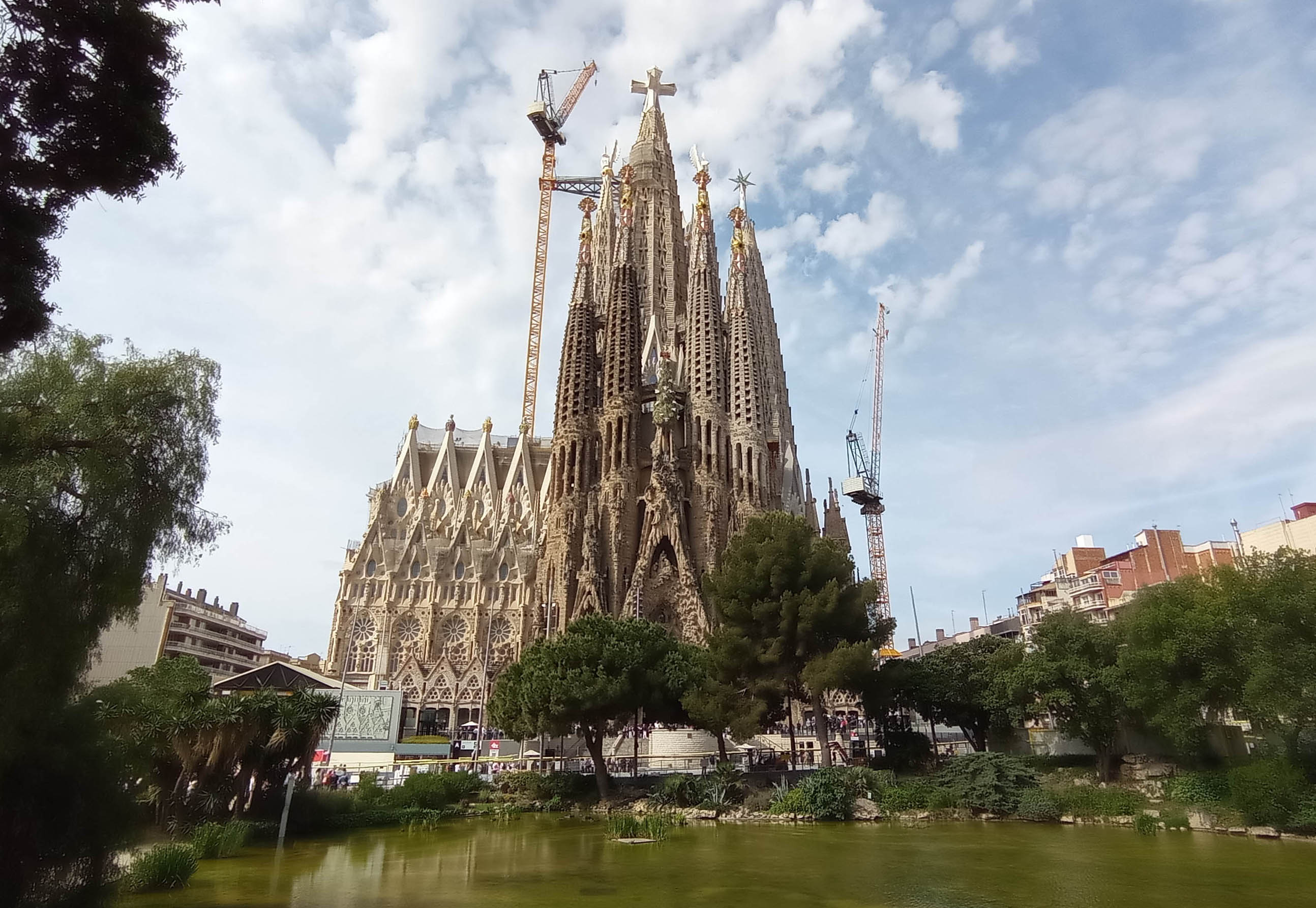
The Basílica i Temple Expiatori de la Sagrada Família stands as a towering presence in the Eixample district of Barcelona. Known simply as the Sagrada Família, this Roman Catholic minor basilica holds the distinction of being the world's tallest church, with its central spire reaching 172.5 meters. Its full Catalan name translates to "Expiatory Temple of the Holy Family," a title that reflects its unique financial model: construction has always been funded by private donations and visitor ticket sales rather than public funds or state support.
Antoni Gaudí took over the project in 1883, transforming the original neo-Gothic design into something entirely his own. He devoted over four decades to the church, living on the site in his final years where he slept on a cot among his models. When he died in 1926, he left behind detailed models and drawings that have guided every subsequent architect. The basilica fuses Gothic and Art Nouveau forms with organic, nature-inspired elements, creating what locals often call "the Bible carved in stone." Its three grand façades depict the life of Christ from birth to resurrection, each telling a distinct part of the narrative through sculpture and light.
In 2005, the Nativity Façade and Crypt were declared a UNESCO World Heritage Site as part of the broader "Works of Antoni Gaudí" listing. The structure draws millions of visitors annually, making it one of Spain's most-visited landmarks. The completion of the final tower in 2026 marked the end of 144 years of construction, solidifying its status as a triumph of human perseverance and faith.
Missão
A Sagrada Família existe como um templo expiatório, um lugar de adoração e penitência construído através das ofertas dos fiéis. Sua missão é contar a história da Sagrada Família e a vida de Jesus Cristo através da arquitetura, escultura e luz, enquanto serve como centro de devoção católica em Barcelona. A basílica visa inspirar reflexão espiritual e ser um testemunho da fé expressa através do gênio artístico.
História
A história começa com Josep Maria Bocabella, um devoto livreiro que fundou a Associação Espiritual dos Devotos de São José. A associação comprou um terreno nos então arredores de Barcelona e lançou a pedra fundamental em 19 de março de 1882, festa de São José. O arquiteto Francisco de Paula del Villar projetou uma igreja neogótica convencional, mas renunciou após um ano devido a divergências. Em 1883, um Antoni Gaudí de 31 anos assumiu e jogou fora os planos originais.
Gaudí reimaginou a igreja como uma floresta de colunas ramificadas e torres imponentes, inspirando-se na natureza e no simbolismo católico. Ele trabalhou nela por 43 anos, sabendo que não viveria para vê-la terminada. Em seus últimos anos, viveu em uma oficina no local, dormindo em um catre entre seus modelos. Em 7 de junho de 1926, foi atropelado por um bonde e morreu dois dias depois, enterrado na cripta de sua obra-prima inacabada.
A Guerra Civil Espanhola trouxe desastre. Em 1936, anarquistas invadiram a oficina e destruíram muitos dos modelos e desenhos de Gaudí. O trabalho de reconstrução nas décadas de 1940 e 1950 teve que contar com fragmentos sobreviventes e fotografias. A construção continuou lentamente, financiada inteiramente por doações e, mais tarde, pela venda de ingressos. Em 2016, a basílica resolveu uma disputa de longa data com o Conselho Municipal de Barcelona sobre a falta de licença de construção, concordando em pagar €36 milhões ao longo de dez anos para melhorias urbanas.
O impulso final veio nas décadas de 2010 e 2020. Engenheiros da Arup enfrentaram desafios estruturais, e a Henkel forneceu adesivos Loctite para unir pedra e aço. A Torre Central de Jesus Cristo foi coroada com uma cruz de quatro braços no início de 2026, e em 10 de junho de 2026, exatamente um século após a morte de Gaudí, a basílica foi declarada completa. O Papa Leão XIV visitou para celebrar uma Missa Solene e abençoar a torre, marcando o fim de 144 anos de construção.
Subdivisões
The Basilica
The main worship space featuring three grand façades: the Nativity Façade, the Passion Façade, and the Glory Façade.
Museums and Workshops
Facilities on-site that display Gaudí's models, drawings, and the history of the construction process.
Educational Programs
Includes school competitions for the Tower of Jesus and various cultural workshops for visitors.
Pessoas notáveis
Antoni Gaudí
Arquiteto · 1883–1926
Designed and oversaw construction for over 40 years; buried in the crypt.
Josep Maria Bocabella
Fundador · 1882
Initiated the project through the Spiritual Association of Devotees of Saint Joseph.
Francisco de Paula del Villar
Original architect · 1882–1883
Conceived the initial neo-Gothic design before resigning.
Jordi Faulí
Architectural director · 2012–present
Led the completion of the Tower of Jesus Christ in 2026.
Esteve Camps i Sala
President of the Junta Constructora · 2015–present
Oversaw the final construction phase and the centenary celebrations.
Marcos
1882
Cornerstone laid on 19 March
1883
Antoni Gaudí takes over as architect
1926
Gaudí dies; construction continues under his assistants
1936
Spanish Civil War; workshop and models destroyed by anarchists
1952
Construction resumes after the war
2010
Pope Benedict XVI consecrates the basilica and proclaims it a minor basilica
2005
Nativity Façade and Crypt declared UNESCO World Heritage Site
2026
Tower of Jesus Christ completed; basilica declared complete on 10 June
Fontes
Informações da organização
- Fundado
- March 19, 1882
- Sede
- Barcelona, Catalonia, Spain
- País
- Spain
- President of the Junta Constructora
- Esteve Camps i Sala
- Controladora
- Junta Constructora del Temple Expiatori de la Sagrada Família
- Tipo
- Religious
- Fundado
- March 19, 1882
- País
- Spain
- Altura
- 172.5 meters
- Architect
- Antoni Gaudí
- UNESCO World Heritage
- 2005 (Nativity Façade and Crypt)
- Completion
- June 10, 2026
Site oficial
sagradafamilia.org/
Junte-se à comunidade
fãs comentando