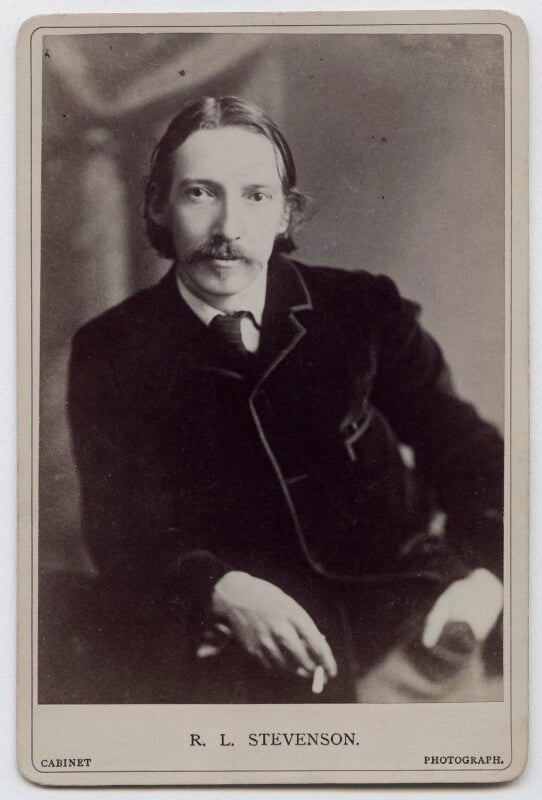
Robert Louis Stevenson
 United Kingdom
Also known as: RLS, Tusitala
Data de nascimento
November 13, 1850
Signo
Scorpio
Local de nascimento
Edinburgh, Scotland
Idade
Faleceu aos 44
Altura
5 ft 10 in (178 cm)
Sobre
Robert Louis Stevenson foi um romancista, ensaísta, poeta e escritor de viagens escocês, celebrado por romances de aventura como A Ilha do Tesouro e novelas góticas como O Médico e o Monstro. Sua produção prolífica inclui clássicos como Raptado e Jardim de Versos para Crianças. As obras de Stevenson alcançaram aclamação mundial, e ele foi classificado como o 26º autor mais traduzido. Conhecido em Samoa como Tusitala, o Contador de Histórias, sua narrativa distinta continua a cativar leitores e inspirar cineastas globalmente.
Início da vida e origens
Robert Lewis Balfour Stevenson nasceu em 13 de novembro de 1850, em Edimburgo, Escócia, filho único do engenheiro de faróis Thomas Stevenson e Margaret Balfour. Ele foi criado em um lar calvinista rigoroso em Edimburgo. Desde cedo, Stevenson sofreu de uma doença brônquica vitalícia, que frequentemente o mantinha acamado por longos períodos. Durante esses longos períodos de confinamento, ele encontrou consolo e inspiração na literatura, passando o tempo devorando livros e começando a escrever suas próprias histórias, nutrindo assim seus primeiros interesses e talentos.
Su a educação formal começou na Academia de Edimburgo, e mais tarde ele se matriculou na Universidade de Edimburgo. Inicialmente, Stevenson seguiu engenharia, com a intenção de seguir os passos de seu pai, mas suas verdadeiras paixões estavam em outro lugar. Ele eventualmente mudou seus estudos para direito e foi chamado para a Ordem dos Advogados escocesa em 1875. No entanto, ele nunca exerceu a advocacia profissionalmente. Em vez disso, ele gravitou em torno da vibrante cena literária de Edimburgo, frequentando pubs e clubes onde aprimorou sua arte imitando seus autores favoritos e imergindo no mundo das letras.
Os primeiros passos de Stevenson no mundo literário público vieram com a publicação de seu ensaio, "Roads", em 1873. Durante este período formativo, ele encontrou um mentor significativo em Frances Sitwell, uma mulher mais velha casada que forneceu orientação crucial e encorajamento para seu desenvolvimento artístico. Sua carreira literária realmente começou a tomar forma com a publicação de seu primeiro livro, Uma Viagem pelo Interior, em 1878, que narrava uma viagem de canoa que ele fez pela França, marcando seu avanço como escritor profissional.
Crescimento na carreira
O avanço de Stevenson veio em 1883 com A Ilha do Tesouro, originalmente serializada em uma revista infantil. O romance foi um enorme sucesso e o estabeleceu como mestre da ficção de aventura. Em rápida sucessão, ele publicou Jardim de Versos para Crianças (1885), depois em 1886 tanto O Médico e o Monstro — que vendeu 40.000 cópias em seis meses — quanto Raptado. Ele se mudou para os Estados Unidos em 1887, depois embarcou em uma viagem pelos Mares do Sul em 1888 a bordo do iate Casco, visitando as Marquesas, Taiti e Havaí. Em 1889, ele se estabeleceu em Samoa, construindo uma casa chamada Vailima. Obras posteriores incluem O Senhor de Ballantrae (1889) e Catriona (1893). Ele morreu em 1894 de um derrame.
Linha do tempo da carreira
Imagem pública e estilo
Stevenson cultivou uma imagem romântica e boêmia: um homem frágil e barbudo, de capa, muitas vezes com um cigarro, que escrevia sobre heróis espadachins. Seu estilo misturava aventura romântica com escuridão gótica, e sua poesia lírica encantava os leitores. A mídia e os fãs o veem como o arquétipo do inválido romântico — um homem doentio que vivia vicariamente através de seus personagens. Seu fandom, chamado Stevensonians, inclui estudiosos literários e entusiastas de aventura. Eles celebram seu aniversário, visitam suas casas em Edimburgo e Samoa e realizam leituras. Nas redes sociais, páginas de fãs compartilham citações e curiosidades biográficas, mantendo um tom reverente e erudito.
Fama e fandom (iFAMOUS Rankings)
The cultural presence of Robert Louis Stevenson is defined by institutional reverence rather than the organized activism typical of modern celebrity. Unlike contemporary figures who command unified fanbases with specific monikers and digital campaigns, his admirers operate through museums, historical societies, and academic circles. There is no formal collective name for his followers, nor are there recorded instances of grassroots movements driving viral trends or social media phenomena in his honor. The primary centers of devotion remain physical locations such as the museum in Apia, Samoa, and the historic sites in Edinburgh and New York, which serve as pilgrimage grounds for scholars and readers alike. Recent efforts to restore statues and maintain summer camps reflect a sustained, quiet appreciation managed by curators rather than an active fanbase orchestrating chart pushes. His legacy rests on the enduring power of works like Treasure Island and Strange Case of Dr Jekyll and Mr Hyde, which have generated countless adaptations without creating a distinct fandom culture around the author himself. While stories of his travels and illness persist as folklore, they lack the chaotic public spectacles often associated with legendary status. As of August 2026, the iFANN Global Fame Engine has evaluated this individual but does not currently assign him a placement within the published rankings or scope lists. Consequently, no numeric rank or score exists for Robert Louis Stevenson in the current global standings.
Fatos interessantes e lendas
Robert Louis Stevenson altered the spelling of his middle name from Lewis to Louis at age eighteen yet continued to pronounce it as Lewis throughout his life. He composed the novella Strange Case of Dr Jekyll and Mr Hyde during a six-day feverish period inspired by a recurring nightmare. Despite suffering from chronic lung disease, he maintained a heavy smoking habit. His close friendship with Henry James persisted despite their divergent literary styles. He actively advocated for Samoan independence, earning the title Tusitala, or Teller of Tales, from local residents. His epitaph reads: Under the wide and starry sky, / Dig the grave and let me lie. / Glad did I live and gladly die, / And I laid me down with a will. A persistent legend surrounds his final resting place beneath a mango tree on Vailima, a detail that has become central to his mythos. Another widely retold narrative involves his convalescence in Saranac Lake, New York, where he wrote Kidnapped while battling illness in a modest cottage now preserved as a museum. In 2026, restoration teams utilized 3D printing technology to repair a decapitated statue of the author in Samoa, ensuring the physical legacy remains intact for future generations.
Frases notáveis
“Sooner or later, we all sit down to a banquet of consequences.”
“To travel hopefully is a better thing than to arrive, and the true success is to labour.”
“The world is so full of a number of things, I'm sure we should all be as happy as kings.”
“Quiet minds cannot be perplexed or frightened, but go on in fortune or misfortune at their own private pace, like a clock during a thunderstorm.”
Família e vida pessoal
Stevenson foi filho único de Thomas Stevenson, um respeitado engenheiro de faróis, e Margaret Isabella Balfour, cuja família incluía advogados e ministros. Seus pais eram calvinistas rigorosos. Casou-se com Fanny Van de Grift Osbourne em 1880; ela tinha dois filhos de um casamento anterior: Isobel (Belle) e Lloyd Osbourne. Stevenson adotou legalmente Lloyd, que mais tarde colaborou em obras como A Caixa Errada. A família viveu em Samoa, em Vailima, onde Fanny administrava a casa e a saúde de Stevenson. Ele não teve filhos biológicos. Os Stevensons tinham animais de estimação, incluindo um cavalo chamado Jack.
Conexões notáveis
Stevenson foi casado com Fanny Van de Grift Stevenson, que também atuou como sua editora e gerente. Seu enteado e colaborador foi Lloyd Osbourne. Ele foi mentorado por Sidney Colvin e contou com Andrew Lang, Edmund Gosse, Leslie Stephen e W. E. Henley entre seus amigos. Henley pode ter inspirado Long John Silver. Suas obras foram publicadas pela Charles Scribner's Sons nos EUA. Ele foi pintado por John Singer Sargent.
Relacionamentos e história amorosa
O primeiro envolvimento romântico conhecido de Stevenson foi com Frances Sitwell, uma mulher casada mais velha que conheceu em 1873. Ela incentivou sua escrita, mas optou por permanecer com o marido, encerrando o relacionamento por volta de 1875. Em 1876, em uma colônia de artistas em Grez-sur-Loing, França, ele conheceu Fanny Van de Grift Osbourne, uma americana separada do marido. Eles iniciaram um relacionamento e, quando ela retornou à Califórnia em 1878, Stevenson a seguiu através do Atlântico, quase morrendo na viagem. Casaram-se em 19 de maio de 1880 em São Francisco. Fanny foi sua esposa, editora e gerente, e o casamento foi considerado feliz e duradouro. Ele não teve outros parceiros conhecidos. Em 2026, Stevenson está falecido; ele era casado com Fanny na época de sua morte.
- NamoraramFrances Sitwell1873 - 1875Relação platônica, mas profundamente emocional; ela era uma mentora literária casada que incentivou seus primeiros escritos.
- Casado(a)Fanny Van de Grift Osbourne1880 - 1894AtualConheceu-se em 1876 na França; ela estava separada do primeiro marido. Casaram-se em São Francisco e permaneceram juntos até a morte dele.
Morte e repercussões
Morte
December 3, 1894 (aos 44 anos)
Local da morte
Apia, Upolu, Samoa
Causa da morte
Cerebral hemorrhage due to tuberculosis
Robert Louis Stevenson died on December 3, 1894, at the age of forty-four in his sleep at Vailima, his home near Apia on the island of Upolu in Samoa. The cause of death was officially ruled as a cerebral hemorrhage resulting from complications of chronic tuberculosis and hypertension, conditions that had plagued him since childhood. This determination relied on family testimony and the medical observations of his physician, Dr. Walter Woodhouse, following a severe stroke in November 1894 that left him partially paralyzed and another on December 2nd before he slipped into unconsciousness., historical consensus confirms he passed peacefully while attempting to write a letter to his wife Fanny, though he never finished it. Public reaction across the British Empire and the United States was immediate and profound, with tributes pouring in from peers such as Arthur Conan Doyle, Rudyard Kipling, and Henry James.
A memorial service was held at St. Paul's Cathedral in London attended by prominent literary figures, while fan gatherings and vigils took place in Edinburgh and New York. Sales of his books surged immediately following the news, prompting publishers to release special editions, and crowds gathered along the coast to meet the steamer Lurline carrying his body back to Europe. Despite the journey, his remains were ultimately interred in Samoa rather than returned to Scotland for burial. Stevenson's funeral was a private ceremony held on December 4, 1894, at Vailima conducted by a missionary and attended by his wife Fanny, their son Lloyd, close friends including American consul William H. Smith, and several Samoan chiefs. Due to the tropical climate and logistical difficulties of transporting a heavy oak coffin up the steep mountainside, the burial took place in a small clearing on Mount Vaea overlooking the ocean, known as the Top of the World.
His son Lloyd recited a passage from Treasure Island during the service, which featured no elaborate performances or public eulogies. Posthumously, his widow Fanny managed his copyrights and published collections such as The Wrecker and St. Ives, while his legacy expanded through numerous film adaptations and the establishment of museums in Edinburgh, Saranac Lake, and Apia.
Patrimônio (valor do espólio)
$10 Million
Estimativa da equipe editorial do iFANN
Per iFANN's editorial analysis, the literary estate of Robert Louis Stevenson holds a value of $10 Million as of 2026 estimates. This valuation reflects ongoing revenue streams derived from book sales, film and television adaptations, audiobooks, and merchandise. Major productions include dozens of film versions of Dr Jekyll and Mr Hyde and Treasure Island, which continue to generate significant income. The estate is administered by the Stevenson family trust, which retains control over the rights to his extensive body of work. Posthumous earnings have expanded steadily, aided by new editions and digital formats that broaden global reach. Additionally, the Robert Louis Stevenson Museum in Samoa contributes to the financial standing of the estate. No public filings exist to verify these figures, yet the estate remains financially substantial among authors from the nineteenth century.
Prêmios e condecorações
View 3 records, honours and achievementsConhecido por
Treasure Island
1883 · Autor
Strange Case of Dr Jekyll and Mr Hyde
1886 · Autor
Kidnapped
1886 · Autor
A Child's Garden of Verses
1885 · Autor
The Master of Ballantrae
1889 · Autor
Palavras-chave
Dados rápidos
- Profissão
- poet, essayist, novelist
- Nascimento
- +1850-11-13
- Local de nascimento
- Edinburgh
- Morte
- +1894-12-03
- Local da morte
- Vailima
- Gênero
- Masculino
- Cônjuge
- Fanny Stevenson
- Signo
- Scorpio
Dados pessoais
- Nome completo
- Robert Lewis Balfour Stevenson
- Altura
- 5 ft 10 in (178 cm)
- Cônjuge
- Fanny Stevenson
- Filhos
- Lloyd Osbourne (adopted stepson), Isobel Osbourne (stepdaughter)
- Formação
- University of Edinburgh (studied engineering, then law)
Perguntas frequentes
Como Robert Louis Stevenson morreu?
Qual é o livro mais famoso de Robert Louis Stevenson?
Robert Louis Stevenson teve filhos?
Onde Robert Louis Stevenson está enterrado?
Qual era o nome verdadeiro de Robert Louis Stevenson?
Redes sociais
Pessoas semelhantes
Junte-se à comunidade
fãs comentando