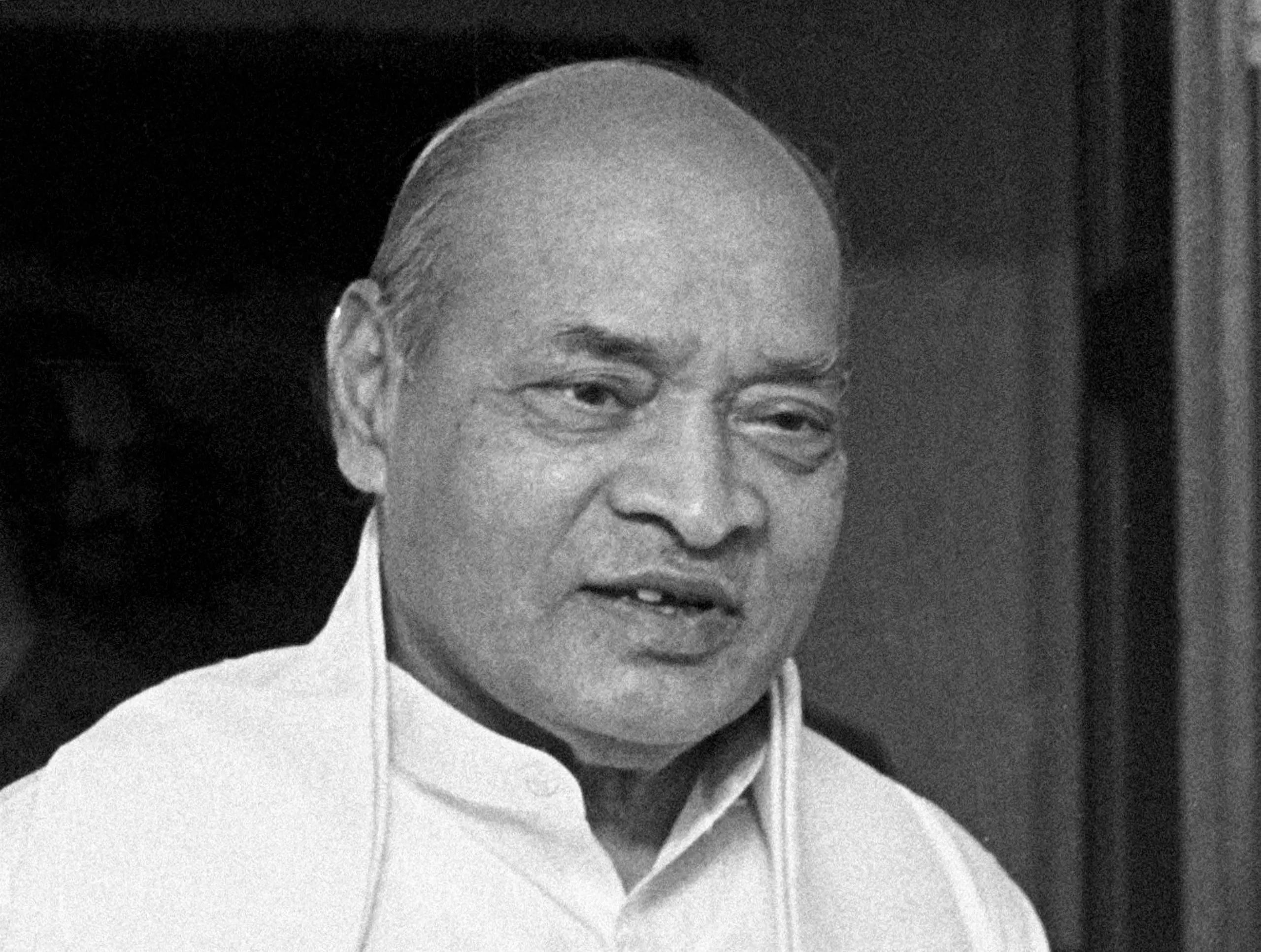
P. V. Narasimha Rao
 India
Indiapolitician•novelist•freedom fighter
Also known as: P. V. Narasimha Rao, Pamulaparthi Venkata Narasimha Rao, Chanakya
Data de nascimento
June 28, 1921
Signo
Cancer
Local de nascimento
Laknepalli, Warangal district, Hyderabad State (now Telangana), India
Idade
Faleceu aos 83
Sobre
Pamulaparthi Venkata Narasimha Rao foi o 9º Primeiro-Ministro da Índia e o arquiteto das reformas econômicas de 1991 que remodelaram a nação. Um político-erudito fluente em 13 idiomas, liderou um governo minoritário do Congresso de 1991 a 1996, afastando a Índia de uma grave crise no balanço de pagamentos ao desmantelar o License Raj e abrir a economia aos mercados globais. Suas políticas, executadas ao lado do Ministro das Finanças Manmohan Singh, são amplamente creditadas por acelerar a trajetória de crescimento da Índia e são mantidas por todas as administrações subsequentes.
A carreira política de Rao abrangeu cinco décadas, incluindo serviço como Ministro-Chefe de Andhra Pradesh e ministro da União para Defesa, Assuntos Internos e Relações Exteriores. Conhecido por sua profundidade intelectual e perspicácia política, foi agraciado postumamente com o Bharat Ratna, a mais alta honraria civil da Índia, em 2024. Em 2025, seu retrato foi inaugurado no Raj Bhavan, Telangana, em seu aniversário de nascimento.
Início da vida e origens
Narasimha Rao nasceu em 28 de junho de 1921, em uma família Niyogi Brahmin na vila de Laknepalli, mandal de Narsampet, distrito de Warangal, no que hoje é Telangana (então parte do Estado de Hyderabad). Sua língua materna era o telugo. Completou parte de sua educação primária na vila de Katkuru enquanto morava com um parente, Gabbeta Radhakishan Rao. Após obter um BA pela Universidade de Osmania, estudou direito no Fergusson College em Pune e depois na Universidade de Nagpur, obtendo finalmente um diploma de direito.
Durante seus anos de estudante, participou do movimento Vande Mataram em Hyderabad. Na década de 1940, editou o semanário telugo Kakatiya Patrika junto com um primo distante. Foi um ativista ativo pela independência e conheceu Mahatma Gandhi. Após a independência, entrou na política em tempo integral como membro do Partido do Congresso, também atuando como advogado e agricultor.
Crescimento na carreira
O grande avanço de Rao veio em 1971, quando se tornou Ministro-Chefe de Andhra Pradesh, implementando reformas agrárias e promovendo a participação política de castas inferiores. Apoiou Indira Gandhi durante a divisão do Congresso em 1969, alinhando-se à facção Congresso (I). Após ocupar pastas ministeriais-chave, tornou-se Primeiro-Ministro em 21 de junho de 1991, liderando um governo minoritário com 244 assentos. Foi a primeira pessoa do Sul da Índia e a segunda de origem não falante de hindi a ocupar o cargo.
Enfrentando uma grave crise econômica, Rao lançou uma liberalização histórica em 1991: desvalorizando a rupia, reduzindo tarifas de importação, abolindo licenças industriais e convidando investimentos estrangeiros. Essas reformas encerraram o License Raj e colocaram a Índia em um caminho de alto crescimento. Seu mandato também viu a demolição da Mesquita Babri em 1992. Após o fim de seu mandato em 1996, permaneceu como Membro do Parlamento até sua morte em 23 de dezembro de 2004.
Linha do tempo da carreira
Imagem pública e estilo
Rao era frequentemente chamado de 'Chanakya' por sua astúcia política. Cultivava uma personalidade erudita e reservada, conhecida por sua profundidade intelectual e declarações públicas ponderadas. As representações da mídia enfatizam seu papel como arquiteto da transformação econômica da Índia. Seus discursos e escritos eram filosóficos e eruditos. Ele é amplamente estudado como estadista e reformador, embora não haja um fandom formal. Às vezes é referido como o 'Pai das Reformas Econômicas Indianas'.
Fama e fandom
P. V. Narasimha Rao stands as a monumental figure in modern Indian history, yet his global footprint operates differently than that of the entertainment elite. As of August 2026, the iFANN Global Fame Engine has evaluated his standing and confirmed he currently holds no placement within the published Global Top 1,000 or any Top-100 scope list. This absence of a numerical rank reflects his unique status as a statesman rather than a pop culture commodity; his influence is measured in policy shifts and institutional reverence rather than viral metrics or chart positions. The world knows him for dismantling the License Raj and steering India through a severe economic crisis, achievements that anchor his legacy in political science textbooks rather than fan wikis. Unlike celebrities who command organized followings, Rao never cultivated a formal fanbase with a specific name or ritualistic engagement. His admirers are not a movement of individuals organizing tributes or launching charity drives in his honor. Instead, public homage flows through official channels where political leaders across party lines pay respects on anniversaries, and state infrastructure projects bear his name. While citizens benefit from the economic boom he engineered, there are no records of crowds disrupting streets or fan campaigns demanding his work be promoted. His fame remains rooted in the quiet power of his decisions, making him a revered architect whose legend is built on verified historical milestones like being the first non-Gandhi Prime Minister to complete a full term.
Fatos interessantes e lendas
P. V. Narasimha Rao was a polymath capable of speaking thirteen languages, including eight Indian tongues alongside English, French, Arabic, Spanish, German, Greek, Latin, and Persian. He penned novels and poems in Telugu and Hindi while working as an agriculturist and advocate before entering politics. His literary contributions included translating Viswanatha Satyanarayana's Telugu novel Veyi Padagalu into Hindi as SahasraPhan and adapting Hari Narayan Apte's Marathi Abala Jeevitam into Telugu. He also lectured at universities in the USA and West Germany under a pen name. Beyond his scholarly pursuits, Rao left behind legends of strategic brilliance and independent courage. He is widely remembered for issuing a stark warning on Independence Day 1995, stating that Pakistan was exporting terror and that Jammu and Kashmir was not merely an issue but a fundamental threat. This prophetic insight into regional security dynamics became a cornerstone of his political mythology. Another defining chapter of his life was his role as the principal architect of the 1991 economic reforms, which ended the License Raj and opened India to global markets. Historians cite this moment as the singular event that set the nation on a trajectory of high growth. He also holds the distinction of being the first Prime Minister outside the Nehru-Gandhi family to serve a full five-year term, symbolizing a shift away from dynastic dominance in Indian politics.
Família e vida pessoal
Os pais biológicos de Rao eram Sitarama Rao e Rukma Bai, de famílias agrárias Niyogi Brahmin. Aos três anos, foi adotado por Pamulaparthi Ranga Rao e Rukminamma e mudou-se para a vila de Vangara, no mandal de Bheemadevarpalle, atual distrito de Hanamkonda, Telangana. Casou-se com Satyamma Rao, que faleceu antes dele. Tiveram três filhos e cinco filhas. Sua origem familiar é agrária Niyogi Brahmin.
Conexões notáveis
Rao trabalhou em estreita colaboração com Indira Gandhi, apoiando-a durante a divisão do Congresso em 1969. Seu ministro das finanças, Manmohan Singh, foi o executor-chave das reformas econômicas de 1991. Traduziu obras do romancista telugo Viswanatha Satyanarayana e do romancista marata Hari Narayan Apte.
Relacionamentos e história amorosa
Rao teve apenas um relacionamento romântico conhecido: casou-se com Satyamma Rao na década de 1940. Ela faleceu antes dele, e ele era viúvo quando se tornou Primeiro-Ministro em 1991. Tiveram três filhos e cinco filhas. Ele nunca se casou novamente após a morte dela.
- Casado(a)Satyamma RaoEla foi sua esposa e mãe de seus oito filhos. Ela faleceu antes dele.
Morte e repercussões
Morte
December 23, 2004 (aos 83 anos)
Local da morte
Hyderabad, Andhra Pradesh
Causa da morte
Causas naturais
P. V. Narasimha Rao, the 9th Prime Minister of India and a distinguished novelist, died on December 23, 2004, at his residence in Hyderabad, Andhra Pradesh (now Telangana). He was 83 years old at the time of his death. The cause of death was reported as natural causes resulting from a prolonged illness, specifically complications arising from age-related ailments. While specific medical details were not released in a formal coroner's report or autopsy publicly available in general records, the official statement came from his family and was corroborated by hospital staff present at his home, where he had been under care for several months prior to his passing. There are no disputed accounts regarding the circumstances of his death; he passed away peacefully in his sleep.
His final days were spent in relative seclusion at his Hyderabad home, following a period of declining health that limited his public appearances significantly in the years leading up to 2004. V. Narasimha Rao's death. The estate and affairs were handled privately by his family. Public reaction to his death was marked by widespread tributes from political peers, government institutions, and the general populace. Upon his death, the Government of India declared a day of national mourning. Former colleagues, including then-President A.P.J. Abdul Kalam and Prime Minister Manmohan Singh, issued statements praising his contributions to Indian democracy and economic reform. The Indian National Congress party organized memorial services across the country. Memorial murals dedicated to him exist in various parts of Hyderabad and Karimnagar, though these were often established or renovated posthumously rather than erected immediately upon his death.
His funeral was a private affair held on December 24, 2004, at his ancestral village of Laknepally in the Karimnagar district of Andhra Pradesh. The cremation rites were performed according to Hindu traditions. Notable attendees included senior leaders of the Congress party, former ministers, and members of his immediate family. The event was relatively low-key compared to state funerals, reflecting his wish for privacy, though it was attended by high-ranking officials who paid their respects before the cremation. In the posthumous era, numerous honors have been bestowed upon P. V. Narasimha Rao. In 2005, he was posthumously awarded the Padma Vibhushan, India's second-highest civilian award, for his contributions to the nation. Several educational institutions and scholarships have been named in his honor, including the P.V. Narasimha Rao Chair at various universities.
A major landmark in Hyderabad, the PV Narasimha Rao Expressway, was named after him to commemorate his role in transforming the city's infrastructure. Additionally, the Prime Ministers Museum and Library (PMML) has held special exhibitions featuring rare photographs and documents related to his life and tenure. His grandson, K. Chandrashekar Rao (who later became the Chief Minister of Telangana), has frequently spoken about his grandfather's legacy, and an exhibition was inaugurated by his grandson at the PM Sanghralaya in 2026. Regarding his estate, it was managed entirely by his family, though his literary works continue to be published and distributed by Penguin Random House India.
Patrimônio (valor do espólio)
Não existe estimativa pública disponível do patrimônio de P. V. Narasimha Rao. Como político de carreira e funcionário público que faleceu em 2004, o valor de seu espólio não é divulgado. Ele não possuía empreendimentos comerciais significativos nem fontes de receita póstumas, como acordos de licenciamento. Seu espólio provavelmente consiste em propriedade pessoal e bens familiares, possivelmente incluindo royalties residuais de livros de suas obras literárias.
Prêmios conquistados (2)
Rao recebeu postumamente o Bharat Ratna em 2024, a mais alta honraria civil da Índia, por seu papel nas reformas econômicas e no serviço público.
1980
65.90
2024 · Civil
Economic reforms and public service
Conhecido por
Prime Minister of India
1991 · 9th Prime Minister
Economic liberalization of 1991
1991 · Architect of reforms
Chief Minister of Andhra Pradesh
1971 · Ministro-Chefe
Palavras-chave
Fontes
Dados rápidos
- Profissão
- politician, novelist, freedom fighter
- Nascimento
- June 28, 1921
- Local de nascimento
- Laknepalli, Warangal district
- Morte
- December 23, 2004
- Local da morte
- Delhi
- Gênero
- Masculino
- Signo
- Cancer
- Cônjuge
- Satyamma Rao
- Children
- 3 sons, 5 daughters
Dados pessoais
- Nome completo
- Pamulaparthi Venkata Narasimha Rao
- Cônjuge
- Satyamma Rao
- Filhos
- Three sons and five daughters
- Formação
- Bachelor of Arts from Osmania University; Master's degree in Law from Fergusson College (University of Bombay); law degree from Nagpur University
Perguntas frequentes
P. V. Narasimha Rao é conhecido por quê?
Filhos de P. V. Narasimha Rao?
Idade de P. V. Narasimha Rao ao falecer?
Patrimônio de P. V. Narasimha Rao?
Casta de P. V. Narasimha Rao?
Pessoas semelhantes
Junte-se à comunidade
fãs comentando