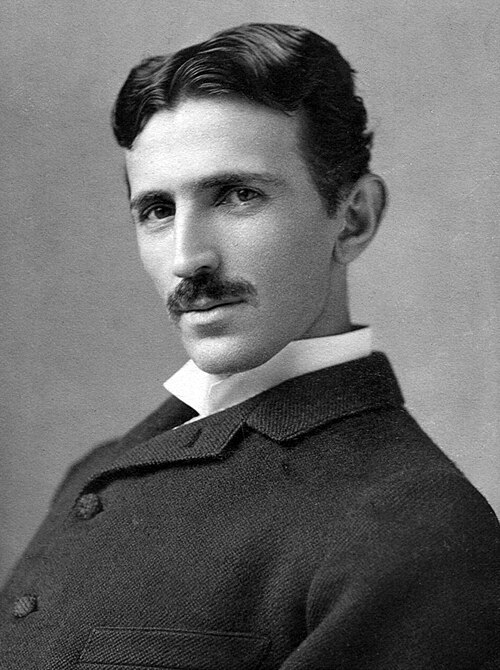
Nikola Tesla
 Austria
inventor•electrical engineer•physicist
Data de nascimento
July 10, 1856
Signo
Cancer
Local de nascimento
Smiljan, Austrian Empire (modern-day Croatia)
Idade
Faleceu aos 86
Sobre
Nikola Tesla foi um inventor sérvio-americano, engenheiro elétrico, físico e futurista que transformou o mundo moderno com seu trabalho pioneiro em sistemas de energia elétrica. Nascido em 1856 em Smiljan, Império Austríaco, Tesla é mais conhecido por desenvolver o sistema de corrente alternada (CA), que continua sendo o padrão global para distribuição de energia. Suas invenções incluem o motor de indução CA, a bobina de Tesla e as primeiras tecnologias de comunicação sem fio. Tesla detinha mais de 300 patentes em todo o mundo e suas ideias lançaram as bases para inúmeras tecnologias modernas, do rádio ao controle remoto. Apesar de sua genialidade, ele enfrentou dificuldades financeiras em seus últimos anos e morreu em relativa obscuridade. Hoje, ele é celebrado como um dos maiores inventores da história, com um ressurgimento do interesse popular desde a década de 1990. A unidade SI de densidade de fluxo magnético, o tesla, foi nomeada em sua homenagem.
Início da vida e origens
Tesla nasceu de pais sérvios na vila de Smiljan, onde seu pai era padre ortodoxo e sua mãe era conhecida por sua memória inventiva e ferramentas caseiras. Ele mostrou sinais precoces de genialidade, realizando cálculos complexos mentalmente e memorizando livros inteiros. Aos 17 anos, matriculou-se na Escola Politécnica Joanneum em Graz, estudando engenharia e física, mas abandonou o curso após três anos e nunca se formou. Mais tarde, frequentou brevemente a Universidade Carlos-Fernando em Praga. Em 1881, mudou-se para Budapeste para trabalhar em uma empresa de telégrafos, onde concebeu a ideia de um campo magnético rotativo e do motor de indução CA. Em seguida, trabalhou para a Continental Edison em Paris, instalando sistemas de iluminação. Em 1884, emigrou para os Estados Unidos com pouco mais do que uma carta de apresentação para Thomas Edison.
Crescimento na carreira
Após chegar a Nova York, Tesla trabalhou para a Edison Machine Works, mas uma disputa sobre remuneração o levou a sair e fundar sua própria empresa. Em 1888, licenciou seu motor de indução CA e patentes de CA polifásica para George Westinghouse, que os usou para alimentar a Feira Mundial de Chicago de 1893 e ganhar o contrato para gerar eletricidade nas Cataratas do Niágara. Isso estabeleceu a CA como o sistema elétrico dominante. Na década de 1890, Tesla conduziu experimentos espetaculares com eletricidade de alta voltagem em seu laboratório na Rua Houston, criando relâmpagos artificiais e acendendo lâmpadas sem fio. Ele também construiu um barco controlado por rádio em 1898, um dos primeiros veículos controlados remotamente. Seu projeto mais ambicioso, a Torre Wardenclyffe, visava transmitir energia sem fio e comunicação através do Atlântico, mas o financiamento secou em 1905 e a torre nunca foi concluída. Depois disso, Tesla continuou inventando, trabalhando em turbinas, motores sem lâminas e armas de feixe de partículas, mas seus últimos anos foram marcados por recursos financeiros em declínio.
Linha do tempo da carreira
Imagem pública e estilo
Tesla era conhecido como um showman e gênio excêntrico. Vestia-se formalmente com casacos de gola alta e chapéus, e sua figura alta e esbelta, com olhar intenso, o tornava uma figura marcante. Realizava palestras públicas dramáticas onde acendia lâmpadas passando corrente elétrica através de seu próprio corpo. A mídia frequentemente o retratava como um cientista louco, mas seus apoiadores o viam como um visionário. Hoje, sua imagem é a de um gênio incompreendido, celebrado na cultura da internet, livros e filmes. Seu nome adorna empresas como a Tesla Inc. e inúmeras ruas e escolas. Os fãs admiram seu idealismo e sua crença em energia gratuita, embora algumas teorias da conspiração exagerem suas invenções suprimidas.
Fama e fandom (iFAMOUS Rankings)
Nikola Tesla remains a towering figure in the history of innovation, his name echoing through modern discourse long after his death. In the August 2026 cycle of the iFANN Global Fame Rankings, he holds the position of the 196th most famous person in the world, a standing that has held steady from the previous measurement period. His influence extends beyond general recognition; within his birthplace, he is celebrated as the 2nd most famous person from Austria, and within the technology sector, he ranks as the 7th most famous person in Tech. These placements reflect a global attention span that tracks media coverage, search trends, and cultural consumption across continents.
Unlike living celebrities, Tesla does not have a formal fandom or an organized collective known by a specific name. His admirers are historians, engineers, and science enthusiasts who gather at institutions like the Tesla Science Center at Wardenclyffe rather than in fan clubs. This community engages in rituals such as annual commemorations on July 10th, marking his birthday with lectures and online discussions. Their advocacy often centers on preserving historical sites and correcting the narrative of his rivalry with Thomas Edison. While there are no viral campaigns or street parties, the group actively supports STEM education and the restoration of landmarks like the Wardenclyffe Tower, ensuring his legacy endures through physical preservation and educational outreach.
Fatos interessantes e lendas
Tesla possessed a photographic memory that allowed him to visualize complex inventions before building them. He claimed to need only two hours of sleep nightly, supplementing rest with catnaps. A notorious germaphobe, he refused to shake hands and developed a strong aversion to pearls, refusing to speak to women wearing them. His close friendship with writer Mark Twain included visits to his lab where they were photographed under a Tesla coil. He spoke eight languages: Serbo-Croatian, English, Czech, German, French, Hungarian, Italian, and Latin. In his final years, he spent much time caring for injured birds, feeding pigeons in New York parks. Legends persist about his ability to predict earthquakes, stemming from his actual patent applications for an apparatus utilizing earth vibrations filed in 1893. While the story of a city-destroying "death ray" is largely folklore, his work on the teleforce weapon in the 1930s was verified.
The most iconic moment occurred in 1893 at the World's Columbian Exposition in Chicago, where he demonstrated wireless electricity by lighting thousands of lamps without wires, effectively proving the superiority of AC power. Another enduring tale involves his obsession with a specific white pigeon, a story that embellishes his documented love for birds into a narrative of tragic mourning preceding his death. The myth of his solitary death in poverty at the New Yorker Hotel remains a central part of his legend, fueling the image of the misunderstood genius.
Frases notáveis
“The present is theirs; the future, for which I really worked, is mine.”
“Let the future tell the truth, and evaluate each one according to his work and accomplishments.”
“I do not think there is any thrill that can go through the human heart like that felt by the inventor as he sees some creation of the brain unfolding to success.”
Família e vida pessoal
Tesla nasceu de Milutin Tesla, um padre ortodoxo sérvio, e Đuka Mandić, conhecida por sua criatividade e memória. Ele tinha um irmão mais velho, Dane, que morreu em um acidente a cavalo quando Nikola tinha cinco anos, e três irmãs: Milka, Angelina e Marica. Seu pai queria originalmente que ele se tornasse padre, mas Nikola escolheu engenharia após sobreviver a um surto de cólera aos 17 anos. Tesla nunca se casou e não teve filhos. Em seus últimos anos, viveu sozinho em uma série de hotéis em Nova York, incluindo o Waldorf-Astoria e o New Yorker Hotel, onde morreu. Não tinha animais de estimação, embora alimentasse pombos regularmente.
Conexões notáveis
Tesla teve uma famosa rivalidade com Thomas Edison sobre corrente contínua versus corrente alternada. Ele fez parceria com George Westinghouse, que financiou e comercializou seu sistema CA. Também era amigo do escritor Mark Twain, que visitou seu laboratório. Outros associados incluíam o financista J.P. Morgan, que inicialmente apoiou Wardenclyffe, e o físico Lord Kelvin.
Relacionamentos e história amorosa
Tesla nunca se casou e não teve relacionamentos românticos conhecidos. Ele era intensamente focado em seu trabalho e frequentemente expressava que o celibato ajudava sua concentração. Houve rumores de uma amizade próxima com a artista Alice Mayhew, mas nenhuma evidência sugere um envolvimento romântico. Tesla era conhecido por ter admiradores, incluindo algumas mulheres que lhe escreviam cartas, mas ele as mantinha à distância. Em seus últimos anos, ele formou um vínculo emocional profundo com uma pomba branca que visitava a janela de seu hotel, a qual ele afirmava amar como um ser humano. Até sua morte em 1943, Tesla era solteiro.
Morte e repercussões
Morte
January 7, 1943 (aos 86 anos)
Local da morte
New York City, New York, USA
Causa da morte
Coronary thrombosis
A bellboy detected a foul odor drifting from Room 3327 of the New Yorker Hotel on West 42nd Street and alerted the front desk, where staff found Nikola Tesla slumped in his chair. He was discovered alone on January 7, 1943, at the age of 86, having made no public appearances since the early 1930s. The official report cited coronary thrombosis as the cause of death based on initial assessments by hotel staff and an attending physician. Tributes flowed from scientific institutions and peers who recognized his contributions to electrical engineering, while the general public remained largely unaware of his specific legacy at that moment. A private funeral service took place four days later at the Holy Trinity Serbian Orthodox Church in New York City, attended by family members, colleagues, and representatives from the Serbian community.
Following the service, Tesla was cremated, and his ashes were transported to Belgrade, Serbia, to rest in the Nikola Tesla Museum founded in 1952. In the decades following his passing, Tesla received extensive recognition including inductions into the National Inventors Hall of Fame and the IEEE Hall of Fame. The SI unit of magnetic flux density bears his name, and the Tesla Science Center at Wardenclyffe now serves as a museum dedicated to his work. Legal battles over his estate concluded with assets passing to his nephew Sava Kosanović, allowing his intellectual property to eventually enter the public domain or be managed by the Serbian government.
Patrimônio (valor do espólio)
$10 Million
Estimativa da equipe editorial do iFANN
Per iFANN's editorial analysis, Nikola Tesla's estate is valued at approximately $10 million going by 2026 estimates. Tesla died with very little personal wealth in 1943, having spent most of his fortune on research and the failed Wardenclyffe project. However, his patents, particularly those for AC power, became immensely valuable over time. The estate has earned royalties from the licensing of his AC patents, which have generated billions in revenue for others but relatively little for his heirs. In 1943, the U.S. Supreme Court upheld a key patent for radio that Tesla had filed before Guglielmo Marconi, though this did not result in significant financial gain for the estate. Today, the estate's income comes from licensing fees, merchandise, and appearances in media. The estate is managed by the Tesla Science Foundation and various family trusts. Since the 1990s, interest in Tesla has surged, boosting revenue from documentaries, books, and branded merchandise.
Prêmios conquistados (3)
Nikola Tesla recebeu várias honrarias durante sua vida, incluindo a Medalha Edison em 1916 e a Medalha John Scott em 1934. Postumamente, foi introduzido no National Inventors Hall of Fame em 1975 e na lista dos melhores engenheiros elétricos do IEEE. Em 2013, a revista Time o nomeou uma das 100 figuras mais significativas de todos os tempos. A unidade SI de densidade de fluxo magnético, o tesla, foi nomeada em sua homenagem em 1960.
1916 · Engenharia Elétrica
Contributions to the development of the alternating current system
1934 · Inovação
Polyphase alternating current system
Conhecido por
Alternating Current (AC) Electrical System
1888 · Inventor
Tesla Coil
1891 · Inventor
Radio-Controlled Boat
1898 · Inventor
Wardenclyffe Tower
1901 · Designer
Wireless Power Transmission
1890 · Pioneiro
Palavras-chave
Dados rápidos
Dados pessoais
- Nome completo
- Nikola Tesla
- Formação
- Studied engineering and physics at Graz University of Technology (did not complete), attended Charles-Ferdinand University
Perguntas frequentes
Quantos anos Nikola Tesla tinha quando morreu?
Qual é o patrimônio de Nikola Tesla em 2026?
Nikola Tesla alguma vez se casou?
Pelo que Nikola Tesla é mais conhecido?
Nikola Tesla era sérvio ou americano?
Pessoas semelhantes
Junte-se à comunidade
fãs comentando