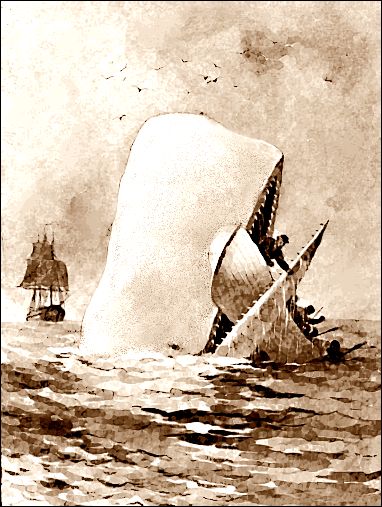
Mocha Dick
Data de nascimento
Signo
Local de nascimento
Pacific Ocean
Idade
Faleceu aos 38
Sobre
Mocha Dick foi um cachalote macho real, historicamente documentado, conhecido por sua aparência branca fantasmagórica e agressividade extraordinária contra baleeiros. Vagando pelo sudeste do Pacífico no início dos anos 1800, tornou-se uma lenda entre os baleeiros americanos e britânicos muito antes de qualquer escritor colocar sua história no papel. Sua fama repousa em um único artigo de revista de 1839 do explorador J. N. Reynolds, que mais tarde serviu como a principal inspiração para o romance de Herman Melville, Moby-Dick. Embora Melville tenha transformado a baleia em uma figura simbólica, quase sobrenatural, o verdadeiro Mocha Dick era um animal de carne e osso que lutou ferozmente por sua vida.
Início da vida e origens
Mocha Dick nasceu em algum momento do final dos anos 1700, provavelmente nas vastas águas do Oceano Pacífico. Como um jovem cachalote, teria vivido em um grupo social, aprendendo a caçar lulas e navegar pelas correntes oceânicas. No início dos anos 1800, ele havia amadurecido em um grande touro solitário, sua pele adquirindo uma impressionante coloração branca devido ao albinismo ou leucismo. Baleeiros operando perto da Ilha Mocha, na costa do Chile, começaram a encontrá-lo com frequência crescente. Eles notaram sua cor incomum e sua resposta feroz aos ataques: ele investia contra os barcos, estalava as mandíbulas e batia a cauda, muitas vezes sobrevivendo a múltiplos arpoadas. A notícia dessa baleia formidável se espalhou de porto em porto, transformando-a em uma lenda marítima antes mesmo de existir qualquer relato escrito.
Crescimento na carreira
O grande avanço de Mocha Dick veio em 1839, quando J. N. Reynolds publicou Mocha Dick, ou A Baleia Branca do Pacífico na revista The Knickerbocker. O artigo descrevia as batalhas da baleia com baleeiros em prosa vívida e dramática, consolidando seu lugar na literatura americana. Reynolds havia reunido histórias de baleeiros que encontraram a baleia, incluindo a tripulação que finalmente a matou em 1838. O artigo tornou-se uma sensação e, uma década depois, Herman Melville baseou-se fortemente nele ao escrever Moby-Dick. Melville mudou o nome de Mocha para Moby e adicionou camadas de significado filosófico, mas o cerne da história, uma baleia branca que revida, veio diretamente de Mocha Dick. Esse romance nunca saiu de catálogo e é estudado mundialmente.
Linha do tempo da carreira
Imagem pública e estilo
A imagem pública de Mocha Dick é a de um leviatã da vida real, uma figura trágica e inspiradora da natureza. A mídia e a literatura o retratam como a baleia branca original, um símbolo da natureza indomável e da futilidade da luta do homem contra a natureza. Seu fandom é principalmente acadêmico e literário, sem nome oficial. Os fãs são tipicamente leitores de Moby-Dick, entusiastas da história marítima e seguidores de criptozoologia.
Fama e fandom (iFAMOUS Rankings)
Mocha Dick commands a quiet but enduring global attention, sustained not by modern media cycles but by his pivotal role in literary history and maritime folklore. His presence is felt wherever Herman Melville's Moby-Dick is studied, discussed, or celebrated, anchoring the imagination of readers across generations. Despite this deep cultural resonance, Mocha Dick does not currently hold a placement in the iFANN Global Top 1,000 rankings or any scope-based list. The iFANN evaluation confirms that while he remains a significant historical figure, he has no current numerical rank within the published hierarchy. The community surrounding him lacks an official name; there are no organized fan clubs, specific collective nouns like 'Dickites,' or formal campaigns dedicated solely to the whale himself. Instead, the audience consists of Melville scholars, maritime historians, and general readers who engage with his story through academic discourse and literary appreciation. While recent artistic projects, such as Tristin Lowe's 2026 exhibition at the Williams College Museum of Art, have brought visual attention to his legend, these are curated exhibitions rather than grassroots fan movements. Similarly, discussions regarding climate change or fatphobia in relation to the novel represent critical analysis rather than active fandom rituals. There are no birthday billboards, social media trends, or interactive traditions associated with the real Mocha Dick. His legacy survives through the pages of books and the halls of museums, where his tale of survival and aggression against whalers continues to be recounted as a foundational myth of American literature.
Fatos interessantes e lendas
Mocha Dick was not the only white whale in history; Migaloo, an albino humpback sighted off Australia since 1991, shares this rare genetic trait. According to explorer J. N. Reynolds, the real Mocha Dick was heavily covered in barnacles, a clear sign of his advanced age and decades of skirmishes. The name Mocha derives from Mocha Island, a small landmass off central Chile where he was frequently spotted. Unlike the fictional Moby Dick, who sinks only one ship, the real whale was credited with destroying multiple whaleboats over the years. Reynolds described him snapping his jaws so loudly the sound carried above the wind. A core legend tells of his resilience against approximately 100 different whaling ships before his death in 1838. He measured between 70 and 72 feet, making him one of the largest sperm whales ever recorded. In March 2026, scientists captured footage of modern sperm whales headbutting, behavior long debated and famously depicted in Moby-Dick, which validated the aggressive tactics attributed to Mocha Dick. While often conflated with the sinking of the Essex in 1820, that event involved a different whale, yet it contributed to the lore of the white whale's capacity for catastrophic attack.
Frases notáveis
“But the monster was not to be vanquished without a struggle. He turned upon his assailants, lashing the sea with his tail, and snapping his huge jaws with a noise that was heard above the roar of the wind.”
Família e vida pessoal
Como cachalote, a vida familiar de Mocha Dick não é documentada. Cachalotes machos geralmente deixam seu grupo natal após a adolescência e vivem vidas solitárias, retornando às áreas de reprodução apenas para acasalar. Nenhum parceiro ou filhote específico é registrado para Mocha Dick. Suas únicas interações conhecidas com outras baleias teriam sido durante as temporadas de acasalamento, mas nenhum detalhe sobreviveu.
Conexões notáveis
J. N. Reynolds, o explorador e autor que escreveu o artigo definitivo de 1839 sobre Mocha Dick. Herman Melville, o autor de Moby-Dick, que usou o relato de Reynolds como sua principal inspiração.
Relacionamentos e história amorosa
Morte e repercussões
Morte
1838 (aos 38 anos)
Local da morte
near Mocha Island, Chile
Causa da morte
Lethal harpooning by whalers
The end of the legendary white whale arrived in 1838, confirmed by whaling logs that recorded his final struggle against a determined crew. Mocha Dick fell after surviving over a hundred encounters with hunters who had long viewed him as an invincible foe, likely near the waters off Mocha Island, Chile, where he had made his home. Accounts suggest he may have been killed while attempting to defend a distressed cow and her calf, a final act of protection before succumbing to lethal harpoons in the open Pacific. Public reaction remained confined to the immediate whaling community.
His true legacy emerged through literature rather than ceremony. In May 1839, explorer Jeremiah N. Reynolds published a lengthy article titled "Mocha Dick; or, The White Whale of the Pacific" in the Knickerbocker Magazine, drawing on stories from crews like the one that finally killed him. This journalistic account served as the direct catalyst for Herman Melville, who would later adapt the real-life tragedy into the symbolic masterpiece Moby-Dick. That novel, published in 1851, transformed the historical animal into an immortal figure of fiction, ensuring his story survived long after his body returned to the ocean.
Prêmios e condecorações
View 4 records, honours and achievementsConhecido por
Moby-Dick
1851 · Real-life inspiration
Palavras-chave
Dados rápidos
- Species
- Sperm whale (Physeter macrocephalus)
- Color
- White (albino or leucistic)
- Morte
- 1838
- Famous for
- Inspiring Moby-Dick
Perguntas frequentes
Mocha Dick é o mesmo que Moby Dick?
Como Mocha Dick morreu?
Qual era o tamanho de Mocha Dick?
Mocha Dick era realmente branco?
Onde Mocha Dick vivia?
Pessoas semelhantes

Junte-se à comunidade
fãs comentando