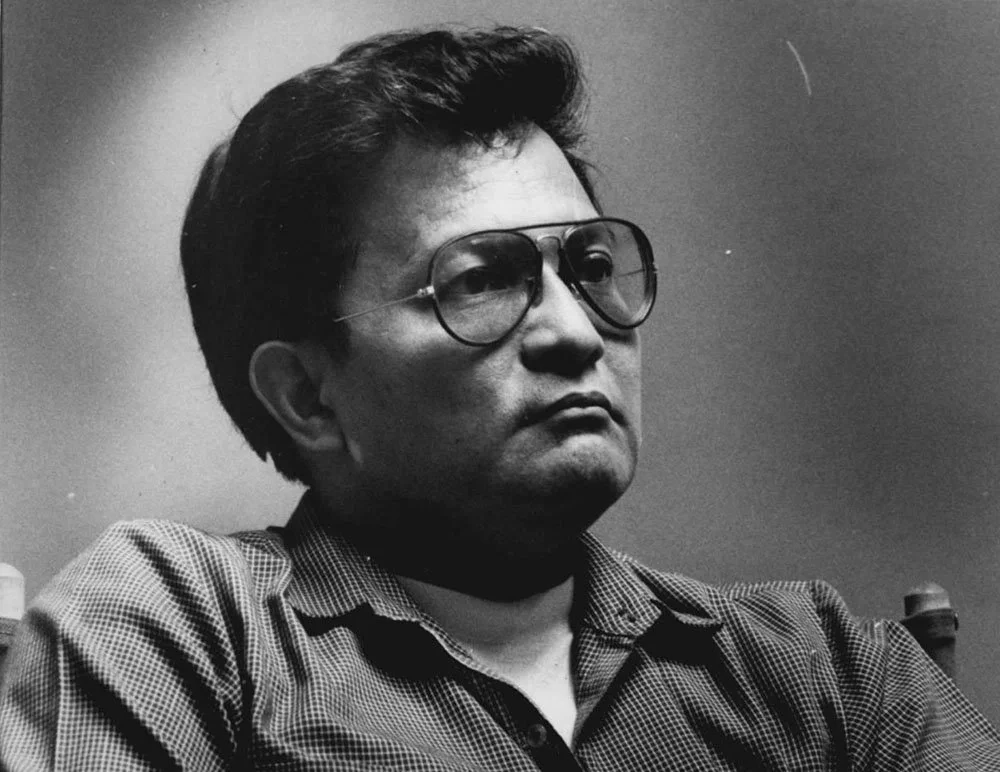
Lino Brocka
 Philippines
diretor de cinema•roteirista•ator
Also known as: Catalino Ortiz Brocka
Data de nascimento
April 3, 1939
Signo
Aries
Local de nascimento
Pilar, Sorsogon, Philippines
Idade
Faleceu aos 52
Sobre
Lino Brocka was the towering figure of Philippine cinema, a director who made over 60 films in two decades by threading social realism through crowd-pleasing melodrama. Born Catalino Ortiz Brocka in 1939, he started in theater and television before his 1970 debut Wanted: Perfect Mother. His breakthrough came with Weighed But Found Wanting (1974), but the landmark was Manila in the Claws of Light (1975), widely called the greatest Filipino film ever made. Insiang (1976) became the first Philippine film to screen at Cannes, followed by Jaguar (1979) and This Is My Country (1984). Brocka's work openly attacked the Marcos dictatorship, and he paid for that activism with arrests and death threats. He died in a car crash in 1991 at 52. In 1997, he was named a National Artist of the Philippines. Today, his films are studied as masterclasses in using popular cinema to tell hard truths about poverty, power, and survival.
Início da vida e origens
Brocka cresceu pobre em Pilar, Sorsogon, depois mudou-se para San Jose, Nueva Ecija, onde frequentou a San Jose Central School e se formou na Nueva Ecija High School em 1956. Seu pai morreu quando ele era jovem, e ele viveu com parentes que muitas vezes eram abusivos. Ele encontrava refúgio nos cinemas, entrando escondido quando não podia mais pagar os ingressos. Filmes de Rene Clement e Federico Fellini o faziam chorar e sentir-se conectado à humanidade. Mais tarde, ele disse que os filmes se tornaram uma obsessão tão grande que ele precisava fazê-los, queria tocar estranhos que nunca tinha visto. Apesar da pobreza, ele se destacou academicamente e ganhou uma bolsa para a Universidade das Filipinas. Lá, juntou-se ao clube de teatro dirigido pelo Artista Nacional Wilfrido Ma. Guerrero e depois à Philippine Educational Theatre Association (PETA), onde conheceu a fundadora Cecille Guidote. Essa conexão levou ao seu primeiro filme. Por essa época, o amigo Behn Cervantes o apresentou ao Mormonismo. Brocka se converteu e passou um ano em Molokai, Havaí, cuidando de leprosos, esperando encontrar respostas sobre sua homossexualidade. Ele retornou a Manila após buscar um fechamento.
Crescimento na carreira
A estreia de Brocka em longas-metragens, Wanted: Perfect Mother (1970), foi um melodrama comercial que lhe deu uma posição na indústria. No mesmo ano, dirigiu Dipped in Gold, uma adaptação de uma história em quadrinhos de Mars Ravelo sobre um empresário gay enrustido. O reconhecimento da crítica chegou com Weighed But Found Wanting (1974), um filme que provou que arte e comércio podiam coexistir. Depois veio Manila in the Claws of Light (1975), um retrato brutal da pobreza urbana sob a lei marcial que hoje é considerado o maior filme filipino de todos os tempos. Insiang (1976) fez história como o primeiro filme filipino a ser exibido em Cannes. Jaguar (1979) e This Is My Country (1984) também foram exibidos em Cannes. Em 1983, fundou a Concerned Artists of the Philippines para defender a livre expressão. No ano seguinte, foi preso e encarcerado por protestar contra a censura da mídia sob Marcos. Recebeu o Prêmio Ramon Magsaysay em 1985. Em 1986, serviu no júri de Cannes e foi nomeado pelo presidente Corazon Aquino para a Comissão Constitucional de 1986, embora tenha renunciado depois. Seus trabalhos posteriores incluem Macho Dancer (1988) e Orapronobis (1989). Seu último filme foi Dirty Affair (1990).
Linha do tempo da carreira
Imagem pública e estilo
Brocka é lembrado como o maior cineasta filipino e um ativista destemido. Seu estilo característico mistura melodrama com realismo social, criando filmes ricos em realismo e comentário social. Ele usou o cinema como uma arma contra o autoritarismo, e fãs e críticos celebram sua coragem. Não existe um nome oficial de fandom, mas seu trabalho é estudado em universidades e exibido em retrospectivas ao redor do mundo. Seus filmes são conhecidos por seu olhar cru e implacável sobre pobreza, corrupção e opressão.
Fama e fandom (iFAMOUS Rankings)
Lino Brocka never cultivated a celebrity fanbase in the traditional sense, nor did he inspire organized groups with catchy names or rituals. His legacy survives not through billboards or fan clubs, but through the quiet devotion of cinephiles, scholars, and activists who treat his filmography as sacred cultural heritage. This audience operates through formal channels like university departments and international festivals rather than grassroots campaigns, organizing restorations and screenings to keep his vision alive against the erosion of time. The reverence for Brocka is defined by his role as a voice for the marginalized during the Martial Law era, creating a bond with the public that transcended typical star worship. His fanbase has no formal name. In August 2026, the iFANN Global Fame Engine evaluated Lino Brocka's standing in the global consciousness. While his influence remains profound, he currently holds no placement in the published rankings, including the Global Top 1,000 or any scope-specific lists. This absence of a numeric rank reflects the unique nature of his fame: it is deeply rooted in historical significance and academic study rather than current search volume or media consumption signals worldwide. The evaluation confirms that while Brocka is a towering figure in Philippine cinema history, he does not currently generate the continuous, mass-market engagement required for a specific global ranking position. His status remains that of an icon whose work is preserved and studied, rather than a personality tracked by real-time popularity metrics.
Fatos interessantes e lendas
Lino Brocka was one of the first Mormon converts in the Philippines. He directed over 60 films in just two decades, averaging three movies per year.
Wanted: Perfect Mother stood out as the only film he made that did not focus heavily on social injustice. His father is believed to have been politically killed, and Brocka himself feared for his life in his later years due to threats stemming from his activism. At age 25, he learned the craft of directing by joining the Theatre Club led by Wilfrido Ma. Guerrero. A signature element of his filmmaking style involves characters frequently wielding pointed or sharp objects.
Legends surrounding Brocka often recount his physical presence in the thick of protests that culminated in the ouster of dictator Ferdinand Marcos. This transition from filmmaker to active participant in the People Power Revolution defines his mythos as the "spokesman of the generation." Fans also retell the story of *Macho Dancer* evolving from a commercial hit into a landmark of queer Asian cinema, a journey highlighted by its recent restoration and return to US screens for Pride Month premieres. Another enduring tale involves the near-loss of his works, such as a nearly lost film rescued by academic intervention in 2024, proving the fragility of his legacy and the dedication required to preserve it.
Frases notáveis
“When I was young, I used to cry too inside the theater, watching films by Rene Clement and Fellini. I felt vindicated, an integral part of humanity. Films became such an obsession that I had to make them...I wanted to touch strangers I had never seen.”
“I make films about the poor because I am one of them. I know their pain.”
“The artist must be involved. He cannot just sit and watch.”
Família e vida pessoal
O pai de Brocka morreu quando ele era criança; algumas fontes sugerem que ele foi morto politicamente. Ele viveu com sua mãe e irmã, mudando-se entre parentes que eram severos e abusivos. Seu sobrinho é Q. Allan Brocka, um cineasta e roteirista de televisão conhecido por Rick & Steve: The Happiest Gay Couple in All the World. Sua prima é A. Julian Brocka. Brocka nunca se casou e não teve filhos. Ele era abertamente gay, mas mantinha seus relacionamentos pessoais privados.
Conexões notáveis
Brocka era intimamente associado ao ator William Lorenzo, que estava com ele na noite de sua morte. Ele era amigo de Behn Cervantes, que o apresentou ao Mormonismo e ao PETA. Cecille Guidote-Alvarez, fundadora do PETA, o ajudou a fazer seu primeiro filme. Wilfrido Ma. Guerrero, um Artista Nacional, dirigiu o clube de teatro que Brocka frequentou no início de sua carreira. Seu sobrinho Q. Allan Brocka é cineasta e roteirista de televisão.
Relacionamentos e história amorosa
Brocka era abertamente gay, mas mantinha privacidade em relação à sua vida romântica. Nenhum parceiro de longo prazo confirmado está documentado em fontes biográficas confiáveis. Ele passou um ano em Molokai, Havaí, cuidando de leprosos em uma tentativa de encontrar respostas sobre sua homossexualidade através do Mormonismo, mas retornou a Manila após buscar um fechamento. Na noite de sua morte, ele estava com o ator William Lorenzo no Spindle Music Lounge, e Lorenzo estava dirigindo o carro que bateu. A natureza de seu relacionamento não está definitivamente documentada. Brocka nunca se casou e não teve filhos conhecidos. Até sua morte em 1991, ele era solteiro.
- NamoraramWilliam Lorenzo1991 - 1991Ator que estava com Brocka na noite de sua morte; dirigindo o carro que bateu.
Morte e repercussões
Morte
May 22, 1991 (aos 52 anos)
Local da morte
Manila, Philippines
Causa da morte
Multiple trauma from vehicular collision
The Philippine General Hospital confirmed that Lino Brocka had succumbed to multiple trauma following a severe vehicular collision on EDSA in Quezon City. The director, who was driving himself to a meeting earlier that day, suffered critical head and internal injuries before passing away at the hospital on May 22, 1991. Authorities treated the incident as an accidental fatality. Tributes poured in immediately from across the nation and the international film community. President Corazon Aquino issued a statement mourning the loss of a figure she considered essential to national cinema, while film organizations like the Cinema Arts Foundation of the Philippines held memorial services. Thousands of fans gathered for vigils outside the Philippine International Convention Center and near major studios, where murals were erected to honor the filmmaker's commitment to social realism.
Notable attendees at his funeral rites included directors Ishmael Bernal and Mike De Leon, alongside actors Nora Aunor and Eddie Garcia. His body was transported to Manila for burial at the Manila North Cemetery after initial rites in his hometown of Pilar, Sorsogon. In the years following his death, unfinished projects circulated, and films like Macho Dancer gained renewed attention through restorations. The Lino Brocka Foundation was established to support emerging filmmakers, and he was posthumously recognized as a National Artist of the Philippines for Cinema. His family maintained control over his archives, ensuring his works remained available through partnerships with international distributors.
Patrimônio (valor do espólio)
$10 Million
Estimativa da equipe editorial do iFANN
As a filmmaker who died in 1991, Brocka's estate is not publicly valued in standard celebrity net worth databases. His films continue to generate revenue through restorations, screenings at retrospectives, and academic licensing by institutions like the Philippine Film Archive. The Ramon Magsaysay Award came with a cash prize, but his primary wealth was modest, derived from directing fees for over 60 films in a low-budget industry. Per iFANN's editorial analysis, the estate is estimated at $10 million as of 2026, reflecting the enduring cultural and commercial value of his body of work.
Prêmios conquistados (17)
Brocka foi nomeado postumamente Artista Nacional das Filipinas para Cinema em 1997, a mais alta honraria cultural do país. Ele recebeu o Prêmio Ramon Magsaysay em 1985 por Jornalismo, Literatura e Artes de Comunicação Criativa. Seus filmes foram indicados em Cannes, mas não ganharam a Palma de Ouro.
1971 · Melhor Diretor
Tubog Sa Ginto
1975 · Melhor Diretor
Tinimbang Ka Ngunit Kulang
Conhecido por
Manila in the Claws of Light
1975 · Diretor
Insiang
1976 · Diretor
Weighed But Found Wanting
1974 · Diretor
Jaguar
1979 · Diretor
This Is My Country
1984 · Diretor
Palavras-chave
Fontes
Dados rápidos
- Profissão
- diretor de cinema, roteirista, ator
- Nascimento
- April 3, 1939
- Local de nascimento
- Pilar, Sorsogon, Philippines
- Morte
- May 22, 1991
- Local da morte
- Quezon City, Filipinas
- Gênero
- Masculino
- Signo
- Aries
- National Artist
- 1997 (posthumous)
- Ramon Magsaysay Award
- 1985
Dados pessoais
- Nome completo
- Catalino Ortiz Brocka
- Formação
- Nueva Ecija High School; University of the Philippines (scholarship)
Filmografia
60
Total
60
Cinema
0
TV
Perguntas frequentes
Pelo que Lino Brocka é conhecido?
Como Lino Brocka morreu?
Lino Brocka era gay?
Quais prêmios Lino Brocka ganhou?
Quantos filmes Lino Brocka dirigiu?
Pessoas semelhantes
Junte-se à comunidade
fãs comentando