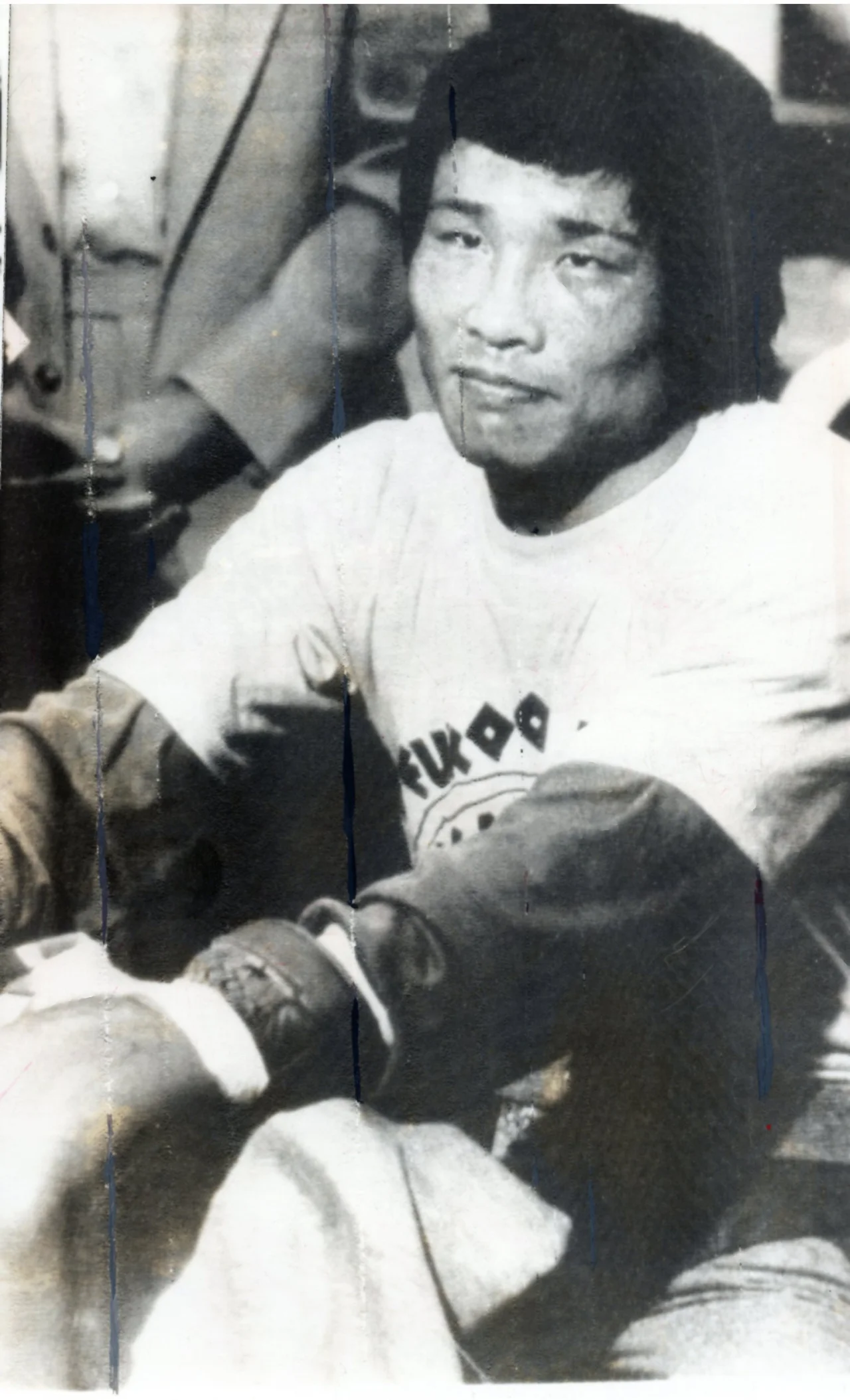
Kim Duk-koo
 South Korea
Also known as: Lee Deok-gu
Data de nascimento
July 29, 1955
Signo
Leo
Local de nascimento
Banam-ri, Goseong County, Gangwon Province, South Korea
Idade
Faleceu aos 27
Altura
5 ft 6 in (168 cm)
Sobre
Kim Duk-koo foi um pugilista profissional sul-coreano que competiu na divisão dos leves. Nascido Lee Deok-gu, ele lutava na postura canhota e acumulou um cartel de 17 vitórias, 2 derrotas e 1 empate, com 8 nocautes. Seu estilo agressivo e implacável lhe rendeu o título leve do Oriente-Pacífico em 1982. Kim é mais lembrado por sua morte trágica após uma luta pelo título mundial contra Ray Mancini, que catalisou importantes reformas de segurança no boxe, incluindo a redução das lutas de campeonato de 15 para 12 rounds pela WBC. Hoje, ele é um símbolo dos perigos inerentes ao esporte e da necessidade de proteção aos atletas.
Início da vida e origens
Kim era o mais novo de cinco filhos nascidos em extrema pobreza em uma pequena vila na província de Gangwon. Seu pai morreu de doença quando Kim tinha apenas dois anos, e sua mãe se casou três vezes. Um meio-irmão abusivo tornou a vida em casa insuportável. Aos 14 anos, Kim fugiu para Seul, onde sobreviveu vendendo chicletes e engraxando sapatos nas ruas. Ele não tinha experiência no boxe amador. Aprendeu o esporte após se juntar a uma academia em Seul, onde sua resistência natural chamou a atenção do empresário Hyun-Chi Kim em um clube de luta local. Hyun-Chi o acolheu e o treinou do zero. Kim se tornou profissional aos 19 anos, em 1976. Certa vez, refletiu: "Se não fosse pelo boxe, eu teria sido um delinquente sujo."
Crescimento na carreira
Kim se profissionalizou em 1976 e lutou principalmente na Coreia do Sul, construindo um cartel de 17-2-1. Em 1982, venceu o título leve do Oriente-Pacífico, garantindo uma chance pelo título mundial dos leves da WBA, detido por Ray Mancini. A luta ocorreu em 13 de novembro de 1982, no Caesars Palace, em Las Vegas, transmitida ao vivo pela CBS. Kim assinou por uma bolsa recorde de US$ 20.000, enquanto Mancini ganhou US$ 250.000. Kim lutou bravamente, mas estava atrás nos três cartões dos juízes quando o 14º round começou. Faltando 19 segundos para o fim do round, Mancini desferiu uma série de golpes, e Kim desabou. Ele nunca recuperou a consciência. Quatro dias depois, em 18 de novembro, foi declarado morto aos 27 anos.
Linha do tempo da carreira
Imagem pública e estilo
Na Coreia do Sul, Kim é lembrado como uma figura nacional trágica que emergiu da pobreza para disputar um título mundial, apenas para morrer no ringue. Sua história é frequentemente citada em discussões sobre reformas de segurança no boxe. Não existe um nome oficial de fandom. O filme biográfico de 2002 Champion, estrelado por Yu Oh-seong, é a homenagem cultural mais proeminente. O sacrifício de Kim levou diretamente a WBC a reduzir as lutas de campeonato de 15 para 12 rounds, uma mudança que permanece em vigor até hoje.
Fama e fandom
Kim Duk-koo remains a singular, tragic figure in global sports history rather than a contemporary celebrity with a living fanbase. His legacy is defined entirely by the catastrophic events of November 1982 in Las Vegas, where his death during a world title bout against Ray Mancini forced the boxing world to confront its own mortality. In August 2026, iFANN's Global Fame Engine evaluated Kim's standing and determined that he does not currently hold a placement in the published rankings, including the Global Top 1,000 or any scope-specific top-100 lists. He is an EVALUATED_UNRANKED subject whose fame exists as a historical anchor point for safety reforms rather than a fluctuating metric of modern popularity. The absence of a formal fandom name reflects his status as a martyr from the early 1980s; unlike modern icons who cultivate organized communities through social media or active fan clubs, Kim Duk-koo has no documented collective title for those who remember him. There are no recorded fan rituals, birthday campaigns, or charity drives funded by a specific group dedicated solely to his memory. Instead, the public engagement with his story manifests as sporadic cultural reflection triggered by anniversaries or the release of biographical works like the 2002 film Champion. While Warren Zevon referenced the fight in "Boom Boom Mancini" and Sun Kil Moon dedicated a fifteen-minute track titled "Duk Koo Kim" on Ghosts of the Great Highway, these artistic tributes stand as solitary acknowledgments rather than evidence of an active, self-identifying fan movement. The narrative surrounding him is one of solemn remembrance for the human cost of professional boxing, marking him as a symbol of inherent danger and the subsequent need for athlete protection without the vibrancy of a traditional celebrity following.
Fatos interessantes e lendas
Before the fatal bout against Ray Mancini, Kim taped the words "Kill or be killed" to his hotel mirror, a chilling premonition that fans still retell as a defining moment of his psychological state. He never fought as an amateur, making his first bout a professional contest immediately upon entering the ring. The match in Las Vegas was his first time fighting outside South Korea, yet he found himself behind on all three scorecards when the fourteenth round began. Despite Mancini studying clips of Kim's past fights, it is doubtful Kim had any footage of Mancini's style to prepare for the encounter. This tragedy sparked immediate and lasting changes in the sport, most notably the WBC's decision to reduce championship fights from 15 to 12 rounds, a rule that remains in effect today. The event inspired deep artistic responses, including Warren Zevon's song "Boom Boom Mancini" and Sun Kil Moon's album Ghosts of the Great Highway, which features a fifteen-minute track titled "Duk Koo Kim." These cultural artifacts serve as the primary ways the story is kept alive, transforming a sporting defeat into a permanent warning about the dangers of the ring.
Frases notáveis
“If it was not thanks to boxing, I would have been a dirty punk.”
“Kill or be killed. (taped to his hotel mirror before the Mancini fight)”
Família e vida pessoal
Kim era o mais novo de cinco filhos. Seu pai morreu quando ele tinha dois anos, e sua mãe se casou mais três vezes. Ele tinha um meio-irmão abusivo. Kim era casado na época de sua morte e tinha um filho. Sua viúva e filho encontraram Ray Mancini pela primeira vez em 2011, durante a produção do documentário The Good Son. Após a morte de Kim, sua mãe cometeu suicídio. O presidente sul-coreano Chun Doo Hwan fez uma doação pessoal à mãe de Kim, e doações públicas foram coletadas em Seul.
Conexões notáveis
Kim é mais associado a Ray Mancini, o oponente em sua luta fatal. Seu empresário Hyun-Chi Kim o treinou desde o início. Bob Arum promoveu a luta. O árbitro Richard Green, que apitou a luta, mais tarde cometeu suicídio. O filme de 2002 Champion dramatizou a vida de Kim, e o documentário The Good Son (2011) mostrou Mancini encontrando a família de Kim.
Relacionamentos e história amorosa
Kim era casado na época de sua morte. O nome de sua esposa não é amplamente divulgado em fontes de língua inglesa. Eles tiveram um filho juntos. Nenhum outro relacionamento romântico público foi documentado. Kim era casado na época de sua morte.
- Casado(a)? - 1982Kim era casado na época de sua morte. O nome de sua esposa não é amplamente divulgado. Eles tiveram um filho.
Morte e repercussões
Morte
November 18, 1982 (aos 27 anos)
Local da morte
Las Vegas, Nevada, USA
Causa da morte
Massive brain damage from trauma
The tragedy of Kim Duk-koo's death sparked immediate national grief in South Korea and a somber silence across the American boxing world. Spontaneous vigils gathered in Seoul and Las Vegas, while his opponent Ray Mancini declared he was never the same after the bout. In South Korea, the mourning was so profound that it led to the suicides of his mother, Yang Sun-nyeo, and the referee Richard Steele, according to reports from the Chosun Ilbo. Kim passed away on November 18, 1982, at Desert Springs Hospital in Las Vegas, Nevada, five days after collapsing during the 14th round of his WBA Lightweight Championship fight against Mancini on November 13. Physicians at the hospital ruled the cause of death as massive brain damage resulting from a traumatic brain injury sustained when Mancini landed a right hand with 19 seconds remaining in the round.
Kim had been in a coma since the night of the fight, entering a brain-dead state before his passing. Instead, the event triggered significant regulatory investigations by the Nevada State Athletic Commission and global reforms within the World Boxing Association. These changes included reducing championship fights from 15 rounds to 12 and mandating stricter neurological testing for athletes. Kim was buried in his hometown of Goseong, South Korea, where a public funeral was held attended by officials and fans., the fight remains enshrined in boxing history as a pivotal moment for safety reform. Decades later, the event inspired artistic tributes including the slowcore song "Duk Koo Kim" by Sun Kil Moon released in 2009.
Patrimônio (valor do espólio)
$100 Thousand
Estimativa da equipe editorial do iFANN
Kim Duk-koo died with minimal assets, leaving behind a career-high purse of $20,000 for the Mancini fight, a sum far below the $250,000 earned by his opponent. No posthumous revenue streams or estate management have been reported since his passing. Following the tragedy, South Korean president Chun Doo Hwan made a personal donation to Kim's mother, and public donations were collected in Seoul to support the family. Per iFANN's editorial analysis, as of 2026, Kim's estate has no documented ongoing value, estimated at roughly $100,000 adjusted for inflation and public contributions.
Prêmios e condecorações
View 4 records, honours and achievementsConhecido por
WBA Lightweight Championship fight vs. Ray Mancini
1982 · Challenger
Orient-Pacific Lightweight Championship
1982 · Campeão
Palavras-chave
Fontes
Dados rápidos
- Profissão
- boxer
- Nascimento
- July 29, 1955
- Local de nascimento
- Banam-ri, Goseong County, Gangwon Province, South Korea
- Morte
- November 18, 1982
- Local da morte
- Paradise, Nevada, USA
- Gênero
- Masculino
- Signo
- Leo
- Altura
- 5 ft 6 in (168 cm)
- Stance
- Southpaw
- Total Fights
- 20
- Wins
- 17
- Wins by KO
- 8
- Losses
- 2
- Draws
- 1
Dados pessoais
- Nome completo
- Lee Deok-gu
- Altura
- 5 ft 6 in (168 cm)
- Filhos
- 1 son
Perguntas frequentes
Como Kim Duk-koo morreu?
Kim Duk-koo tinha esposa e filhos?
Que reformas de segurança a morte de Kim Duk-koo causou?
Qual era o histórico de boxe de Kim Duk-koo?
A mãe de Kim Duk-koo também morreu tragicamente?
Pessoas semelhantes
Junte-se à comunidade
fãs comentando