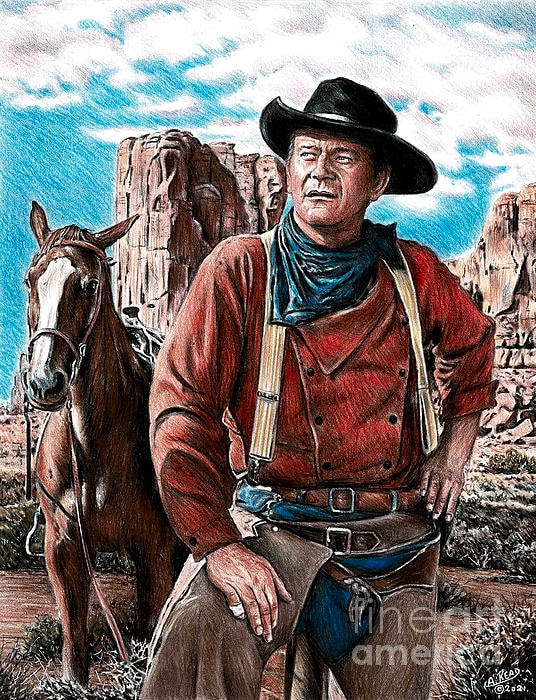
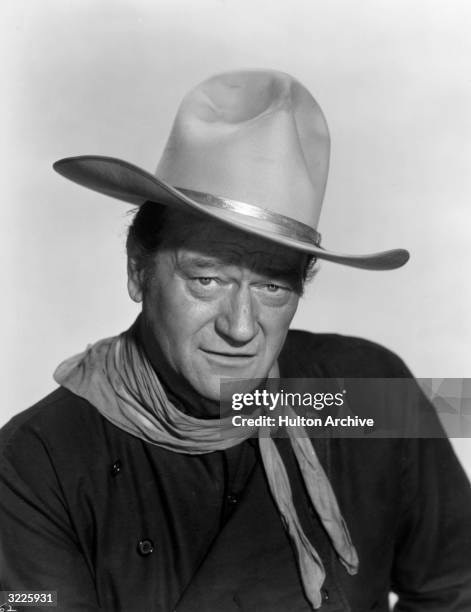
John Wayne
 United States
Also known as: Duke
Data de nascimento
May 26, 1907
Signo
Gemini
Local de nascimento
Winterset, Iowa
Idade
Faleceu aos 72
Altura
6 ft 4 in (193 cm)
Sobre
John Wayne foi um ator americano que se tornou um ícone definidor da Era de Ouro de Hollywood. Apelidado de "Duke", ele personificou o espírito rude da fronteira em faroestes e filmes de guerra. Ao longo de uma carreira que durou cinco décadas, ele apareceu em 179 produções cinematográficas e televisivas e permaneceu como uma das maiores bilheterias por três décadas. Sua filmografia inclui clássicos como Stagecoach (1939), Red River (1948), The Quiet Man (1952), The Searchers (1956) e True Grit (1969), este último lhe rendendo o Oscar de Melhor Ator.
A persona de Wayne, de um herói forte e moralmente certo, ressoou profundamente com o público americano. Ele recebeu a Medalha Presidencial da Liberdade postumamente em 1980 e a Medalha de Ouro do Congresso em 1998. O American Film Institute o classificou entre os maiores astros masculinos do cinema clássico americano. Seu legado continua através de seus filmes, da gestão de seu espólio por sua família e da John Wayne Cancer Foundation.
Início da vida e origens
Nascido Marion Robert Morrison em Winterset, Iowa, Wayne era o mais velho de dois filhos. Sua família mudou-se para o sul da Califórnia em 1914, estabelecendo-se em Glendale. Seu pai, Clyde, era farmacêutico e enfrentava dificuldades com negócios e saúde, deixando a família muitas vezes com pouco dinheiro. O jovem Marion foi apelidado de "Duke" por bombeiros locais por causa de seu amado Airedale terrier, um apelido que ficou para sempre.
Wayne frequentou a Glendale High School, onde foi um aluno popular e um jogador de futebol americano estrela. Ele também atuou em peças escolares. Ganhou uma bolsa de futebol americano para a University of Southern California em 1925, mas um acidente de bodyboarding rompeu os ligamentos do ombro, encerrando sua carreira no futebol e sua bolsa. Para pagar a mensalidade, começou a trabalhar no departamento de adereços e como figurante na Fox Film Corporation. Lá, fez amizade com o diretor John Ford, que lhe deu seus primeiros pequenos papéis. Depois de abandonar a USC, Wayne trabalhou em tempo integral na indústria cinematográfica, fazendo pontas e estrelado faroestes B durante a década de 1930.
Crescimento na carreira
O grande avanço de Wayne veio com Stagecoach (1939), de John Ford, um faroeste marcante que o estabeleceu como uma grande estrela e reviveu o gênero. Nas três décadas seguintes, ele dominou as bilheterias com sucessos como Red River (1948), The Quiet Man (1952), The Searchers (1956), Rio Bravo (1959) e The Man Who Shot Liberty Valance (1962). Ele cofundou a Batjac Productions em 1952, produzindo e dirigindo vários filmes, incluindo The Alamo (1960).
Em 1969, ganhou o Oscar de Melhor Ator por seu papel como Rooster Cogburn em True Grit. Seu último filme foi The Shootist (1976), no qual interpretou um pistoleiro morrendo de câncer, espelhando sua própria luta contra a doença. Wayne morreu de câncer no estômago em 11 de junho de 1979, aos 72 anos.
Linha do tempo da carreira
Imagem pública e estilo
O estilo característico de Wayne incluía uma caminhada lenta e deliberada, uma voz arrastada e olhos semicerrados. Ele quase sempre interpretava um herói forte, moralmente certo e independente. Ele é consistentemente retratado como o ícone americano definitivo do gênero faroeste. Embora reverenciado por muitos, seu legado também é debatido no contexto das visões modernas sobre raça e gênero. Os fãs celebram sua vida anualmente em sua cidade natal, Winterset, Iowa, e seus filmes são frequentemente exibidos na TV a cabo.
Fama e fandom (iFAMOUS Rankings)
John Wayne remains a towering figure in global cinema history, though the iFANN Global Fame Engine has evaluated his current standing and determined he does not hold a placement in the published rankings. This absence from the Top 1,000 or scope lists reflects a unique status where his cultural footprint is so deeply embedded that modern real-time metrics no longer capture his specific velocity, yet his legacy endures without a formal numeric rank. While contemporary stars often dominate charts with active fanbases, Wayne's influence operates through historical reverence rather than trending algorithms. The audience for this icon does not cluster under a single official moniker; fans generally identify simply as admirers of "The Duke" or enthusiasts of Western cinema, maintaining a connection through enduring cultural appreciation rather than organized digital campaigns. Unlike modern celebrities who rely on fan-driven streaming drives or birthday billboards, Wayne's supporters sustain his memory through institutional milestones like the John Wayne Airport in Santa Ana and the John Wayne Parkway in Arizona. These tributes stand as permanent markers of a man whose persona defined an era, proving that true stardom can exist beyond the fluctuating noise of current popularity metrics.
Fatos interessantes e lendas
John Wayne was an avid smoker diagnosed with lung cancer in 1964, which led to the removal of one of his lungs. A Freemason and registered Republican known for his pro-Vietnam War stance, he owned a yacht named The Wild Goose and was an accomplished sailor. His final film, The Shootist (1976), mirrored his own life as it featured a gunfighter dying of cancer. Decades later, his image appeared in a 2024 Super Bowl commercial for a bourbon brand. Beyond these facts, lore surrounds his personal habits: while pop culture often depicts him as a whiskey drinker, he actually favored Sauza Conmemorativo Añejo tequila over crushed ice with lemon. Another cherished story involves his sweet tooth; he kept a stash of Abba-Zaba chocolate bars in a drawer on set or at home, a detail that humanizes his rugged cowboy image. The mythology of his nickname "Duke" is also well-documented, originating from his childhood in Winterset where locals called him "Big Duke" alongside his Airedale dog, "Little Duke." This bond between boy and dog cemented the name that would become synonymous with Hollywood's Golden Age.
Frases notáveis
“I won't be wronged, I won't be insulted, and I won't be laid a hand on. I don't do these things to other people, and I require the same from them.”
“Tomorrow is the most important thing in life. Comes into us at midnight very clean. It's perfect when it arrives and it puts itself in our hands. It hopes we've learned something from yesterday.”
“Courage is being scared to death... but saddling up anyway.”
Família e vida pessoal
Wayne foi casado três vezes. Sua primeira esposa foi Josephine Alicia Saenz, com quem teve quatro filhos: Penelope, Aissa, Patrick e Michael. Eles se divorciaram em 1945. Seu segundo casamento foi com Esperanza Baur, de 1946 a 1954; não tiveram filhos. Sua terceira esposa foi Pilar Pallete, com quem teve três filhos: Aissa, John Ethan e Marisa. Eles permaneceram casados até sua morte. Seu filho Ethan Wayne administra o espólio de John Wayne.
Conexões notáveis
Relacionamentos e história amorosa
Wayne se casou com sua primeira esposa, Josephine Alicia Saenz, em 1933. Eles tiveram quatro filhos antes de se divorciarem em 1945 devido às longas ausências e infidelidade de Wayne. Em 1946, casou-se com Esperanza Baur; o casamento foi tumultuado, marcado por ciúmes e alcoolismo, e terminou em divórcio em 1954. Mais tarde naquele ano, casou-se com Pilar Pallete, com quem teve três filhos. Eles permaneceram casados até a morte dele em 1979. Apesar de rumores frequentes, sua amizade próxima com a colega de elenco Maureen O'Hara permaneceu platônica.
- Casado(a)Josephine Alicia Saenz1933 - 1945Teve quatro filhos; divorciou-se devido às ausências e infidelidade de Wayne.
- Casado(a)Esperanza Baur1946 - 1954Sem filhos; casamento marcado por ciúmes e alcoolismo.
- Casado(a)Pilar Pallete1954 - 1979Teve três filhos; permaneceu casada até a morte de Wayne.
Morte e repercussões
Morte
June 11, 1979 (aos 72 anos)
Local da morte
Santa Monica, California, USA
Causa da morte
Metastatic stomach cancer
President Jimmy Carter issued a statement praising John Wayne as "a symbol of American courage" and "one of our greatest actors," while peers like Clint Eastwood, Henry Fonda, and James Stewart offered eulogies highlighting his patriotism and integrity. This wave of tributes followed the actor's passing at St. John's Health Center in Santa Monica, California, on June 11, 1979, where he spent his final days under palliative care for metastatic stomach cancer. Medical records confirm that Wayne had undergone surgery earlier that year before the disease spread to his liver, leaving him too weak to speak clearly in his last hours despite remaining conscious. The death occurred, allowing the estate to be handled according to his will with immediate family members present.
A private funeral service was held on June 14, 1979, at the Chapel of the Chimes in Hollywood Hills, attended by his wife Pilar Pallete, children Patrick and Mary Antonia, and close friends. Following the ceremony, Wayne was cremated, and his ashes were interred at Forest Lawn Memorial Park in Glendale, California. His legacy endured through posthumous releases and honors, including induction into the National Cowboy & Western Heritage Museum's Hall of Fame and the establishment of the John Wayne Cancer Foundation to support research. Tributes aired on television networks in the days following his death, reflecting a renewed focus on his filmography and the impact of his persona on American culture.
Patrimônio (valor do espólio)
$50 Million
Estimativa da equipe editorial do iFANN
Per iFANN's editorial analysis, the estate of John Wayne is valued at $50 Million as of 2026. Managed by his son Ethan Wayne, the estate generates revenue through licensing deals for his image and likeness, royalties from his extensive filmography, and business ventures including a line of bourbon and cigars. The organization also oversees the John Wayne Museum in Winterset, Iowa, and supports the John Wayne Cancer Foundation.
Prêmios conquistados (7)
John Wayne ganhou o Oscar de Melhor Ator por Bravura Indômita (1969). Recebeu vários prêmios Globo de Ouro, incluindo o Prêmio Cecil B. DeMille pelo conjunto da obra (1965) e vários Prêmios Henrietta como Favorito Mundial do Cinema. Também ganhou vários Prêmios People's Choice e Prêmios Western Heritage.
1969 · Melhor Ator
True Grit
1969 · Melhor Ator – Drama
True Grit
Conhecido por
Stagecoach
1939 · Ringo Kid
Red River
1948 · Thomas Dunson
The Quiet Man
1952 · Sean Thornton
The Searchers
1956 · Ethan Edwards
Rio Bravo
1959 · John T. Chance
The Man Who Shot Liberty Valance
1962 · Tom Doniphon
True Grit
1969 · Rooster Cogburn
The Shootist
1976 · J.B. Books
Palavras-chave
Fontes
Dados rápidos
- Profissão
- film actor, actor, film director
- Nascimento
- +1907-05-26
- Local de nascimento
- Winterset
- Morte
- +1979-06-11
- Local da morte
- Westwood
- Gênero
- Masculino
- Cônjuge
- Esperanza Baur, Pilar Pallete, Josephine Wayne
- Signo
- Sagittarius
- Signo
- Gemini
Dados pessoais
- Nome completo
- Marion Robert Morrison
- Altura
- 6 ft 4 in (193 cm)
- Cônjuge
- Josephine Alicia Saenz, Esperanza Baur, Pilar Pallete
- Filhos
- 7
- Formação
- Attended University of Southern California (did not graduate)
Filmografia
179
Total
142
Cinema
37
TV
Perguntas frequentes
Qual era a altura de John Wayne?
Qual era o nome verdadeiro de John Wayne?
Quantos filhos John Wayne teve?
John Wayne serviu nas forças armadas?
Qual foi o último filme de John Wayne?
Pessoas semelhantes

Junte-se à comunidade
fãs comentando