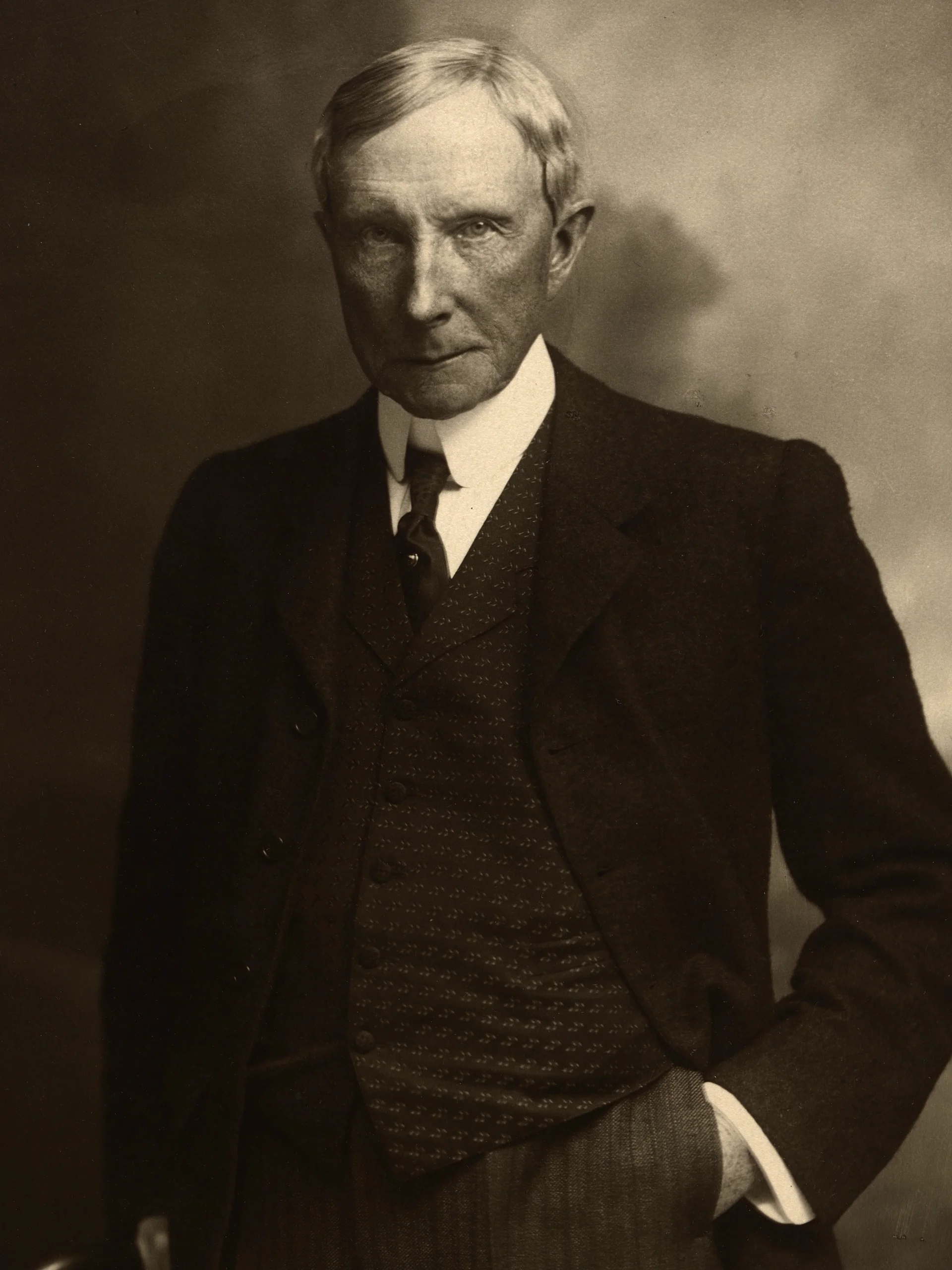
John D. Rockefeller
 United States
Also known as: John Davison Rockefeller, John D. Rockefeller Sr.
Data de nascimento
July 8, 1839
Signo
Cancer
Local de nascimento
Richford, New York, USA
Idade
Faleceu aos 97
Sobre
John D. Rockefeller Sr. foi um industrial e filantropo americano que fundou a Standard Oil Company e se tornou uma das pessoas mais ricas da história. Ele começou sua carreira como assistente de contabilidade aos 16 anos e, aos 20, entrou em parcerias de negócios. Seu foco logo se estreitou para a indústria de refino de petróleo, o que se mostrou profético à medida que o querosene e a gasolina se tornavam commodities essenciais.
Rockefeller fundou a Standard Oil Company em 1870 e a liderou até 1897, permanecendo seu maior acionista. Sob sua direção, a Standard Oil cresceu para controlar impressionantes 90% da produção de petróleo do país em 1900. A empresa alcançou esse domínio por meio de cortes agressivos de custos e métodos inovadores de distribuição. Críticos apontaram práticas monopolistas, citando a famosa visão de Rockefeller de que "A competição é um pecado".
O imenso sucesso da Standard Oil atraiu atenção regulatória. Em 1911, a Suprema Corte ordenou sua dissolução, dividindo-a em 34 entidades independentes, muitas das quais, como ExxonMobil e Chevron, ainda existem hoje. No auge, a fortuna pessoal de Rockefeller foi estimada em US$ 900 milhões, representando 2,3% do PIB dos EUA. Ele se tornou oficialmente o primeiro bilionário do país em 28 de setembro de 1916.
Após se aposentar, Rockefeller dedicou 40 anos à filantropia. Ele e sua esposa Laura fundaram instituições que pioneiraram a doação sistemática, focando em educação, medicina e pesquisa científica. Esses esforços avançaram a pesquisa médica e combateram doenças como ancilostomíase e febre amarela. Ele também fundou a Universidade de Chicago e a Universidade Rockefeller, moldando o ensino superior e a ciência médica. Rockefeller morreu em 23 de maio de 1937, deixando um legado tanto como titã industrial quanto como filantropo transformador.
Início da vida e origens
Rockefeller nasceu em 8 de julho de 1839, em Richford, Nova York, o segundo de seis filhos. Seu pai, William Avery Rockefeller, era um vendedor viajante que frequentemente estava ausente, enquanto sua mãe, Eliza Davison, criava os filhos com rígidos valores batistas. A família mudou-se várias vezes antes de se estabelecer em Cleveland, Ohio, em 1853. Desde jovem, Rockefeller demonstrou um grande senso de negócios, mantendo livros contábeis meticulosos e economizando dinheiro de biscates. Ele frequentou escolas locais e, aos 16 anos, matriculou-se no Folsom's Commercial College em Cleveland para estudar contabilidade, concluindo um curso de três meses.
Em 1855, aos 16 anos, Rockefeller conseguiu um emprego como assistente de contabilidade na Hewitt & Tuttle, uma firma de comissão de produtos. Ele trabalhava diligentemente, ganhando reputação de precisão e confiabilidade. Economizou seus ganhos e, em 1859, aos 20 anos, fez parceria com Maurice B. Clark para formar a Clark & Rockefeller, uma empresa que lidava com produtos e mercadorias. A descoberta de petróleo em Titusville, Pensilvânia, em 1859, chamou sua atenção. Reconhecendo o potencial do petróleo, Rockefeller e Clark investiram em uma refinaria de petróleo em Cleveland em 1863, marcando sua mudança decisiva para o negócio do petróleo. Esta refinaria, construída com um sócio, foi a base de seu futuro império.
Crescimento na carreira
O empreendimento mais significativo de Rockefeller foi a fundação da Standard Oil Company em 1870, com sócios incluindo seu irmão William, Henry M. Flagler e Stephen V. Harkness. Sob sua liderança, a Standard Oil cresceu por meio de integração horizontal e vertical agressiva, visando controlar todos os aspectos da produção e distribuição de petróleo. Em 1880, a Standard Oil controlava aproximadamente 90% da capacidade de refino de petróleo dos EUA. A empresa alcançou economias de escala que lhe permitiram subcotar concorrentes e negociar tarifas ferroviárias favoráveis.
Em 1882, a Standard Oil foi reorganizada como um truste, uma estrutura que centralizava o controle e se tornou modelo para outras indústrias. Rockefeller se aposentou da gestão diária em 1897, mas permaneceu o maior acionista. O domínio da empresa levou à decisão da Suprema Corte em 1911 ordenando sua dissolução em 34 empresas independentes, muitas das quais, como ExxonMobil e Chevron, continuam sendo grandes corporações. A fortuna pessoal de Rockefeller atingiu o pico de estimados US$ 900 milhões, cerca de 2,3% do PIB dos EUA. Em 28 de setembro de 1916, ele se tornou o primeiro americano oficialmente reconhecido como bilionário.
Linha do tempo da carreira
Imagem pública e estilo
A imagem pública de Rockefeller é complexa e polarizadora. Para seus admiradores, ele foi um industrial visionário que revolucionou a produção e distribuição de petróleo, tornando o querosene e a gasolina acessíveis e disponíveis. Seu trabalho filantrópico, particularmente em pesquisa médica e educação, lhe rendeu amplo respeito. Críticos, no entanto, o viam como um monopolista implacável que usava táticas predatórias para esmagar a concorrência, fixar preços e subornar políticos. A exposição de 1904 da jornalista investigativa Ida Tarbell, "A História da Standard Oil Company", moldou a percepção pública dele como um barão ladrão. Em seus últimos anos, Rockefeller cultivou uma imagem de avô, distribuindo moedas de dez centavos e jogando golfe. Ele não era uma celebridade no sentido moderno, mas seu nome se tornou sinônimo de riqueza extrema e poder corporativo. Não há um fandom formal, mas historiadores e economistas continuam a debater seu legado.
Fama e fandom
John D. Rockefeller remains a towering figure in global history, though his legacy operates differently than modern celebrity culture. As of August 2026, the iFANN Global Fame Engine has evaluated this person, but they do not currently hold a placement in the published rankings such as the Global Top 1,000 or any Top-100 scope list. This absence reflects a unique status where historical influence transcends contemporary fame metrics rather than indicating obscurity. While he lacks a formal fandom name and no organized group identifies themselves as his fans, his enduring presence is maintained through the institutions he built rather than social media campaigns or fan rituals. The Rockefeller Foundation and the University of Chicago serve as living monuments to his life, drawing scholars and donors who engage with his philosophy of stewardship instead of chasing viral moments. His story continues to shape discussions on wealth, monopoly, and philanthropy, creating a quiet but pervasive cultural footprint that does not require active fan mobilization to sustain its relevance.
Fatos interessantes e lendas
Rockefeller was a devout Baptist who tithed 10% of his income from his very first paycheck onward. He often gave dimes to children as a gesture of goodwill and never smoked or drank alcohol. An avid golfer, he played into his 90s and maintained greenhouses at his estate in Pocantico Hills, New York, where his favorite flower, the orchid, bloomed. Despite his vast fortune, he lived modestly, avoiding ostentation, and kept a diary from age 16 until his death to document his finances and thoughts. He was known for strict punctuality and expected the same from others. Beyond these personal habits, legends surround him as the world's first dollar billionaire, a milestone officially crossed in 1916 when his wealth peaked at $900 million. A central part of his lore involves the antitrust case Standard Oil Co. of New Jersey v. United States, which led to the company's breakup in 1911 after controlling 90% of U.S. refineries. Another enduring narrative is his transition from a ruthless tycoon to a benevolent philanthropist who gave away $540 million before his death, establishing foundations that continue to operate globally today.
Frases notáveis
“The ability to deal with people is as much a commodity as sugar or coffee and I will pay more for that ability than for any other under the sun.”
“I believe it is the duty of every man who has been blessed by the opportunities of this land to help his fellow men.”
“Competition is a sin.”
Família e vida pessoal
Rockefeller casou-se com Laura Spelman em 8 de setembro de 1864. Laura era professora e filha de um proeminente abolicionista. Tiveram seis filhos: Bessie (morta na infância), Elizabeth, John D. Jr., Alta, Edith e Rodman (morto na infância). Laura foi uma influência fundamental na virada filantrópica de Rockefeller, e ele a creditava por moldar sua bússola moral. Ela morreu em 29 de março de 1915. Rockefeller nunca se casou novamente. Seu filho, John D. Rockefeller Jr., tornou-se um notável filantropo e construiu o Rockefeller Center. A propriedade da família em Pocantico Hills, Nova York, tornou-se um ponto de encontro para gerações. Os descendentes de Rockefeller continuaram seu legado filantrópico através da Fundação Rockefeller e outras instituições.
Conexões notáveis
Rockefeller era intimamente associado à sua esposa Laura Spelman Rockefeller, que influenciou sua filantropia. Seu filho John D. Rockefeller Jr. deu continuidade ao seu trabalho filantrópico. Os parceiros de negócios incluíam Henry M. Flagler, Stephen V. Harkness e seu irmão William Rockefeller. O antigo parceiro Maurice B. Clark ajudou a lançar sua carreira. Ele também foi associado à jornalista investigativa Ida Tarbell, cuja denúncia moldou sua imagem pública.
Relacionamentos e história amorosa
John D. Rockefeller casou-se com Laura Spelman em 8 de setembro de 1864. Laura era professora de uma proeminente família abolicionista. Tiveram seis filhos juntos, embora dois tenham morrido na infância. Laura foi uma influência estabilizadora para Rockefeller e incentivou sua virada filantrópica. Foram casados por mais de 50 anos até a morte de Laura em 29 de março de 1915. Rockefeller nunca se casou novamente e permaneceu devoto à sua memória. Ele costumava dizer que ela foi a melhor decisão de negócios que já tomou. Em 2026, Rockefeller está falecido e seu estado civil é viúvo.
- Casado(a)Laura Spelman Rockefeller1864 - 1915Casou-se em 8 de setembro de 1864; ela faleceu em 29 de março de 1915.
Morte e repercussões
Morte
May 23, 1937 (aos 97 anos)
Local da morte
Ormond Beach, Florida
Causa da morte
Natural causes related to his age
John Davison Rockefeller Sr. died on May 23, 1937, at his winter residence in Ormond Beach, Florida. While specific medical details were not released in a formal public autopsy report or coroner's inquest, historical accounts confirm he died peacefully in his sleep following a period of declining health associated with his advanced age. Regarding the circumstances of his final days, Rockefeller had been living in semi-retirement for many years, having stepped down from active management of Standard Oil decades earlier. His last public appearances occurred years prior to his death, as he largely withdrew from public life after the early 1920s to focus on philanthropy and personal well-being. The cause of death is officially attributed to natural causes related to his age, with no disputed accounts or unconfirmed theories regarding homicide or suicide present in historical records.
Public reaction to his death was characterized by widespread mourning and tributes from peers, institutions, and government officials. Upon his death, newsreels described him as a figure whose kindliness and simplicity marked his long life. Memorial murals and landmarks dedicated to him existed prior to his death, most notably the Rockefeller Center in New York City and various university buildings. The funeral for John D. Rockefeller Sr. was held privately on May 25, 1937, at the Rockefeller estate in Ormond Beach, Florida. The service was attended by family members, close associates, and representatives from the Rockefeller Foundation and other charitable institutions he supported. Notable attendees included his son, John D. Rockefeller Jr., and other prominent figures of the time. Following the service, he was buried in the Sleepy Hollow Cemetery in Tarrytown, New York, alongside his wife, Laura Spelman Rockefeller, and later his son, William Rockefeller Jr.
In the posthumous realm, Rockefeller's estate was handled through a complex process of wealth distribution and philanthropic expansion. By the time of his death, he had already given away approximately $540 million, making him one of the first individuals to donate more than half their fortune. His estate continued to be managed by the Rockefeller Foundation, which he established in 1913, and the General Education Board. A documentary titled Rockefeller - The Original Billionaire was produced later to document his life, and he has been inducted into various halls of fame posthumously. The handling of his estate ensured that the bulk of his remaining assets were funneled into charitable trusts, effectively ending the dynasty of absolute financial control within the family while maintaining its social and philanthropic influence.
Patrimônio (valor do espólio)
$1.4 Billion
Estimativa da equipe editorial do iFANN
iFANN currently estimates John D. Rockefeller's net worth at the time of his death in 1937 to be $1.4 Billion. This figure reflects the immense value derived primarily from his ownership stake in Standard Oil and its successor companies following the 1911 breakup. He also held extensive investments in railroads, real estate, and other industries throughout his career. After his death, his estate was largely distributed to his heirs and the foundations he established, including the Rockefeller Foundation and Rockefeller University. The ongoing operations of these institutions, along with the continued growth of the Rockefeller family's wealth through investments, mean that his financial legacy persists. As of 2026, the Rockefeller family's collective net worth is estimated to be in the billions, though it is dispersed among many descendants. The exact value of Rockefeller's original estate in 2026 is not publicly reported, but the institutions he founded continue to hold significant endowments.
Prêmios e condecorações
View 6 records, honours and achievementsConhecido por
Standard Oil Company
1870 · Founder and Chairman
Rockefeller Foundation
1913 · Founder
University of Chicago
1890 · Founder
Rockefeller University
1901 · Founder
Palavras-chave
Dados rápidos
- Profissão
- industrialist, philanthropist
- Nascimento
- +1839-07-08
- Local de nascimento
- Richford, New York, USA
- Morte
- +1937-05-23
- Local da morte
- Ormond Beach, Florida, USA
- Gênero
- Masculino
- Cônjuge
- Laura Spelman Rockefeller
- Signo
- Cancer
Dados pessoais
- Nome completo
- John Davison Rockefeller
- Cônjuge
- Laura Spelman Rockefeller
- Filhos
- Bessie Rockefeller, Elizabeth Rockefeller, John D. Rockefeller Jr., Alta Rockefeller, Edith Rockefeller, Rodman Rockefeller
- Formação
- Folsom's Commercial College (bookkeeping)
Perguntas frequentes
Quem foi John D. Rockefeller?
Como John D. Rockefeller fez sua fortuna?
Qual era o patrimônio de John D. Rockefeller?
John D. Rockefeller ainda está vivo?
Pelo que John D. Rockefeller é conhecido além dos negócios?
Pessoas semelhantes
Junte-se à comunidade
fãs comentando