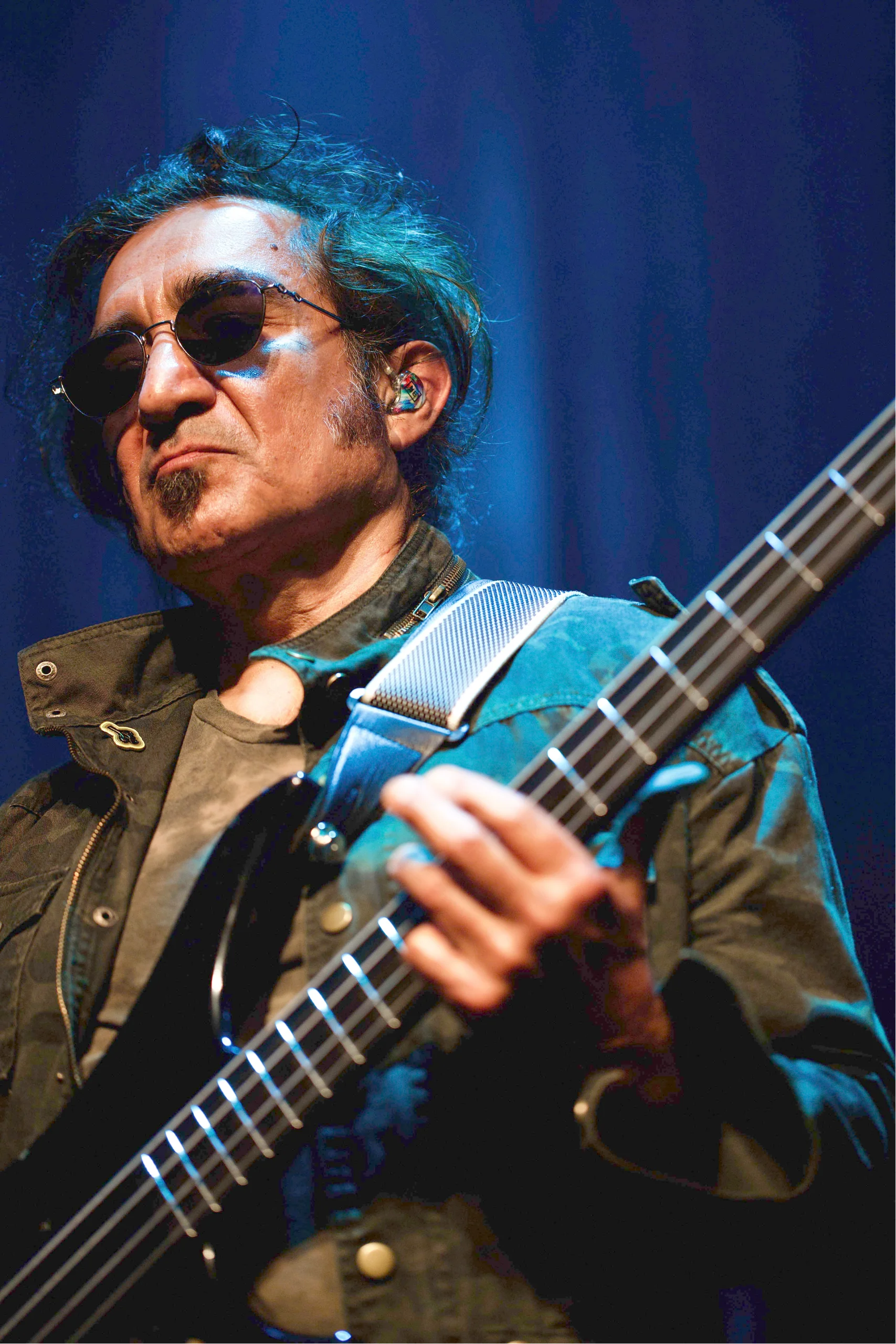
John Avila
Member of Oingo Boingo
bassist•record producer•composer•educator
Data de nascimento
January 14, 1957
Signo
Capricorn
Local de nascimento
San Gabriel, California
Idade
69 anos
Sobre
John Avila é um baixista, produtor musical, compositor e educador americano. Nascido em 14 de janeiro de 1957, em San Gabriel, Califórnia, ele é mais conhecido como o baixista da banda de new wave Oingo Boingo de 1984 até sua despedida em 1995. Suas linhas de baixo melódicas e marcantes ancoraram o som da banda em álbuns como 《Dead Man's Party》 e 《Boi-ngo》. Além dos palcos, Avila produziu 《Turn the Radio Off》 do Reel Big Fish, um marco do revival do ska nos anos 1990. Ele fez turnês com o guitarrista de blues Walter Trout e tocou com o Mutaytor e o The Gama Sennin. Em 2026, também leciona performance de baixo no Los Angeles College of Music. Os fãs o conhecem como uma força versátil e discreta que colaborou com nomes como Neil Young e Steven Tyler.
Início da vida e origens
Avila cresceu em um lar musical em San Gabriel. Seu pai possuía um gravador Ampex, e o jovem John usava aquelas fitas para gravar seus amigos e suas próprias bandas iniciais, despertando uma fascinação vitalícia pela gravação. Ele começou a tocar baixo em bandas locais e conseguiu seu primeiro grande oportunidade quando o grupo soul de Los Angeles El Chicano o convidou para tocar baixo em uma turnê de abertura para o Santana. Apresentar-se para 40.000 pessoas todas as noites o convenceu a deixar o East Los Angeles College, onde frequentava aulas, e seguir a música em tempo integral. Em 1981, ele cofundou a banda Food for Feet, o que ajudou a construir sua reputação na cena de Los Angeles.
Crescimento na carreira
Em 1984, Avila juntou-se ao Oingo Boingo, substituindo o baixista original Kerry Hatch. Ele tocou nos álbuns de maior sucesso comercial da banda: 《Dead Man's Party》 (1985), 《Boi-ngo》 (1987), 《Dark at the End of the Tunnel》 (1990) e 《Boingo》 (1994). Seu trabalho no baixo tornou-se uma marca registrada do som da banda. Após o show de despedida do Oingo Boingo no Halloween de 1995 no Universal Amphitheatre, Avila lançou seu próprio estúdio de gravação, Brando's Paradise, em sua garagem. Em 1996, ele produziu 《Turn the Radio Off》 do Reel Big Fish, um álbum que ajudou a impulsionar o movimento ska da terceira onda. Desde então, tocou com o Mutaytor, o The Gama Sennin e fez extensas turnês com o guitarrista de blues Walter Trout. Também ingressou no corpo docente do Los Angeles College of Music, ensinando performance de baixo.
Linha do tempo da carreira
Imagem pública e estilo
Avila mantém um perfil público discreto em comparação com muitos de seus colegas de banda do Oingo Boingo. Ele é conhecido nos círculos de músicos e da indústria como um baixista e produtor versátil e confiável, com um estilo caloroso e colaborativo. Sua abordagem característica envolve linhas de baixo dinâmicas e melódicas que foram um componente chave do som do Oingo Boingo durante seu auge. A mídia o retrata como um profissional experiente que fez uma transição suave de músico de turnê para produtor e educador. Nenhum nome oficial de fandom ou rituais de fãs estão documentados, mas ele é respeitado por fãs de ska, new wave e música roots por suas contribuições abrangentes.
Fama e fandom (iFAMOUS Rankings)
John Avila does not command a dedicated, named fandom of his own. While his bandmate Danny Elfman enjoys a global legion of followers known by specific monikers, Avila's audience remains subsumed within the broader Oingo Boingo community. There are no documented fan-funded projects, birthday billboards, or organized charity drives bearing his name alone. His interactions with admirers reflect standard professional engagement rather than the ritualistic culture seen with other new wave icons. This low-profile status is consistent with his career trajectory as a versatile musician who prioritized the craft over celebrity. Despite this, he maintains a steady presence in industry circles and among bass enthusiasts. iFANN has evaluated John Avila for inclusion in its Global Fame Engine rankings. As of August 2026, the evaluation indicates that John Avila is currently evaluated but unranked, holding no placement in the published Global Top 1,000 or any Top-100 scope list. He is not currently ranked on any specific genre or category lists either. The absence of a numeric position reflects a lack of sufficient data to place him within the current tiered structure of global fame metrics. While he lacks the viral mythology or legendary crowd reactions associated with frontmen, his enduring contribution to music ensures a quiet, persistent recognition. His work spans decades of touring, production, and education, building a reputation that relies on respect rather than hype. The media portrays him as a seasoned professional who transitioned smoothly from the stage to the studio and finally to the classroom. This steady evolution supports a career that thrives without needing the spotlight reserved for the most famous figures. The scale of his influence is measured in albums produced, students taught, and tours completed rather than headline numbers. His legacy is one of reliability and musical depth, anchored by his time with Oingo Boingo and his subsequent work with artists ranging from Neil Young to Walter Trout. Though he does not appear in the top ranks of global fame, his impact remains significant within the specific domains he inhabits.
Fatos interessantes e lendas
John Avila's father possessed an Ampex tape recorder found in the attic, an object that sparked his initial interest in recording technology. He left high school early to dedicate himself fully to a life in music. In 1996, Avila personally designed and constructed Brando's Paradise studio, creating a facility that continues to serve the local music scene. His first major tour experience involved opening for Santana alongside El Chicano, where he performed nightly before crowds of 40,000 people. A Grammy-nominated producer, composer, and arranger, Avila has recorded or performed with an exceptionally wide range of artists, including Neil Young, Willie Nelson, Steven Tyler, and Stewart Copeland. While the band Oingo Boingo generated legends involving Halloween traditions and the phenomenon surrounding *Dead Man's Party*, these stories are almost exclusively attributed to frontman Danny Elfman and the collective identity rather than Avila personally. No verified incidents of crowds shutting down streets or fans fainting have been linked specifically to his individual performances. Recent years have seen him join blues rock guitarist Walter Trout for an Australian tour in January 2024. He also participated in a masterclass offered by Bass Magazine and the Los Angeles College of Music in October 2019. His involvement in the Johnny Vatos project features original members playing Oingo Boingo music, serving as a legacy act rather than a source of personal folklore. These activities confirm his status as a respected musician whose career is defined by continuous activity rather than singular legendary moments.
Família e vida pessoal
Avila foi criado em San Gabriel, Califórnia, em um lar musical. Seu pai possuía um gravador Ampex que influenciou muito o interesse de Avila pela gravação e produção. Nenhum detalhe adicional sobre seus pais, irmãos ou sua própria vida familiar está documentado publicamente. Ele mantém sua vida pessoal privada.
Conexões notáveis
Avila colaborou com uma ampla gama de artistas, incluindo Danny Elfman, Steve Bartek e o restante do Oingo Boingo. Ele produziu o álbum de sucesso do Reel Big Fish e dividiu palcos com Neil Young, Willie Nelson, Jackson Browne, Steven Tyler, Stewart Copeland, Steve Vai, Eric Johnson, Bob Weir, Madness, The Specials e Ozomatli. Seu atual parceiro de turnê é o guitarrista de blues Walter Trout.
Relacionamentos e história amorosa
Fontes publicamente disponíveis não documentam quaisquer relacionamentos românticos, casamentos ou filhos para John Avila. Ele manteve uma vida pessoal notavelmente privada, sem relatos confirmados de histórico de namoros, noivados ou casamentos em fontes biográficas confiáveis, entrevistas ou cobertura da mídia. Em 2026, não há informações disponíveis publicamente sobre seu status de relacionamento atual.
Salário e patrimônio em 2026
$5 Million
Estimativa da equipe editorial do iFANN
As of 2026, iFANN currently estimates John Avila's net worth at $5 Million. This figure represents an editorial assessment of his accumulated assets and earnings. His financial foundation rests on diverse income streams developed over decades of professional activity. Revenue is generated through touring engagements with Walter Trout and other acts, alongside production royalties derived from albums such as Reel Big Fish's *Turn the Radio Off* and various Oingo Boingo records. Fees from his faculty position at the Los Angeles College of Music provide a stable educational income stream. Additional performance income comes from his work with the Mutaytor and The Gama Sennin. The operation of his private studio, Brando's Paradise, also contributes significantly to his revenue through ongoing recording projects. While he is not a mainstream celebrity commanding massive headlines, his consistent work ethic across multiple sectors of the music industry has established a comfortable and secure financial base.
Prêmios e condecorações
View 2 records, honours and achievementsConhecido por
Production of 'Turn the Radio Off' by Reel Big Fish
1996 · Produtor
Bassist for Oingo Boingo
1984 · Baixista
Faculty at Los Angeles College of Music
2018 · Educator
Palavras-chave
Fontes
Dados rápidos
- Profissão
- bassist, record producer, composer, educator
- Local de nascimento
- San Gabriel, California
- Gênero
- Masculino
- Grupo
- Oingo Boingo
Dados pessoais
- Formação
- East Los Angeles College (attended, did not graduate)
Perguntas frequentes
Quantos anos tem John Avila?
Qual é o patrimônio de John Avila em 2026?
John Avila ainda está ativo na música?
Em quais álbuns John Avila tocou com o Oingo Boingo?
Pelo que John Avila é mais conhecido?
Pessoas semelhantes

Junte-se à comunidade
fãs comentando