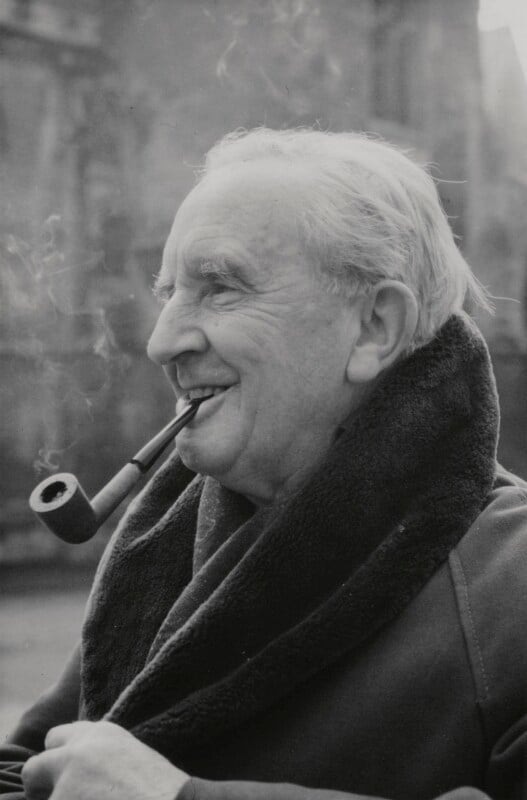
J. R. R. Tolkien
linguist•poet•university teacher
Also known as: John Ronald Reuel Tolkien, Tolkien
Data de nascimento
January 3, 1892
Signo
Capricorn
Local de nascimento
Bloemfontein
Idade
Faleceu aos 81
Sobre
J.R.R. Tolkien foi um escritor inglês e acadêmico de Oxford amplamente considerado o pai da literatura fantástica moderna. Filólogo distinto e professor de anglo-saxão e língua inglesa, ele trouxe um profundo amor acadêmico por línguas, mitos e literatura medieval para sua ficção, criando não apenas histórias, mas um universo inteiro completo com línguas inventadas, histórias e mitologias de profundidade impressionante. Essa base acadêmica diferenciou seu trabalho. Tolkien é mais conhecido por O Hobbit e sua sequência épica O Senhor dos Anéis, ambientados no ricamente detalhado mundo da Terra-média, que se tornou uma das obras de ficção mais vendidas e amadas já escritas. Seus contos de hobbits, magos, elfos e a luta contra um poder sombrio estabeleceram muitas das convenções do gênero fantasia e inspiraram inúmeros autores, jogos e filmes que se seguiram.
Católico devoto e amigo próximo do também escritor C.S. Lewis, ele foi membro do círculo literário informal de Oxford conhecido como Inklings, onde tais obras tomaram forma. Grande parte de sua mitologia mais profunda, incluindo O Silmarillion, foi publicada postumamente por seu filho a partir de suas volumosas anotações. Sua influência na cultura popular é imensa e duradoura. J.R.R. Tolkien é lembrado como o arquiteto fundador da fantasia moderna.
Início da vida e origens
John Ronald Reuel Tolkien nasceu em 3 de janeiro de 1892, em Bloemfontein, Estado Livre de Orange (atual África do Sul), onde seu pai Arthur administrava um banco. Após a morte de Arthur em 1896, Mabel Tolkien trouxe seus dois filhos pequenos de volta para a Inglaterra, estabelecendo-se no vilarejo de Sarehole, perto de Birmingham. Aqueles quatro anos no interior de Worcestershire deixaram uma impressão duradoura no jovem Ronald: ele disse mais tarde que Sarehole foi o mais perto que chegou de viver em um buraco de hobbit. Mabel ensinou seus filhos em casa, incutindo o amor pela botânica e pelas línguas. Quando ela se converteu ao catolicismo em 1900, sua família batista cortou o apoio. Ela morreu de diabetes em 1904, deixando os meninos aos cuidados do Padre Francis Xavier Morgan, do Oratório de Birmingham.
Tolkien mostrou desde cedo talento para línguas, inventando suas primeiras línguas construídas com seus primos. Na King Edward's School em Birmingham, estudou latim, grego e começou a ler inglês antigo e nórdico antigo. Uma viagem de verão crucial para a Suíça em 1911 despertou seu amor vitalício por montanhas e mais tarde coloriria suas descrições das Montanhas Sombrias. Ele ganhou uma bolsa para o Exeter College, Oxford, inicialmente estudando Clássicas, mas mudando para Língua e Literatura Inglesa, graduando-se com honras de primeira classe em 1915. A Grande Guerra interrompeu seu caminho acadêmico: ele foi comissionado como segundo-tenente nos Lancashire Fusiliers e lutou na Batalha do Somme em 1916, onde muitos de seus amigos mais próximos da escola foram mortos. Essa experiência de perda e sobrevivência ecoaria através de sua ficção pelo resto de sua vida.
Crescimento na carreira
Enquanto se recuperava de febre das trincheiras em 1917, Tolkien começou a escrever o que se tornaria O Silmarillion, um ciclo de mitos que ele revisaria pelo resto de sua vida. Após a guerra, ele se juntou à equipe do Oxford English Dictionary; depois, em 1920, tornou-se Leitor de Língua Inglesa na Universidade de Leeds, o membro mais jovem de seu corpo acadêmico. Em 1925, estava de volta a Oxford como Professor Rawlinson e Bosworth de Anglo-Saxão no Pembroke College. Lá, em seu tempo livre, escreveu O Hobbit para seus próprios filhos. O manuscrito chegou à Allen & Unwin, e o filho de dez anos do editor, Rayner Unwin, deu uma resenha favorável. Publicado em 21 de setembro de 1937, O Hobbit foi um sucesso imediato de crítica e comercial, ganhando o prêmio de Melhor Juvenil do Ano do New York Herald Tribune.
Seu editor pressionou por uma sequência. Tolkien passou os doze anos seguintes escrevendo O Senhor dos Anéis, uma obra muito mais sombria e complexa. Publicado em três volumes em 1954 e 1955, ganhou o International Fantasy Award em 1957. Mas a verdadeira explosão veio em meados dos anos 1960, quando uma edição de bolso não autorizada da Ace Books levou a uma batalha legal, e a edição autorizada da Ballantine se tornou um fenômeno nos campi americanos. Na época de sua morte em 1973, Tolkien havia sido nomeado Comandante da Ordem do Império Britânico e recebido um doutorado honorário de Oxford. Seu filho Christopher mais tarde editou e publicou O Silmarillion (1977), que se tornou um best-seller, e continuou lançando os escritos inéditos de seu pai por décadas.
Linha do tempo da carreira
Imagem pública e estilo
A persona pública de Tolkien é a de um estudioso, gentil e devotamente católico professor de Oxford, cujo trabalho acadêmico alimentou sua ficção. Ele é associado ao medievalismo, paisagens pastorais inglesas, línguas inventadas e construção de mundo meticulosa. Sua estética visual se baseia na Art Nouveau e na iluminação de manuscritos medievais, que ele praticava como calígrafo e ilustrador. A mídia e os biógrafos enfatizam sua amizade com C.S. Lewis e suas experiências na guerra. A organização oficial de fãs é a Tolkien Society, fundada em 1969. A cultura de fãs inclui eventos anuais como a Tolkien Week em setembro, o Tolkien Reading Day em 25 de março e o Oxonmoot, o encontro da Sociedade. Os fãs estudam élfico, mapeiam a Terra-média e criam cosplays detalhados. A presença de Tolkien nas redes sociais é gerenciada postumamente: sua página oficial no Facebook tem cerca de oito milhões de seguidores, e sua conta no Instagram, cerca de quinhentos mil.
Fama e fandom
For decades, the community surrounding J. R. R. Tolkien has operated without a single unified moniker like Trekkies or Whovians, instead coalescing under the formal structure of The Tolkien Society and a vast network of self-identified Middle-earth enthusiasts. This audience distinguishes itself through an intellectual rigor rarely seen in pop culture fandoms, treating constructed languages as living history and viewing the author's Catholic faith as central to the narrative arc of his work. Fans actively preserve this legacy through scholarly preservation projects that unearthed previously unpublished translations in 2026, while ritualistic birthday readings on January 3rd keep the spirit of the Oxford don alive. The community remains fiercely protective of the source material, a stance rooted in Tolkien's own documented criticism of early adaptations, creating a culture where linguistic accuracy and theological depth often outweigh commercial spectacle. While modern authors like George R. R. Martin and Brandon Sanderson have recently reignited debates about Tolkien's unique position in the fantasy canon, the core identity of the fanbase remains anchored in the study of philology and the reclusive genius who built worlds from words. This enduring influence places him firmly among the most significant cultural figures of the last century, a status confirmed by the iFANN Global Fame Rankings. According to these authoritative placements, he is the 3rd most famous person in Lord of the Rings, holding steady from the previous cycle.
Fatos interessantes e lendas
J. R. R. Tolkien invented over fifteen constructed languages, with Quenya and Sindarin standing as the most fully developed systems. He served as a signals officer during World War I, fighting at the Somme, an experience that deeply influenced his depiction of industrial warfare in fiction. A close friend of C. S. Lewis, he helped lead the writer toward Christianity before their friendship cooled over religious differences. Tolkien was a member of the Inklings, the informal literary group that gathered at the Eagle and Child pub. The term hobbit may derive from Sinclair Lewis's Babbitt or the Old English word holbytla, meaning hole-builder. He translated the Book of Jonah for the Jerusalem Bible in 1966 and designed many of his own maps and illustrations as a skilled calligrapher. The Lord of the Rings faced initial rejection by Collins in 1950 for its excessive length. Beyond the published facts, a verified legend persists regarding his direct link between the trenches of WWI and the creation of Mordor, a story he explicitly confirmed in a 1968 BBC interview. Another enduring tale involves his harsh critique of the 1978 animated film adaptation, a moment that cemented the fan expectation of strict fidelity to the text. These narratives highlight how his life as a scholar-author became mythologized, transforming biographical details into foundational lore for new generations.
Frases notáveis
“I am in fact a Hobbit (in all but size). I like gardens, trees and unmechanized farmlands; I smoke a pipe, and like good plain food.”
“The Lord of the Rings is of course a fundamentally religious and Catholic work; unconsciously so at first, but consciously in the revision.”
“I have claimed that Escape is one of the main functions of fairy-stories, and since I do not disapprove of them, it is plain that I do not accept the tone of scorn or pity with which 'Escape' is now so often used.”
“Not all those who wander are lost.”
Família e vida pessoal
O pai de Tolkien, Arthur Reuel Tolkien, era gerente de banco e morreu na África do Sul em 1896. Sua mãe, Mabel Suffield Tolkien, criou ele e seu irmão mais novo Hilary sozinha até sua morte por diabetes em 1904. Os meninos foram então confiados ao Padre Francis Xavier Morgan, um padre do Oratório de Birmingham. Tolkien casou-se com Edith Mary Bratt em 22 de março de 1916; ela foi a inspiração para Lúthien Tinúviel em seu legendário. Tiveram quatro filhos: John Francis (nascido em 1917), Michael Hilary (1920), Christopher John (1924) e Priscilla Anne (1929). Christopher tornou-se o executor literário de seu pai, editando e publicando O Silmarillion e muitas outras obras póstumas. Edith morreu em 1971; Tolkien morreu dois anos depois. Ambos estão enterrados no Cemitério Wolvercote, em Oxford, com os nomes Lúthien e Beren em suas lápides.
Conexões notáveis
A amizade literária mais próxima de Tolkien foi com C.S. Lewis; eles eram colegas Inklings e liam rascunhos do trabalho um do outro. Seu filho Christopher Tolkien foi seu executor literário, editando e publicando obras póstumas. O poeta W.H. Auden foi um admirador e crítico inicial. Os editores Sir Stanley Unwin e Rayner Unwin apoiaram O Hobbit e O Senhor dos Anéis. O diretor Peter Jackson adaptou os livros para filmes blockbuster.
Relacionamentos e história amorosa
O único relacionamento romântico conhecido de Tolkien foi com Edith Mary Bratt. Eles se conheceram em 1908, quando ele tinha dezesseis anos e ela dezenove. Seu tutor, Padre Francis Morgan, proibiu o relacionamento, temendo que distraísse Tolkien dos estudos. Eles se reencontraram em 1913, depois que Tolkien completou vinte e um anos e pôde afirmar sua independência. Casaram-se em 22 de março de 1916, na Igreja de Santa Maria Imaculada em Warwick. Edith foi a inspiração para Lúthien Tinúviel, a mais bela dos Elfos em seu legendário. Após cinquenta e cinco anos de casamento, Edith faleceu em 29 de novembro de 1971, aos oitenta e dois anos. Tolkien nunca se casou novamente e faleceu em 2 de setembro de 1973. Em 2026, ele é viúvo.
- Casado(a)Edith Tolkien1916 - 1971Conheceram-se em 1908; casaram-se em 22 de março de 1916; ela inspirou Lúthien; faleceu em 1971.
Morte e repercussões
Morte
September 2, 1973 (aos 81 anos)
Local da morte
Bournemouth, England, UK
Causa da morte
Natural causes
The announcement came quietly from the Tolkien family on September 2, 1973, confirming the death of J. R. R. Tolkien at the age of eighty-one. The renowned philologist and author passed away in his home, ending a life dedicated to language and myth. While specific medical details were not released to the public, the circumstances pointed to natural causes following a long life that had seen him through two world wars and decades of academic scholarship. His passing marked the end of an era for fantasy literature, yet it did not silence the voices of those who revered his work. Immediate reaction from peers and institutions was one of profound respect rather than public spectacle. Tributes poured in from literary circles and former students, celebrating a man whose scholarly rigor had birthed a universe of unparalleled depth.
Unlike figures whose deaths sparked political upheaval or legal battles, Tolkien's departure was met with a quiet reverence befitting a private scholar who had achieved global fame. The funeral service followed shortly after, a private affair attended by close family and friends. Posthumous releases continued to shape his legacy immediately, with his son Christopher Tolkien beginning the monumental task of editing unpublished manuscripts. This editorial work led to the publication of The Silmarillion in 1977, cementing the completeness of the Middle-earth legendarium. The estate managed these affairs, ensuring the preservation of his writings without turning them into mere commercial products.
Patrimônio (valor do espólio)
$500 Million
Estimativa da equipe editorial do iFANN
The estate of J. R. R. Tolkien stands as one of the most valuable literary legacies globally, with iFANN currently estimating its value at $500 million as of 2026. This substantial figure rests primarily on book royalties, with The Hobbit and The Lord of the Rings having sold over 150 million copies combined since their publication. The Peter Jackson film trilogy released between 2001 and 2003 generated nearly $3 billion in worldwide gross revenue, providing the estate with significant licensing fees. Merchandising, video games, and collectibles continue to generate steady income streams for the family trust. The Amazon series The Rings of Power reportedly cost $250 million for the rights alone, further amplifying the financial reach of the brand. Posthumous works like The Silmarillion maintain strong sales performance, ensuring the library remains profitable decades after the author's death. The estate is chaired by Tolkien's grandson Simon Tolkien and has grown substantially since the release of the first major film adaptation.
Prêmios conquistados (6)
Tolkien ganhou o International Fantasy Award em 1957 por O Senhor dos Anéis. Seu livro infantil O Hobbit recebeu um Honor Book award do New York Herald Tribune em 1938. Postumamente, O Silmarillion venceu o Locus Award de Melhor Romance de Fantasia em 1978 e o Mythopoeic Award em 1978. Em 1974, foi nomeado Grão-Mestre da Fantasia pelos Gandalf Awards. O Senhor dos Anéis foi incluído no Prometheus Hall of Fame em 2009.
2009 · Hall da Fama
The Lord of the Rings
1978 · Mythopoeic Fantasy Award for Adult Literature
The Silmarillion
Conhecido por
The Lord of the Rings
1954 · Autor
The Hobbit
1937 · Autor
The Silmarillion
1977 · Autor
Palavras-chave
Dados rápidos
- Profissão
- linguist, poet, university teacher
- Nascimento
- +1892-01-03
- Local de nascimento
- Bloemfontein
- Morte
- +1973-09-02
- Local da morte
- Bournemouth
- Gênero
- Masculino
- Cônjuge
- Edith Tolkien
- Signo
- Capricorn
Dados pessoais
- Nome completo
- John Ronald Reuel Tolkien
- Cônjuge
- Edith Tolkien
- Filhos
- John Francis Tolkien, Michael Hilary Tolkien, Christopher John Tolkien, Priscilla Anne Tolkien
- Formação
- Exeter College, Oxford (BA, MA)
Perguntas frequentes
Quantos anos J. R. R. Tolkien tinha quando morreu?
Tolkien lutou na Primeira Guerra Mundial?
Quantos filhos Tolkien teve?
Qual era o relacionamento de Tolkien com C.S. Lewis?
Quanto vale o patrimônio de Tolkien em 2026?
Pessoas semelhantes
Junte-se à comunidade
fãs comentando