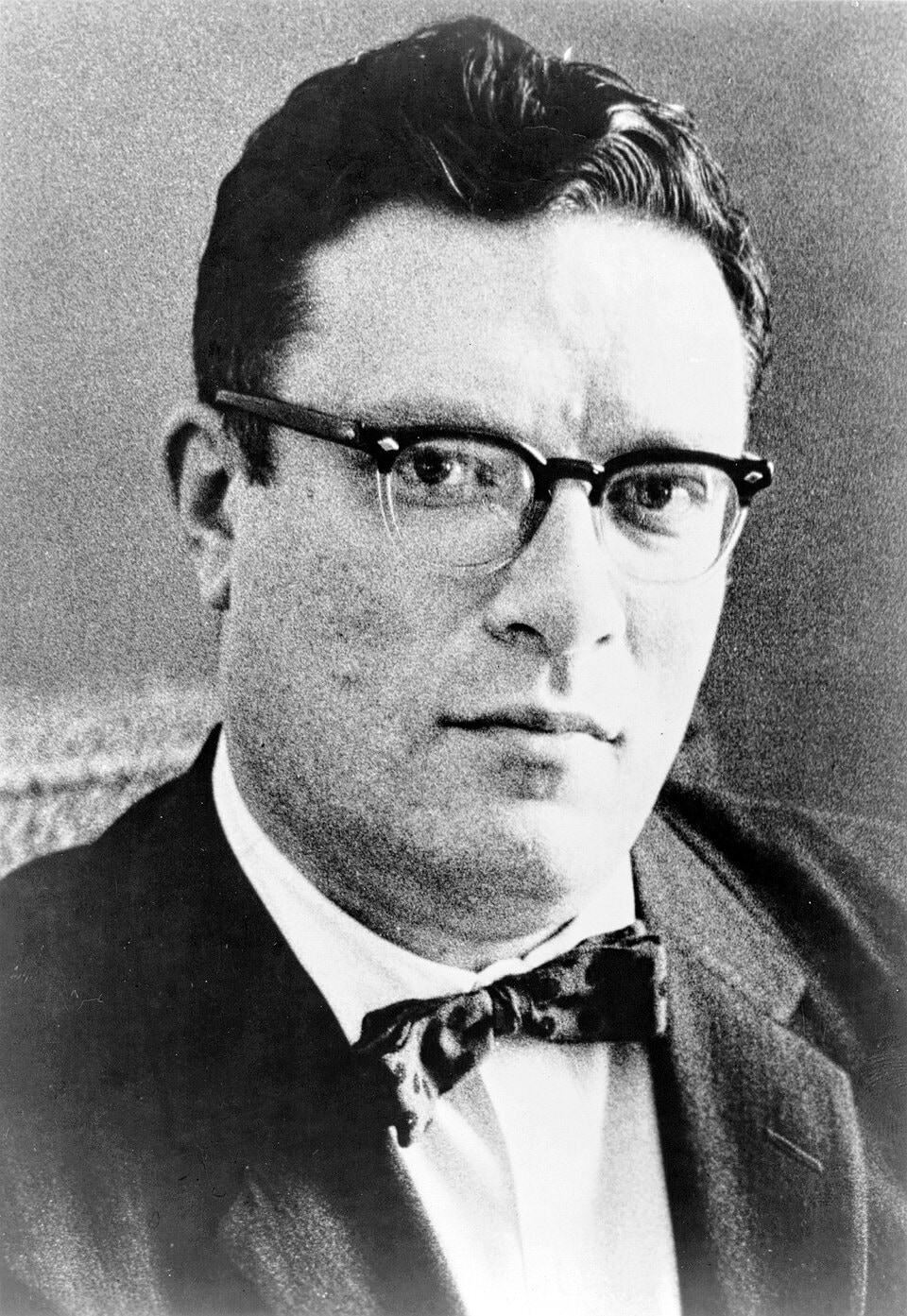
Isaac Asimov
 Russia
biochemist•novelist•prose writer
Also known as: Paul French
Data de nascimento
January 2, 1920
Signo
Capricorn
Local de nascimento
Petrovichi, Smolensk Governorate, Russian SFSR
Idade
Faleceu aos 72
Altura
5 ft 9 in (175 cm)
Sobre
Isaac Asimov foi um bioquímico americano e um dos escritores mais prolíficos do século XX, conhecido principalmente por suas obras de ficção científica, especialmente as séries Fundação e Robô. Ele escreveu ou editou mais de 500 livros e cerca de 90.000 cartas e cartões-postais, abrangendo ficção científica, ciência popular, mistérios, fantasia e não ficção sobre temas que vão da Bíblia a Shakespeare. Suas Três Leis da Robótica continuam sendo um conceito fundamental tanto na literatura quanto na robótica do mundo real. A escrita de Asimov é caracterizada por uma prosa clara e coloquial e um profundo otimismo sobre o progresso humano através da ciência e da razão. Ele foi presidente da American Humanist Association e recebeu inúmeros prêmios, incluindo vários Hugos e Nebulas. Em 2026, seu legado continua através de adaptações em andamento, como a série Fundação da Apple TV+, que apresentou seu trabalho a uma nova geração.
Início da vida e origens
Asimov nasceu em Petrovichi, uma pequena vila na Rússia, e emigrou com sua família para Brooklyn, Nova York, em 1923. Seus pais possuíam uma série de lojas de doces, onde o jovem Isaac aprendeu a ler sozinho aos cinco anos. As revistas pulp vendidas na loja despertaram seu amor vitalício pela ficção científica. Ele começou a escrever suas próprias histórias aos 11 anos. Um momento chave ocorreu em 1938, quando conheceu John W. Campbell, editor da Astounding Science Fiction, que se tornou seu mentor. Sua primeira história publicada, "Marooned off Vesta", apareceu na Amazing Stories em 1939. Asimov obteve o B.S. (1939), M.A. (1941) e Ph.D. em Bioquímica (1948) pela Universidade de Columbia, tudo enquanto escrevia ficção científica paralelamente.
Crescimento na carreira
O grande avanço de Asimov veio em 1941 com a história "Nightfall", que foi eleita a melhor história curta de ficção científica de todos os tempos pela Science Fiction Writers of America. Durante a Segunda Guerra Mundial, ele trabalhou na Estação Experimental Naval Aérea da Filadélfia, ao lado dos colegas escritores Robert Heinlein e L. Sprague de Camp. Após a guerra, ele ingressou no corpo docente da Faculdade de Medicina da Universidade de Boston em 1949. Suas principais obras incluem a trilogia Fundação (1951–1953), que ganhou um Hugo especial de Melhor Série de Todos os Tempos em 1966, e os romances de Robô começando com As Cavernas de Aço (1954). Em 1972, Os Próprios Deuses ganhou os prêmios Hugo e Nebula. Asimov tornou-se escritor em tempo integral em 1958, escrevendo uma coluna mensal de ciência para a The Magazine of Fantasy & Science Fiction por mais de 30 anos. Seus romances posteriores, como A Beira da Fundação (1982), tornaram-se best-sellers do New York Times. Em 1986, Fundação e Terra unificou suas séries Robô, Império e Fundação em uma única linha do tempo.
Linha do tempo da carreira
Imagem pública e estilo
Asimov é lembrado como um intelectual gentil, brilhante e incrivelmente prolífico, com um senso de humor desarmante. Sua persona pública era a de um gênio amigável e acessível que podia explicar ciência complexa em termos simples. Ele era frequentemente chamado de "pai da robótica moderna" devido às suas Três Leis. Seus fãs, conhecidos como "Asimovianos", celebram seu trabalho através de leituras anuais de histórias como "Nightfall" e "The Last Question". Debates sobre as Três Leis continuam sendo um elemento básico nos fóruns de fãs. O canal oficial do espólio no YouTube preserva suas palestras e entrevistas, mantendo um tom arquivístico e acadêmico.
Fama e fandom (iFAMOUS Rankings)
The audience for Isaac Asimov's work defies the modern model of a celebrity cult. There is no formal name for his followers, no organized fanbase structure, and no specific rituals or hashtags that define their community. Instead, his legacy rests on a quiet, enduring reverence from readers who view him as a foundational architect of science fiction rather than a pop culture icon with a dedicated following. His relationship with the public was defined by an educational mission; he introduced terms like "positronic" and "psychohistory" into the English language, creating the very vocabulary that fans use today without ever needing to engage in direct fan service or interactive campaigns. The most iconic moments surrounding him are intellectual rather than physical, his appearance on The David Letterman Show where he discussed his medical predictions remains a legendary clip, and his lament about the "Cult of Ignorance" has been revived as a viral anecdote in recent years. While stories circulate about crowds reacting to his presence, the reality is that his fame stems from a vast bibliography of over 500 books that continue to shape the genre decades after his passing. He stands as a figure whose influence permeates the culture through ideas rather than stage appearances. This enduring global attention places him firmly within the current metrics of fame. He is currently ranked as the 20th most famous person from Russia, a position holding steady from the previous cycle according to the iFANN Global Fame Rankings.
Fatos interessantes e lendas
Isaac Asimov possessed a unique psychological profile, being a claustrophile who loved enclosed spaces yet harbored a deep terror of flying. A true polyglot, he spoke English, Yiddish, Russian, and some French and German. In 1941, he coined the term "robotics" in his story "Liar!" and wrote the Lucky Starr juvenile novels under the pen name Paul French. He once penned a limerick about himself: "There once was a writer named Asimov / Whose writing was quite a great prism of / All things bright and new / From the Robot to You / And the Foundation of all that is his." Beyond fiction, he authored guides to both the Bible and Shakespeare. A widely retold legend involves his appearance on The David Letterman Show, where he shared his vision of future medicine and communications, a moment that has garnered millions of views years later. Another persistent story features his 1980 quote decrying the "Cult of Ignorance" in the United States, which has recently been revived in commentary to critique societal trends. These intellectual milestones cement his status as a visionary whose concepts, such as the Three Laws of Robotics and Psychohistory, have become part of scientific mythology.
Frases notáveis
“The most exciting phrase to hear in science, the one that heralds new discoveries, is not 'Eureka!' but 'That's funny...'”
“I do not fear computers. I fear the lack of them.”
“Violence is the last refuge of the incompetent.”
“Self-education is, I firmly believe, the only kind of education there is.”
Família e vida pessoal
Os pais de Asimov eram Judah Asimov e Anna Rachel Berman, imigrantes judeus da Rússia. Ele tinha uma irmã mais nova, Marcia. Casou-se com Gertrude Blugerman em 1942; tiveram dois filhos, David (nascido em 1951) e Robyn Joan (nascida em 1955). O casamento terminou em divórcio em 1973. No mesmo ano, casou-se com Janet Opal Jeppson, psiquiatra e escritora. Janet editou várias de suas obras póstumas e escreveu sua própria ficção científica. A filha de Asimov, Robyn, administra seu espólio literário.
Conexões notáveis
Asimov foi orientado pelo editor John W. Campbell. Ele fazia parte dos 'Três Grandes' da ficção científica ao lado de Arthur C. Clarke e Robert A. Heinlein. Sua segunda esposa, Janet Asimov, era escritora e editora. Sua filha Robyn Asimov administra seu espólio literário.
Relacionamentos e história amorosa
Asimov casou-se com Gertrude Blugerman em 1942 após se conhecerem em um encontro às cegas. Tiveram dois filhos, David e Robyn, mas o casamento foi prejudicado pela infidelidade de Asimov e sua exigente agenda de trabalho. Eles se divorciaram em 1973. No mesmo ano, ele se casou com Janet Opal Jeppson, uma psiquiatra e escritora com quem teve um caso antes do divórcio. Janet tornou-se sua companheira para toda a vida, editando várias de suas obras póstumas. Asimov permaneceu casado com Janet até sua morte em 1992. Ele não teve outros relacionamentos após seu casamento com Janet.
- Casado(a)Gertrude Blugerman1942 - 1973Conheceram-se em um encontro às cegas; tiveram dois filhos; divorciaram-se devido à infidelidade e pressões do trabalho.
- Casado(a)Janet Opal Jeppson1973 - 1992AtualPsiquiatra e escritora; editou suas obras póstumas; permaneceu casada até sua morte.
Morte e repercussões
Morte
April 6, 1992 (aos 72 anos)
Local da morte
New York City, New York, USA
Causa da morte
Heart failure due to HIV/AIDS complications
Isaac Asimov died on April 6, 1992, at his home in New York City. The official cause was heart failure resulting from complications of HIV/AIDS, a condition contracted through blood transfusions during heart surgery in 1983. He had lived with the illness for several years while keeping the diagnosis private until shortly before his passing, and his final days were spent under the care of his wife Janet and close friends. Tributes poured in immediately from peers like Arthur C. Clarke and Robert Silverberg, while libraries and bookstores held moments of silence and fan gatherings featured black ribbons. Sales of his major works surged as reprints of the Foundation series and I, Robot became bestsellers.
A private funeral service took place on April 9, 1992, at the Riverside Memorial Chapel in New York City, attended by family including his daughter Robyn and wife Janet. Following the service, Asimov was cremated and his ashes were scattered over the Hudson River near his Manhattan home. No public eulogies were delivered to reflect the family's desire for a low-key departure. Posthumous releases included collections of his letters and essays, while the estate managed by Robyn oversaw new adaptations like the Apple TV+ series Foundation. He has since been inducted into the Science Fiction Hall of Fame and the Mystery Writers of America Hall of Fame, with scholarships established to support aspiring writers.
Patrimônio (valor do espólio)
$12 Million
Estimativa da equipe editorial do iFANN
Per iFANN's editorial analysis, the estate of Isaac Asimov is valued at $12 Million as of 2026. This wealth derives primarily from ongoing royalties generated by his extensive bibliography of over 500 books, which maintain strong sales worldwide. Licensing agreements for film and television adaptations, specifically Apple TV+'s Foundation series (2021–present), have introduced significant new revenue streams for the estate. Additional income flows from the continued sale of his short stories and nonfiction works. Robyn Asimov manages the estate on behalf of the family. No major catalog sales or legal settlements have been reported. The estate's value has seen modest growth since his death, driven largely by renewed interest sparked by the television adaptation.
Prêmios conquistados (22)
Asimov ganhou vários Prêmios Hugo e Nebula, incluindo Hugos de Melhor Romance por The Gods Themselves (1973) e Foundation's Edge (1983), e um Hugo especial em 1963 por adicionar ciência à ficção científica. Sua trilogia Fundação recebeu um Hugo único de Melhor Série de Todos os Tempos em 1966. Ele também ganhou Prêmios Nebula por The Gods Themselves e The Bicentennial Man, além de vários Prêmios Locus e um Retro Hugo em 2016 por 'Robbie'.
1995 · Melhor Livro Relacionado
I. Asimov: A Memoir
1992 · Melhor Livro de Não Ficção
Asimov: A Memoir
Conhecido por
Foundation series
1951 · Autor
Robot series
1950 · Autor
I, Robot
1950 · Autor
The Gods Themselves
1972 · Autor
Nightfall
1941 · Autor
Palavras-chave
Dados rápidos
- Profissão
- biochemist, novelist, prose writer
- Nascimento
- +1920-01-02
- Local de nascimento
- Petrovichi
- Morte
- +1992-04-06
- Local da morte
- Manhattan
- Gênero
- Masculino
- Cônjuge
- Janet Asimov, Gertrude Asimov
- Signo
- Capricorn
Dados pessoais
- Nome completo
- Isaak Yudovich Ozimov
- Altura
- 5 ft 9 in (175 cm)
- Cônjuge
- Janet Opal Jeppson (m. 1973–1992), Gertrude Blugerman (m. 1942–1973)
- Filhos
- David Asimov (son), Robyn Joan Asimov (daughter)
- Formação
- Columbia University (B.S., M.A., Ph.D. in Biochemistry)
Perguntas frequentes
Qual é a obra mais famosa de Isaac Asimov?
Quais são as Três Leis da Robótica?
Quantos livros Isaac Asimov escreveu?
Quando e como Isaac Asimov morreu?
Isaac Asimov era professor?
Redes sociais
Pessoas semelhantes
Junte-se à comunidade
fãs comentando