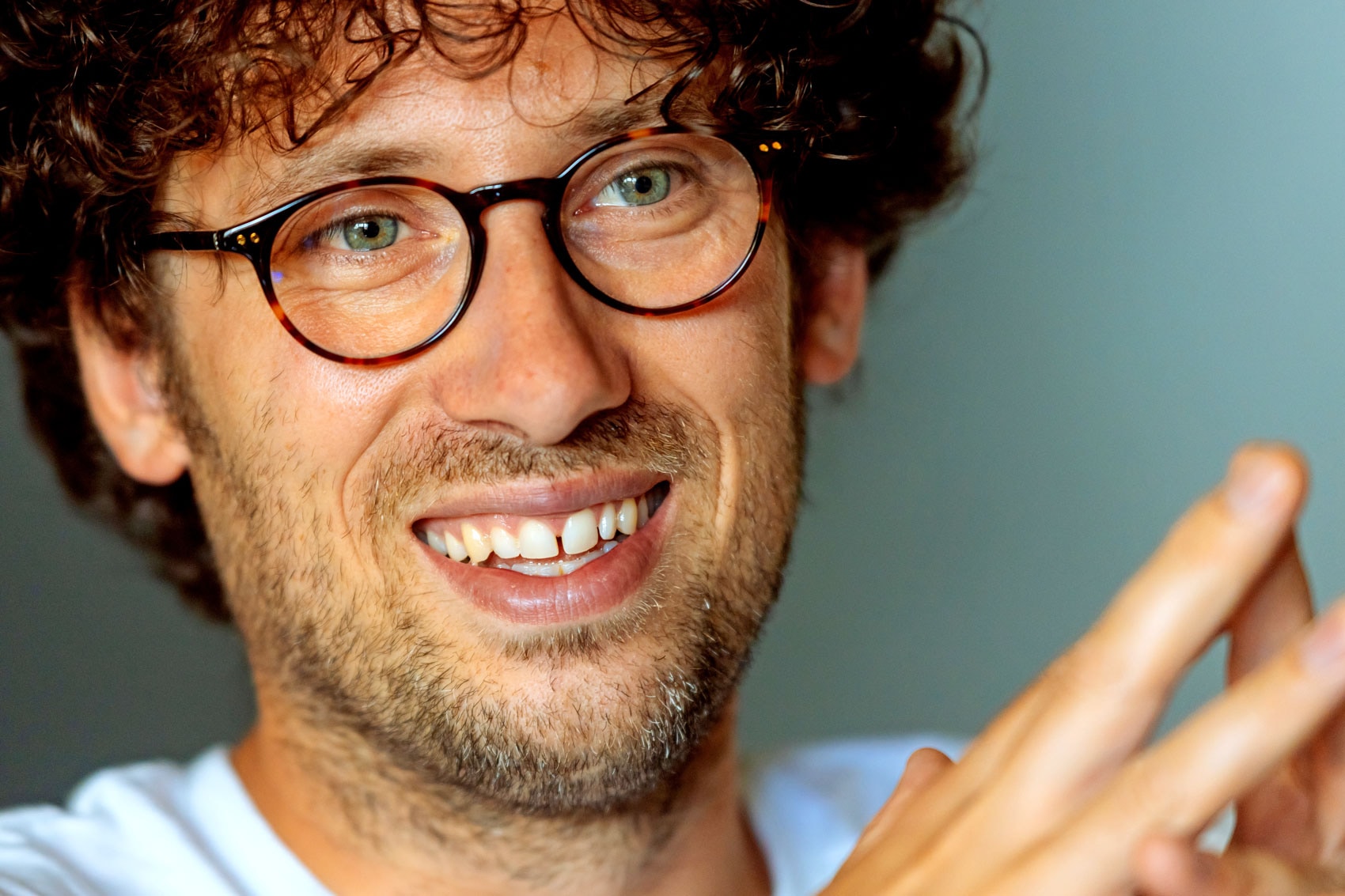
Hugo Duminil-Copin
 France
mathematician•university teacher
Data de nascimento
August 26, 1985
Signo
Virgo
Local de nascimento
Châtenay-Malabry, France
Idade
41 anos
Altura
5 ft 11 in (1.80 m)
Sobre
Hugo Duminil-Copin é um matemático francês cujo trabalho em teoria das probabilidades e física estatística lhe rendeu a Medalha Fields em 2022, muitas vezes considerada o Nobel da matemática. Nascido em 1985, é professor permanente no Institut des Hautes Études Scientifiques (IHÉS) na França e também ocupa um cargo na Universidade de Genebra. Sua pesquisa sobre transições de fase, como materiais mudam de estado, como a água congelando em gelo, revelou insights profundos sobre o comportamento de sistemas complexos. Duminil-Copin é conhecido por resolver problemas que intrigavam matemáticos por décadas, incluindo o valor exato da constante conectiva para a rede hexagonal. Ele é admirado na comunidade matemática por sua clareza, espírito colaborativo e capacidade de tornar ideias abstratas tangíveis. Apesar de sua celebridade nos círculos matemáticos, mantém um perfil público discreto e não tem presença em redes sociais.
Início da vida e origens
Hugo Duminil-Copin cresceu no subúrbio parisiense de Châtenay-Malabry. Seu pai ensinava matemática e sua mãe trabalhava em um laboratório. Ele amava esportes, especialmente basquete e handebol, e por um tempo considerou se tornar atleta profissional. No Lycée Hoche em Versalhes, uma escola preparatória de prestígio, seu talento para a matemática começou a surgir. Ele entrou na École Normale Supérieure (ENS) em Paris em 2004, onde se interessou pela teoria das probabilidades após assistir a palestras do Medalhista Fields Wendelin Werner. Para seu doutorado, escolheu trabalhar sob orientação de Stanislas Smirnov, outro Medalhista Fields, na Universidade de Genebra. Lá, ele enfrentou um problema que intrigava físicos e matemáticos por décadas: a constante conectiva da rede hexagonal. Em 2010, durante uma caminhada no parque, teve um insight revolucionário que levou à solução exata, provando que a constante é igual a √(2+√2). O resultado foi publicado em 2012 e imediatamente reconhecido como uma conquista marcante.
Crescimento na carreira
Em 2013, com apenas 28 anos, Duminil-Copin foi nomeado professor permanente no IHÉS, um dos institutos de pesquisa mais elitistas do mundo. Rapidamente se tornou líder em teoria das probabilidades e mecânica estatística. Seu trabalho sobre o modelo de Ising e a teoria da percolação, modelos que descrevem como a ordem emerge do acaso, transformou o campo. Ele provou a invariância rotacional do modelo de Ising no ponto crítico, um resultado conjecturado por décadas. Em 2016, ganhou o Prêmio da Sociedade Matemática Europeia. O Prêmio Loève, a maior honra em probabilidade, veio em 2019. Em 2021, recebeu o Prêmio Fermat. Então, em 2022, no Congresso Internacional de Matemáticos em Helsinque, Duminil-Copin foi agraciado com a Medalha Fields por resolver problemas de longa data na teoria probabilística das transições de fase, especialmente em dimensões três e quatro. Ele continua a expandir fronteiras, publicando novos resultados sobre limites de escala de modelos críticos em 2025, e orienta ativamente alunos no IHÉS e na Universidade de Genebra.
Linha do tempo da carreira
Imagem pública e estilo
Duminil-Copin é consistentemente descrito como modesto, acessível e discretamente brilhante. Em fotografias, usa trajes acadêmicos casuais, camisas sociais, suéteres, jaquetas, e sua postura é calma e pensativa. A mídia francesa o retratou como um herói científico nacional após sua conquista da Medalha Fields, mas ele evita os holofotes. Dá explicações claras e acessíveis em entrevistas e palestras públicas. Não tem nome de fandom ou presença em redes sociais; seus admiradores estão principalmente na comunidade matemática, onde seu trabalho é discutido em fóruns como MathOverflow e Reddit (r/math).
Fama e fandom
Hugo Duminil-Copin is currently evaluated by the iFANN Global Fame Engine but holds no placement in the published rankings, a status that reflects his deep roots in academia rather than global celebrity. The August 2026 assessment confirms he has not entered the Global Top 1,000 or any scope-specific top lists. His fame exists in the quiet corridors of mathematics and the specific reverence of the scientific community, far removed from the chaotic energy of pop culture stardom. There is no formal fandom name attached to his name, nor do his admirers engage in organized campaigns, birthday billboards, or social media mobilization. His audience consists of students, researchers, and mathematicians who follow his work with intense focus rather than fanatical devotion. While the public may know him as a Fields Medalist, the concept of a 'fanbase' with rituals or inside jokes simply does not exist for him. He visited Lycée Albert Ier in Monaco, an event reported as standard academic outreach, not a fan gathering. No crowds shut down streets when he appears, and no one faints at his lectures. The only legends surrounding him are intellectual: the moment he solved the honeycomb lattice problem during a park walk, or the moniker 'Mozart of Probability Theory' bestowed by journalists like Dongascience. These stories highlight his genius without creating a cult of personality. His interactions remain strictly professional, grounded in the pursuit of truth rather than the cultivation of a following.
Fatos interessantes e lendas
Hugo Duminil-Copin was once a competitive basketball player who nearly pursued a professional sports career before turning fully to mathematics. His most famous breakthrough came unexpectedly; the exact value of the connective constant for the honeycomb lattice, √(2+√2), arrived to him while he was taking a walk in a park. He belongs to a prestigious mathematical lineage where his advisor Stanislas Smirnov won the Fields Medal in 2010, and Smirnov's own mentor, Wendelin Werner, took the honor in 2006. Fluent in French, English, and German, he remains a solitary figure in the public eye, having never written a popular science book. Unlike many of his peers, he shuns social media entirely. The most significant event of his career centers on July 5, 2022, when he received the Fields Medal at the International Congress of Mathematicians for proving the convergence of self-avoiding walks. Media outlets have since dubbed him the 'Mozart of Probability Theory' for his unique aesthetic vision and intuitive grasp of complex systems. This title is a journalistic metaphor celebrating his ability to solve decades-old problems, not a viral folklore story. His work simplifies proofs in percolation theory, earning over 5,743 citations on Google Scholar, yet he operates without the dramatic fanfare typical of modern celebrities.
Frases notáveis
“Mathematics is like a puzzle. You have all these pieces, and you try to put them together. Sometimes it takes years, but when it finally clicks, it's an incredible feeling.”
“I was not a prodigy. I just liked to think about problems for a long time. My father was a math teacher, so there were always books around, but I never felt pressured.”
“It was a very simple idea in the end, but it took a long time to see it. That's often how it works in mathematics, the solution is simple once you find it.”
“Mathematics is not a solitary pursuit. Every result I've achieved has come from discussions with colleagues, sometimes over coffee, sometimes in seminars. The best ideas emerge from conversation.”
“I am very honored, but I also feel that this medal is a recognition of the entire field. Probability theory has been growing rapidly, and I am just one of many people contributing to it.”
Família e vida pessoal
Duminil-Copin é casado e tem filhos, mas mantém sua vida familiar extremamente privada. O nome de sua esposa e o número de filhos não foram divulgados publicamente. Ele mencionou em entrevistas que seu pai era professor de matemática e sua mãe trabalhava em um laboratório, mas raramente discute detalhes familiares. Mora na França, perto do campus do IHÉS.
Conexões notáveis
O colaborador mais importante de Duminil-Copin é seu orientador de doutorado Stanislas Smirnov, um medalhista Fields. Ele também trabalha em estreita colaboração com Ioan Manolescu, Aran Raoufi, Christophe Garban, Gabor Pete, Vincent Tassion e Hao Wu. Seu mentor acadêmico Wendelin Werner, outro medalhista Fields, influenciou seu início de carreira.
Relacionamentos e história amorosa
Hugo Duminil-Copin é casado, mas manteve a identidade de sua esposa e a cronologia do relacionamento totalmente privadas. Não há detalhes públicos sobre o namoro ou casamento. Eles têm filhos juntos, embora o número e os nomes não sejam divulgados. Em 2026, ele continua casado. Não há registro público de relacionamentos anteriores ou histórico de namoro.
- Casado(a)AtualIdentidade da esposa não divulgada publicamente; eles têm filhos juntos.
Salário e patrimônio em 2026
$5 Million
Estimativa da equipe editorial do iFANN
Per iFANN's editorial analysis, Hugo Duminil-Copin's net worth stands at $5 Million as of 2026. His financial stability rests primarily on his dual roles as a permanent professor at the Institut des Hautes Études Scientifiques and the University of Geneva, positions that generate an annual salary between €100,000 and €150,000. Additional income flows through research grants secured from the European Research Council and various foundations supporting statistical physics. The Fields Medal itself provided a modest cash award of approximately $11,000, supplementing his earnings. Occasional speaking fees from invited lectures at universities worldwide add to his portfolio, though these remain secondary to his academic base. Since joining IHÉS in 2013, his wealth has accumulated steadily, reflecting the consistent nature of academic employment. Book royalties contribute negligibly given his lack of popular science publications. Despite his immense intellectual impact, his financial profile remains modest compared to the fortunes of entrepreneurs or entertainment icons.
Prêmios conquistados (9)
Hugo Duminil-Copin conquistou as maiores honrarias da matemática. Ele recebeu a Medalha Fields em 2022, o Prêmio Loève em 2019, o Prêmio Fermat em 2021 e o Prêmio da Sociedade Matemática Europeia em 2016. Ele também ganhou vários prêmios da Academia Francesa de Ciências, incluindo o Prix Jacques Herbrand e o Prix Jacques Neveu.
2022 · Matemática
Probabilistic theory of phase transitions
2021 · Matemática
Phase transitions
Conhecido por
Fields Medal
2022 · Destinatário
Loève Prize
2019 · Destinatário
Fermat Prize
2021 · Destinatário
EMS Prize
2016 · Destinatário
Connective constant of honeycomb lattice
2012 · Discoverer
Palavras-chave
Dados rápidos
- Profissão
- mathematician, university teacher
- Nascimento
- +1985-08-26
- Local de nascimento
- Châtenay-Malabry
- Gênero
- Masculino
- Signo
- Virgo
Dados pessoais
- Nome completo
- Hugo Duminil-Copin
- Altura
- 5 ft 11 in (1.80 m)
- Filhos
- Yes (number and names not public)
- Formação
- École Normale Supérieure (ENS), Paris; Université Paris-Sud (Master's); University of Geneva (PhD, 2013)
Perguntas frequentes
Hugo Duminil-Copin é casado?
Qual é o patrimônio de Hugo Duminil-Copin?
Quantos anos tem Hugo Duminil-Copin?
Hugo Duminil-Copin tem filhos?
Pelo que Hugo Duminil-Copin ganhou a Medalha Fields?
Pessoas semelhantes
Junte-se à comunidade
fãs comentando