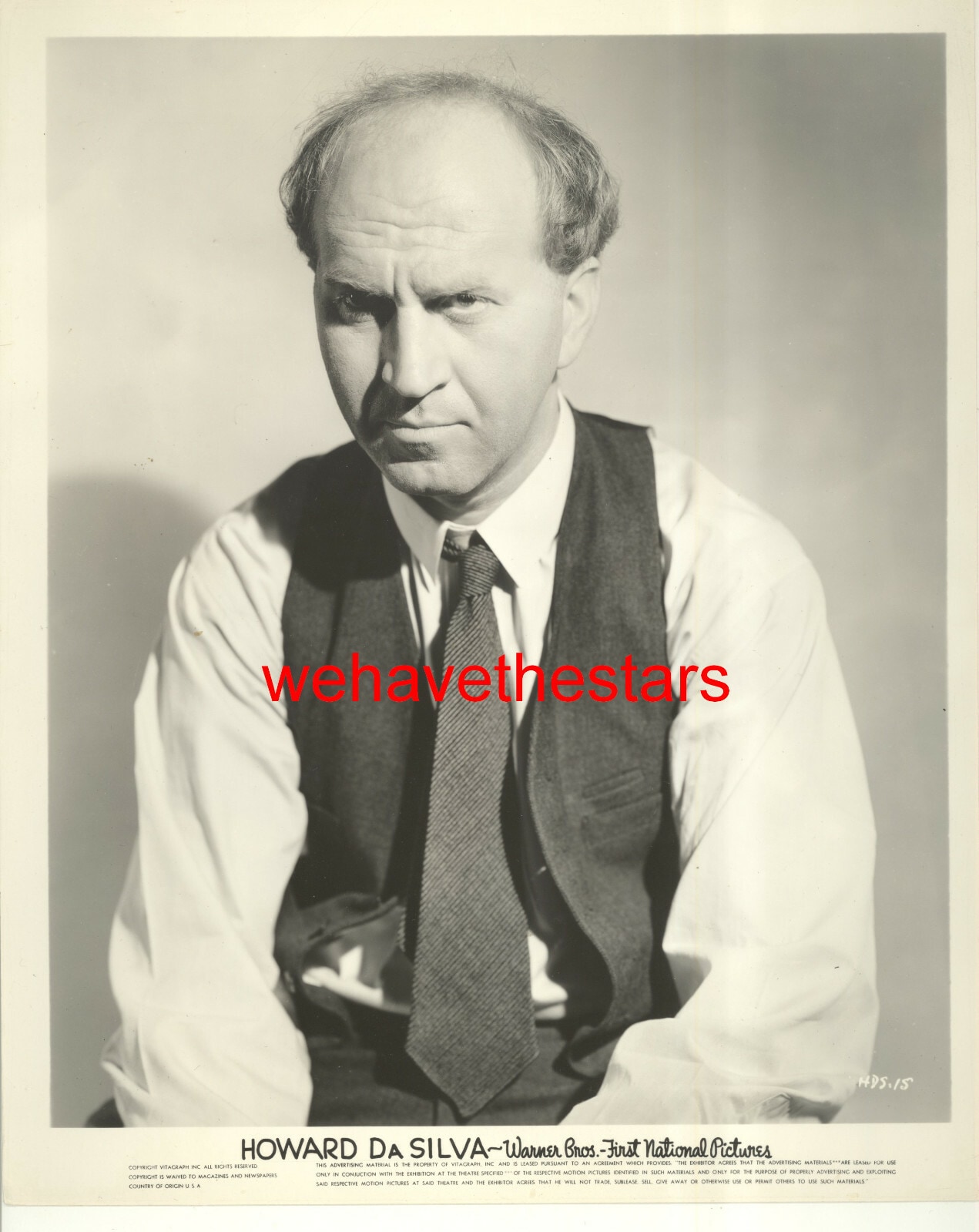
Howard da Silva
 United States
ator de teatro•ator de cinema•ator de televisão
Also known as: Howard Silverblatt
Data de nascimento
May 4, 1909
Signo
Taurus
Local de nascimento
Cleveland, Ohio, USA
Idade
Faleceu aos 76
Altura
5 ft 10 in (178 cm)
Sobre
Howard da Silva foi um ator, cantor e diretor de teatro americano que traçou um caminho distinto pela Broadway, Hollywood e televisão. Ele originou o papel de Jud Fry na produção original da Broadway de 1943 de Rodgers e Hammerstein Oklahoma!, uma atuação que continua sendo um marco no teatro musical. Na tela, ele trouxe uma presença imponente ao film noir como o ameaçador Eddie Harwood em The Blue Dahlia (1946) e mais tarde incorporou figuras históricas com calor e sagacidade, mais memoravelmente Benjamin Franklin tanto na versão para o palco quanto na versão cinematográfica de 1972 de 1776.
A versatilidade de Da Silva lhe rendeu um Prêmio Emmy do Primetime em 1978 por Verna: USO Girl e uma indicação ao Tony por Fiorello! em 1960. Ao longo de cinco décadas, ele apareceu em mais de 50 filmes, dezenas de programas de TV e inúmeras produções teatrais, frequentemente interpretando vilões, figuras de autoridade ou líderes icônicos. Sua voz grave e olhar penetrante o tornaram instantaneamente reconhecível, e seu trabalho continua a ser celebrado por fãs do teatro clássico e do cinema noir.
Início da vida e origens
Howard da Silva nasceu Howard Silverblatt em 4 de maio de 1909, em Cleveland, Ohio. Seu pai, Benjamin Silverblatt, era um joalheiro nascido na Rússia, e sua mãe, Bertha Dworkin, era de ascendência judaica austríaca. Ele cresceu no bairro operário de Glenville, frequentando a Glenville High School, onde descobriu o teatro através de produções escolares.
Após se formar, estudou drama no Carnegie Institute of Technology em Pittsburgh, obtendo um diploma em teatro. Foi lá que ele mudou seu sobrenome para "da Silva", um nome que ele achava que soava mais artístico e menos étnico durante uma era de antissemitismo generalizado. No início dos anos 1930, mudou-se para a cidade de Nova York e juntou-se ao Federal Theatre Project, um programa do New Deal que empregava artistas durante a Grande Depressão. Lá, ele atuou em peças experimentais e socialmente conscientes, aprimorando sua arte.
Um momento crucial veio quando ele se juntou ao Group Theatre no final dos anos 1930, um renomado coletivo que enfatizava o método de atuação e temas políticos. Essa associação levou à sua estreia na Broadway em Abe Lincoln in Illinois (1939), onde interpretou Jack Armstrong. Ele reprisou o papel na adaptação cinematográfica de 1940, marcando sua primeira aparição importante nas telas. Os anos no Group Theatre o conectaram com figuras influentes como Elia Kazan e Lee Strasberg, preparando o terreno para seu grande avanço.
Crescimento na carreira
O grande avanço de Da Silva ocorreu em 1943, quando ele originou o papel de Jud Fry em Oklahoma! de Rodgers e Hammerstein na Broadway. O musical revolucionou o teatro americano, e sua interpretação do capataz sombrio e ameaçador tornou-se uma atuação definidora. Ele seguiu com uma série de papéis no film noir, incluindo o dono da boate Eddie Harwood em The Blue Dahlia (1946) e o sádico Capitão Francis Thompson em Two Years Before the Mast (1946).
Em 1959, ele recebeu uma indicação ao Tony por sua atuação como Ben Marino em Fiorello! Dois anos depois, dirigiu a inovadora peça de Ossie Davis, Purlie Victorious, na Broadway. Seu papel mais icônico veio em 1969, quando ele originou Benjamin Franklin no musical 1776, um papel que ele interpretou mais de 1.000 vezes na Broadway e reprisou no filme de 1972. Mais tarde, ele interpretou Nikita Khrushchev em The Missiles of October (1974) e Franklin D. Roosevelt em The Private Files of J. Edgar Hoover (1977). Em 1978, ganhou um Emmy do Primetime por seu papel em Verna: USO Girl. Seu último papel no cinema foi como o chefe do estúdio MGM, Louis B. Mayer, em Mommie Dearest (1981).
Linha do tempo da carreira
Imagem pública e estilo
A persona pública de Da Silva era a de um ator de personagem conhecido por interpretar vilões, figuras de autoridade e personagens históricos com intensidade e gravidade. A mídia o retratava como um artista versátil e confiável que podia elevar qualquer produção. Seu estilo característico incluía uma voz grave e ressonante, olhos penetrantes e uma presença de palco imponente. Ele não tinha um nome oficial de fandom, mas fãs do teatro clássico e do film noir frequentemente o citam como um favorito. Fóruns online dedicados a Oklahoma! e 1776 frequentemente discutem suas atuações, e contas de fãs nas redes sociais celebram seu legado compartilhando fotos raras e clipes. A voz de Da Silva nas redes sociais, mantida por admiradores, foca em suas contribuições para o teatro e o cinema.
Fama e fandom (iFAMOUS Rankings)
Howard da Silva remains a figure of significant historical weight within the pantheon of American theater and film noir, though his standing in contemporary global metrics reflects a specific, measured reality. As of August 2026, iFANN's Global Fame Engine has evaluated this person, but they do not currently hold a placement in the published rankings (Global Top 1,000 or a Top-100 scope list). This absence from the numerical hierarchy does not diminish his cultural footprint; rather, it signals that his fame operates through enduring critical acclaim and niche appreciation rather than the volatile currents of modern viral popularity. His legacy is anchored by two verified historical narratives: his blacklisting during the McCarthy era and his definitive portrayal of Benjamin Franklin. While he originated the role of Jud Fry in the original 1943 Broadway production of Rodgers and Hammerstein's Oklahoma!, the studio cast Rod Steiger for the 1955 film adaptation to attract a larger audience, yet da Silva's embodiment of Franklin in both the stage and 1972 film versions of 1776 is widely regarded as definitive. The fanbase surrounding his work lacks a formal name or organized structure, operating instead as general appreciation communities among film historians and classic movie aficionados who discuss his resilience and vocal talents without the rituals of a dedicated cult following. No official fandom name exists to claim him, and there are no records of fan clubs, organized campaigns, birthday billboards, subway ads, or charity drives established by a specific group calling themselves his fans. His story survives not through mass hysteria or street-shutting incidents common in pop culture lore, but through the quiet authority of his performances and the documented history of his career interruption due to political ostracization.
Fatos interessantes e lendas
Howard da Silva altered his surname from Silverblatt to "da Silva" to secure a more theatrical identity during an era of pervasive anti-Semitism in Hollywood. He was a founding member of the Group Theatre, working alongside luminaries like Elia Kazan and Lee Strasberg, which deeply shaped his approach to method acting. Although he originated the role of Jud Fry in the 1943 Broadway production of Oklahoma!, the studio cast Rod Steiger for the 1955 film adaptation to attract a larger audience. His career faced a significant interruption when he was blacklisted in the 1950s due to his associations with leftist groups, yet he maintained a steady presence in the industry. A close friend of John Huston, da Silva appeared in two of the director's films and was recognized for his vocal talents in musicals. His portrayal of Benjamin Franklin in the stage and 1972 film versions of 1776 is widely regarded as definitive, with over 1,000 performances credited to his interpretation. Fans of classic theater often retell the story of his delivery of the line, "If we do not hang together, we shall most assuredly hang separately," as a defining moment of his career. The enduring legend of his life also centers on his survival and return to prominence following the political ostracization of the McCarthy era, a chapter that defines his biography more than any single performance.
Frases notáveis
“The theater is a place where you can be anyone, and that's the greatest freedom.”
“Jud Fry was the most complicated character I ever played. He wasn't just a villain; he was a man who had been broken by the world.”
“Benjamin Franklin was a genius, but he was also a man who loved a good joke. That's what I tried to bring to the role.”
“I never wanted to be a star. I wanted to be a good actor. That's all.”
Família e vida pessoal
O pai de Da Silva, Benjamin Silverblatt, era um joalheiro nascido na Rússia, e sua mãe, Bertha Dworkin, era de ascendência judaica austríaca. Ele tinha uma irmã, mas seu nome não é amplamente documentado. Casou-se com Marjorie Tyler em 1933; eles tiveram dois filhos, John e Ann, antes de se divorciarem em 1946. Casou-se com Nancy N. S. B. em 1949, com quem teve um filho, David; esse casamento terminou em divórcio em 1960. Em 1963, casou-se com Mary Ann "Mimi", que permaneceu com ele até sua morte. Da Silva viveu em Ossining, Nova York, em seus últimos anos. Nenhuma informação sobre animais de estimação ou histórias familiares detalhadas foi compartilhada publicamente.
Conexões notáveis
Da Silva colaborou com muitas figuras notáveis. Contracenou com Alan Ladd e Veronica Lake em The Blue Dahlia (1946). Era amigo do diretor John Huston e apareceu em dois de seus filmes. Dirigiu a peça de Ossie Davis, Purlie Victorious (1961), na Broadway. Em 1776, trabalhou ao lado de William Daniels e Ken Howard. Atuou ao lado de Faye Dunaway em Mommie Dearest (1981). Sua carreira inicial foi moldada por sua participação no Group Theatre ao lado de Elia Kazan, Lee Strasberg e Stella Adler.
Relacionamentos e história amorosa
Da Silva casou-se com Marjorie Tyler em 1933; tiveram dois filhos, John e Ann, antes de se divorciarem em 1946. Casou-se com Nancy N. S. B. em 1949; tiveram um filho, David, e se divorciaram em 1960. Em 1963, casou-se com Mary Ann "Mimi", que permaneceu com ele até sua morte em 1986. Em 2026, da Silva é falecido e nenhum relacionamento póstumo foi relatado.
- Casado(a)Marjorie Tyler1933 - 1946Primeira esposa; teve dois filhos, John e Ann. Divorciados após 13 anos.
- Casado(a)Nancy N. S. B.1949 - 1960Segunda esposa; teve um filho, David. Divorciados.
- Casado(a)Mary Ann "Mimi"1963 - 1986Terceira esposa; permaneceu casada até sua morte.
Morte e repercussões
Morte
February 16, 1986 (aos 76 anos)
Local da morte
Ossining, New York, USA
Causa da morte
Lymphoma
Howard da Silva died on February 16, 1986, at his home in Ossining, New York. The actor passed away at the age of seventy-six from lymphoma, a malignancy of the lymphatic system. This cause of death was officially reported and confirmed by an obituary published in The New York Times on February 18, 1986. The available historical record does not specify the exact date of his final public appearance nor provide detailed narratives regarding his last weeks prior to his death. Unlike figures whose passing triggers immediate digital tracking or chart surges, da Silva's death in 1986 did not generate fan vigils, memorial murals, or documented moments of silence in the era preceding modern streaming data.
The handling of his estate remains outside the scope of the provided documentation. Information concerning the specific details of his funeral or memorial service, including the date, location, notable attendees, and burial specifics, is not contained within the search results. Similarly, while Howard da Silva is posthumously recognized for his role in the original Broadway production of Oklahoma! and his portrayal of Benjamin Franklin in the musical 1776, the search results do not list specific posthumous awards, hall-of-fame inductions, dedicated foundations, or scholarship funds created in his name immediately following his death.
The primary legacy noted in the sources remains his status as a character actor who was blacklisted in the 1950s and his enduring presence in classic films such as They Live by Night and The Blue Dahlia. His career spanned more than fifty-five years before he succumbed to the disease, leaving a professional contribution that defines his remembrance rather than immediate institutional honors or heirs mentioned in the text.
Patrimônio (valor do espólio)
$2.5 Million
Estimativa da equipe editorial do iFANN
Per iFANN's editorial analysis, Howard da Silva's net worth at the time of his death in 1986 is estimated at $2.5 Million in 2026 dollars. His financial standing was built primarily on salaries earned from acting roles across film, television, and stage productions throughout his career. Income streams included residuals from his extensive body of work, encompassing royalties generated by Oklahoma! and 1776. There are no publicly documented major business ventures, endorsement deals, or real estate holdings attributed to him. His estate is administered by his surviving family members, chiefly his children. Posthumous revenue continues to flow from licensing fees associated with film and television reruns, streaming rights, and occasional stage revivals of Oklahoma! and 1776 that reference his original performances. No significant posthumous releases or merchandise lines have been reported.
Prêmios conquistados (2)
Da Silva ganhou um Primetime Emmy Award de Melhor Ator Coadjuvante em Comédia ou Drama Especial em 1978 por seu papel em Verna: USO Girl. Foi indicado ao Tony Award de Melhor Ator Coadjuvante em Musical em 1960 por Fiorello!, mas não venceu.
1978 · Melhor Ator Coadjuvante em Comédia ou Drama Especial
Verna: USO Girl
1978 · Melhor Ator Coadjuvante em Comédia ou Drama Especial
Verna: USO Girl
Conhecido por
Oklahoma!
1943 · Jud Fry (original Broadway)
The Blue Dahlia
1946 · Eddie Harwood
Two Years Before the Mast
1946 · Captain Francis Thompson
Fiorello!
1959 · Ben Marino
1776
1969 · Benjamin Franklin
The Missiles of October
1974 · Nikita Khrushchev
Verna: USO Girl
1978 · Eddie
Mommie Dearest
1981 · Louis B. Mayer
Palavras-chave
Dados rápidos
- Profissão
- ator de teatro, ator de cinema, ator de televisão
- Nascimento
- 1909-05-04
- Local de nascimento
- Cleveland, Ohio, EUA
- Morte
- 1986-02-16
- Local da morte
- Ossining, New York, USA
- Gênero
- Masculino
- Signo
- Taurus
Dados pessoais
- Nome completo
- Howard Silverblatt
- Altura
- 5 ft 10 in (178 cm)
- Cônjuge
- Marjorie Tyler (m. 1933–1946), Nancy N. S. B. (m. 1949–1960), Mary Ann "Mimi" (m. 1963–1986)
- Filhos
- John, Ann, David
- Formação
- Glenville High School; Carnegie Institute of Technology (now Carnegie Mellon University)
Filmografia
50
Total
50
Cinema
30
TV
Perguntas frequentes
Quantos anos Howard da Silva tinha quando morreu?
Qual era o nome verdadeiro de Howard da Silva?
Howard da Silva ganhou um Emmy?
Howard da Silva foi colocado na lista negra?
Qual papel Howard da Silva interpretou em Oklahoma!?
Pessoas semelhantes

Junte-se à comunidade
fãs comentando