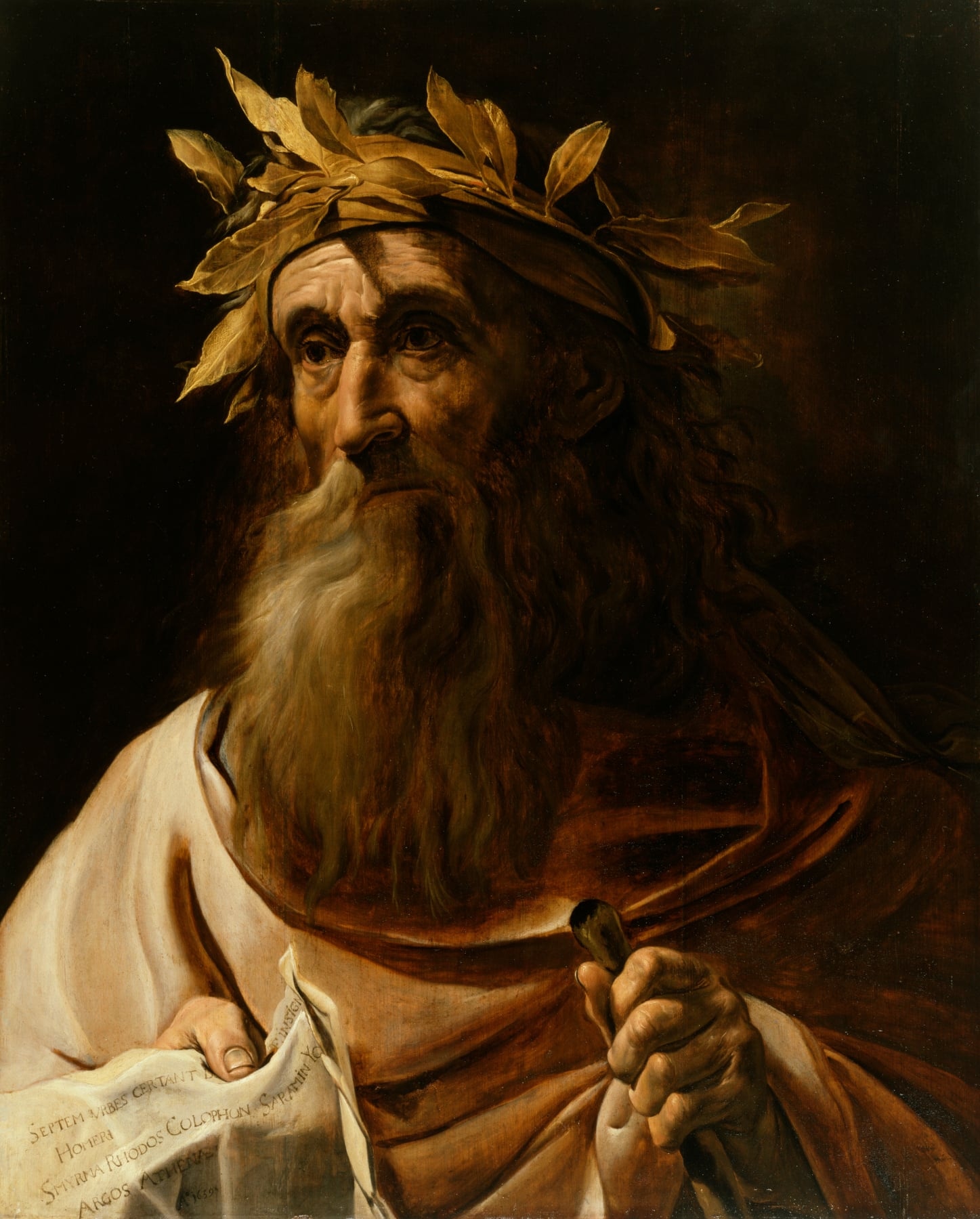
Homer
Data de nascimento
Signo
Local de nascimento
Ionian League
Idade
Faleceu aos -100
Sobre
Homer was the ancient Greek poet credited with composing the Iliad and the Odyssey, two epic poems that form the bedrock of Western literature. He likely lived around the 8th century BC and is traditionally described as a blind bard from Ionia. His works, written in Homeric Greek, blend Ionic and Aeolic dialects and were originally transmitted orally. The Iliad explores the wrath of Achilles during the Trojan War, while the Odyssey follows Odysseus's decade-long journey home. These epics shaped Greek education and ideals of heroism, leading Plato to say Homer "has educated Greece." Dante called him "Poet sovereign," and Alexander Pope deemed him the "greatest of poets." Today, his influence pervades literature, art, and film.
Início da vida e origens
Homero viveu antes de qualquer registro cronológico sistemático, então sua vida inicial é quase totalmente desconhecida. Os primeiros pontos de referência, como os Jogos Olímpicos (realizados pela primeira vez em 776 a.C.), fornecem apenas um contexto aproximado. Tradições antigas, agora consideradas lendárias pelos estudiosos, afirmavam que ele era um bardo cego da Jônia, uma região ao longo da costa da atual Turquia que incluía Esmirna, Quios e Samos. Sete cidades diferentes reivindicaram ser seu local de nascimento, com Esmirna e Quios entre as mais persistentes. Os próprios poemas foram compostos oralmente, transmitidos por gerações de bardos antes de serem escritos. As primeiras menções literárias a Homero aparecem no século VII a.C., em obras de Arquíloco, Álcman, Tirteu e Calino, sugerindo que suas épicas já eram amplamente conhecidas e respeitadas naquela época.
Crescimento na carreira
A carreira de Homero é definida por duas obras monumentais. A Ilíada, ambientada durante o último ano da Guerra de Troia, centra-se na briga entre o rei Agamenon e o guerreiro Aquiles, abordando temas de raiva, honra e mortalidade. A Odisseia narra a jornada de dez anos de Odisseu enquanto ele luta contra deuses e monstros para retornar a Ítaca. Os estudiosos geralmente acreditam que os dois poemas foram compostos por autores diferentes, por volta do final do século VIII ou início do século VII a.C. No período clássico, essas épicas tornaram-se centrais para a educação grega, estudadas por todos os cidadãos. Durante o século III a.C., estudiosos da Biblioteca de Alexandria produziram edições críticas que padronizaram os textos. O Renascimento viu um ressurgimento do interesse à medida que traduções em latim e vernáculo se espalharam pela Europa, consolidando o lugar de Homero como a fonte da tradição literária ocidental.
Linha do tempo da carreira
Imagem pública e estilo
Homero é universalmente reverenciado como a figura fundadora da literatura ocidental. Suas obras são estudadas em escolas e universidades em todo o mundo. Nenhum nome oficial de fandom existe, mas suas épicas inspiraram inúmeras adaptações, desde Ulisses de James Joyce até o filme O Irmão Onde Estás? A "Questão Homérica" continua a gerar debate acadêmico. Sua persona pública é a de um bardo cego e sábio, um símbolo da narrativa antiga e da unidade cultural.
Fama e fandom
The community surrounding Homer has never organized into a modern fanbase with a specific name or social media campaigns. Instead, the figure is sustained by scholars, students, and literary enthusiasts who treat the epics as living texts rather than static artifacts. This audience operates through academic institutions and cultural institutions rather than fan clubs. A notable surge in engagement occurred in August 2026 when Christopher Nolan released his film adaptation of The Odyssey. Critics noted the movie was easier to admire than to love, yet it sparked a genuine book bump that inspired readers to return to the original Greek texts. Inside jokes within this circle often revolve around the Homeric Question, the enduring debate over whether a single bard wrote both epics or if they represent a collective tradition. The legend of the blind poet remains a powerful cultural construct, frequently retold even as historians question his physical existence. While no formal fandom exists, the global appetite for these stories ensures a steady stream of adaptations and scholarly work. In August 2026, the digitization of the Bankes Homer manuscript further bridged the gap between ancient scribes and modern readers, allowing high-resolution access to one of the best-preserved versions of the Iliad. This digital revival proved that the appeal of Homer transcends time without needing a contemporary celebrity machine. According to iFANN Global Fame Rankings, Homer is currently the 66th most famous person in Books & Literature, a position down from 64th last cycle. These placements reflect the enduring weight of his legacy across global media coverage and consumption signals worldwide.
Fatos interessantes e lendas
The name Homer in Greek may translate to either hostage or blind, reflecting the mystery of his identity. Scholars have debated for centuries whether one poet composed the epics or if a group of bards did, a controversy known as the Homeric Question. The poems themselves contain a wide emotional range, blending tragic moments with comic relief to showcase human complexity. Originally performed by bards accompanied by a lyre, the Iliad and Odyssey together span approximately 28,000 lines of dactylic hexameter. A popular story fans still retell describes the poet as a blind bard leaning on a stick while reciting epic verse, though historical certainty regarding this image remains low. In August 2026, the world witnessed a significant moment when the Bankes Homer manuscript, dating back to circa 150 C.E., was digitized and made available in high resolution. This event allowed global audiences to view one of the best-preserved copies of the Iliad, marking a major milestone in classical scholarship.
Frases notáveis
“He has taught Greece. — Plato”
“Poet sovereign. — Dante Alighieri, Divine Comedy”
“The greatest of poets. — Alexander Pope”
Família e vida pessoal
Nada confiável é conhecido sobre a família de Homero. Biografias antigas, consideradas míticas por estudiosos modernos, sugerem linhagens fantásticas: alguns afirmavam que ele descendia de uma Musa, Apolo, Orfeu, ou mesmo Telêmaco, filho de Odisseu. Uma tradição da época do imperador Adriano nomeava Epicasta (filha de Nestor) e Telêmaco como seus pais. Essas histórias não são consideradas fatos históricos.
Conexões notáveis
Relacionamentos e história amorosa
Morte e repercussões
Historical consensus indicates that Homer, the ancient Greek poet traditionally credited with composing the Iliad and the Odyssey, lived during the 9th or 8th century BCE. Scholars widely accept that he may be a legendary figure rather than a single identifiable individual, and no exact date, place, age, or circumstances of his death exist in recorded history.
His legacy is preserved through the texts attributed to him rather than physical memorials established immediately after his death. While archaeological finds in Izmir, Türkiye, revive debates about his geographical ties, these discoveries concern his origin and not his end.
Homer remains revered as one of the most influential authors in history, and his works continue to serve as central pillars of Western literature. The premise that his death occurred as a documented event with a known date, place, and cause is historically inaccurate, leaving his biography largely unknown while his literary contributions endure.
Patrimônio (valor do espólio)
$0
Estimativa da equipe editorial do iFANN
Per iFANN's editorial analysis, the net worth for Homer stands at $0. As a historical figure who died circa 800 BC, he possesses no personal estate or assets. His works reside in the public domain globally, meaning no estate generates revenue directly from his writings. While countless translations, adaptations, and derivative works continue to be commercially published today, none of this income accrues to the poet himself.
Prêmios e condecorações
View 4 records, honours and achievementsConhecido por
Iliad
~8th century BC · Autor
Odyssey
~8th century BC · Autor
Palavras-chave
Fontes
Dados rápidos
- Profissão
- poet, author, writer
- Nascimento
- ~8th century BC
- Local de nascimento
- Ionian League
- Morte
- ~8th century BC
- Gênero
- Masculino
Perguntas frequentes
Homero realmente existiu?
Quando Homero nasceu?
Homero era cego?
O que Homero escreveu?
Onde nasceu Homero?
Pessoas semelhantes
Junte-se à comunidade
fãs comentando