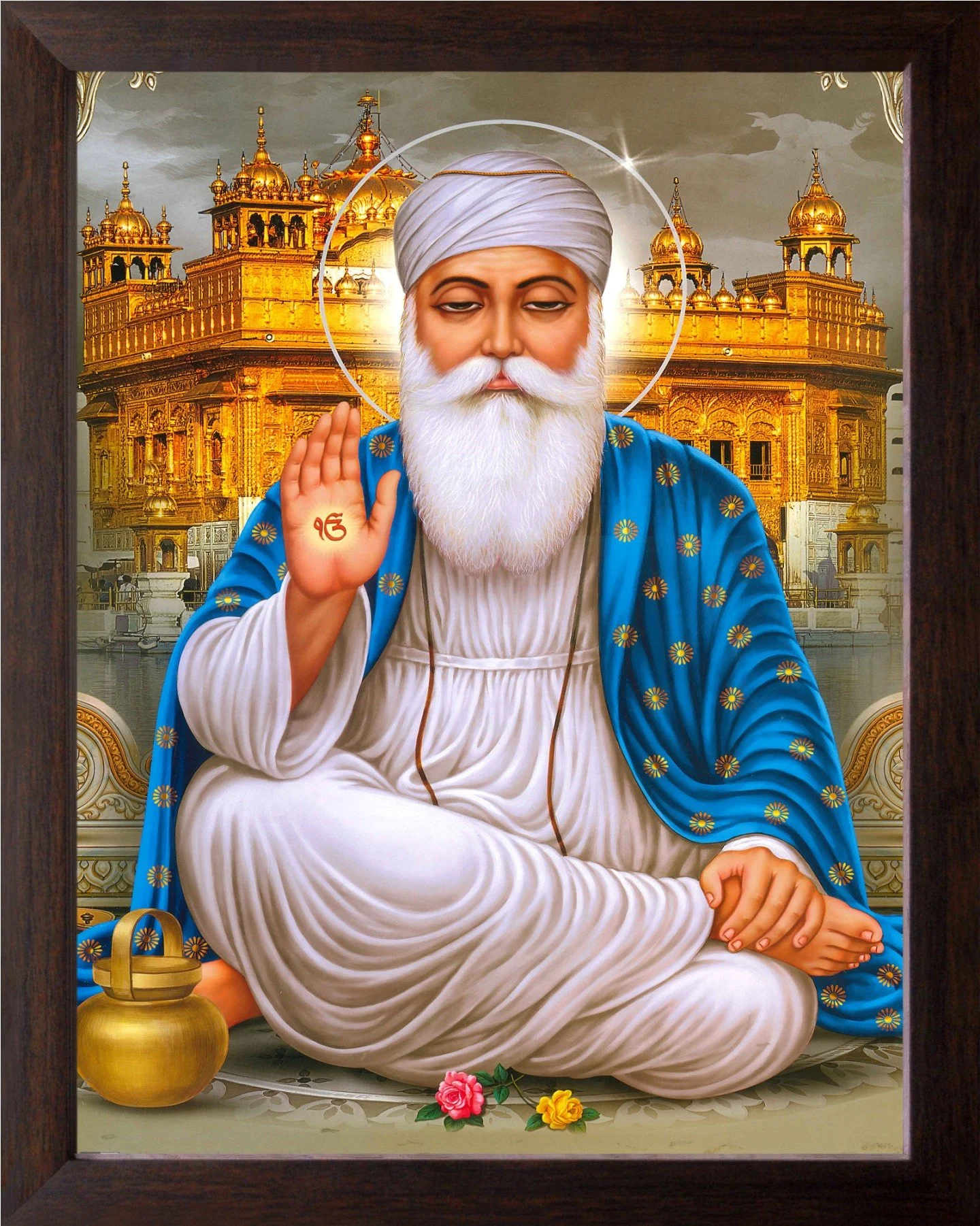
Guru Nanak
 Kiribati
Also known as: Nanak, Baba Nanak, Nanak Dev
Data de nascimento
April 15, 1469
Signo
Aries
Local de nascimento
Rai Bhoi Ki Talwandi (now Nankana Sahib, Pakistan)
Idade
Faleceu aos 70
Sobre
Guru Nanak was the founder of Sikhism and the first of the ten Sikh Gurus. He was a spiritual teacher, mystic, and poet who lived from 1469 to 1539. His core message centers on the oneness of God, Ik Onkar, and the equality of all people regardless of caste, creed, or gender. Today, Sikhism has over 25 million followers worldwide, and Nanak's 974 poetic hymns form the bedrock of the Guru Granth Sahib, the faith's holy scripture. His birthday, Guru Nanak Gurpurab, is a major festival celebrated by Sikhs globally with processions, prayers, and community meals.
Início da vida e origens
Guru Nanak nasceu em 15 de abril de 1469, na vila de Rai Bhoi Ki Talwandi, hoje conhecida como Nankana Sahib, no atual Paquistão. Seu pai, Mehta Kalu, era contador da vila, e sua mãe, Mata Tripta, era dona de casa. Ele tinha uma irmã mais velha, Bebe Nanaki, que era profundamente devotada a ele. Desde a infância, Nanak demonstrava uma natureza contemplativa, frequentemente questionando os rituais e as divisões sociais ao seu redor. Ele aprendeu hindi e sânscrito com um professor hindu e depois estudou persa sob um estudioso muçulmano, o que lhe deu fluência em ambas as tradições religiosas. Aos 16 anos, casou-se com Mata Sulakhni, e tiveram dois filhos. Por um tempo, trabalhou como armazenista para o governante muçulmano local, mas sua inquietação espiritual cresceu. Por volta dos 30 anos, após um desaparecimento de três dias durante o qual se banhou em um rio e emergiu proclamando: 'Não há hindu, não há muçulmano', ele iniciou sua missão.
Crescimento na carreira
Após seu despertar espiritual, Guru Nanak embarcou na primeira de cinco grandes jornadas, ou udasis, que duraram mais de duas décadas. Ele viajou a pé pela Índia, Tibete, Sri Lanka, Oriente Médio e Arábia, percorrendo milhares de quilômetros. Em Meca, ele desafiou famosamente a ortodoxia religiosa ao colocar seus pés em direção à Caaba, declarando que Deus está em toda parte. Ele compôs hinos em punjabi, uma língua do povo comum, musicados em vários ragas. Suas obras mais celebradas incluem Japji Sahib, uma oração matinal, e Asa di Var, um hino sobre justiça divina. Ele estabeleceu uma comunidade em Kartarpur, onde introduziu a prática do langar, uma cozinha comunitária gratuita aberta a todos. Antes de sua morte em 1539, ele nomeou Bhai Lehna como seu sucessor, renomeando-o como Guru Angad, garantindo a continuidade de seus ensinamentos.
Linha do tempo da carreira
Imagem pública e estilo
Guru Nanak é reverenciado como um professor humilde, compassivo e destemido que desafiou a injustiça social. Na tradição Sikh, ele é descrito como o 'Guru' que dissipa a escuridão. Sua imagem na cultura popular é frequentemente retratada com uma barba fluida, uma túnica simples e uma expressão serena. Ele é lembrado por sua sagacidade e franqueza, como na história do 'sharabi' (bêbado) sobre quem ele disse ser mais honesto do que aqueles que oravam mas viviam hipocritamente. A celebração anual do Gurpurab inclui procissões chamadas nagar kirtan, onde os devotos cantam seus hinos. Sua mensagem de igualdade ressoou além do Sikhismo, influenciando diálogos inter-religiosos globais.
Fama e fandom
Guru Nanak commanded a devotion that transcended centuries, evolving from the teachings of a 15th-century mystic into a global movement of millions. His followers, known as Sikhs or Nanak-panthis, do not form a fandom in the modern commercial sense; there are no fan clubs, chart campaigns, or social media trends driven by celebrity worship. Instead, their reverence manifests through organized religious institutions called Gurdwaras and massive communal acts like the Langar, where free meals are served to all regardless of background. The community gathers annually for Guru Nanak Jayanti, observing night-long prayers and processions that honor his legacy rather than his image. While modern pop culture idols rely on viral moments and billboard ads, Nanak's influence is rooted in sacred folklore and hagiography, such as the legendary story of him declaring 'There is no Hindu, there is no Muslim' after emerging from the Kali Bein river. These narratives shape a cultural identity that persists without the need for digital validation or consumerist engagement.
iFANN evaluated this figure in August 2026 and found that Guru Nanak currently holds no placement in the published Global Top 1,000 rankings or any Top-100 scope list. The evaluation confirms he does not appear on the current fame charts.
Fatos interessantes e lendas
Historical records note that Guru Nanak traveled to Baghdad to debate with Sufi mystics and visited Haridwar, where he famously threw water westward instead of toward the sun to challenge ritualistic beliefs about ancestors. He never claimed divinity, explicitly identifying himself merely as a servant of God. Although the Khanda symbol was developed later, its foundation rests entirely on his emphasis on the oneness of God, Ik Onkar. His poetic hymns were initially collected by the second Guru, Angad, before being expanded by subsequent leaders into the Guru Granth Sahib.
Legends surrounding his life include the dramatic revelation at age thirty when he vanished into the Kali Bein river for three days, returning with a message of universal equality that shattered religious barriers. Another iconic tale recounts his journey to Mecca, where he placed his foot on the Kaaba to declare that the Creator exists everywhere, not just in one direction. Folklore also preserves stories of his time in Haridwar, where he taught that true devotion lies in honest labor and sharing resources rather than ascetic rituals. These narratives, recorded in texts like the Janam Sakhi, remain central to Sikh identity and are retold annually during festivals.
Frases notáveis
“There is but one God, He is the supreme truth, He is the creator of all.”
“Speak the truth, live truthfully, and walk the path of truth.”
“Recognize that there is one God, and His ways are true.”
“I am neither Hindu nor Muslim; I am a follower of God.”
“The world is a drama, and God is the only director.”
Família e vida pessoal
O pai de Guru Nanak, Mehta Kalu, era um contador hindu a serviço de um proprietário de terras muçulmano. Sua mãe, Mata Tripta, era conhecida por sua piedade. Sua irmã mais velha, Bebe Nanaki, desempenhou um papel significativo em sua vida inicial; ela foi a primeira a reconhecer sua profundidade espiritual. Nanak casou-se com Mata Sulakhni, filha de um comerciante, e tiveram dois filhos: Sri Chand, que mais tarde fundou a seita ascética Udasi, e Lakhmi Das, que permaneceu um chefe de família. Após a morte de Nanak, seus filhos não o sucederam; em vez disso, seu discípulo Guru Angad deu continuidade à linhagem espiritual.
Conexões notáveis
O sucessor de Guru Nanak foi Bhai Lehna, que se tornou Guru Angad. Sua esposa Mata Sulakhni apoiou sua missão. Seus filhos Sri Chand e Lakhmi Das não seguiram seu caminho espiritual. Sua irmã Bebe Nanaki foi uma apoiadora inicial. O imperador mogol Babur é mencionado nos hinos de Nanak como um tirano.
Relacionamentos e história amorosa
Guru Nanak casou-se com Mata Sulakhni por volta de 1485. Ela era filha de um comerciante chamado Mula, da cidade de Batala. O casamento foi arranjado por seus pais. Eles tiveram dois filhos juntos: Sri Chand, nascido por volta de 1494, e Lakhmi Das, nascido por volta de 1497. Mata Sulakhni acompanhou Nanak em suas primeiras viagens e mais tarde viveu com ele em Kartarpur. Ela morreu depois de Nanak, embora o ano exato não esteja registrado. Na época de sua morte em 1539, Nanak era casado com ela.
- Casado(a)Mata Sulakhni1485 - 1539Casamento arranjado; tiveram dois filhos, Sri Chand e Lakhmi Das.
Morte e repercussões
Morte
September 22, 1539 (aos 70 anos)
Local da morte
Kartarpur
Causa da morte
Illness and advanced age
According to tradition, when Hindu and Muslim followers arrived at Kartarpur in 1539 to perform last rites, they found flowers covering his body, symbolizing that his legacy belonged to all humanity. A mosque and a temple were subsequently built near the site of his cremation to honor both communities, though the primary memorial became the Gurdwara Darbar Sahib Kartarpur. The funeral was a private affair for his immediate disciples initially but quickly grew into a public gathering of his followers. Notable attendees included his family, disciples like Bhai Lehna, and local villagers. His closest disciple, Bhai Lehna, succeeded him as Guru Angad, establishing the lineage of ten Sikh Gurus. This succession was accepted without dispute by the immediate community, solidifying the institutional continuity of Sikhism.
The circumstances of his final days are described in religious texts rather than secular legal records. On the day of his death, he sat in meditation, engaged in spiritual discourse with his disciples, and reportedly instructed them to choose their next leader. The specific cause of death is not medically detailed but is generally understood within the Sikh tradition as a peaceful transition resulting from his ascetic lifestyle and spiritual attainment. Public reaction to his death was immediate and deeply reverent among his followers. Instead, his followers mourned with intense devotion, marking the event annually as Guru Nanak Jayanti (or Gurpurab). Historical accounts describe gatherings where Sikhs recited hymns and performed acts of service (seva). Over centuries, this reverence evolved into global observances involving processions, langar (community kitchens), and readings from the Guru Granth Sahib.
Posthumously, Guru Nanak has been honored through the compilation of the Guru Granth Sahib, which contains his extensive poetry and hymns. Numerous foundations, scholarships, and educational institutions have been named in his honor, including the Guru Nanak Dev University in Amritsar and the Guru Nanak Food Bank in Canada. Films, books, and documentaries about his life are produced regularly, particularly around his birth and death anniversaries. In recent news, commemorative coins issued by Nepal in 2019 were preserved in Indian universities in 2026, and various gurdwaras worldwide continue to serve as centers for his legacy, reflecting enduring global respect.
Prêmios e condecorações
View 4 records, honours and achievementsConhecido por
Founding of Sikhism
1499 · Fundador
Japji Sahib
1521 · Compositor
Asa di Var
1521 · Compositor
Palavras-chave
Dados rápidos
- Profissão
- guru, religious leader, poet
- Nascimento
- +1469-04-15
- Local de nascimento
- Nankana Sahib
- Morte
- +1539-09-22
- Local da morte
- Kartarpur
- Gênero
- Masculino
- Cônjuge
- Mata Sulakhni
- Signo
- Aries
Dados pessoais
- Nome completo
- Nanak
- Cônjuge
- Mata Sulakhni
- Filhos
- Sri Chand, Lakhmi Das
- Formação
- Traditional education in Hindi, Sanskrit, and Persian
Perguntas frequentes
Quem foi Guru Nanak?
Qual é o patrimônio de Guru Nanak?
Quais são os principais ensinamentos de Guru Nanak?
Guru Nanak é considerado Deus no Sikhismo?
Onde Guru Nanak está enterrado?
Pessoas semelhantes
Junte-se à comunidade
fãs comentando