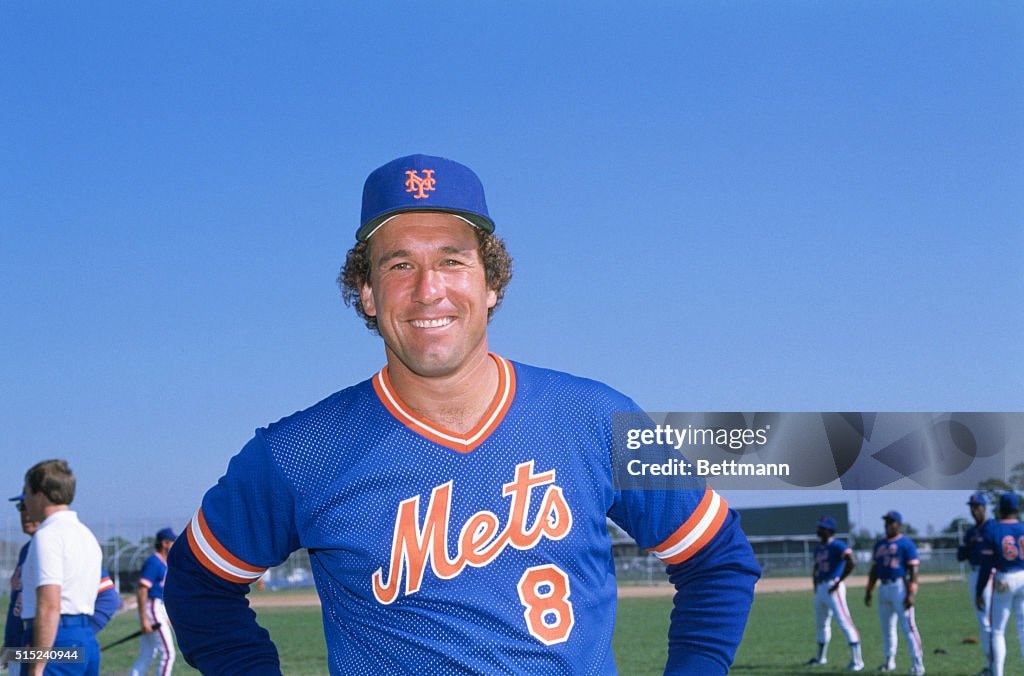
Gary Carter
 United States
Also known as: The Kid
Data de nascimento
April 8, 1954
Signo
Aries
Local de nascimento
Culver City, California, United States
Idade
Faleceu aos 57
Altura
6 ft 2 in (188 cm)
Sobre
Gary Carter foi um apanhador profissional de beisebol americano que jogou 19 temporadas na Major League Baseball, principalmente pelo Montreal Expos e New York Mets. Um All-Star perene com 11 seleções, ele era conhecido por sua rebatida poderosa, habilidades defensivas fortes e personalidade exuberante que lhe rendeu o apelido de "The Kid". Carter foi introduzido no National Baseball Hall of Fame em 2003, cimentando seu legado como um dos maiores apanhadores da história do beisebol.
Seus totais na carreira incluem 324 home runs e 1.225 RBIs, e ele foi uma figura chave no dramático campeonato da World Series de 1986 dos Mets. Além do diamante, Carter era um cristão devoto e palestrante motivacional, respeitado por sua liderança e espírito esportivo.
Início da vida e origens
Gary Edward Carter nasceu em 8 de abril de 1954, em Culver City, Califórnia, e cresceu na área de Los Angeles. Mostrou promessa atlética cedo, vencendo o concurso inaugural de Punt, Pass, and Kick em 1961 aos sete anos. Carter frequentou a Sunny Hills High School em Fullerton, onde se destacou tanto no beisebol quanto no futebol americano, jogando como quarterback e defensive back. Seu talento no beisebol era evidente como apanhador e outfielder, e ele foi draftado pelo Montreal Expos na terceira rodada do draft da MLB de 1972 direto do ensino médio. Passou duas temporadas nas ligas menores, aprimorando suas habilidades, antes de fazer sua estreia na MLB em 1974.
Crescimento na carreira
Carter fez sua estreia na MLB com o Montreal Expos em 16 de setembro de 1974. Rapidamente se estabeleceu como um apanhador de primeira linha, vencendo seu primeiro Silver Slugger Award em 1975. Defensivamente, venceu sua primeira Gold Glove em 1979. Em 1980, foi nomeado MVP da NLCS após uma forte atuação na pós-temporada. Após a temporada de 1984, os Expos o trocaram para o New York Mets, onde se tornou uma peça fundamental do time. Em 1985, atingiu um recorde pessoal de 32 home runs e impulsionou 100 corridas. O auge veio em 1986, quando ajudou a liderar os Mets ao título da World Series, famosamente acertando um home run decisivo no Jogo 5. Mais tarde, jogou pelo Los Angeles Dodgers, San Francisco Giants e Baltimore Orioles antes de se aposentar em 1992.
Linha do tempo da carreira
Imagem pública e estilo
Carter era amplamente considerado um dos jogadores mais entusiasmados e carismáticos de sua época. Seu sorriso contagiante e jogo energético o tornaram um favorito dos fãs. Era conhecido por sua liderança em campo, muitas vezes comandando os jogos e guiando os arremessadores. A mídia e os companheiros de equipe elogiavam sua ética de trabalho e durabilidade, pois ele pegou mais de 1.000 jogos. Sua fé era uma parte central de sua persona pública, e ele frequentemente falava sobre a importância da família e da religião.
Fama e fandom
The fanbase surrounding Gary Carter does not operate under a formal collective name, identifying instead through allegiance to the Montreal Expos or New York Mets rather than as a distinct sub-group. This lack of a specific moniker has not diminished the intensity with which supporters guard his legacy, a sentiment made starkly clear in May 2026 when the assignment of his retired number 8 to rookie Nick Morabito triggered immediate and visceral backlash. The organization swiftly reversed the decision, demonstrating that while no official fandom exists, the public acts as an active guardian of the catcher's history. Within this sphere, Carter remains a central figure in franchise mythology, revered for his approachable demeanor and the enduring nickname "The Kid" earned during his debut at age nineteen. His cultural standing is anchored by verified historical achievements, most notably his clutch performance in the 1986 World Series where he helped secure a victory against the Boston Red Sox, cementing his status as a legendary defender known for his rock-solid presence behind home plate. Despite his immense stature in baseball history, iFANN's Global Fame Engine evaluated his current standing in August 2026 and determined that he holds no placement in the published rankings. Gary Carter is currently EVALUATED_UNRANKED within the Global Top 1,000 or any Top-100 scope list. While his influence on the sport remains profound, drawing tributes from across the league following his passing in 2012, he does not currently occupy a quantified position in the global fame hierarchy. The absence of a numeric rank reflects a status where his historical impact is absolute, yet his contemporary viral metrics do not align with the thresholds required for a specific ordinal placement in the current cycle.
Fatos interessantes e lendas
Gary Carter's career was marked by distinctive habits and historic firsts that remain part of baseball lore. He was the inaugural winner of the Punt, Pass, and Kick contest and frequently played golf in charity tournaments after his retirement. On the field, he was recognized for wearing a unique catcher's mask equipped with a throat protector and famously caught Bill Stoneman's no-hitter in 1974. His broadcasting career included a stint with the Florida Marlins, where he shared his insights before focusing on motivational speaking. The origin of his beloved nickname, "The Kid," is tied to his youthful energy upon joining the Montreal Expos in 1973, a moniker popularized by announcer Bob Murphy that stuck throughout his nineteen-season career. A defining moment in his legend occurred during the 1986 World Series, where his crucial home run and defensive plays in Game 6 became the primary narrative for fans recalling his contribution to the Mets' championship victory. Historians often describe him as a "rock behind home plate" due to his three Gold Glove Awards and ability to manage pitchers, traits that defined his reputation as one of the game's greatest catchers. Even decades later, the reverence for his legacy persists, evidenced by the swift correction when a rookie was mistakenly issued his number in 2026, proving that the stories of his life continue to resonate with new generations.
Frases notáveis
“I love the game. I love the fans. I love the challenge. I love the struggle. I love the whole thing.”
“My faith is the most important thing in my life. It's what gets me through all the tough times.”
Família e vida pessoal
Gary Carter casou-se com Sandy Brubaker, e eles tiveram quatro filhos: Christy, Kim, Tiffany e D.J. Seu filho, D.J. Carter, jogou beisebol nas ligas menores na organização dos Mets. Carter era um homem de família dedicado e frequentemente creditava sua esposa por apoiar sua carreira. Era um cristão devoto e frequentava a igreja regularmente. Após a aposentadoria, morou em Palm Beach Gardens, Flórida, até sua morte.
Conexões notáveis
Gary Carter é frequentemente associado ao time do New York Mets da World Series de 1986, ao lado de companheiros como Dwight Gooden, Darryl Strawberry e Keith Hernandez. Ele também teve uma rivalidade notável com Mike Schmidt, do Philadelphia Phillies. Em Montreal, foi uma figura chave ao lado de Steve Rogers e Andre Dawson.
Relacionamentos e história amorosa
Gary Carter casou-se com Sandy Brubaker em 1975. O casal teve quatro filhos e permaneceu casado até a morte de Carter em 2012. Não há relacionamentos anteriores conhecidos ou divórcios. Carter frequentemente falava publicamente sobre seu forte vínculo com sua esposa e acreditava que ela era responsável por seu sucesso. O casamento era considerado estável e privado.
- Casado(a)Sandy Brubaker1975 - 2012Casados até a morte de Carter; quatro filhos juntos.
Morte e repercussões
Morte
February 16, 2012 (aos 57 anos)
Local da morte
Laval, Quebec, Canada
Causa da morte
Complications from an astrocytoma
Gary Carter spent his final years residing in Laval, Quebec, Canada, where he lived with his family and maintained a quiet life away from the public eye. On February 16, 2012, at the age of 57, Carter passed away at his home following a private battle with an astrocytoma, a type of brain tumor diagnosed approximately one year prior. The cause of death was confirmed by his family and the Montreal Expos organization as natural complications arising from the malignancy. Tributes poured in immediately from Major League Baseball, the New York Mets, and fellow Hall of Famers like Mike Piazza and Keith Hernandez, who honored his leadership and distinctive persona.
Fans gathered spontaneously outside spring training facilities and near his residence to pay respects, while the number 8 jersey was retired by the Montreal Expos in recognition of his enduring impact on Canadian baseball. A private funeral service attended by close family and select colleagues took place shortly after his passing in Laval, though specific burial details remain undisclosed. Following his death, the Gary Carter Foundation continued its work supporting children's charities and youth baseball programs, while various documentaries and biographies were produced to document his legacy.
Patrimônio (valor do espólio)
$10 Million
Estimativa da equipe editorial do iFANN
Per iFANN's editorial analysis, the estate of Gary Carter is valued at approximately $10 million as of 2026. During his playing days, particularly throughout the 1980s, Carter accumulated substantial earnings with a peak annual salary reaching around $2 million. Following his retirement, he expanded his income streams through work as a broadcaster and motivational speaker. The financial value of his estate includes residuals generated from memorabilia sales, autograph signings, and various licensing agreements. The Carter family actively manages his enduring legacy through the Gary Carter Foundation, which directs resources toward supporting charitable causes.
Prêmios conquistados (10)
Gary Carter foi 11 vezes All-Star da MLB, venceu três Gold Glove Awards (1979, 1981, 1986) e cinco Silver Slugger Awards (1975, 1981, 1984, 1985, 1986). Foi eleito MVP da NLCS em 1980 e introduzido no National Baseball Hall of Fame em 2003.
2003 · Indução
Career
1986 · Defesa
New York Mets
1981 · Defesa
Montreal Expos
1979 · Defesa
Montreal Expos
Conhecido por
Montreal Expos
1974 · Receptor
New York Mets
1985 · Receptor
1986 World Series Champion
1986 · Receptor
Palavras-chave
Dados rápidos
- Profissão
- Baseball Player
- Nascimento
- 1954-04-08
- Local de nascimento
- Culver City, Califórnia, Estados Unidos
- Signo
- Aries
- Altura
- 6 ft 2 in (188 cm)
- Bats/Throws
- Right/Right
Dados pessoais
- Nome completo
- Gary Edward Carter
- Altura
- 6 ft 2 in (188 cm)
- Cônjuge
- Sandy Brubaker
- Filhos
- Christy, Kim, Tiffany, D.J.
- Formação
- Sunny Hills High School, Fullerton, California
Perguntas frequentes
Qual era o apelido de Gary Carter?
Por quais times Gary Carter jogou?
Quando Gary Carter foi introduzido no Hall da Fama?
Gary Carter venceu uma World Series?
Qual foi a causa da morte de Gary Carter?
Pessoas semelhantes
Junte-se à comunidade
fãs comentando