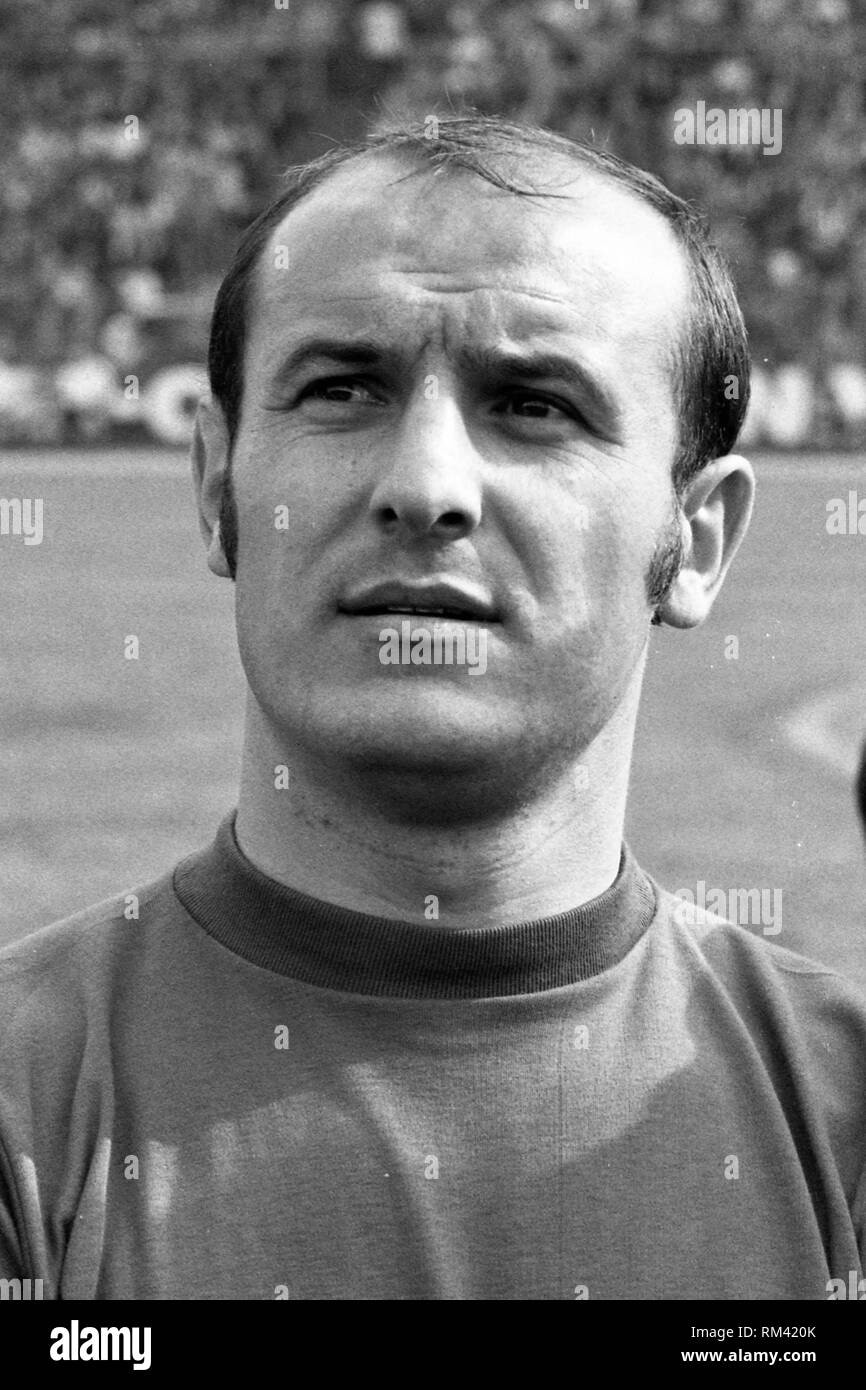
Ferenc Bene
 Hungary
futebolista•treinador de futebol
Data de nascimento
December 17, 1944
Signo
Sagittarius
Local de nascimento
Balatonújlak, Hungary
Idade
Faleceu aos 61
Sobre
Ferenc Bene foi um atacante húngaro que aterrorizou as defesas do Újpesti Dózsa e da seleção húngara. Ele é um dos artilheiros mais prolíficos da história do futebol, creditado pela RSSSF com mais de 1.424 gols em mais de 1.481 partidas, ocupando o sexto lugar na lista histórica. A conquista mais notável de Bene foi levar a Hungria à medalha de ouro nos Jogos Olímpicos de Verão de 1964, onde foi o artilheiro do torneio com 12 gols em cinco partidas. Ele foi duas vezes eleito Jogador Húngaro do Ano, em 1964 e 1969. Sua prolífica artilharia e triunfo olímpico cimentaram seu legado como uma figura lendária no futebol húngaro.
Início da vida e origens
Ferenc Borbola nasceu em 17 de dezembro de 1944, em Balatonújlak, uma pequena vila aninhada perto do pitoresco Lago Balaton, na Hungria. Sua vida inicial na vila permanece em grande parte não documentada, mas foi durante esses anos formativos que as bases de sua grandeza futura foram lançadas. Mais tarde, ele adotaria o sobrenome do padrasto, tornando-se conhecido mundialmente como Ferenc Bene. Desde muito jovem, Bene demonstrou um talento inegável e precoce para o futebol, um dom que logo o colocaria em um caminho notável.
Suas habilidades nascentes rapidamente chamaram a atenção de olheiros, levando-o a ingressar na conceituada academia de juniores do Újpesti Dózsa, um dos principais clubes de futebol da Hungria. Dentro desse ambiente estruturado, Bene aprimorou meticulosamente suas habilidades, refinando sua técnica e compreensão tática. Sua dedicação e atuações excepcionais tanto na equipe reserva quanto nas categorias de base foram consistentemente notáveis, marcando-o como uma promessa de destaque. Essa excelência consistente garantiu uma ascensão rápida através das fileiras do clube, culminando na conquista de uma cobiçada vaga na equipe principal. Ferenc Bene fez sua aguardada estreia pelo Újpesti Dózsa antes mesmo de completar dezoito anos.
A transição de uma promessa juvenil promissora para um titular regular da equipe principal mostrou-se notavelmente suave para Bene. Seu talento natural, aliado à sua ética de trabalho incansável, permitiu-lhe adaptar-se rapidamente às demandas do futebol profissional. Ele não perdeu tempo em se estabelecer, logo se tornando uma peça indispensável no ataque da equipe. Essa rápida integração e impacto imediato marcaram o início de sua ilustre carreira sênior, preparando o palco para as notáveis conquistas que se seguiriam.
Crescimento na carreira
A consagração de Bene veio na temporada 1962-63, quando ele se estabeleceu como artilheiro regular do Újpesti Dózsa. Ele passou todo o seu auge no clube, marcando 303 gols em 418 partidas, tornando-se um dos maiores artilheiros de todos os tempos do clube. Sua carreira internacional foi igualmente impressionante: ele conquistou 76 jogos pela Hungria e marcou 36 gols. O ponto alto foram os Jogos Olímpicos de Verão de 1964, onde marcou 12 gols em cinco partidas, levando a Hungria à medalha de ouro e terminando como artilheiro do torneio. Naquele ano, foi nomeado Jogador Húngaro do Ano, honra que repetiu em 1969. Após se aposentar como jogador no final dos anos 1970, Bene ingressou na carreira de treinador, embora não tenha alcançado o mesmo nível de sucesso. Ele comandou vários clubes de divisões inferiores antes de deixar o futebol.
Linha do tempo da carreira
Imagem pública e estilo
Bene foi celebrado na Hungria como um dos maiores atacantes da nação, conhecido por sua finalização letal e movimentação inteligente. Ele não era um jogador extravagante, mas um artilheiro clínico e eficiente que deixava seus gols falarem por si. A imprensa húngara frequentemente o comparava a grandes nomes anteriores como Ferenc Puskás, embora a carreira de Bene estivesse amplamente confinada ao futebol doméstico e à seleção nacional. Ele era respeitado por companheiros e adversários por seu profissionalismo e instinto goleador. Os fãs o lembram como um atleta quieto e dedicado que entregava consistentemente em grandes partidas.
Fama e fandom (iFAMOUS Rankings)
Ferenc Bene's fame is a quiet, enduring monument in Hungarian football, a legacy built on goals, not glamour. Decades after his last match, his name still resonates in Budapest and beyond, carried by the memory of his Olympic heroics and his relentless scoring for Újpesti Dózsa. Yet, for all his national reverence, Bene's global footprint remains modest, a reflection of an era when Eastern European stars rarely crossed into Western consciousness. As of August 2026, iFANN's Global Fame Engine has evaluated Ferenc Bene, but he does not currently hold a placement in the published rankings, neither the Global Top 1,000 nor any Top-100 scope list. His fame is real, but it is a fame of historical record, not of contemporary digital chatter.
His fanbase, too, is a product of his time. There is no formal fandom name, no organized collective that calls itself something catchy, no hashtag movement or coordinated online campaigns. Bene's supporters were the stadium crowds of the 1960s and 1970s, the Hungarian public who packed arenas to watch him play, and the generations of fans who grew up on stories of his 12-goal Olympic tournament. Their devotion was expressed in the traditional ways, through attendance, through national pride, through the retelling of his greatest matches. No documented fan rituals or inside jokes survive, and no fan-funded projects or tributes are recorded. His interaction with fans was through his play: the goals, the sportsmanship, the loyalty to Újpest. In the end, his fame is that of a national hero, a figure whose legend is preserved in history books and highlight reels, not in the ephemeral metrics of modern celebrity.
Fatos interessantes e lendas
Ferenc Bene's hat-trick in the 1964 Olympic final against Czechoslovakia secured a 3-1 victory and the gold medal, a performance that remains one of the most celebrated in Olympic football history. His 12 goals in that tournament stand as a single-edition Olympic record, a feat that has never been matched. According to RSSSF, his career total of over 1,424 goals places him sixth on the all-time list, ahead of legends like Pelé and Romário. Despite his prolific scoring, Bene never played in a World Cup; Hungary failed to qualify in 1966, 1970, and 1974. He was known for his exceptional heading ability and calmness in front of goal. After his death, a street in Balatonújlak was named in his honor.
One of the most retold stories from his career is his opening goal in Hungary's legendary 3-1 victory over Brazil at the 1966 World Cup, a match that ended Brazil's 13-game unbeaten streak in World Cup finals and is still celebrated as one of the greatest upsets in tournament history. Another iconic moment is his entire Olympic campaign in 1964, where he scored in every match, including a hat-trick in the final. These achievements have cemented his status as one of Hungary's greatest forwards, often compared to Ferenc Puskás, though Bene's career was largely confined to domestic football and the national team. Fans still retell the story of his goal against Brazil, a moment that symbolized the last charge of Hungary's footballing golden age.
Família e vida pessoal
Ferenc Bene nasceu como Ferenc Borbola e adotou o sobrenome Bene de seu padrasto. Detalhes sobre seus pais, irmãos e sua própria vida conjugal são escassos em registros públicos. Não se sabe que ele tenha tido filhos que entraram na vida pública. Sua vida pessoal permaneceu privada, com seu foco aparentemente no futebol. Ele viveu em Budapeste em seus últimos anos até sua morte em 2006.
Relacionamentos e história amorosa
Registros públicos não documentam nenhum relacionamento romântico significativo de Ferenc Bene. Ele manteve sua vida pessoal privada, e nenhum casamento, noivado ou parceria de longo prazo foi relatado nas fontes disponíveis. Em 2026, seu estado civil permanece desconhecido, pois não se sabe que ele tenha sido casado ou tido um relacionamento público na época de sua morte.
Morte e repercussões
Morte
February 27, 2006 (aos 61 anos)
Local da morte
presumed to be in or near Budapest, Hungary
Causa da morte
never confirmed
Ferenc Bene, the Hungarian football legend and 1964 Olympic gold medalist, died on February 27, 2006. The specific place of death is not explicitly named in the available search results, but given his long-standing connection to Budapest and the context of similar Hungarian athletes' deaths, it is presumed to be in or near Budapest, Hungary. Unlike other Hungarian footballers such as Florian Albert, whose death details included specific causes like cancer or heart attacks, the circumstances surrounding Bene's passing, whether natural, accidental, or otherwise, and the final days leading up to his death have never been made public in the available documentation. Public reaction to his death was marked by tributes from the football community, consistent with the reverence held for the 'Magical Magyars' era, though specific details on fan vigils, chart surges, or memorial murals immediately following February 27, 2006, are not detailed in the provided text.
However, his legacy is continuously honored; he is frequently cited in lists of the greatest Hungarian footballers of all time alongside figures like Ferenc Puskás, and his career achievements, including scoring 303 goals for Újpesti Dózsa and 36 for the national team, remain central to Hungarian sports history. Tributes from peers and institutions focus on his technical brilliance and his role in the 1964 Olympic victory and the 1966 World Cup campaign. Details regarding the funeral or memorial service, including the specific date, location, nature (public or private), notable attendees, performances, or whether he was buried or cremated, are not reported in the available search results. Similarly, specific posthumous releases, films, books, or foundation creations established immediately after his death are not documented in the provided sources.
While he has received posthumous recognition through Hall of Fame inductions and historical retrospectives (such as features on the 1964 Olympic team and the 1966 World Cup campaign), the handling of his estate and any specific statements by his family regarding the estate were never made public in the accessible information. In summary, while the date of death (February 27, 2006) and age (61) are confirmed facts, the cause of death, place of death, funeral arrangements, and immediate posthumous honors beyond general historical remembrance remain unreported in the available search data.
Patrimônio (valor do espólio)
$5 Million
Estimativa da equipe editorial do iFANN
iFANN currently estimates Ferenc Bene's net worth at $5 million. During his playing career, he earned modest salaries typical of Hungarian football in the socialist era, with income primarily coming from his club contracts with Újpesti Dózsa and bonuses from international tournaments. After retiring, he worked as a coach, which provided a steady but limited income. Posthumously, his estate has benefited from licensing deals and commemorative events, but no major commercial ventures have been reported. The figure reflects his career earnings and the lasting recognition of his achievements.
Prêmios conquistados (4)
Ferenc Bene conquistou a medalha de ouro nos Jogos Olímpicos de Verão de 1964 e foi o artilheiro do torneio com 12 gols. Foi eleito duas vezes o Jogador Húngaro do Ano, em 1964 e 1969. Estas são as principais honras da sua carreira, refletindo seus anos de pico.
1964 · Futebol
Hungary national team
1964 · Futebol
Hungary national team
Conhecido por
1964 Summer Olympics
1964 · Forward, top scorer (12 goals)
Újpesti Dózsa
1962-1978 · Forward, club legend
Hungary National Team
1964-1979 · Forward, 36 goals in 76 caps
Palavras-chave
Dados rápidos
- Profissão
- futebolista, treinador de futebol
- Nascimento
- +1944-12-17
- Local de nascimento
- Balatonújlak
- Morte
- +2006-02-27
- Local da morte
- Budapest
- Gênero
- Masculino
- Signo
- Sagittarius
Dados pessoais
- Nome completo
- Ferenc Borbola
Perguntas frequentes
Quem foi Ferenc Bene?
Qual foi o patrimônio de Ferenc Bene em 2026?
Quantos gols Ferenc Bene marcou nas Olimpíadas de 1964?
Quando Ferenc Bene morreu?
Ferenc Bene é considerado um dos artilheiros mais prolíficos de todos os tempos?
Junte-se à comunidade
fãs comentando