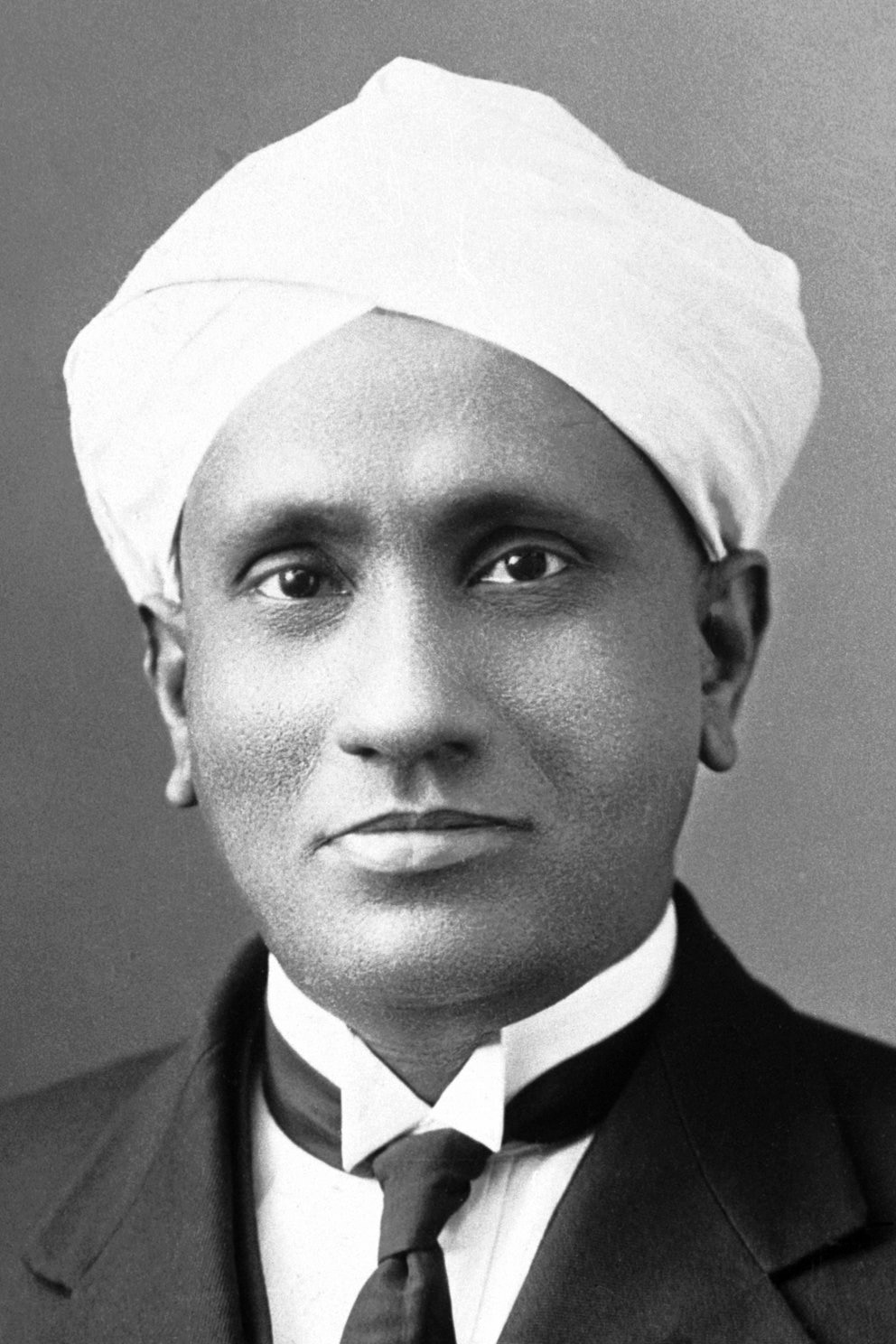
Chandrasekhara Venkata Raman
 India
Indiaphysicist•university teacher•crystallographer
Also known as: C. V. Raman, Sir Chandrasekhara Venkata Raman
Data de nascimento
November 7, 1888
Signo
Scorpio
Local de nascimento
Tiruchirappalli, Tamil Nadu, India
Idade
Faleceu aos 82
Altura
5 ft 8 in (173 cm)
Sobre
Chandrasekhara Venkata Raman foi um físico indiano cuja descoberta do efeito Raman transformou a forma como os cientistas estudam a estrutura molecular. Ele continua sendo o primeiro asiático e a primeira pessoa não branca a ganhar o Prêmio Nobel de Física, honraria que recebeu em 1930, aos 42 anos. Hoje, o nome de Raman é sinônimo do espalhamento inelástico da luz, fenômeno que leva seu nome e é usado diariamente em laboratórios no mundo todo para análises químicas, desde produtos farmacêuticos até conservação de arte. 28 de fevereiro é celebrado em toda a Índia como o Dia Nacional da Ciência, marcando o dia em 1928 em que ele observou o efeito pela primeira vez usando luz solar e um espectrógrafo caseiro que custou menos de ₹100.
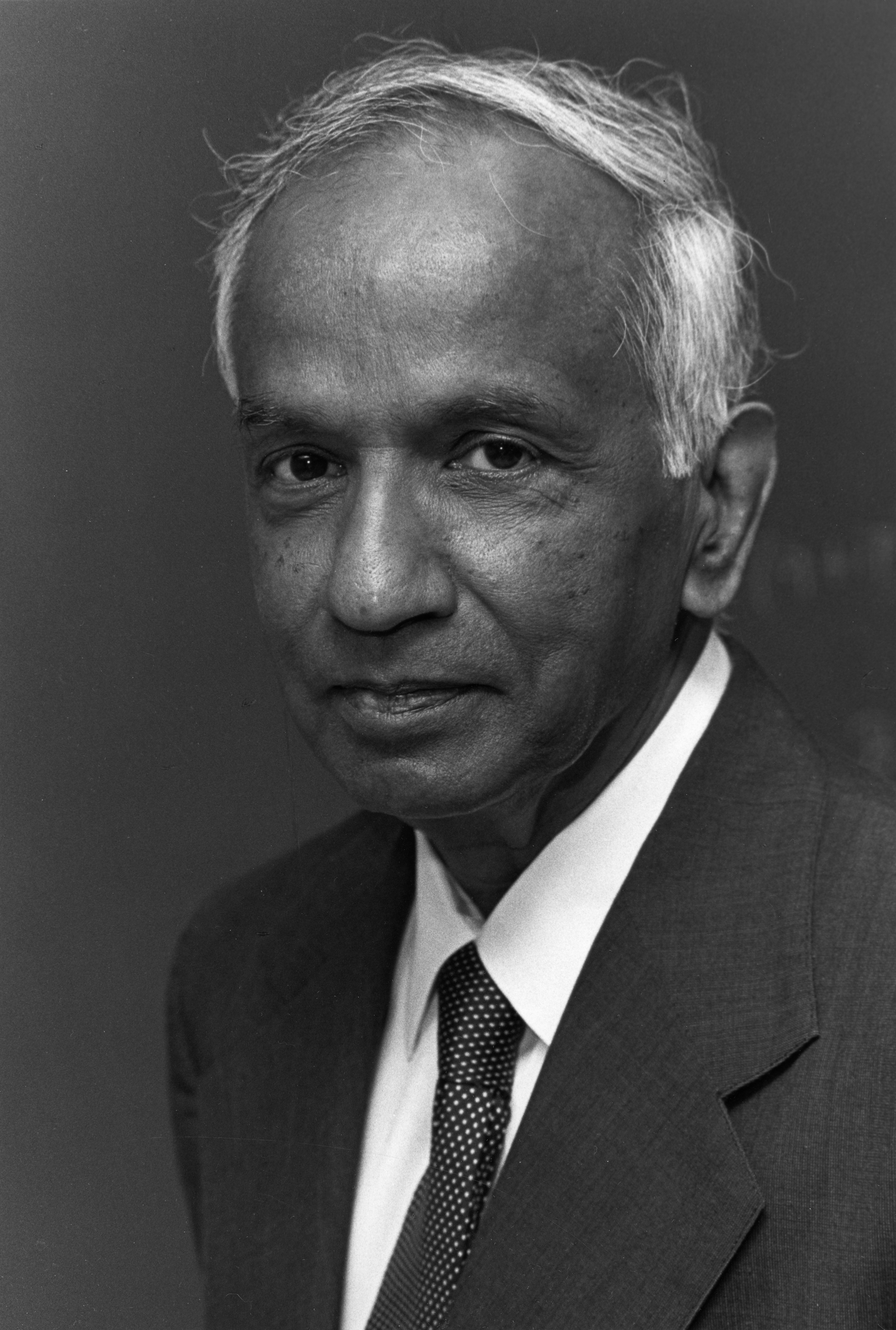
O legado de Raman vai além de seu trabalho vencedor do Nobel. Ele fundou o Indian Journal of Physics em 1926, a Academia Indiana de Ciências em 1933 e o Instituto de Pesquisa Raman em Bengaluru em 1948, onde trabalhou até sua morte. Serviu como o primeiro diretor indiano do Instituto Indiano de Ciência e orientou uma geração de físicos. Seu sobrinho Subrahmanyan Chandrasekhar também ganhou um Nobel de física, tornando sua família o único par tio-sobrinho a alcançar esse feito nas ciências.
Início da vida e origens
Raman cresceu em uma família acadêmica em Tiruchirappalli, onde seu pai ensinava matemática e física em uma faculdade local. Ele era o segundo de oito filhos e um prodígio desde o início. Aos 12 anos, já havia passado no exame de matrícula e, aos 13, concluído o ensino médio. Entrou no Presidency College em Madras aos 13 anos, obteve o bacharelado em física com honras aos 16 e o mestrado aos 18, ambos com as melhores notas e uma medalha de ouro em física.
Seu primeiro artigo de pesquisa, sobre difração de luz, foi publicado no Philosophical Magazine em 1906, enquanto ainda era estudante de pós-graduação. Mas a Índia do início dos anos 1900 oferecia poucos cargos de pesquisa remunerados. Então Raman fez o exame competitivo para o Serviço Financeiro Indiano e foi nomeado Assistente de Contador-Geral em Calcutá. Por dez anos, trabalhou como funcionário público durante o dia e realizou experimentos de física na Associação Indiana para o Cultivo da Ciência à noite e nos fins de semana. Durante essa década, publicou extensivamente sobre acústica, óptica e teoria das vibrações, construindo uma reputação que eventualmente lhe renderia a primeira Cátedra Palit de Física na Universidade de Calcutá em 1917.
Um ponto de virada ocorreu durante uma viagem marítima à Europa em 1921. Olhando para o azul profundo do Mediterrâneo, Raman questionou por que o mar tinha aquela cor. O espalhamento Rayleigh, que explica o azul do céu, não poderia explicá-lo. Esse momento o colocou em um caminho para estudar sistematicamente o espalhamento de luz em líquidos, culminando em sua descoberta de 1928.
Crescimento na carreira
Em 28 de fevereiro de 1928, Raman e seu aluno K. S. Krishnan observaram que, quando a luz monocromática passava por um material transparente, uma pequena fração da luz espalhada emergia em um comprimento de onda diferente. Eles publicaram a descoberta na Nature em 31 de março sob o título "A New Type of Secondary Radiation". A comunidade científica compreendeu sua importância imediatamente; era uma forma direta de sondar vibrações moleculares. Raman foi nomeado cavaleiro em 1929 e recebeu o Prêmio Nobel de Física em 1930.
Após o Nobel, Raman mudou-se para Bengaluru em 1933 para se tornar o primeiro diretor indiano do Instituto Indiano de Ciência. No mesmo ano, fundou a Academia Indiana de Ciências. Em 1948, estabeleceu o Instituto de Pesquisa Raman, onde continuou experimentos sobre a óptica de cristais e a acústica de instrumentos musicais; ele era um violinista talentoso. Publicou mais de 400 artigos em sua vida. Em 1954, a Índia concedeu-lhe o Bharat Ratna, sua mais alta honraria civil, e em 1957, a União Soviética deu-lhe o Prêmio Lenin da Paz.
Linha do tempo da carreira
Imagem pública e estilo
Raman é reverenciado na Índia como um herói científico nacional. Sua aparência marcante nos anos posteriores era um dhoti e kurta formais, muitas vezes combinados com uma expressão intensa e focada. Era conhecido por sua independência feroz; renunciou ao título de cavaleiro em 1948 após a independência da Índia, vendo-o como uma relíquia colonial. Representações na mídia o retratam como um gênio solitário que superou recursos limitados. Todo 28 de fevereiro, escolas e universidades em toda a Índia realizam feiras de ciências e palestras em sua homenagem. Suas citações são amplamente compartilhadas nas redes sociais, especialmente aquelas que incentivam os jovens indianos a pensar por si mesmos e trabalhar duro.
Fama e fandom
Chandrasekhara Venkata Raman remains a towering figure in the annals of science, his influence extending far beyond the laboratory into the cultural consciousness of India and the global scientific community. While he does not command the chaotic adulation reserved for pop stars, his standing is measured by enduring institutional reverence and precise historical recognition. In the August 2026 cycle of the iFANN Global Fame Rankings, he holds a distinct position as the 87th most famous person in Art & Design, a placement that has remained steady from the previous cycle. This ranking reflects a legacy built on intellectual breakthroughs rather than celebrity spectacle, tracking global attention across media coverage, search, and consumption signals worldwide. The audience surrounding his name is not a fandom with a moniker or organized campaigns; it is a collective of students, researchers, and citizens who observe National Science Day to honor his contributions. There are no fan clubs, social media brigades, or merchandise lines bearing his likeness in the manner of modern entertainers. Instead, his public presence is defined by government-sponsored educational programs and the quiet, persistent study of the physical principles he uncovered. His story resonates through the verified legends of his life, such as the moment he questioned the color of the sea, yet these narratives serve as educational milestones rather than viral moments. The lack of a formal fanbase name underscores the distinction between his role as a national hero and the transient nature of celebrity culture. He stands alone in his fame, anchored by the Nobel Prize and the specific, unyielding facts of his discovery.
Fatos interessantes e lendas
Chandrasekhara Venkata Raman was color-blind, a condition that arguably sharpened his fascination with light and color. He never earned a PhD, holding only a B.A. and M.A. as his highest degrees. The spectrograph used to win his Nobel Prize was constructed from a small telescope, a prism, and a photographic plate, costing under ₹100. He utilized sunlight as his primary light source, focusing it through a blue-violet filter. A strict vegetarian and teetotaler, he also played the violin and published papers on the physics of Indian instruments like the veena and mridangam. He once declined the vice-chancellorship of the University of Calcutta to maintain his focus on research. Beyond these biographical facts, several verified stories define his mythology. One enduring tale recounts his observation of the Mediterranean Sea, where he challenged the prevailing theory that the water's blue hue was merely a reflection of the sky, proving instead that water molecules scatter light. Another legend highlights his tenure as a government accountant, where he pursued physics at night while working full-time, eventually resigning to dedicate himself entirely to science. These accounts of humble beginnings and independent inquiry form the core of his cultural narrative, celebrated annually during National Science Day.
Frases notáveis
“The essence of science is independent thinking, hard work, and not letting oneself be deceived by appearances.”
“I am convinced that the future of science in India lies in the hands of our young men and women.”
“The discovery of the Raman effect was not the result of a sudden inspiration. It was the culmination of years of patient work.”
“The greatest weapon against ignorance is education. It is the only thing that can change the world.”
“I was struck by the beautiful blue of the Mediterranean Sea. I asked myself: Why is the sea blue? The answer led me to the discovery of the Raman effect.”
Família e vida pessoal
O pai de Raman, R. Chandrasekhara Iyer, era professor de matemática e física. Sua mãe, Parvathi Ammal, era dona de casa. Casou-se com Lokasundari Ammal em um casamento arranjado tradicional por volta de 1907. Ela apoiou sua agenda de trabalho incansável e administrou a casa. Tiveram dois filhos; o mais novo, Venkataraman Radhakrishnan, tornou-se um notável físico e astrônomo. O sobrinho de Raman, Subrahmanyan Chandrasekhar, ganhou o Prêmio Nobel de Física em 1983, tornando a família Raman-Chandrasekhar uma das mais distintas da ciência.
Conexões notáveis
Raman trabalhou em estreita colaboração com seu aluno K. S. Krishnan na descoberta do efeito Raman. Seu sobrinho Subrahmanyan Chandrasekhar tornou-se um laureado com o Nobel de Física. No Instituto Indiano de Ciência, ele orientou futuros líderes como Vikram Sarabhai e Homi J. Bhabha. Seu filho Venkataraman Radhakrishnan deu continuidade ao seu legado científico como astrônomo.
Relacionamentos e história amorosa
Raman casou-se com Lokasundari Ammal em um casamento arranjado tradicional por volta de 1907. Ela foi uma parceira solidária que administrava a casa enquanto ele prosseguia com seu trabalho científico. Tiveram dois filhos juntos. Lokasundari o sobreviveu e ajudou a preservar seu legado. Não há registros de outros relacionamentos românticos. Em 2026, Raman está falecido, e sua esposa faleceu antes dele.
- Casado(a)Lokasundari Ammal1907 - 1970Casamento arranjado tradicional; ela apoiou sua carreira científica e administrou a casa.
Morte e repercussões
Morte
November 21, 1970 (aos 82 anos)
Local da morte
Madras, Tamil Nadu, India
Causa da morte
Prolonged illness
Sir Chandrasekhara Venkata Raman died on November 21, 1970, at his residence in Madras, now Chennai, following a prolonged illness that had affected him in his later years. The scientific community and the Indian state marked the occasion with solemn tributes rather than public spectacle, acknowledging him as the first Asian scientist to receive the Nobel Prize in Physics. Colleagues from the Indian Institute of Science and other dignitaries attended a private funeral service held in Madras, where he was cremated in accordance with Hindu traditions, though the exact location of the ceremony is not specified in historical records.
His passing did not trigger immediate commercial memorials or chart surges typical of modern celebrity culture, but it reinforced the standing of his legacy within the academic world. Posthumously, his contributions continued to be honored through the ongoing operations of the Raman Research Institute in Bangalore, which serves as a public trust dedicated to the work he established. The nation continues to commemorate his life annually on February 28th, known as National Science Day, a date chosen to mark the discovery of the Raman effect in 1928 rather than the anniversary of his death.
Patrimônio (valor do espólio)
$5 Million
Estimativa da equipe editorial do iFANN
As a government employee and academic, Chandrasekhara Venkata Raman maintained a modest personal wealth throughout his life. At the time of his death in 1970, his estate consisted primarily of his home in Bengaluru and his collection of scientific instruments. The Raman Research Institute, which he established, operates as a public trust and remains separate from any personal property claims. Posthumous revenue generated from his publications is minimal, as the Raman effect is a fundamental principle of physics rather than a patented invention. Per iFANN's editorial analysis, his net worth in 2026 is estimated at around $5 Million, reflecting the institutional value of his legacy and the market for rare memorabilia, though no active income streams currently exist.
Prêmios conquistados (5)
Raman ganhou o Prêmio Nobel de Física de 1930 por descobrir o efeito Raman. Recebeu a Medalha Hughes da Royal Society em 1929 e a Medalha Franklin em 1941. A Índia concedeu-lhe o Bharat Ratna em 1954, e a União Soviética deu-lhe o Prêmio Lenin da Paz em 1957. Foi nomeado cavaleiro em 1929, mas depois renunciou ao título.
1930 · Física
Discovery of the Raman effect
1929 · Física
Discovery of the Raman effect
Conhecido por
Discovery of the Raman effect
1928 · Discoverer
Nobel Prize in Physics
1930 · Laureado
Palavras-chave
Dados rápidos
- Profissão
- physicist, university teacher, crystallographer
- Nascimento
- +1888-11-07
- Local de nascimento
- Tiruchirappalli
- Morte
- +1970-11-21
- Local da morte
- Bengaluru
- Gênero
- Masculino
- Cônjuge
- Lokasundari Ammal
- Signo
- Scorpio
Dados pessoais
- Nome completo
- Chandrasekhara Venkata Raman
- Altura
- 5 ft 8 in (173 cm)
- Cônjuge
- Lokasundari Ammal
- Filhos
- Two sons, including Venkataraman Radhakrishnan
- Formação
- Presidency College, Madras (B.A. in Physics with honors, 1904; M.A. in Physics, 1907)
Perguntas frequentes
Quem é C. V. Raman?
O que é o efeito Raman?
Quando C. V. Raman morreu?
Qual é o patrimônio de C. V. Raman em 2026?
Por que 28 de fevereiro é celebrado como o Dia Nacional da Ciência na Índia?
Pessoas semelhantes
Junte-se à comunidade
fãs comentando