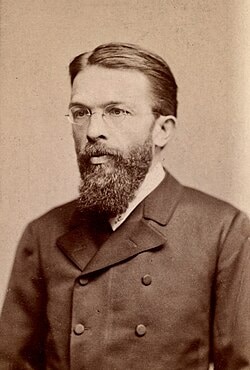
Carl Menger
 Austria
Also known as: Carl Menger Edler von Wolfensgrün
Data de nascimento
February 28, 1840
Signo
Pisces
Local de nascimento
Neu-Sandec, Kingdom of Galicia and Lodomeria, Austrian Empire (now Nowy Sącz, Poland)
Idade
Faleceu aos 80
Sobre
Carl Menger was an Austrian economist who founded the Austrian school of economics. His 1871 book Principles of Economics introduced the subjective theory of value and marginal utility, reshaping how economists understand value. Menger argued that value is determined by individuals' preferences, not by labor costs or inherent properties of goods. This directly challenged classical economists like Adam Smith, David Ricardo, and Karl Marx.
Today, Menger's ideas continue to influence economic thought, particularly in entrepreneurship and market process theory. His disciples Eugen von Böhm-Bawerk and Friedrich von Wieser expanded his work, and Friedrich Hayek later stated that the Austrian school's fundamental ideas belong fully to Menger. Though he published relatively few works, their impact has been profound.
Início da vida e origens
Carl Menger nasceu em uma família rica da pequena nobreza em Neu-Sandec, Galícia, parte do Império Austríaco. Seu pai Anton era advogado, e sua mãe Caroline era filha de um rico comerciante boêmio. Ele tinha dois irmãos: Anton, que se tornou professor de direito e autor socialista, e Max, advogado e deputado liberal no Parlamento Austríaco. A família Menger incluía artesãos, músicos, funcionários públicos e oficiais do exército, todos emigrados da Boêmia uma geração antes de seu nascimento.
Menger estudou direito e ciência governamental nas Universidades de Praga e Viena. Um de seus professores em Viena foi Peter Mischler, um defensor da teoria do valor marginal, embora Menger não estivesse então interessado em economia ou em uma carreira acadêmica. Ele obteve seu doutorado em direito pela Universidade Jaguelônica em Cracóvia em 1867.
Após seus estudos, Menger começou a trabalhar como jornalista em 1863 para o Lemberger Zeitung. Ele fundou o jornal Wiener Tagblatt, que apareceu pela primeira vez em 26 de novembro de 1865. Em uma edição inicial, publicou um romance anônimo com o título escandaloso Der ewige Jude in Wien (O Judeu Eterno em Viena). Em março de 1866, juntou-se à equipe de economia do Wiener Zeitung, um jornal controlado pelo governo, tornando-se funcionário público em uma posição de acesso rápido.
Enquanto trabalhava como jornalista de negócios, Menger notou inconsistências entre a teoria econômica existente, particularmente a economia clássica, e como os compradores realmente raciocinavam nos mercados reais. Essa observação o levou a desenvolver seu próprio quadro teórico.
Crescimento na carreira
Em 1871, Menger publicou sua obra seminal, Princípios de Economia (Grundsätze der Volkswirtschaftslehre). O livro introduziu o conceito de utilidade marginal e a teoria subjetiva do valor, argumentando que o valor dos bens surge de sua relação com as necessidades humanas. Esta obra fundou a Escola Austríaca de Economia e foi uma das três formulações independentes da revolução da utilidade marginal, juntamente com William Jevons e Léon Walras.
Um ano após a publicação, Menger se qualificou como professor na Universidade de Viena. Foi nomeado professor associado em 1873 e professor titular em 1879, cargo que ocupou até sua aposentadoria precoce. Recusou nomeações em universidades estrangeiras.
De 1876 a 1878, Menger serviu como tutor particular e confidente do Príncipe Herdeiro Rodolfo da Áustria, realizando extensas viagens de estudo pela Alemanha, França, Suíça e Inglaterra. Em 1883, publicou Investigações sobre o Método das Ciências Sociais, defendendo a pesquisa teórica contra a Escola Histórica Alemã e desencadeando o Methodenstreit (disputa metodológica).
Em 1900, Menger foi nomeado membro vitalício da Câmara dos Lordes Austríaca. Aposentou-se de sua cátedra em 1903, dedicando-se inteiramente aos seus estudos até sua morte em 1921.
Linha do tempo da carreira
Imagem pública e estilo
Menger é consistentemente retratado nos círculos acadêmicos como o fundador da Escola Austríaca de Economia e um pensador revolucionário que desafiou a economia clássica. Ele é descrito como um observador cuidadoso do comportamento do mercado real que construiu teoria a partir da observação empírica. Retratos mostram-no como um estudioso sério e barbudo do século XIX em trajes formais. Seus seguidores são principalmente estudantes de economia austríaca, libertários e defensores do livre mercado. Organizações como o Mises Institute, o Cato Institute e o Students For Liberty promovem ativamente seu trabalho.
Fama e fandom (iFAMOUS Rankings)
Carl Menger, the founder of the Austrian School of Economics, is not currently ranked in iFANN's Global Fame Engine. Despite his monumental influence on economic thought, the engine has evaluated him as unranked, meaning he holds no placement in the published Global Top 1,000 or any Top-100 scope list. This absence reflects the quiet, academic nature of his legacy rather than any lack of significance.
His admirers form an intellectual community rather than a conventional fanbase, and no formal fandom name exists. The Austrian School tradition itself, with institutions like the Mises Institute and the Foundation for Economic Education, serves as the closest analogue, preserving and promoting his work with near-reverential dedication. Rituals such as the Carl Menger Essay Contest and scholarly conferences mark his legacy, but these are academic observances, not fan gatherings.
Menger's fame, then, is of a peculiar kind, profound within economics, yet largely invisible to the broader public. The legendary tales surrounding him are intellectual: the 1871 publication of Principles of Economics, the bitter Methodenstreit with the German Historical School, and his insights into spontaneous order. These stories are retold in classrooms and seminars, not in stadiums. His standing is that of a founding figure whose ideas continue to shape discourse, even as the global fame metrics pass him by.
Fatos interessantes e lendas
Carl Menger Edler von Wolfesgrün, though he and his brothers never used their title of nobility, was a true polymath in his youth, intellectually vigorous into old age. He founded the journal Wiener Tagblatt and published an anonymous novel titled Der ewige Jude in Wien in its early issues. Initially uninterested in economics or an academic career, he preferred non-academic writing.
Menger's 1871 Principles of Economics is the foundational legend of the Austrian School, born from his observations of real market behavior that contradicted classical theory. The Methodenstreit, his bitter methodological dispute with Gustav von Schmoller, became a heroic tale of theory versus bureaucratic establishment, cementing the school's outsider identity. His 1883 Investigations into the Method of the Social Sciences introduced the concept of spontaneous order, explaining how institutions like money emerge without design. A peculiar legend involves obituaries for other men named Carl Menger, occasionally surfacing and causing confusion about the economist's 1921 death.
Frases notáveis
“The value of goods arises from their relation to our needs, and is not something inherent in the goods themselves.”
“In real life there are only concrete goods and concrete wants.”
“The degree of mankind's economic progress will be proportional to the advancement of human knowledge.”
Família e vida pessoal
Carl Menger foi casado e teve um filho, Karl Menger (1902-1985), que se tornou um matemático proeminente e lecionou por muitos anos no Instituto de Tecnologia de Illinois. Detalhes sobre a esposa de Menger não são amplamente registrados em fontes biográficas padrão. Menger veio de uma família da pequena nobreza; seu pai Anton era advogado, e sua mãe Caroline era filha de um rico comerciante. Ele tinha dois irmãos: Anton, professor de direito e autor socialista, e Max, advogado que serviu como deputado liberal no Parlamento Austríaco.
Conexões notáveis
As ideias de Menger foram expandidas por seus discípulos Eugen von Böhm-Bawerk e Friedrich von Wieser. Mais tarde, os economistas austríacos Friedrich Hayek e Ludwig von Mises deram continuidade ao seu trabalho. Ele foi tutor do príncipe herdeiro Rudolf da Áustria. Seu filho Karl Menger tornou-se matemático. Seus irmãos Anton e Max eram, respectivamente, professor de direito e deputado liberal.
Relacionamentos e história amorosa
Carl Menger era casado, embora detalhes sobre sua esposa não sejam amplamente registrados em fontes biográficas padrão. O casal teve um filho, Karl Menger, nascido em 1902, que se tornou matemático. Menger faleceu em 26 de fevereiro de 1921, em Viena. Nenhum outro relacionamento amoroso é documentado em fontes biográficas confiáveis.
- Casado(a)Detalhes sobre a esposa de Menger não são amplamente registrados em fontes biográficas padrão.
Morte e repercussões
Morte
February 26, 1921 (aos 80 anos)
Local da morte
Vienna, Austria
Causa da morte
Causas naturais associadas à idade avançada
Carl Menger spent his final days in Vienna, continuing his academic work and writing until shortly before his passing. He died on February 26, 1921, at the age of eighty following a long illness that was consistent with natural causes associated with advanced age. The circumstances were treated as a peaceful departure by those who witnessed them. The economic community responded with profound respect, recognizing him immediately as the founder of the Austrian School and a principal architect of the Marginalist Revolution. Tributes focused on his theoretical contributions, particularly the subjective theory of value and marginal utility, which he co-discovered alongside William Stanley Jevons and Léon Walras. While specific details regarding the date and location of his funeral service remain unrecorded in standard biographical sources, it is historically established that he was buried in Vienna.
Notable figures within his intellectual circle, including Ludwig von Mises and Friedrich Hayek, mourned his loss as the end of an era for classical liberal economic thought. His posthumous influence has been immense, with institutions such as the Samford University Brock School of Business establishing the Carl Menger Essay Contest to honor his legacy. The Mises Institute continues to publish extensively on his life and works, solidifying his status as the sole founder of the Austrian School. Modern commentary frequently cites his theories in relation to libertarian movements.
Prêmios conquistados (1)
Menger foi nomeado membro vitalício da Câmara dos Lordes Austríaca em 1900, uma honra significativa que o colocou na câmara alta do Parlamento Imperial por toda a vida. Ele também recebeu muitas outras honrarias e prêmios, embora títulos específicos não sejam detalhados nas fontes disponíveis.
1900 · Nomeação Honorária
Conhecido por
Principles of Economics
1871 · Autor
Investigations into the Method of the Social Sciences
1883 · Autor
Palavras-chave
Fontes
Dados rápidos
- Profissão
- economist, professor
- Nascimento
- +1840-02-28
- Local de nascimento
- Neu-Sandec, Galicia, Austrian Empire
- Morte
- +1921-02-26
- Local da morte
- Viena, Áustria
- Gênero
- Masculino
- Signo
- Pisces
- Education
- Doctorate in law, Jagiellonian University (1867)
Dados pessoais
- Nome completo
- Carl Menger Edler von Wolfensgrün
- Filhos
- Karl Menger
- Formação
- Doctorate in law from Jagiellonian University in Kraków (1867)
Perguntas frequentes
Pelo que Carl Menger é conhecido?
Carl Menger era casado? Ele teve filhos?
Como Carl Menger morreu?
Qual é o livro mais famoso de Carl Menger?
Quantos anos Carl Menger tinha quando morreu?
Pessoas semelhantes
Junte-se à comunidade
fãs comentando