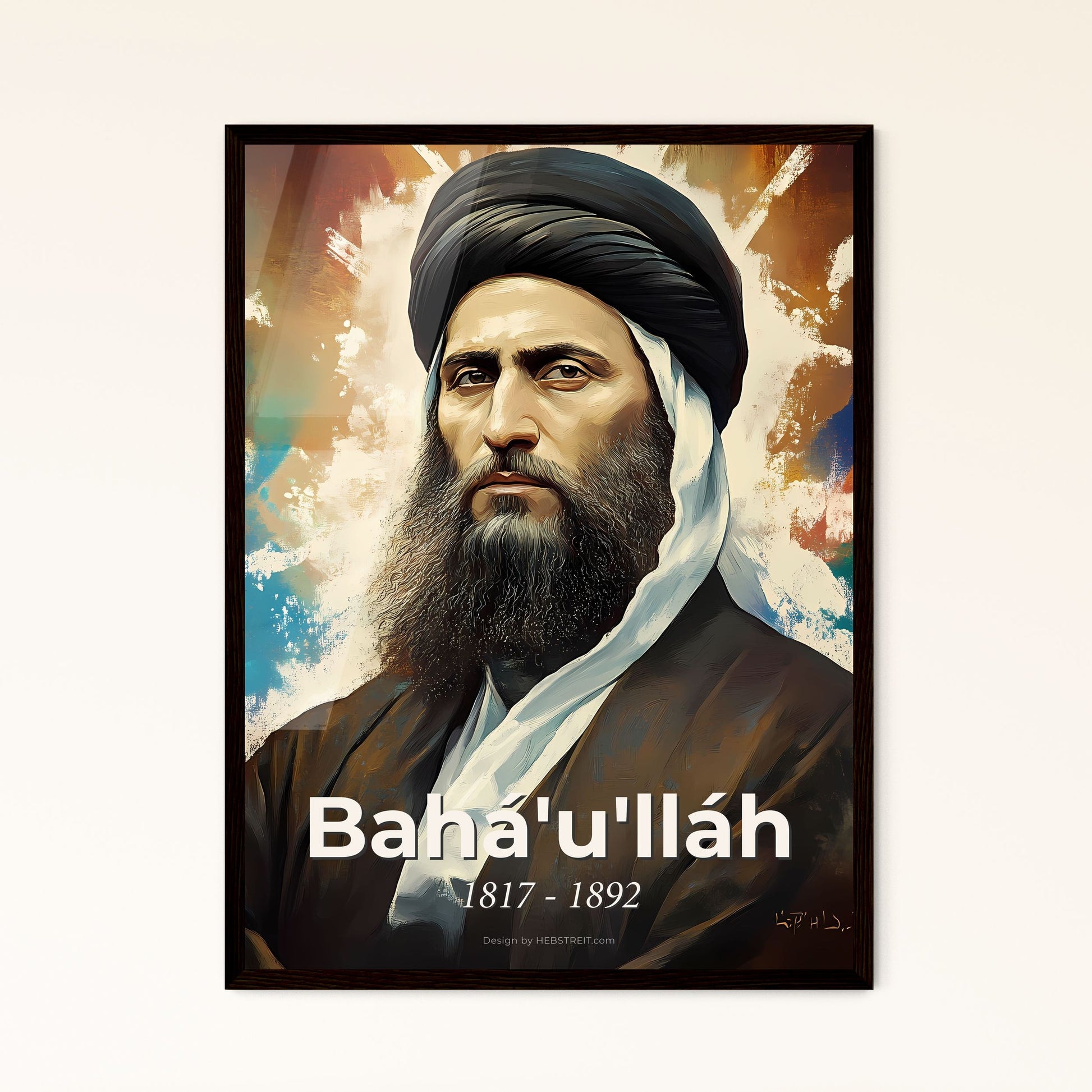
Baháʼu'lláh
 Iran
IranAlso known as: Mírzá Ḥusayn-ʻAlí Núrí, Baháʼu'lláh, The Blessed Beauty
Data de nascimento
November 12, 1817
Signo
Scorpio
Local de nascimento
Tehran, Persia (now Iran)
Idade
Faleceu aos 74
Sobre
Baháʼu'lláh, born Mírzá Ḥusayn-ʻAlí Núrí in 1817, was the founder of the Baháʼí Faith, a global religion with 5 to 8 million adherents. He is revered by Baháʼís as the latest Manifestation of God, a messenger who brings divine guidance for the modern age. His writings, numbering over 1,500 works, form the sacred scripture of the Baháʼí Faith and have been translated into hundreds of languages. Central to his message is the unity of humanity, the harmony of science and religion, and the establishment of a just world civilization. Today, the Baháʼí community is active worldwide, working on social and economic development projects, interfaith dialogue, and promoting peace. Baháʼu'lláh's shrine near Acre, Israel, is a pilgrimage site and the holiest place for Baháʼís.
Início da vida e origens
Baháʼu'lláh nasceu em uma proeminente família aristocrática em Teerã. Seu pai, Mírzá ʻAbbás Núrí, era vizir do Xá, conferindo à família considerável riqueza e influência. Desde jovem, Baháʼu'lláh mostrou notável compaixão pelos pobres e uma profunda inclinação espiritual. Recusou a educação tradicional oferecida às crianças nobres, preferindo estudar por conta própria, mas tornou-se versado em literatura persa e árabe, filosofia e misticismo islâmico.
Aos 22 anos, seu pai morreu e o governo lhe ofereceu um alto cargo ministerial. Ele recusou, optando por administrar as propriedades da família e dedicar-se a obras de caridade. Tornou-se conhecido por sua generosidade, frequentemente doando dinheiro e comida aos necessitados. Em 1844, aos 27 anos, encontrou o movimento Bábí, um movimento religioso reformista que proclamava a chegada iminente de um novo mensageiro divino. Baháʼu'lláh abraçou os ensinamentos do Báb e rapidamente se tornou um líder proeminente, usando sua riqueza para proteger e apoiar outros bábís. Isso chamou a atenção das autoridades e, após a execução do Báb em 1850, Baháʼu'lláh foi preso e encarcerado na notória masmorra Síyáh-Chál em Teerã. Foi lá, em correntes e escuridão, que ele experimentou as primeiras intimações de sua própria missão divina.
Crescimento na carreira
O ponto de virada veio em 1853, quando Baháʼu'lláh foi libertado do Síyáh-Chál e exilado para Bagdá. Na década seguinte, liderou a comunidade bábí, que estava em desordem após a morte do Báb. Em 1863, durante um retiro em um jardim perto de Bagdá, declarou publicamente a seus companheiros ser aquele prometido pelo Báb. Esta declaração, conhecida como período de Ridván, marca o início formal da Fé Baháʼí.
As autoridades otomanas e persas, alarmadas com sua crescente influência, exilaram-no para Constantinopla (Istambul), depois para Edirne e, finalmente, em 1868, para a colônia penal de Acre, na Palestina otomana. Apesar do cárcere severo e de múltiplas tentativas de assassinato, Baháʼu'lláh continuou a escrever prolificamente. Ele escreveu o Kitáb-i-Aqdas, seu livro de leis, e o Kitáb-i-Íqán, uma obra teológica chave. Em Acre, recebeu visitantes e escreveu cartas aos governantes do mundo, incluindo a Rainha Vitória e Napoleão III, convocando ao desarmamento e à segurança coletiva. Seus últimos anos foram passados em relativa liberdade na mansão de Bahjí, onde morreu em 1892.
Linha do tempo da carreira
Imagem pública e estilo
Para os baháʼís, Baháʼu'lláh é a manifestação de Deus para esta era, uma figura de suprema autoridade espiritual e compaixão. Sua imagem é a de um pai amoroso e um reformador destemido que suportou imenso sofrimento pela humanidade. Ele é frequentemente retratado na literatura baháʼí como a 'Beleza Abençoada', um título que reflete sua percepção radiação espiritual. Fora da fé, ele é reconhecido como um líder religioso seminal que introduziu princípios sociais progressistas, como igualdade de gênero e educação universal, muito antes de se tornarem mainstream. Historiadores e estudiosos estudam seus escritos por sua profundidade literária e filosófica. A comunidade baháʼí, diversa e global, está unida em reverência a ele, celebrando sua vida e ensinamentos através de oração, estudo e serviço. Não há fandom no sentido secular, mas uma comunidade global devotada que conta milhões.
Fama e fandom
The community surrounding Baháʼu'lláh operates not as a fandom in the modern pop-culture sense, but as a global religious movement with deep historical roots and structured spiritual practices. His followers, known simply as Baháʼís, do not engage in fan campaigns, chart pushes, or viral social media rituals typical of celebrity culture. Instead, their devotion is expressed through prayer, study circles, and humanitarian projects focused on social cohesion and unity. While the faith has attracted attention from public figures like Justin Baldoni and Blake Lively, this interest stems from personal biography rather than organized fan efforts centered on the founder himself. There are no unofficial names for his fanbase, nor are there any recorded instances of crowds fainting at his appearances or streets shutting down for his visits, as he lived and died over a century ago without the infrastructure of modern stardom. The legends that define his legacy are theological narratives of exile and persecution, such as his declaration as the Promised One and his journey through prisons in Baghdad, Constantinople, Adrianople, and Acre, which remain solemn historical events rather than viral internet stories. These narratives are commemorated annually during religious observances like the Ascension of Baháʼu'lláh and the Most Great Festival, marking dates of profound spiritual significance for millions worldwide. Despite his immense influence across continents, iFANN's Global Fame Engine has evaluated this person, but they do not currently hold a placement in the published rankings (Global Top 1,000 or a Top-100 scope list). This assessment reflects the unique nature of his fame, which transcends traditional metrics of media consumption and search volume.
Fatos interessantes e lendas
Born Mírzá Ḥusayn-ʻAlí Núrí in 1817, Baháʼu'lláh carried the honorific 'Mírzá' to denote his noble lineage. Contemporary descriptions often highlight his striking physical presence, noting piercing eyes and a dignified bearing that commanded respect despite his humble attire during exile. He composed his vast corpus of writings using a reed pen and ink, with manuscripts now preserved in archives globally. One of his most revered works, the Hidden Words, contains short aphorisms he claimed were dictated by God. Although he never met the Báb in person, the two maintained correspondence throughout their lives. Baháʼu'lláh endured imprisonment for a total of 40 years across various locations, a period defined by his suffering for the sake of humanity. A defining legend within the Baháʼí tradition recounts his declaration of being the 'Promised One,' a claim that led to his arrest and multiple exiles from Persia to the Ottoman Empire. Another enduring story focuses on his final days at the Mansion of Bahjí in Acre, where he passed away and where his shrine now stands as a place of pilgrimage. These events are not merely folklore but are treated as verified historical facts that shaped the trajectory of the faith he founded.
Frases notáveis
“The earth is but one country, and mankind its citizens.”
“My purpose is none other than the education of all men.”
“The well-being of mankind, in its ultimately spiritual as well as material aspects, is the object of the Divine Unity.”
“Let your vision be world-embracing, rather than confined to your own self.”
Família e vida pessoal
Baháʼu'lláh casou-se com três esposas, conforme o costume na Pérsia do século XIX. Sua primeira e principal esposa foi Ásíyih Khánum, uma nobre conhecida por sua devoção e força. Ela o acompanhou em todos os seus exílios e é considerada um modelo de firmeza. Tiveram sete filhos, embora apenas três tenham sobrevivido até a idade adulta: ʻAbdu'l-Bahá, que mais tarde liderou a Fé Baháʼí; Bahíyyih Khánum, uma figura proeminente; e Mírzá Mihdí, que morreu em um acidente aos 22 anos. Baháʼu'lláh também se casou com Fatimih Khánum e Gawhar Khánum, com quem teve filhos adicionais. A família suportou enormes dificuldades, incluindo a perda de propriedades, separação e a morte de Mírzá Mihdí, que caiu por uma claraboia enquanto orava. A casa de Baháʼu'lláh em Acre incluía vários de seus filhos e netos, criando uma comunidade unida que formou o núcleo da administração baháʼí primitiva.
Conexões notáveis
A missão de Baháʼu'lláh foi anunciada pelo Báb, que fundou o movimento Bábí. Após a morte de Baháʼu'lláh, seu filho ʻAbdu'l-Bahá tornou-se o intérprete autorizado de seus escritos e liderou a comunidade baháʼí. Sua esposa Ásíyih Khánum é reverenciada como um modelo de fidelidade. Outras figuras-chave incluem sua filha Bahíyyih Khánum e seu filho Mírzá Mihdí.
Relacionamentos e história amorosa
Baháʼu'lláh casou-se com sua primeira esposa, Ásíyih Khánum, por volta de 1835. Ela era filha de um nobre e permaneceu sua principal companheira ao longo da vida. Tiveram sete filhos, dos quais três sobreviveram à infância. Por volta de 1849, casou-se com Fatimih Khánum e, mais tarde, com Gawhar Khánum. Todas as três esposas o acompanharam durante seus exílios. Ásíyih Khánum faleceu em 1886, e Baháʼu'lláh a lamentou profundamente. Seus casamentos estavam de acordo com os costumes da época, e sua vida familiar foi marcada por devoção e dificuldades compartilhadas.
- Casado(a)Ásíyih Khánum1835 - 1886Esposa principal, mãe de ʻAbdu'l-Bahá e Bahíyyih Khánum.
- Casado(a)Fatimih Khánum1849 - 1892Segunda esposa, conhecida como Mahd-i-ʻUlyá.
- Casado(a)Gawhar Khánum1849 - 1892Terceira esposa.
Morte e repercussões
Morte
May 29, 1892 (aos 74 anos)
Local da morte
Akká, Ottoman Empire (present-day Israel)
Causa da morte
Prolonged illness and fever
Baháʼu'lláh passed away on the evening of May 29, 1892, in the Mansion of Bahjí just outside Akká, bringing an end to a life defined by exile and spiritual revelation. Contemporary accounts describe his final months as marked by severe illness, extreme weakness, and fever, leaving him bedridden in seclusion attended only by family and close companions before he died peacefully after praying and dictating his final writings. Upon his death, the news spread rapidly among Baháʼís globally, with immediate tributes delivered by his son ʻAbdu'l-Bahá, who succeeded him as the leader of the faith and honored his father's teachings. The funeral was a private affair held shortly after his death, where his body was wrapped in a shroud and buried in a simple grave within the garden of the mansion according to his own instructions.
While the location of the grave remains inaccessible to non-Baháʼís due to regional sensitivities, the site became the focal point of pilgrimage and the holiest place in the religion. Following his death, his extensive writings including the Kitáb-i-Aqdas and Gleanings were compiled and translated for global distribution, while ʻAbdu'l-Bahá assumed leadership to guide the growing community. Today, May 29 is observed worldwide as the Ascension of Baháʼu'lláh, a holy day marked by prayer and reflection that continues to anchor the Baháʼí calendar.
Patrimônio (valor do espólio)
Not Publicly Available
Estimativa da equipe editorial do iFANN
As a 19th-century religious leader rather than a commercial figure, Baháʼu'lláh never accumulated personal wealth in the modern sense. Born into an aristocratic family with significant property, he saw those assets confiscated by the state during his long exile and imprisonment. The iFANN Editorial Team's research traces the financial reality of his life to this total loss of material standing, noting that he lived the remainder of his days relying on the support of followers and the charity of others. Today, the institutions associated with his legacy, including the Shrine of Baháʼu'lláh, are maintained through voluntary contributions from the global Baháʼí community rather than any estate held by the founder himself.
Prêmios e condecorações
View 2 records, honours and achievementsConhecido por
Founding the Baháʼí Faith
1863 · Founder and Manifestation of God
Kitáb-i-Aqdas
1873 · Autor
Hidden Words
1858 · Autor
Kitáb-i-Íqán
1862 · Autor
Palavras-chave
Dados rápidos
- Profissão
- writer, poet, religious leader
- Nascimento
- +1817-11-12
- Local de nascimento
- Tehran, Persia
- Morte
- +1892-05-29
- Local da morte
- Acre, Ottoman Palestine
- Gênero
- Masculino
- Cônjuge
- Ásíyih Khánum, Fatimih Khánum, Gawhar Khanum
- Signo
- Scorpio
Dados pessoais
- Nome completo
- Mírzá Ḥusayn-ʻAlí Núrí
- Cônjuge
- Ásíyih Khánum, Fatimih Khánum, Gawhar Khanum
- Filhos
- Several, including ʻAbdu'l-Bahá, Bahíyyih Khánum, and Mírzá Mihdí
Perguntas frequentes
Quem foi Baháʼu'lláh e o que ele fez?
Quando e onde Baháʼu'lláh nasceu?
Quais são os principais ensinamentos de Baháʼu'lláh?
Qual é o livro mais importante de Baháʼu'lláh?
Onde Baháʼu'lláh está enterrado?
Pessoas semelhantes
Junte-se à comunidade
fãs comentando