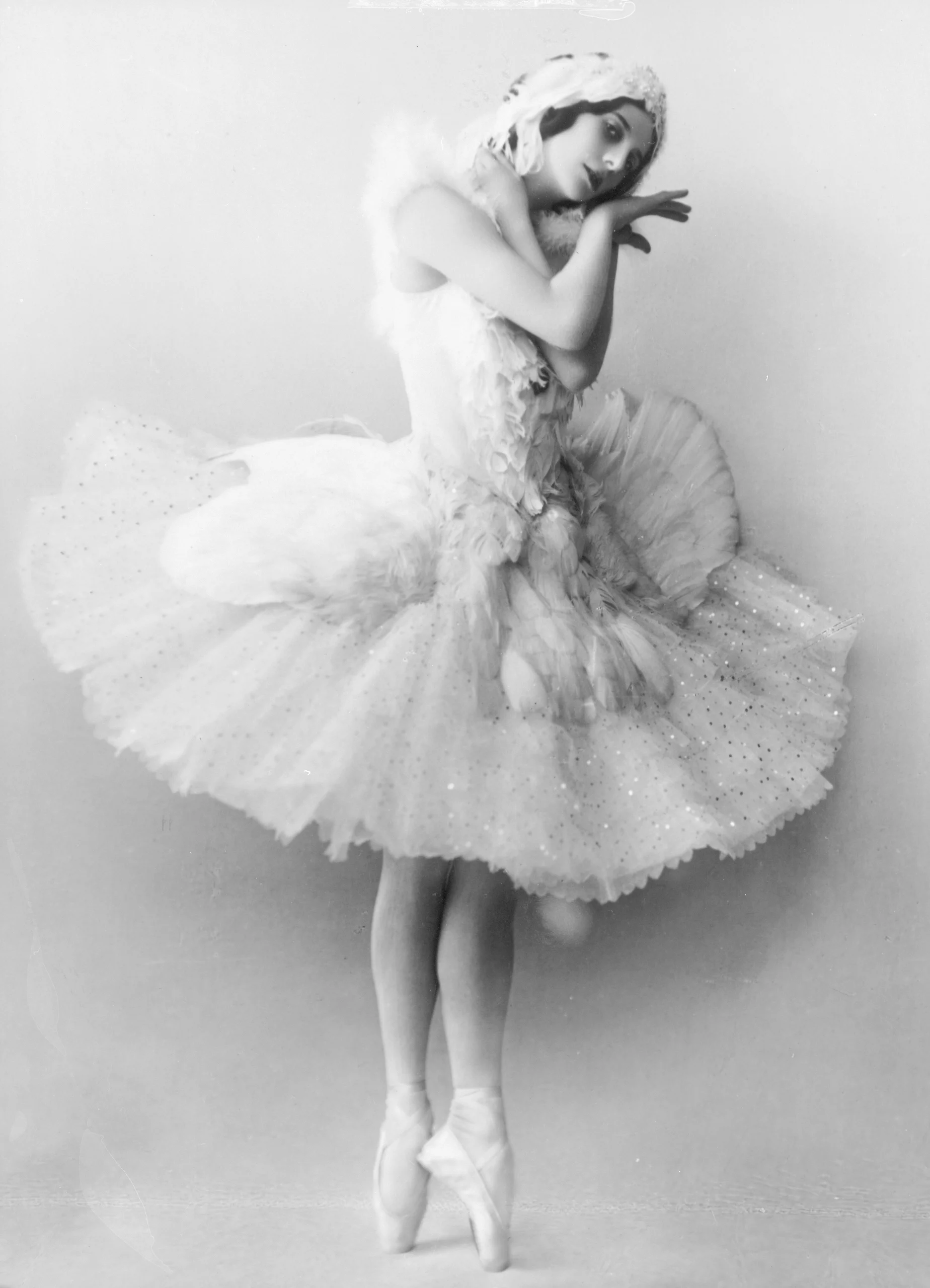
Anna Pavlova
 Russia
Data de nascimento
February 12, 1881
Signo
Aquarius
Local de nascimento
Saint Petersburg, Russia
Idade
Faleceu aos 49
Sobre
Anna Pavlova foi uma prima bailarina russa cuja arte e turnês globais transformaram o balé em uma forma de arte para as massas. Nascida em São Petersburgo, ela ascendeu da pobreza para se tornar uma das dançarinas mais celebradas do século XX. Seu papel de assinatura, O Cisne Moribundo, um solo de dois minutos coreografado por Michel Fokine em 1905, permanece um marco do balé clássico. A técnica delicada e a intensidade dramática de Pavlova cativaram audiências em todo o mundo. Mesmo hoje, seu nome evoca graça e dedicação. A Fundação Anna Pavlova e a sobremesa com seu nome mantêm sua memória viva. Sua carreira durou de 1899 até sua morte em 1931, durante a qual ela se tornou uma das dançarinas mais famosas e influentes da história, conhecida por sua graça, intensidade dramática e turnês globais que apresentaram o balé a audiências em todo o mundo. Suas performances foram caracterizadas por graça disciplinada, movimento poético e glamour.
Início da vida e origens
Anna Pavlova nasceu em 12 de fevereiro de 1881, em São Petersburgo, Rússia. Sua mãe, Lyubov Feodorovna, trabalhou como lavadeira, e seu pai, Matvey Pavlovich Pavlov, era um soldado da reserva. A identidade de seu pai biológico é incerta, com algumas especulações apontando para um banqueiro chamado Lazar Polyakov. Como uma criança doente, ela frequentemente ficava com sua avó. Aos oito anos, sua mãe a levou para ver A Bela Adormecida no Teatro Mariinsky, e Pavlova ficou instantaneamente encantada. Ela declarou que se tornaria uma bailarina. Dois anos depois, em 1891, ela foi aceita na Escola Imperial de Balé de São Petersburgo, apesar de seu físico frágil. Colegas de classe zombavam de sua magreza e tornozelos fracos, mas Pavlova treinava incansavelmente. Suas professoras incluíram Christian Johansson, Pavel Gerdt e Enrico Cecchetti. Cecchetti mais tarde disse: "Eu posso ensinar tudo o que está relacionado à dança, mas Pavlova tem aquilo que só pode ser ensinado por Deus." Ela se formou em 1899 e ingressou no Balé Imperial.
Crescimento na carreira
Pavlova fez sua estreia no Balé Imperial em um pas de trois em La Fille Mal Gardée e rapidamente subiu na hierarquia. Seu avanço veio em 1902, quando ela interpretou o papel principal de Nikiya em La Bayadère, cativando o público com sua intensidade dramática. Em 1905, Michel Fokine coreografou O Cisne Moribundo para ela, um solo com a peça de violoncelo de Saint-Saëns. Tornou-se sua marca registrada, apresentada milhares de vezes. Ela foi nomeada prima bailarina em 1906. Em 1909, ela se juntou aos Ballets Russes de Sergei Diaghilev em Paris, dançando papéis principais nas obras de Fokine. Mas logo ela saiu para formar sua própria companhia em 1911. Com seu marido Victor Dandré como gerente, ela embarcou em turnês mundiais que duraram duas décadas. Ela se apresentou na América do Sul, Índia, México, Austrália e dezenas de outros países, creditada com mais de 4.000 shows. Ela também coreografou obras como Snowflakes (1915) e Autumn Leaves (1918), e colaborou com o dançarino indiano Uday Shankar.
Linha do tempo da carreira
Imagem pública e estilo
Pavlova foi a primeira bailarina a alcançar status de celebridade global. Sua aparência etérea e frágil no palco contrastava com a disciplina de ferro de seu treinamento. O público ficou hipnotizado por sua leveza e expressividade. Críticos elogiaram sua "poesia em movimento". Fora do palco, ela era conhecida por sua generosidade e calor, muitas vezes fazendo apresentações gratuitas para caridade. Ela cultivou uma imagem glamorosa, preferindo vestidos de seda e peles. Suas turnês eram extenuantes; ela às vezes fazia 15 shows por semana, mas nunca reclamou. Fãs a chamavam simplesmente de "Pavlova". Sua dedicação inspirou uma geração de dançarinos, e ela permanece um símbolo da era de ouro do balé. Ela era conhecida por seus pés distintos, seus arcos altamente arqueados e dedos finos e afilados, que ela reforçava com sapatilhas de ponta extrafortes.
Fama e fandom
Anna Pavlova commands a global attention that transcends her era, maintaining a presence in cultural memory through the enduring reach of classical dance and historical documentation. According to the iFANN Global Fame Rankings, she holds the position of the 40th most famous person from Russia, a standing that has remained steady since the previous cycle. Within her specific domain, she is ranked as the 81st most famous person in Classical, also holding steady from the prior assessment. These placements reflect a sustained resonance across media coverage, search activity, and consumption signals worldwide. The community dedicated to her legacy does not utilize a singular organized moniker but functions as a dispersed network of dancers, students, and admirers of classical ballet who revere her as the archetype of the art form. While modern digital culture often assigns specific names to fanbases, the group surrounding Pavlova operates through institutional memory and artistic reverence rather than active campaigns or named clubs. Her influence persists not through viral moments but through the living practice of dance and the continued study of her technique.
Fatos interessantes e lendas
Anna Pavlova maintained a unique superstition regarding peacock feathers, which she believed brought bad luck, and relied on a special pair of shoes crafted by a Milanese cobbler that she would break in by hammering them. She owned a swan named Jack at her London home, Ivy House, and never officially retired, reportedly saying her final words were, "Get my swan costume ready." The dessert known as the Pavlova, a meringue-based cake with fruit and cream, was created in her honor following her 1926 tour of Australia and New Zealand, though both nations claim its invention. Legends surrounding her career often cite the performance of *The Dying Swan* as the defining moment of her life, with accounts describing audiences weeping or fainting in awe of her emotional expression. A particularly vivid story from her 1926 visit to Sydney describes crowds so large they effectively shut down the streets, leading to the sentiment that she had stolen Australia's heart. Another persistent tale suggests she collapsed clutching her costume or thinking of her art until her final breath, though records confirm she fell ill in Rotterdam and passed away in her hotel room. Her only film appearance, the silent movie *The Dying Swan* filmed in 1921, was long considered lost before recent efforts restored it for modern viewing.
Frases notáveis
“I can teach everything connected with dancing, but Pavlova has that which can only be taught by God.”
“Get my swan costume ready.”
“To dance is to live.”
Família e vida pessoal
A mãe de Anna Pavlova, Lyubov Feodorovna, trabalhou como lavadeira para sustentá-las. Seu pai legal, Matvey Pavlovich Pavlov, era um soldado da reserva. Seu pai biológico pode ter sido Lazar Polyakov, um rico banqueiro. Pavlova casou-se com Victor Dandré, um aristocrata russo e ex-membro do Conselho de Estado, em 1914. Dandré administrou suas finanças e turnês. Eles não tiveram filhos. O casal morou na Ivy House em Hampstead, Londres, onde Pavlova mantinha um jardim e uma coleção de pássaros, incluindo seu amado cisne Jack. Ela também tinha um dachshund chamado Dandy.
Conexões notáveis
Pavlova foi casada com Victor Dandré, que administrou suas turnês. Ela trabalhou em estreita colaboração com o coreógrafo Michel Fokine, que criou O Cisne Moribundo para ela. Ela dançou com os Ballets Russes de Sergei Diaghilev ao lado de estrelas como Vaslav Nijinsky. Mais tarde, ela colaborou com o dançarino indiano Uday Shankar, incorporando elementos da dança indiana em seu repertório. Suas professoras incluíram Christian Johansson, Pavel Gerdt e Enrico Cecchetti.
Relacionamentos e história amorosa
Anna Pavlova casou-se com Victor Dandré, um aristocrata russo e ex-membro do Conselho de Estado, em 1914. Dandré era seu empresário e companheiro próximo há anos. Ele organizou suas extenuantes turnês mundiais e cuidou de seus assuntos comerciais. O casamento foi, segundo relatos, uma parceria de conveniência tanto quanto de amor; Dandré era seu sistema de apoio. Não há registro de outros relacionamentos públicos. Na época de sua morte em 1931, ela ainda era casada com Dandré.
- Casado(a)Victor Dandré1914 - 1931Casada em 1914; Dandré também foi seu empresário e organizador de turnês.
Morte e repercussões
Morte
January 23, 1931 (aos 49 anos)
Local da morte
The Hague, South Holland, Netherlands
Causa da morte
Pleurisy
During the final months of 1930 and early 1931, Anna Pavlova continued her relentless global touring schedule, having recently completed a series of acclaimed performances in Australia and New Zealand before traveling to Europe. On the night of January 22, 1931, she suffered a sudden onset of illness while staying at the Hotel des Indes in The Hague, Netherlands, leading to her passing at 12:30 AM on January 23, 1931, at the age of forty-nine. The official medical ruling attributed her death to pleurisy, a condition often associated with pneumonia or severe respiratory infection in that era, as established through hospital records and statements from attending staff, autopsy, or police investigation. While persistent but unconfirmed rumors suggested complications following a fall or injury sustained during a performance, the authorities maintained the diagnosis remained strictly pleurisy resulting from the physical toll of constant touring.
Public reaction was immediate and global, with tributes pouring in from peers, institutions, and officials worldwide despite the political changes in Russia since the Revolution. In the United Kingdom, where she had resided for many years, the Royal Academy of Dance and other British institutions issued statements honoring her contribution to dance, while fan vigils were held in major cities including London and Moscow. Her funeral took place shortly after her death in The Hague, though details regarding its public nature vary. Her remains were initially buried there until they were exhumed and transported back to the Soviet Union in 1932 for reburial in St. Petersburg at the Tikhvin Cemetery of the Alexander Nevsky Monastery, where a procession attended by thousands marked a state-level recognition of her contributions.
Posthumously, Pavlova received numerous honors including being named a Prima Ballerina Assoluta, and her legacy was preserved through various foundations and scholarships created in her name. Several films about her life have been produced, and her only surviving film footage has been released on DVD and Blu-ray. Blue plaques were erected in locations she inhabited, such as Hampstead Heath in London, to commemorate her residence and influence.
Patrimônio (valor do espólio)
$5 Million
Estimativa da equipe editorial do iFANN
Anna Pavlova's estate at the time of her death in 1931 was modest by modern standards. She earned substantial sums from her extensive tours, but the costs of travel and maintaining her company were high. Her husband Victor Dandré managed her finances. After her death, Dandré sold Ivy House and other assets. The Anna Pavlova Foundation, established to preserve her legacy, generates some revenue from licensing. The dessert named after her also contributes to her enduring brand. However, unlike modern celebrities, Pavlova did not accumulate massive wealth; her true legacy is artistic. Per iFANN's editorial analysis, the total value attributed to her estate and enduring brand is $5 Million. Information regarding her precise net worth or estate value after her death is not available.
Prêmios e condecorações
View 3 records, honours and achievementsConhecido por
The Dying Swan
1905 · Ballerina (creator of the role)
Giselle
· Ballerina
La Bayadère
1902 · Nikiya
The Sleeping Beauty
· Aurora
Palavras-chave
Fontes
Dados rápidos
- Profissão
- ballet dancer, choreographer
- Nascimento
- February 12, 1881
- Local de nascimento
- São Petersburgo, Rússia
- Morte
- January 23, 1931
- Local da morte
- The Hague, Netherlands
- Gênero
- Feminino
- Cônjuge
- Victor Dandré
- Signo
- Aquarius
Dados pessoais
- Nome completo
- Anna Matveyevna Pavlova
- Cônjuge
- Victor Dandré
- Formação
- Imperial Ballet School of Saint Petersburg
Perguntas frequentes
Quem foi Anna Pavlova?
Qual o patrimônio de Anna Pavlova em 2026?
Como Anna Pavlova morreu?
Pelo que Anna Pavlova é mais conhecida?
Anna Pavlova era casada?
Pessoas semelhantes
Junte-se à comunidade
fãs comentando