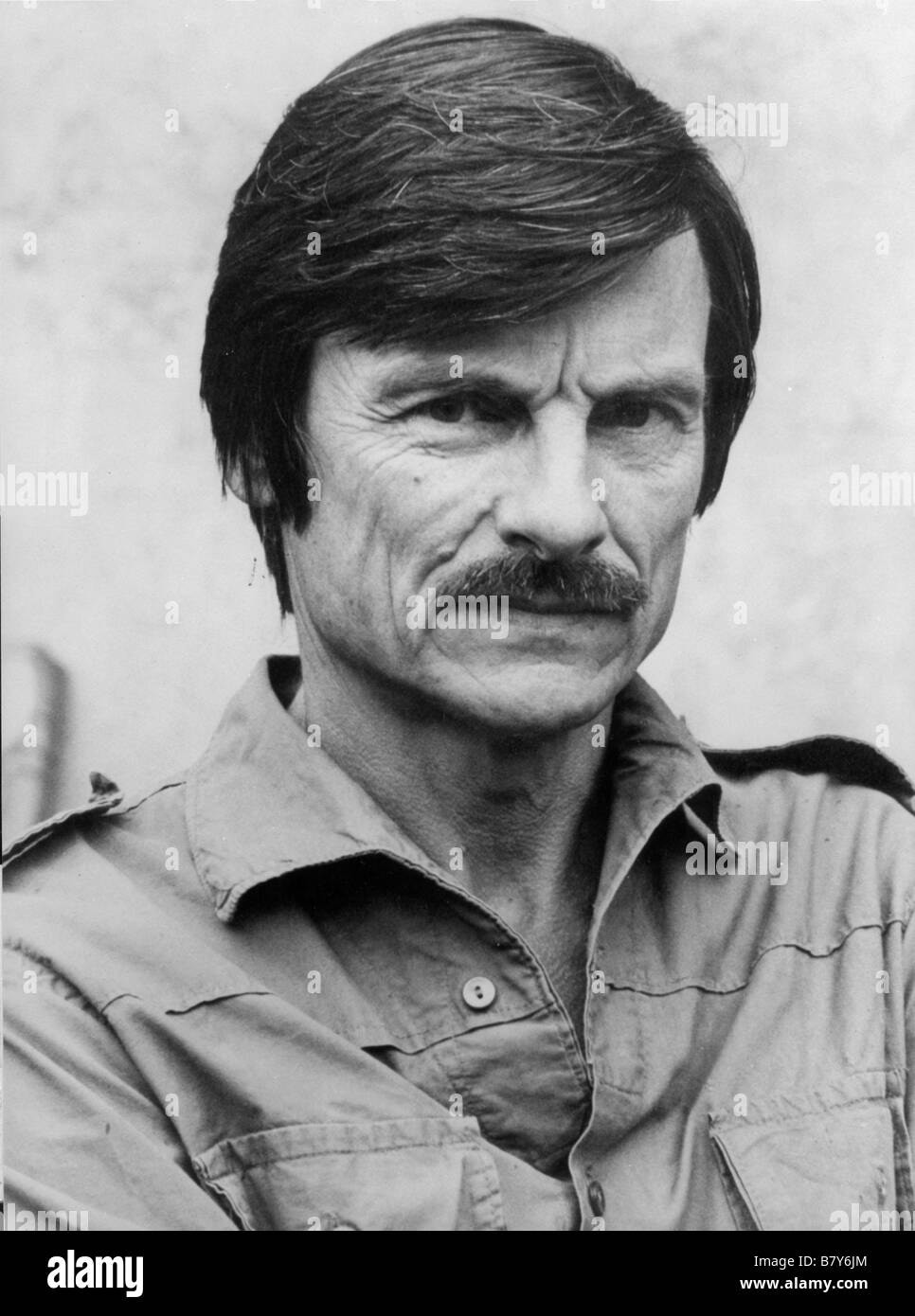
Andrei Tarkovsky
 Russia
Film director•screenwriter•film theorist
Data de nascimento
April 4, 1932
Signo
Aries
Local de nascimento
Zavrazhye, Ivanovo Oblast, Russian SFSR, Soviet Union
Idade
Faleceu aos 54
Altura
5 ft 9 in (175 cm)
Sobre
Andrei Tarkovsky was one of cinema's most revered directors, a Soviet-born artist whose seven feature films and one documentary transformed how we think about time, memory, and spirituality on screen. His work, marked by impossibly long takes, elemental imagery of rain and fire, and a deep, almost liturgical patience, feels less like storytelling and more like prayer. Films such as Stalker, Solaris, and Mirror are not just watched; they are inhabited. Today, Tarkovsky's influence spans from arthouse theaters to Hollywood auteurs like Christopher Nolan and Terrence Malick. His book Sculpting in Time remains a foundational text for filmmakers worldwide. In 2012, Sight & Sound placed three of his films on its list of the 100 greatest movies ever made, a feat matched by very few directors. Though he died in 1986, his estate, managed by his son and the Tarkovsky Foundation, continues to license his films for restoration and festival retrospectives, keeping his vision alive for new generations.
Início da vida e origens
Tarkovsky cresceu na vila rural de Zavrazhye, onde seu pai, o poeta Arseny Tarkovsky, estava frequentemente ausente. Seus pais se divorciaram quando ele era criança, um evento que deixou uma marca permanente em sua paisagem emocional. Mudou-se para Moscou com sua mãe, Maria Vishnyakova, uma tradutora, e frequentou uma escola de música, aprendendo piano. Ele também estudou árabe no Instituto de Línguas Orientais, mas não sentiu vocação real. Em 1954, matriculou-se no Instituto Estatal de Cinematografia da União Soviética (VGIK), a principal escola de cinema da União Soviética, estudando sob o celebrado diretor Mikhail Romm. Romm reconheceu o talento incomum de Tarkovsky e lhe deu espaço para desenvolver sua própria voz. Seu filme de diploma, The Steamroller and the Violin (1961), um curta sobre um menino e um operário da construção civil, ganhou o primeiro prêmio no Festival de Cinema Estudantil de Nova York. Essa pequena vitória abriu as portas para seu primeiro longa.
Crescimento na carreira
O primeiro longa de Tarkovsky, Ivan's Childhood (1962), ganhou o Leão de Ouro em Veneza, colocando-o instantaneamente no cenário mundial. Ele seguiu com Andrei Rublev (1966), uma épica abrangente sobre o pintor de ícones medieval que as autoridades soviéticas engavetaram por cinco anos. Solaris (1972) ganhou o Grande Prêmio Especial em Cannes, embora Tarkovsky tenha repudiado o corte do estúdio. Mirror (1975) foi uma memória radical e não linear que desconcertou os censores, mas mais tarde se tornou um marco. Stalker (1979) levou seu estilo ao extremo: uma lenta jornada filosófica através de uma Zona proibida. Após Stalker, Tarkovsky desertou para o Ocidente, fazendo Nostalghia (1983) na Itália e The Sacrifice (1986) na Suécia. The Sacrifice ganhou o Grande Prêmio em Cannes e um BAFTA de Melhor Filme Estrangeiro. Em 1986, ele publicou Sculpting in Time, seu tratado essencial sobre cinema. Ele morreu de câncer no final daquele ano, provavelmente agravado por produtos químicos tóxicos no set de Stalker.
Linha do tempo da carreira
Imagem pública e estilo
Tarkovsky é frequentemente chamado de o cineasta mais espiritual da história do cinema. Seu estilo característico, tomadas extremamente longas, som natural e imagens de água, fogo e ruínas em desmoronamento, cria uma experiência hipnótica e meditativa. Os fãs, às vezes chamados de Tarkovskianos, se reúnem online para dissecar cada quadro, e as edições da Criterion Collection de seus filmes são tesouros. As representações na mídia enfatizam seu status de mártir da censura soviética e poeta do tempo. Sua presença nas redes sociais vive através de contas de fãs, que tratam seu trabalho com reverência quase religiosa.
Fama e fandom (iFAMOUS Rankings)
Global attention for Andrei Tarkovsky remains steady across a century of cinematic history, anchored by the enduring influence of his seven feature films and theoretical writings. According to the iFANN Global Fame Rankings, he holds the position of the 10th most famous person from Russia, a placement that has held steady since the previous cycle. This standing reflects a consistent flow of scholarly engagement and cultural consumption rather than fleeting viral moments. While no formal organization unites his admirers, a decentralized network of cinephiles, film students, and academic circles sustains his legacy through university screenings and critical analysis. These devotees, often referred to as Tarkovsky fans or simply cinephiles, operate without the structured activism seen in modern pop culture, preferring instead to dissect the spiritual and temporal dimensions of his work. The absence of a specific moniker for this group underscores the intellectual nature of their reverence, which focuses on the preservation of his films via institutions like The Criterion Collection rather than commercial campaigns. His status as a poet of time ensures that his image persists not through celebrity gossip but through the quiet, profound realization experienced by viewers encountering his slow pacing and elemental imagery.
Fatos interessantes e lendas
Before dedicating himself to cinema, Tarkovsky studied Arabic and music, disciplines that informed his later visual rhythms. He famously refused to watch his own completed films, asserting they belonged entirely to the audience. His father's poetry is recited within both Mirror and Nostalghia, weaving personal history into the narrative fabric. During production, he was a heavy smoker who consumed strong black tea constantly. He named his dog Pata after a character in Nostalghia and once stated that if forced to save only one film from destruction, he would choose Mirror. Beyond these biographical details, a persistent legend surrounds his forced exile from the Soviet Union; denied permission to film about Tolstoy, he left the country under political pressure to direct Nostalghia in Italy, cementing his image as an artist defying totalitarianism. Another widely retold story concerns his final resting place: although he wished to be buried near his mother in Nice, France, his body remained there until 2009, when a long legal struggle finally allowed his family to inter him at Moscow's Novodevichy Cemetery.
Frases notáveis
“The allotted function of art is not, as is often assumed, to put across ideas, to propagate thoughts, to serve as an example. The aim of art is to prepare a person for death, to plough and harrow his soul, rendering it capable of turning to good.”
“The cinema is an art form that is not about something, it is something.”
“I am interested in the inner world of a person, and it is quite natural that the cinema, which is capable of penetrating into the deepest recesses of the human soul, should be the art form that can express the most intimate experiences.”
“The film is not a sequence of images, but a sequence of time.”
“I don't make films for the audience. I make them for myself. If the audience likes them, that's fine.”
Família e vida pessoal
O pai de Tarkovsky, Arseny Tarkovsky, foi um poeta celebrado cujo trabalho aparece nos filmes de seu filho. Sua mãe, Maria Vishnyakova, era uma tradutora que o criou após o divórcio. Ele teve dois filhos: Arseny (nascido em 1962) com a primeira esposa Irma Raush, e Mikhail (nascido em 1971) com a segunda esposa Larisa Tarkovskaya. Mikhail é escritor e conservacionista que vive na Sibéria. O ambiente espiritual e intelectual da família moldou profundamente a visão artística de Tarkovsky.
Conexões notáveis
Os principais colaboradores de Tarkovsky incluem seu pai, o poeta Arseny Tarkovsky, cujos versos aparecem em Mirror e Nostalghia; seu professor Mikhail Romm; os diretores de fotografia Georgy Rerberg (Mirror, Stalker) e Vadim Yusov (Ivan's Childhood, Andrei Rublev); o compositor Eduard Artemyev (Solaris, Mirror, Stalker); e os atores Anatoly Solonitsyn, Margarita Terekhova e Erland Josephson.
Relacionamentos e história amorosa
Tarkovsky casou-se com a atriz Irma Raush em 1957. Ela estrelou seu curta O Rolo Compressor e o Violino e em A Infância de Ivan. Eles tiveram um filho, Arseny, em 1962, e se divorciaram em 1970. Nesse mesmo ano, ele se casou com Larisa Kizilova (depois Tarkovskaya), que trabalhou como sua supervisora de roteiro e editora em todos os filmes a partir de O Espelho. Eles tiveram um filho, Mikhail, em 1971. Tarkovsky permaneceu casado com Larisa até sua morte em 1986; ela morreu em 1998.
- Casado(a)Irma Raush1957 - 1970Casados em 1957; ela estrelou seus primeiros filmes; tiveram um filho, Arseny; divorciaram-se em 1970.
- Casado(a)Larisa Tarkovskaya1970 - 1986Casados em 1970; ela trabalhou como sua supervisora de roteiro e editora em todos os filmes a partir de O Espelho; tiveram um filho, Mikhail; permaneceram casados até a morte dele.
Morte e repercussões
Morte
December 29, 1986 (aos 54 anos)
Local da morte
Paris, Île-de-France, France
Causa da morte
Lung cancer complications
Andrei Arsenyevich Tarkovsky passed away on December 29, 1986, in Paris, France, following a long struggle with lung cancer that had been confirmed by medical professionals prior to his death. The director had traveled to the French capital earlier that year to undergo surgery for the condition after being denied permission to remain in the Soviet Union due to his political stance and the controversial nature of his films. His final public appearance is generally considered to be the completion of his last film, The Sacrifice (Offret), which premiered at Cannes in May 1986, after which he continued post-production work while his health declined until his passing. Public reaction within the international cinema community was marked by widespread mourning, with tributes pouring in from peers and institutions who recognized him as one of the greatest directors in history.
Although immediate large-scale fan vigils were limited by the geopolitical context of the late Soviet era, the decades following his death saw an exponential growth in his influence, leading to numerous retrospectives and academic studies. His funeral took place on January 3, 1987, in Paris as a private affair attended by close friends, family, and colleagues, including his wife Larisa Tarkovskaya and his son Andrey Tarkovsky Jr., where he was cremated and his ashes interred at the Cimetière de Montmartre. Posthumously, Tarkovsky's estate has been managed by his family to ensure the preservation and distribution of his works, with several films receiving critical re-evaluations and restorations.
Patrimônio (valor do espólio)
$1.5 Million
Estimativa da equipe editorial do iFANN
Since Andrei Tarkovsky passed away, his net worth represents the current value of his estate. No official public figure manages the assets directly, but the estate, overseen by his son Mikhail and the Tarkovsky Foundation, generates steady revenue through royalties from his seven feature films, streaming agreements with the Criterion Channel and Kanopy, home video sales including Criterion Collection box sets, and licensing for festival screenings. Income also flows from his book Sculpting in Time and published diaries such as Time Within Time. Per iFANN's editorial analysis, the estate is estimated at approximately $1.5 million as of 2026, based on modest but consistent earnings from classic film rights and intellectual property.
Prêmios conquistados (28)
Tarkovsky ganhou o Leão de Ouro em Veneza por A Infância de Ivan e o Grande Prêmio Especial por Solaris em Cannes. Seu último filme, O Sacrifício, rendeu-lhe o Grande Prêmio em Cannes e um BAFTA de Melhor Filme Estrangeiro. Ele também recebeu o Prêmio Especial do Júri em Veneza por Andrei Rublev e dividiu o prêmio de Melhor Diretor em Cannes por Nostalghia. Em 1990, foi agraciado postumamente com o Prêmio Lenin, uma das mais altas honrarias da União Soviética.
1988 · Melhor Filme em Língua Estrangeira
The Sacrifice
1987 · por O Sacrifício
Conhecido por
Stalker
1979 · Diretor, Roteirista
Solaris
1972 · Diretor, Roteirista
Andrei Rublev
1966 · Diretor, Roteirista
Mirror
1975 · Diretor, Roteirista
The Sacrifice
1986 · Diretor, Roteirista
Palavras-chave
Dados rápidos
- Profissão
- Film director, screenwriter, film theorist
- Nascimento
- April 4, 1932
- Local de nascimento
- Zavrazhye, Ivanovo Oblast, Russian SFSR, Soviet Union
- Morte
- December 29, 1986
- Local da morte
- Paris, França
- Gênero
- Masculino
- Altura
- 5 ft 9 in (175 cm)
- Cônjuge
- Irma Raush (1957–1970), Larisa Tarkovskaya (1970–1986)
- Children
- 2 sons: Arseny and Mikhail
- Education
- All-Union State Institute of Cinematography (VGIK)
- Signo
- Aries
Dados pessoais
- Nome completo
- Andrei Arsenyevich Tarkovsky
- Altura
- 5 ft 9 in (175 cm)
- Cônjuge
- Irma Raush (1957–1970), Larisa Tarkovskaya (1970–1986)
- Filhos
- Arseny Tarkovsky (born 1962), Mikhail Tarkovsky (born 1971)
- Formação
- All-Union State Institute of Cinematography (VGIK), studied under Mikhail Romm
Filmografia
8
Total
7
Cinema
0
TV
Perguntas frequentes
Quantos anos Andrei Tarkovsky tinha quando morreu?
Qual é o patrimônio de Andrei Tarkovsky?
Andrei Tarkovsky teve filhos?
Qual é o filme mais famoso de Andrei Tarkovsky?
Andrei Tarkovsky era religioso?
Pessoas semelhantes
Junte-se à comunidade
fãs comentando