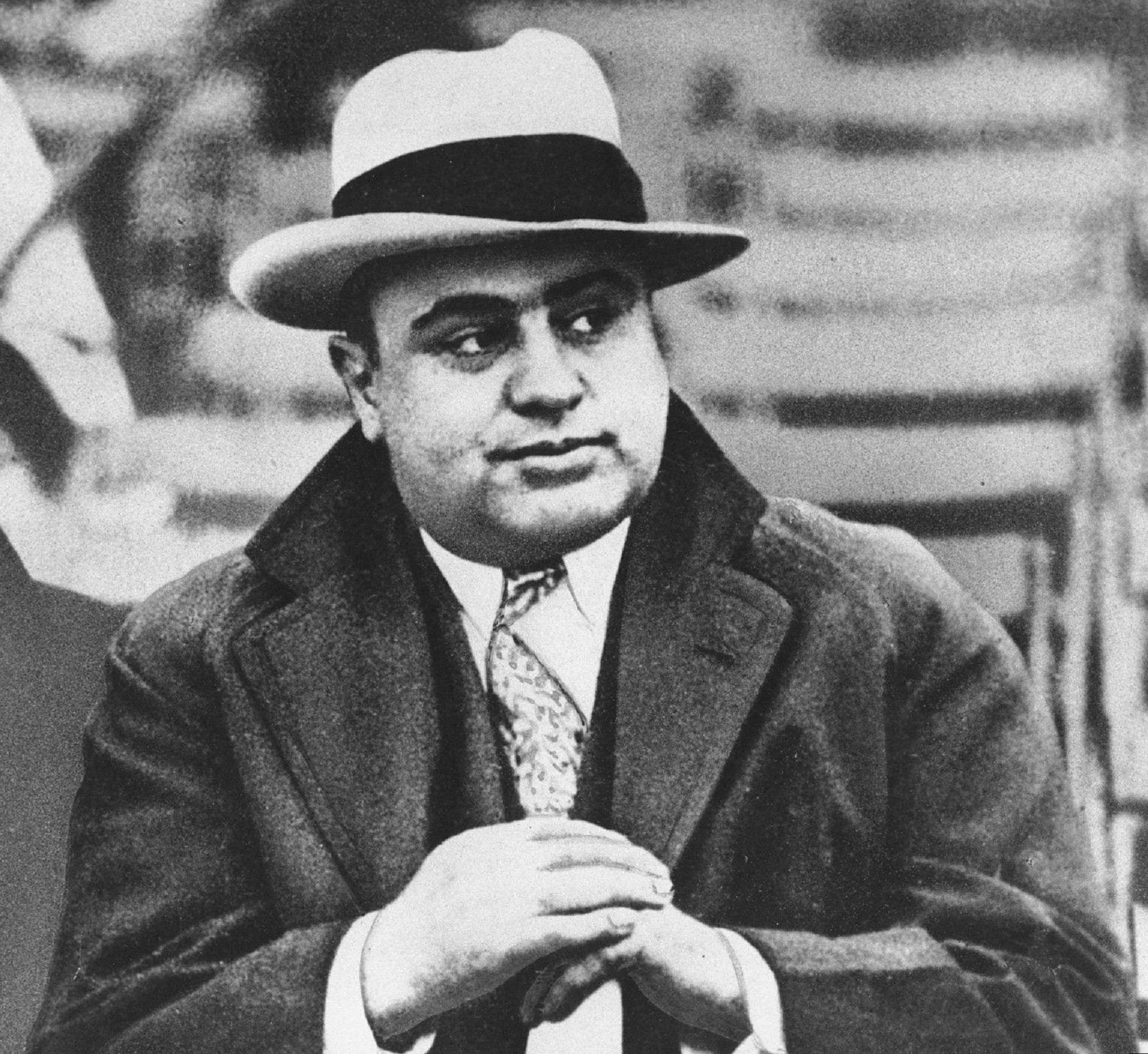
Al Capone
 United States
Also known as: Scarface, Snorky, Big Al
Data de nascimento
January 17, 1899
Signo
Capricorn
Local de nascimento
Brooklyn, New York, USA
Idade
Faleceu aos 48
Sobre
Al Capone foi um gângster e empresário americano que ganhou notoriedade durante a era da Lei Seca. Como cofundador e chefe do Chicago Outfit de 1925 a 1931, ele construiu um vasto império criminoso centrado na venda ilegal de bebidas, jogos de azar e prostituição. Suas táticas violentas e confrontos de alto perfil com a aplicação da lei o tornaram um símbolo nacional do crime organizado. A carreira de Capone terminou aos 33 anos, quando foi condenado por evasão fiscal e preso por quase oito anos. Ele morreu em 1947, aos 48 anos, após um derrame.
Início da vida e origens
Alphonse Gabriel Capone nasceu em 17 de janeiro de 1899, no Brooklyn, Nova York, de pais imigrantes italianos Gabriele e Teresina Capone. Seu pai era barbeiro e sua mãe costureira; eles criaram nove filhos em um bairro da classe trabalhadora. Capone frequentou a escola até a sexta série, depois saiu após agredir uma professora. Ele se envolveu com gangues de rua locais, eventualmente se juntando à Five Points Gang sob a mentoria de Johnny Torrio. Capone trabalhou como segurança em bares do Brooklyn, onde recebeu um corte de faca na bochecha esquerda, ganhando o apelido de "Scarface". Em 1919, Torrio o convidou para Chicago para ajudar a gerenciar suas operações de venda ilegal de bebidas. Capone mudou-se para lá com sua esposa Mae e rapidamente se provou um executor e gerente capaz.
Crescimento na carreira
Em 1925, Capone assumiu o controle total do Chicago Outfit após a aposentadoria de Torrio. Ele expandiu o alcance da sindicato por Chicago e além, controlando bares clandestinos, cervejarias, casas de jogos e bordéis. Em seu auge, a receita anual do Outfit foi estimada em mais de US$ 100 milhões. Capone cultivou uma imagem pública como empresário, doando para instituições de caridade e abrindo cozinhas comunitárias. Mas seu reinado foi marcado por uma brutal guerra de gangues, culminando no Massacre do Dia dos Namorados em 1929, onde sete membros da North Side Gang foram executados. O massacre virou a opinião pública contra ele e levou as autoridades federais a mirá-lo. Capone foi condenado por evasão fiscal em 1931 e sentenciado a 11 anos em uma prisão federal. Ele cumpriu pena em Atlanta e Alcatraz antes de ser libertado em 1939 devido à sua saúde debilitada.
Linha do tempo da carreira
Imagem pública e estilo
Capone cultivou uma dupla persona pública: um gângster implacável e um filantropo generoso. Ele frequentemente usava ternos caros, fumava charutos e era fotografado em jogos de beisebol e eventos de caridade. A mídia o rotulou como "Inimigo Público Nº 1" após o Massacre do Dia dos Namorados, um título que ele tanto ressentiu quanto explorou. Sua imagem foi romantizada em inúmeros filmes e livros, frequentemente retratado como um anti-herói carismático. O fandom em torno de Capone é complexo; alguns o veem como um símbolo de rebelião, outros como um conto de advertência. Sua notoriedade o tornou uma figura proeminente na cultura pop americana, de The Untouchables a Boardwalk Empire.
Fama e fandom
Al Capone remains the 1st most famous person in True Crime, a standing he has held steady across cycles of historical reassessment. This singular dominance reflects how his story continues to anchor the genre more than any other figure, drawing fresh eyes to the Prohibition era decades after his death. His legacy is measured not by fleeting trends but by a persistent, global attention that spans media coverage, search patterns, and consumption signals worldwide.
The audience surrounding this gangster does not organize under a formal name. While some communities form around specific eras or films, there is no single documented group that claims him as their own with a unique title. Instead, the public engagement manifests through a complex relationship with his mythology. Fans often grapple with the duality of his image: the ruthless boss who ordered the St. Valentine's Day Massacre and the man who ran soup kitchens during the Great Depression. The nickname "Scarface" dominates discourse, though it was strictly used behind his back while he preferred the moniker "Snorky." This tension between the brutal reality and the romanticized antihero persona drives much of the enduring interest.
Legendary moments continue to fuel this fascination without needing active fan campaigns. The 1986 broadcast titled *The Mystery of Al Capone's Vaults* remains a cultural touchstone, where Geraldo Rivera's televised search for hidden millions ended in an empty room, turning a massive event into a lasting joke about futility. Similarly, the 1932 film *Scarface* starring Paul Muni and the later 1983 Martin Scorsese version of the same name have cemented his status as an icon, even as they fictionalize his life. The fandom exists in the collective memory of these stories, from the verified bar fight in 1918 that earned him his scar to the tax evasion conviction that set a new legal precedent. There are no crowds fainting at his appearances or organized rituals today, only a quiet, devoted study of a man whose criminal empire and subsequent downfall reshaped American history.
Fatos interessantes e lendas
The nickname "Scarface" was strictly used behind his back, as he preferred the stylish moniker "Snorky." During the Great Depression, he sponsored a free soup kitchen in Chicago that served thousands daily. He suffered from neurosyphilis contracted years earlier, which accelerated his mental decline while imprisoned. His favorite suit was a custom-made number costing $5,000, and his criminal record was sealed in some jurisdictions, fueling decades of mythmaking. As the first major crime figure taken down by tax evasion rather than violent charges, his legal downfall set a new precedent. Beyond these facts, his mythology includes the verified bar fight in 1918 in Brooklyn, where a knife slash earned him his infamous scar. The single most retold incident is the St. Valentine's Day Massacre, where seven members of George "Bugs" Moran's gang were executed against a garage wall in 1929, cementing his reputation for brutality despite never being charged with the murders. Another legendary moment involves the Geraldo Rivera Vault discovery in 1986, where a televised search for millions in hidden cash ended in an empty room, turning a massive event into a cultural joke about futility that persists in collective memory.
Frases notáveis
“You can get much farther with a kind word and a gun than you can with a kind word alone.”
“I am just a businessman, giving the people what they want.”
“All I do is satisfy a public demand.”
Família e vida pessoal
Capone casou-se com Mae Josephine Coughlin em 1918; ela era católica irlandesa, e o casamento gerou um filho, Albert Francis "Sonny" Capone, nascido em 1918. Mae permaneceu leal durante a carreira criminosa e o encarceramento de Capone, e ela o sobreviveu por quase quatro décadas, morrendo em 1986. Sonny sofreu de uma infecção de ouvido congênita que o deixou parcialmente surdo; ele se tornou um empresário e evitou o caminho criminoso de seu pai, morrendo em 2004. O irmão mais velho de Capone, James Vincenzo Capone, mudou seu nome para Richard Hart e se tornou um agente da Lei Seca em Nebraska, trabalhando contra contrabandistas.
Conexões notáveis
A rede criminosa de Capone incluía associados chave como Johnny Torrio, seu mentor, e Frank Nitti, que o sucedeu. Ele também tinha laços com políticos e policiais corruptos em Chicago. Seu principal rival era George "Bugs" Moran, da North Side Gang. O promotor federal Eliot Ness, líder dos "Intocáveis", foi fundamental na construção do caso de evasão fiscal contra ele.
Relacionamentos e história amorosa
Capone casou-se com Mae Josephine Coughlin em 1918, quando ele tinha 19 anos e ela 21. Mae era uma católica devota e permaneceu solidária durante sua carreira criminosa e encarceramento. O casal teve um filho, Albert Francis "Sonny" Capone. Mae viveu uma vida relativamente privada, administrando o lar e protegendo Sonny do público. Eles permaneceram casados até a morte de Capone em 1947. Não há relacionamentos extraconjugais significativos documentados, embora rumores de amantes circulassem. Mae nunca se casou novamente e morreu em 1986, aos 89 anos.
- Casado(a)Mae Capone1918 - 1947Casou-se em 1918; permaneceram juntos até a morte de Capone em 1947. Um filho, Albert.
Morte e repercussões
Morte
January 25, 1947 (aos 48 anos)
Local da morte
Miami Beach, Florida
Causa da morte
cardiac arrest (heart failure)
Al Capone spent his final years in relative seclusion at his estate on Palm Island in Miami Beach, Florida, where he had resided since leaving Alcatraz in 1939. His health had deteriorated significantly due to tertiary syphilis, which caused strokes and paralysis over several years, keeping him largely confined to his home before he passed away peacefully in his sleep on January 25, 1947. The official cause of death was listed as cardiac arrest, a condition attributed to the advanced stage of syphilis that had severely damaged his cardiovascular and nervous systems. Public reaction to the passing of the notorious gangster was mixed but generally muted compared to the frenzy surrounding his earlier criminal activities, with scarce tributes from peers who had been imprisoned, killed, or moved on to other ventures.
Institutions and officials did not issue formal statements of mourning, reflecting the complex legacy of his criminal empire, while media coverage reinforced his status as a historical figure through news reports rather than celebratory events. A private funeral service was held two days later at the Holy Name Cathedral in Chicago, attended by a small group of family members and close friends, after which Capone was cremated and his ashes interred at the Gate of Heaven Cemetery in Hawthorne, Illinois. In the posthumous era, Capone has evolved into a cultural icon inspiring numerous films, books, and documentaries, including the 1959 film titled Al Capone and the 1987 television special The Mystery of Al Capone's Vaults hosted by Geraldo Rivera.
While he has not been inducted into any traditional hall of fame, he is frequently honored in museums such as The Mob Museum in Las Vegas, which features extensive exhibits on his life and crimes.
Patrimônio (valor do espólio)
$10 Million
Estimativa da equipe editorial do iFANN
At the height of his power in the late 1920s, Al Capone's criminal empire generated an estimated $100 million annually from bootlegging, gambling, and prostitution. However, per iFANN's editorial analysis, his net worth at the time of his death in 1947 was significantly lower, standing at approximately $10 Million. Much of his wealth had been hidden or lost to legal fees and seizures during his long legal battles. After his release from prison, Capone lived modestly on Palm Island, Florida, supported by hidden assets while his health declined. His estate, managed by his wife Mae, continued to generate income from legitimate investments. As of 2026, the Capone estate is valued at approximately $10 Million, primarily derived from royalties and licensing of his name and image.
Prêmios e condecorações
View 2 records, honours and achievementsConhecido por
Chicago Outfit
1925 · Boss
Saint Valentine's Day Massacre
1929 · Mentor
Palavras-chave
Fontes
Dados rápidos
- Profissão
- gangster
- Nascimento
- January 17, 1899
- Local de nascimento
- Brooklyn, Nova York
- Morte
- January 25, 1947
- Local da morte
- Palm Island, Florida
- Gênero
- Masculino
- Cônjuge
- Mae Capone
- Signo
- Capricorn
- Net Worth
- $10 Million
- Altura
Dados pessoais
- Nome completo
- Alphonse Gabriel Capone
- Cônjuge
- Mae Capone
- Filhos
- Albert "Sonny" Capone
Perguntas frequentes
Como Al Capone morreu?
Qual era o patrimônio de Al Capone em 2026?
Al Capone ainda está vivo?
Pelo que Al Capone é mais conhecido?
Por que Al Capone foi chamado de "Scarface"?
Pessoas semelhantes
Junte-se à comunidade
fãs comentando