Henrik Zeberg Fed critique
por Gigliola: Federal Reserve
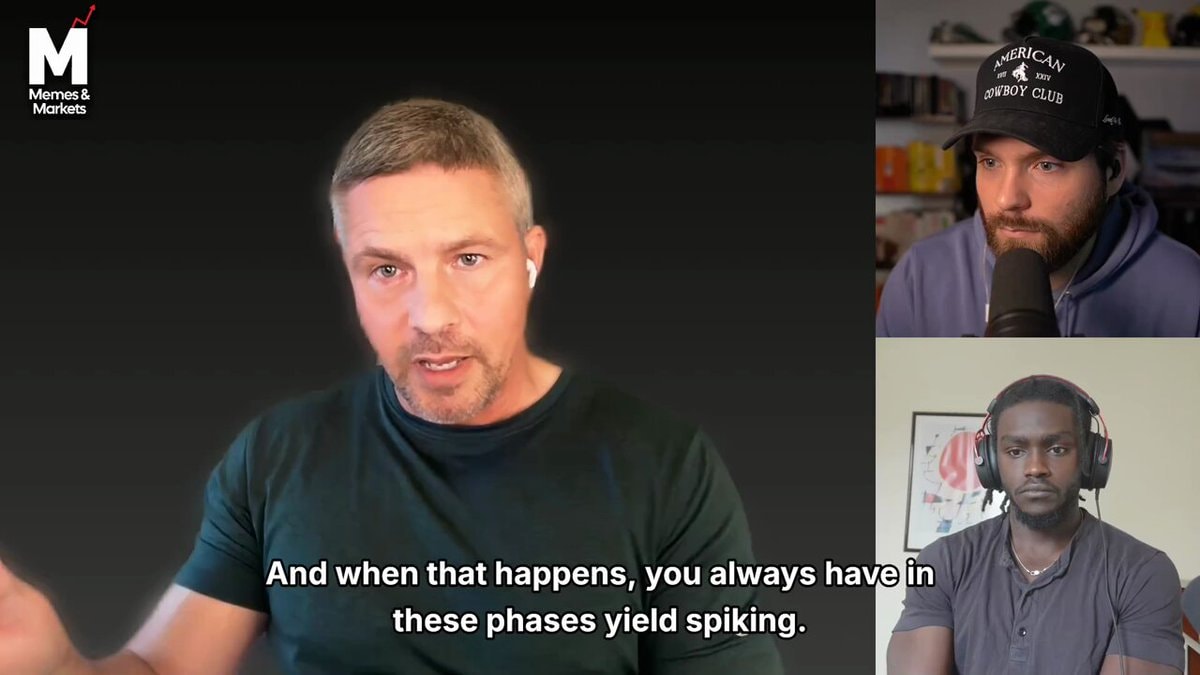
Henrik Zeberg says the Fed is repeating a past error while raising rates and watching employment data fall apart. In 2007 inflation was the main fear, but by October 2008 the situation flipped to deflation. He describes the current strategy as driving forward while looking backward. When that happens, you always have in these phases yield spiking.
Transcrição (en)
And when that happens, you always have in these phases yield spiking. It'll take too much here to go into details of why that is. But I can tell you that's what we see every time. And you can take a look at what the geniuses were talking about in 2007 going into 2008. They were talking about stagflation. They were talking about inflation getting out of control and bond yields were going out of control. In 2007, even in 2008, they were talking about that. Now, when we got to the end of 2008, let's say in October, was inflation a big problem there? It was not. It was deflation. Because when you see this phase and the economy is rolling over, inflation is not the problem, even though that's what you think it is. It resembles driving your car and looking out the rear window and say, oh, shoot, there's a tree there. And you just passed it because you're looking at what happened earlier on. You need to look ahead in order to drive the car. So when you look at inflation, you see what happened six months ago. And that's why the inflation number that the Fed is using, especially the way they use it, is very dangerous in trying to navigate the car there. Because if you're driving and you're looking out the rear window, you're going to hit something. That is why the problem is right now, not inflation. It is the problem that we are so far into the decline of the non-farm payrolls in the deterioration of the real economy. And the Fed is hiking rates. I mean, it is insane. If you enjoyed this, be sure to hit that like button and follow to stay up to date with what's going on in the world and everything else memes and markets. Peace.