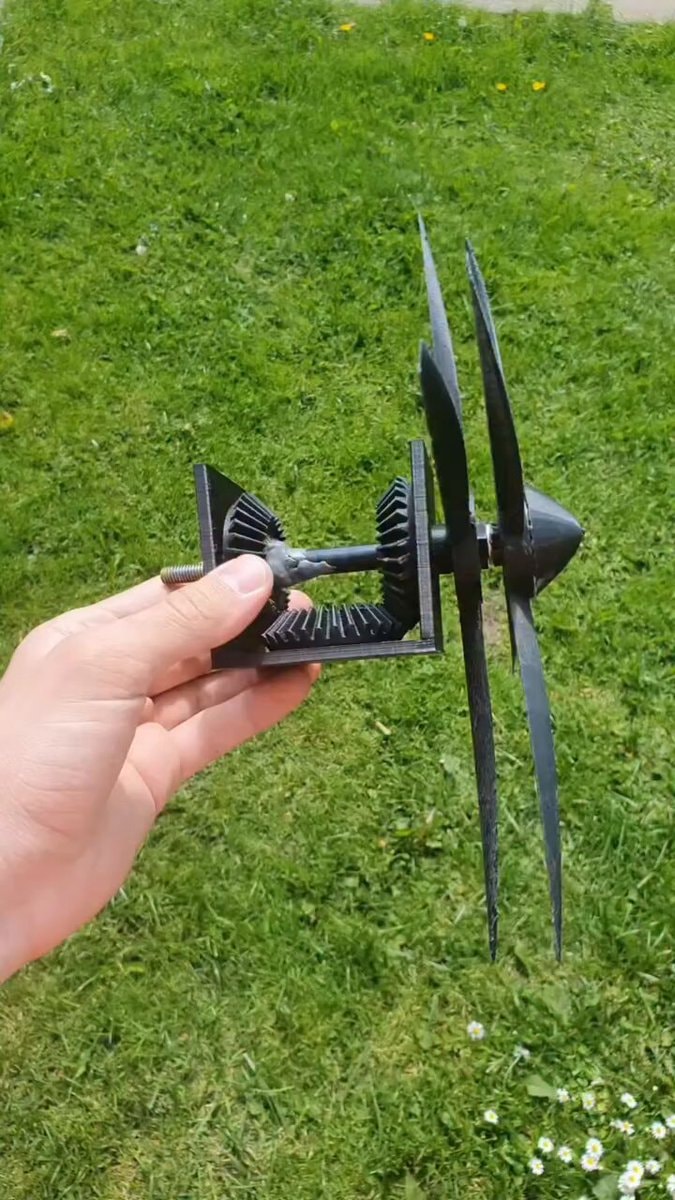
coaxial contrarotating propeller system
por Evira: Leonardo da Vinci
One engineering shortcut made modern flight possible.
Transcrição (en)
Imagine two propellers on the exact same axis, but spinning in completely opposite directions. What you're looking at isn't just a strange design, it's a brilliant engineering solution to one of aviation's biggest nightmares, torque reaction. On a traditional aircraft, when the propeller spins right, the fuselage wants to roll left, making control a constant struggle. Here is where the mechanical magic happens. Look at these bevel gears. Thanks to this clever setup, designers managed to eliminate that torque and cut down on weight using just a single engine. The motor drives the main bevel gear, which instantly rotates the front propeller in one direction while reversing the motion completely for the rear one. This scientific breakthrough is known as the coaxial contrarotating propeller system. But do you know who came up with this idea first? The concept actually traces back to the genius of Leonardo da Vinci in his early sketches. Historically, however, British inventor Brown Simpson patented the system first in 1832 for marine applications. As for aviation, it made its real-world debut at the dawn of the 20th century, specifically on the historic 1903 Wright flyer by the Wright brothers, who used cross-chain drives to spin two propellers in opposite directions and cancel out the torque. The result? The opposing forces cancel each other out perfectly, making the aircraft incredibly stable in the air. Not only that, but the rear propeller catches the turbulent airflow from the front one and straightens it out, delivering massive thrust and way higher efficiency, a centuries-old piece of engineering that is still changing the rules of flight today. If you love this kind of mechanics, hit that follow button to see what's coming next.