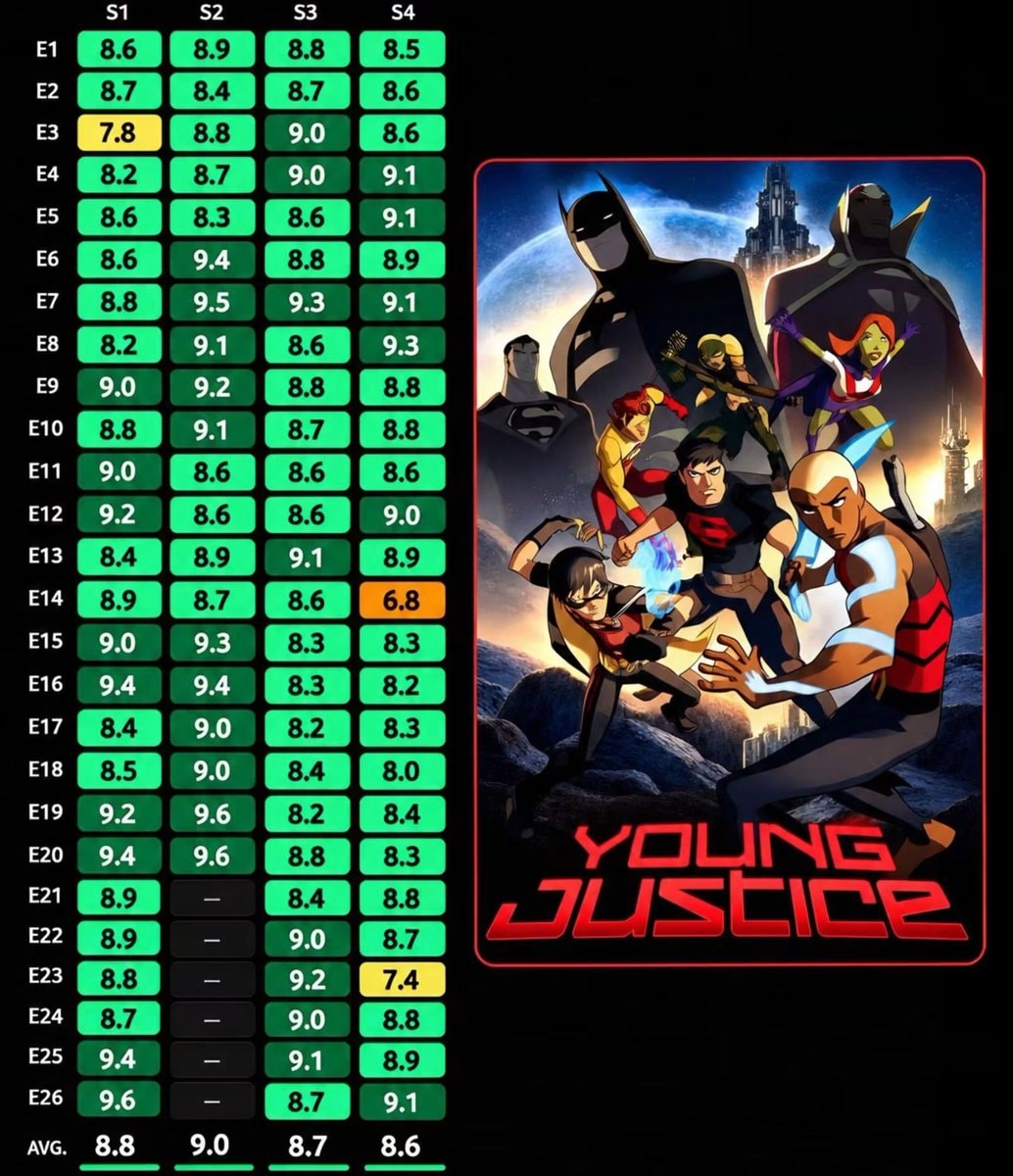
@professional_portalCartoon Network cancelled Young Justice in 2013, and the stated reason had nothing to do with how many people were watching. Mattel couldn't move enough toys. That's the whole obituary. Go back to 2010. Greg Weisman and Brandon Vietti pitched the series, and what the network thought it was buying looked a lot like a half-hour toy commercial: episodic, shiny, Robin and Aqualad and Kid Flash punching interchangeable bad guys so the action figures could sit on a shelf somewhere. What the creators actually handed over was a serialized espionage thriller wearing a teen superhero costume. Moles. Psychological trauma. Geopolitical conspiracies. Five-year time jumps that rewrote who these characters were. Kids were treated like they could keep up, which apparently was the problem. The audience that showed up was heavily female and older-teen, and that's a demographic the business side never figured out how to turn into money. So the show got cancelled. Twice, in the end. None of this is new. Batman: The Animated Series spent the nineties getting notes from network censors who wanted simpler colors, less shadow, and no story that carried across weeks, because the assumption was that young viewers couldn't track it. Bruce Timm and Paul Dini fought that fight constantly. Then Gargoyles premiered in 1994 under Weisman, and Disney got an intricate drama about ancient curses and moral gray areas when what they wanted was another DuckTales. Meanwhile everyone in streaming talks up cinematic universes and serialized storytelling like they invented the concept. Young Justice was running that play on basic cable fifteen years earlier, and it did it without multiverse gimmicks or nostalgic cameos. The heroes aged. They changed. They stayed iconic anyway. Math is math.
Ver publicação original