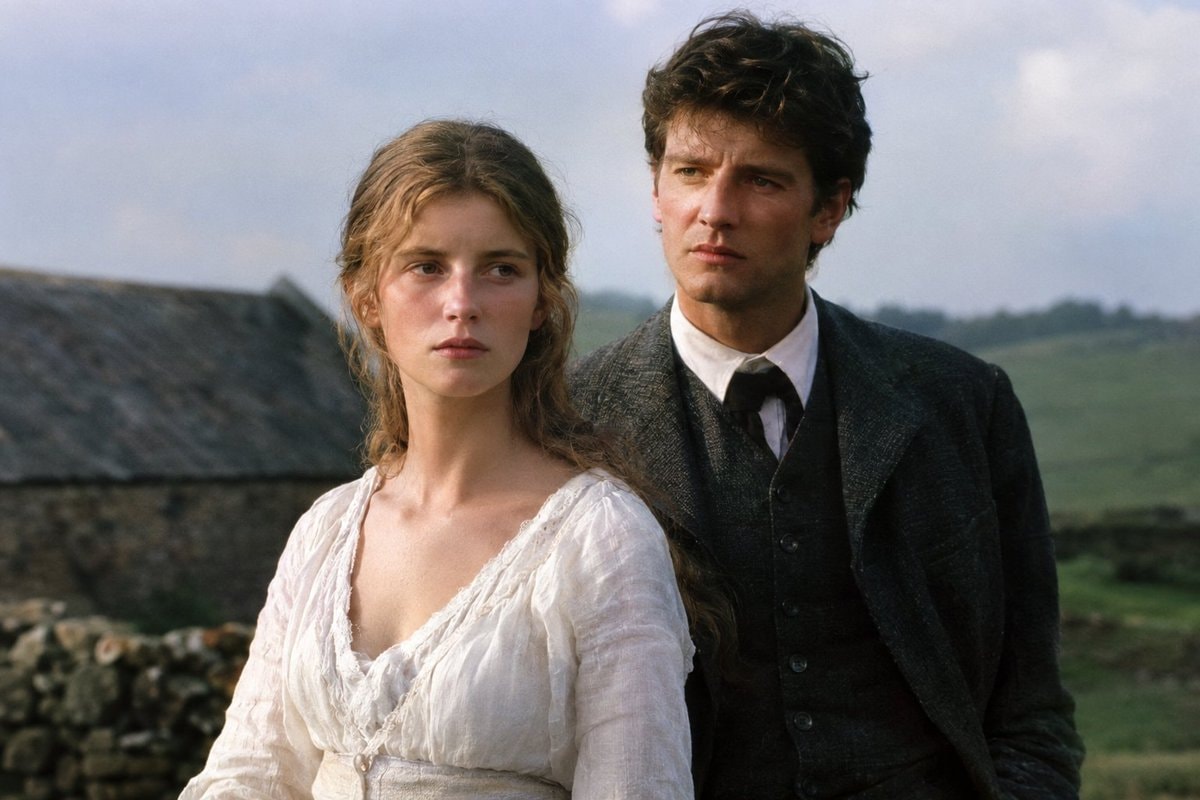
@yuna_yHalf the audience still sides with the man who abandoned her, and that is the real tragedy of Tess (1979). Polanski filmed Hardy's story like a Corot painting but ended it with a caption instead of mercy. Nastassja Kinski was only 17 when she carried three hours of fate, class, and seduction on her shoulders. Angel Clare turns out to be a worse villain than Alec, who is just a predator. Angel married the protagonist, heard her confession on their wedding night, and left her anyway. He chose his purity over her life because he treated her past as a stain. She didn't need another seducer; she needed someone who wouldn't treat her history as a mark on his soul. Hardy understood this. Polanski understood this. Yet half the crowd still roots for the guy who walked away. Nastassja Kinski in Tess (1979) is one of the great faces in cinema. It isn't performance in the awards-reel sense. It is just a face that can hold mist, guilt, hunger, and the last five minutes at Stonehenge without blinking first. The film is dedicated to Sharon Tate. They shot it in France because the director couldn't visit Hardy country. Three hours of countryside scenery resembles a painting left out in the rain. Still undefeated. A poor family discovers potential aristocratic lineage. They send the beautiful daughter to claim kin. A fake cousin feeds her strawberries then takes what he wants. Her baby dies. She works as a milkmaid and falls for the preacher's son. The wedding night confession happens. He leaves. She survives. He comes back. She kills the first man. They hide at Stonehenge. The final caption reads: she was hanged. Three Oscars were awarded for how pretty the suffering looked.
Ver publicação original