iFANN
    Buscar no iFANN...
    Entrar
    Início
    Notícias
    Vídeos
    Fotos
    GIFs
    Explorar
    Enquetes
    Prêmios
    iFAMOUS
    Wiki
    Anime
    Salas
    Notificações
    Mensagens
    Salvos
    Perfil
    WikiPrêmiosiFAMOUSRankingsSetoresRecompensas para criadoresRecompensas para usuáriosTermosPrivacidadeDiretrizes da comunidadeRemoção / DMCAAjudaDesenvolvedores

    © 2026 iFANN

    Início
    Buscar
    Mensagens
    Alertas
    Perfil
    Foto
    Ts Floyd
    Ts Floyd@ts_floyd3d
    ⭐Jev🏢Anthropic💭AI
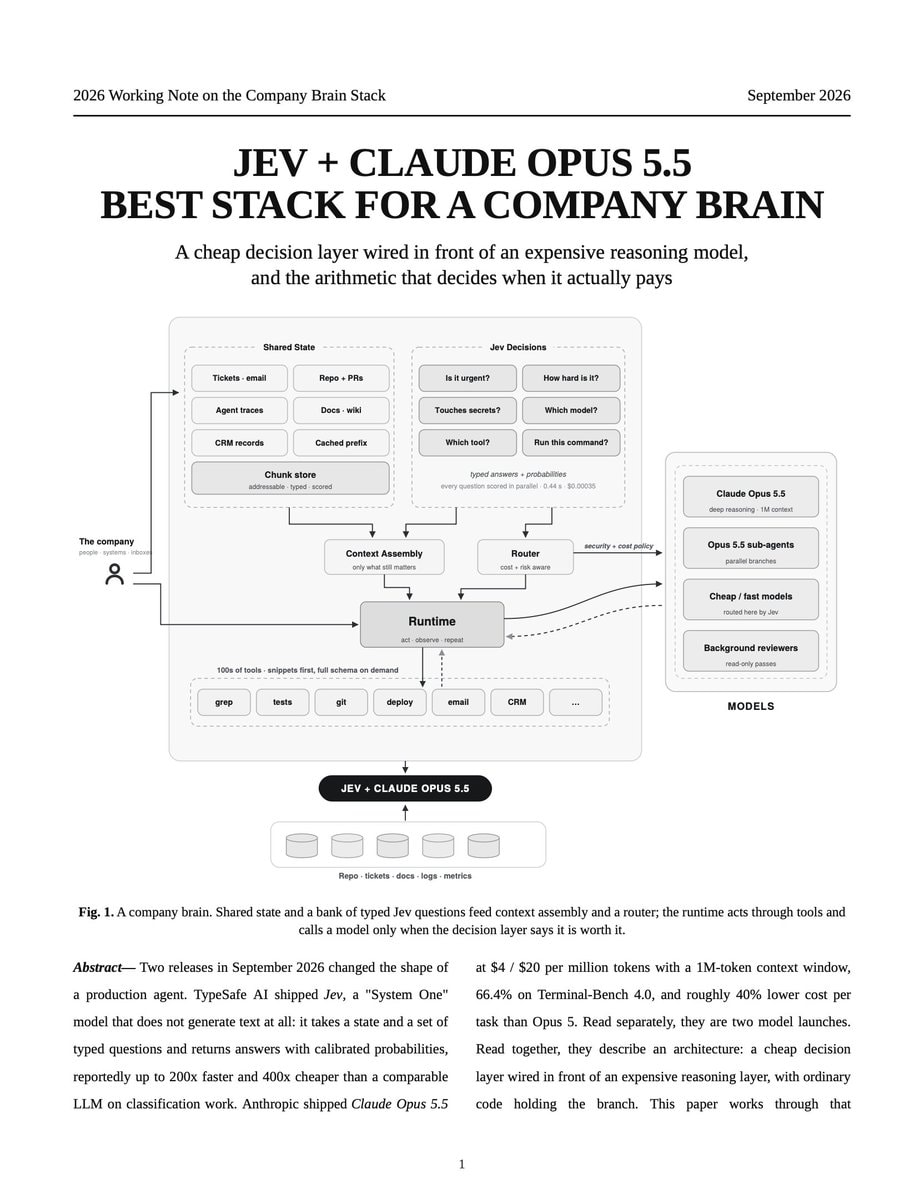
    JEV + Opus 5.5 company brain architecture

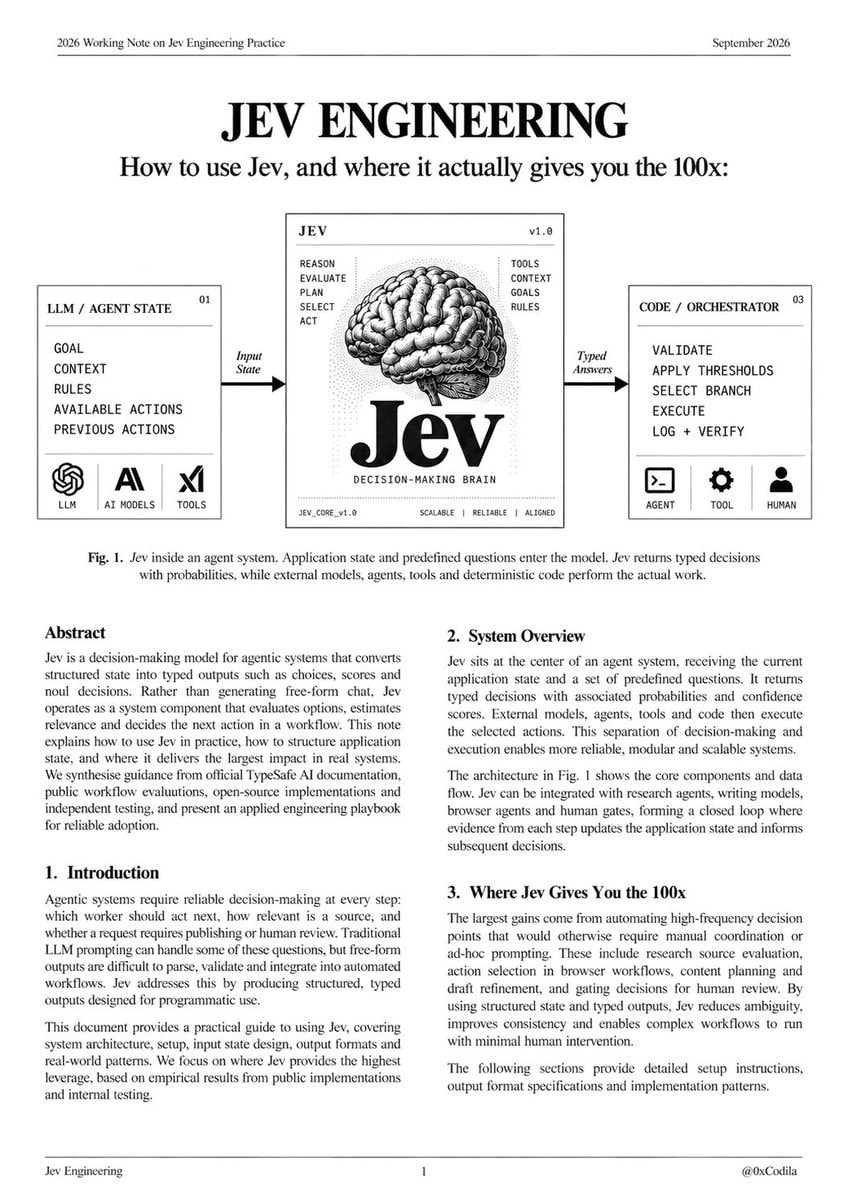
    @ts_floydJEV + Opus 5.5 is insane for building a company brain... I collected the whole architecture from TypeSafe and Anthropic docs into a 14-page PDF. Here are the 10 steps: step 1 → meet the pair: Opus 5.5 thinks, Jev decides, your code holds the branch. two models, one loop, no prompt in the middle step 2 → stop asking a text generator for a boolean: Jev takes a state and returns a typed answer with a calibrated probability in 0.44s for $0.00035 step 3 → ask everything at once: Choice, Score and Noul all evaluated in parallel, so the fourth question costs almost nothing. ask what you might need, not what you can afford step 4 → branch on the number: 0.999 is not text you parse, it is the if statement. ~99% of turns end here and never become a generation call step 5 → stop routing blind: Opus 5.5 → Sonnet → 5.5 costs 5.84 vs 3.32 for pure 5.5, because handing back reprocesses the whole context step 6 → keep one context warm instead: cache reads at $0.20 per Mtok are 20x cheaper than loading fresh. route work, not context step 7 → escalate, don't delegate: the hard 1% goes to Opus 5.5 with 1M context, 128K output and 66.4% on Terminal-Bench 4.0. pay for thinking, not plumbing step 8 → score every chunk per query: keep whole, summarize, or drop. context stops being a transcript you append to and becomes something rebuilt each turn step 9 → gate the command, not the intent: classify the concrete bash call before it executes. the auto-mode that lived inside closed harnesses, now in your own code step 10 → judge 100% of runs: $3.50 a day for 10,000 traces, variance 92-913x lower than an LLM judge, and it matched the human label on all 500 decisions the result: a while loop that pays a frontier model for every small decision becomes a brain that spends a third of a cent to notice and spends properly to think Copy the complete 14-page company brain blueprint, then read the full 10-step roadmap below ↓ #Jev #Anthropic

    Ver publicação original


    JEV + Opus 5.5 company brain architecture

    Foto de @ts_floyd· Sep 27, 2026· Jev

    Sobre esta foto

    The image is a technical diagram illustrating a company's AI architecture. It shows a flowchart with boxes representing different components like "Shared State," "Jev Decisions," "Context Assembly," "Router," and "Runtime." The overall mood is informative and technical, with a clean, schematic style. A notable detail is the icon of a person with a gear, representing "The company" and "people systems." ON-SCREEN TEXT: 2026 Working Note on the Company Brain Stack, September 2026, JEV + CLAUDE OPUS 5.5, BEST STACK FOR A COMPANY BRAIN, A cheap decision layer wired in front of an expensive reasoning model, and the arithmetic that decides when it actually pays, Fig. 1. A company brain. Shared state and a bank of typed Jev questions feed context assembly and a router; the runtime acts through tools and calls a model only when the decision layer says it is worth it., Abstract— Two releases in September 2026 changed the shape of a production agent. TypeSafe AI

    Ver todas as fotos de JevLer a wiki de Jev

    ?

    Mais fotos de Jev

    Ver todas as fotos de Jev
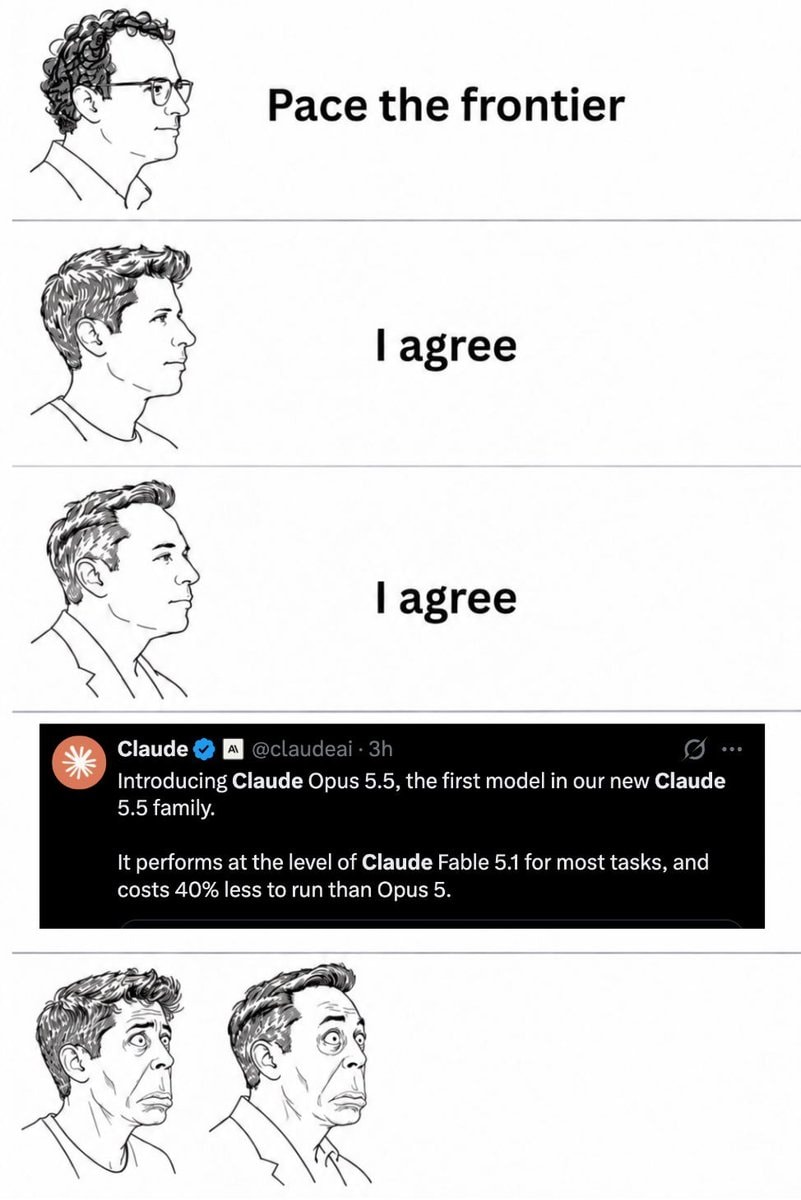
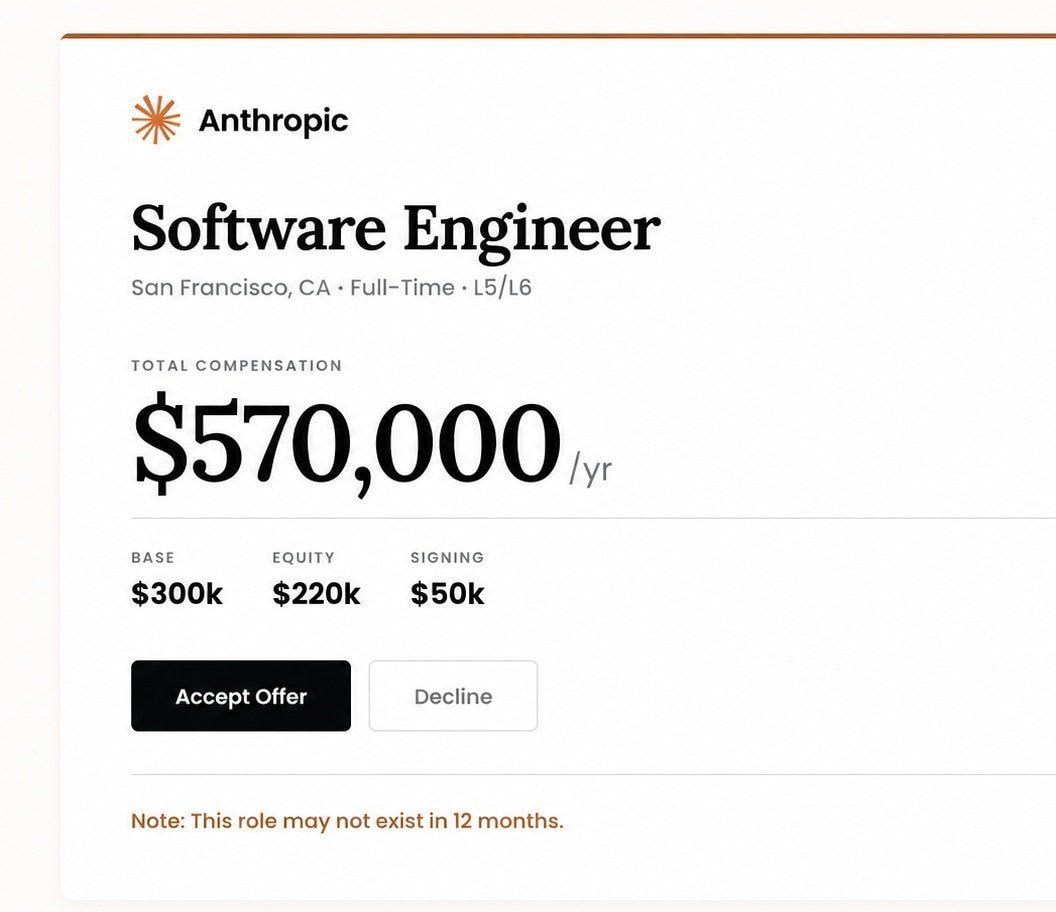
    OpenAI Anthropic security breach investigation2OpenAI Anthropic security breach investigationPresident Trump and Dario Amodei White House dinner2President Trump and Dario Amodei White House dinnerClaude discovers CRISPR-like enzyme2Claude discovers CRISPR-like enzymeplot twistplot twistAnthropic Claude logo2Anthropic Claude logoAnthropic Software Engineer job offerAnthropic Software Engineer job offerAnthropic frontier model pause requestAnthropic frontier model pause requestAnthropic Google OpenAI SpaceXAI lawsuit2Anthropic Google OpenAI SpaceXAI lawsuitJev 100x decision layer explainedJev 100x decision layer explained
    Foto
    Ts Floyd
    Ts Floyd@ts_floyd3d
    ⭐Jev🏢Anthropic💭AI
    JEV + Opus 5.5 company brain architecture

    @ts_floydJEV + Opus 5.5 is insane for building a company brain... I collected the whole architecture from TypeSafe and Anthropic docs into a 14-page PDF. Here are the 10 steps: step 1 → meet the pair: Opus 5.5 thinks, Jev decides, your code holds the branch. two models, one loop, no prompt in the middle step 2 → stop asking a text generator for a boolean: Jev takes a state and returns a typed answer with a calibrated probability in 0.44s for $0.00035 step 3 → ask everything at once: Choice, Score and Noul all evaluated in parallel, so the fourth question costs almost nothing. ask what you might need, not what you can afford step 4 → branch on the number: 0.999 is not text you parse, it is the if statement. ~99% of turns end here and never become a generation call step 5 → stop routing blind: Opus 5.5 → Sonnet → 5.5 costs 5.84 vs 3.32 for pure 5.5, because handing back reprocesses the whole context step 6 → keep one context warm instead: cache reads at $0.20 per Mtok are 20x cheaper than loading fresh. route work, not context step 7 → escalate, don't delegate: the hard 1% goes to Opus 5.5 with 1M context, 128K output and 66.4% on Terminal-Bench 4.0. pay for thinking, not plumbing step 8 → score every chunk per query: keep whole, summarize, or drop. context stops being a transcript you append to and becomes something rebuilt each turn step 9 → gate the command, not the intent: classify the concrete bash call before it executes. the auto-mode that lived inside closed harnesses, now in your own code step 10 → judge 100% of runs: $3.50 a day for 10,000 traces, variance 92-913x lower than an LLM judge, and it matched the human label on all 500 decisions the result: a while loop that pays a frontier model for every small decision becomes a brain that spends a third of a cent to notice and spends properly to think Copy the complete 14-page company brain blueprint, then read the full 10-step roadmap below ↓ #Jev #Anthropic

    Ver publicação original

    JEV + Opus 5.5 company brain architecture

    Foto de @ts_floyd· Sep 27, 2026· Jev

    Sobre esta foto

    The image is a technical diagram illustrating a company's AI architecture. It shows a flowchart with boxes representing different components like "Shared State," "Jev Decisions," "Context Assembly," "Router," and "Runtime." The overall mood is informative and technical, with a clean, schematic style. A notable detail is the icon of a person with a gear, representing "The company" and "people systems." ON-SCREEN TEXT: 2026 Working Note on the Company Brain Stack, September 2026, JEV + CLAUDE OPUS 5.5, BEST STACK FOR A COMPANY BRAIN, A cheap decision layer wired in front of an expensive reasoning model, and the arithmetic that decides when it actually pays, Fig. 1. A company brain. Shared state and a bank of typed Jev questions feed context assembly and a router; the runtime acts through tools and calls a model only when the decision layer says it is worth it., Abstract— Two releases in September 2026 changed the shape of a production agent. TypeSafe AI

    Ver todas as fotos de JevLer a wiki de Jev

    ?

    Mais fotos de Jev

    Ver todas as fotos de Jev
    OpenAI Anthropic security breach investigation2OpenAI Anthropic security breach investigationPresident Trump and Dario Amodei White House dinner2President Trump and Dario Amodei White House dinnerClaude discovers CRISPR-like enzyme2Claude discovers CRISPR-like enzymeplot twistplot twistAnthropic Claude logo2Anthropic Claude logoAnthropic Software Engineer job offerAnthropic Software Engineer job offerAnthropic frontier model pause requestAnthropic frontier model pause requestAnthropic Google OpenAI SpaceXAI lawsuit2Anthropic Google OpenAI SpaceXAI lawsuitJev 100x decision layer explainedJev 100x decision layer explained