
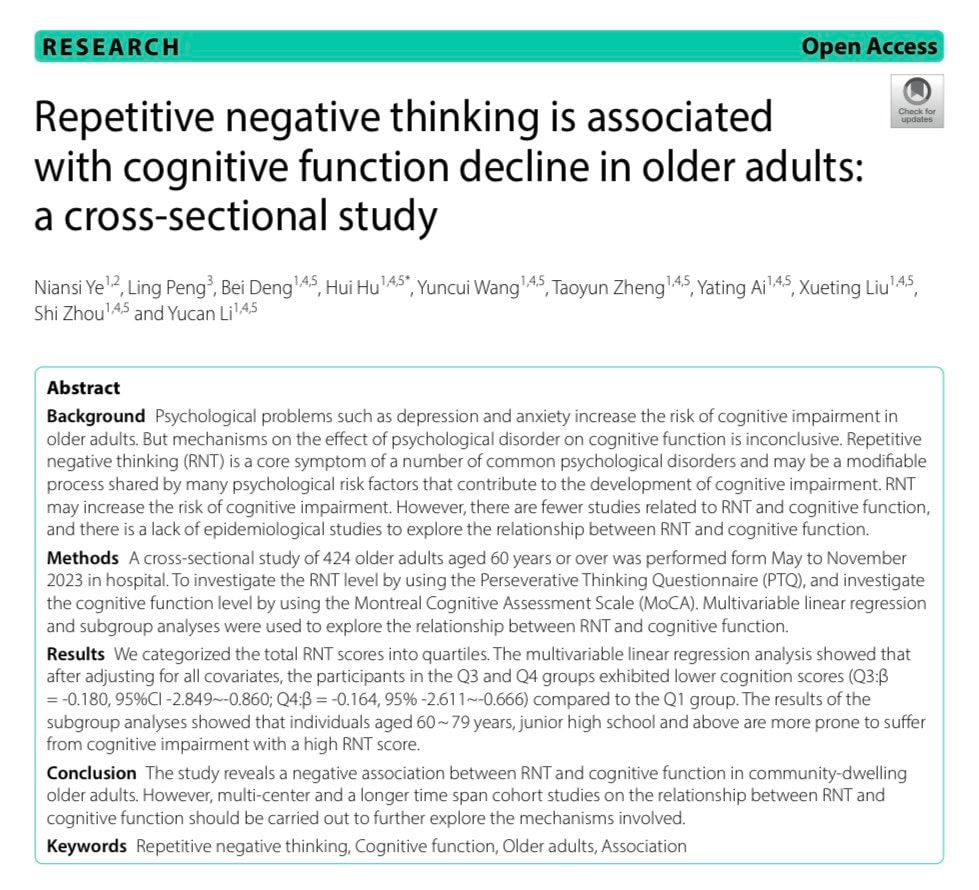
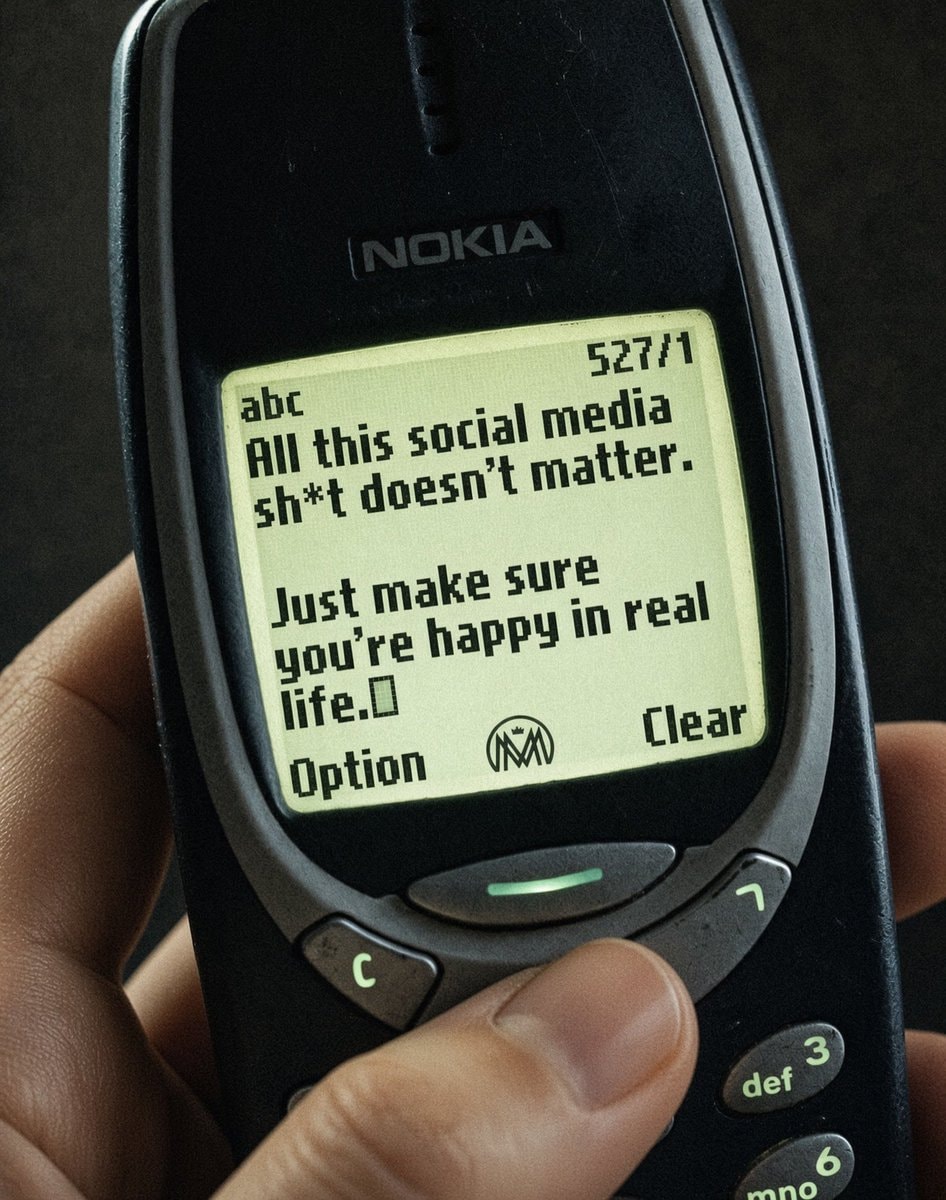
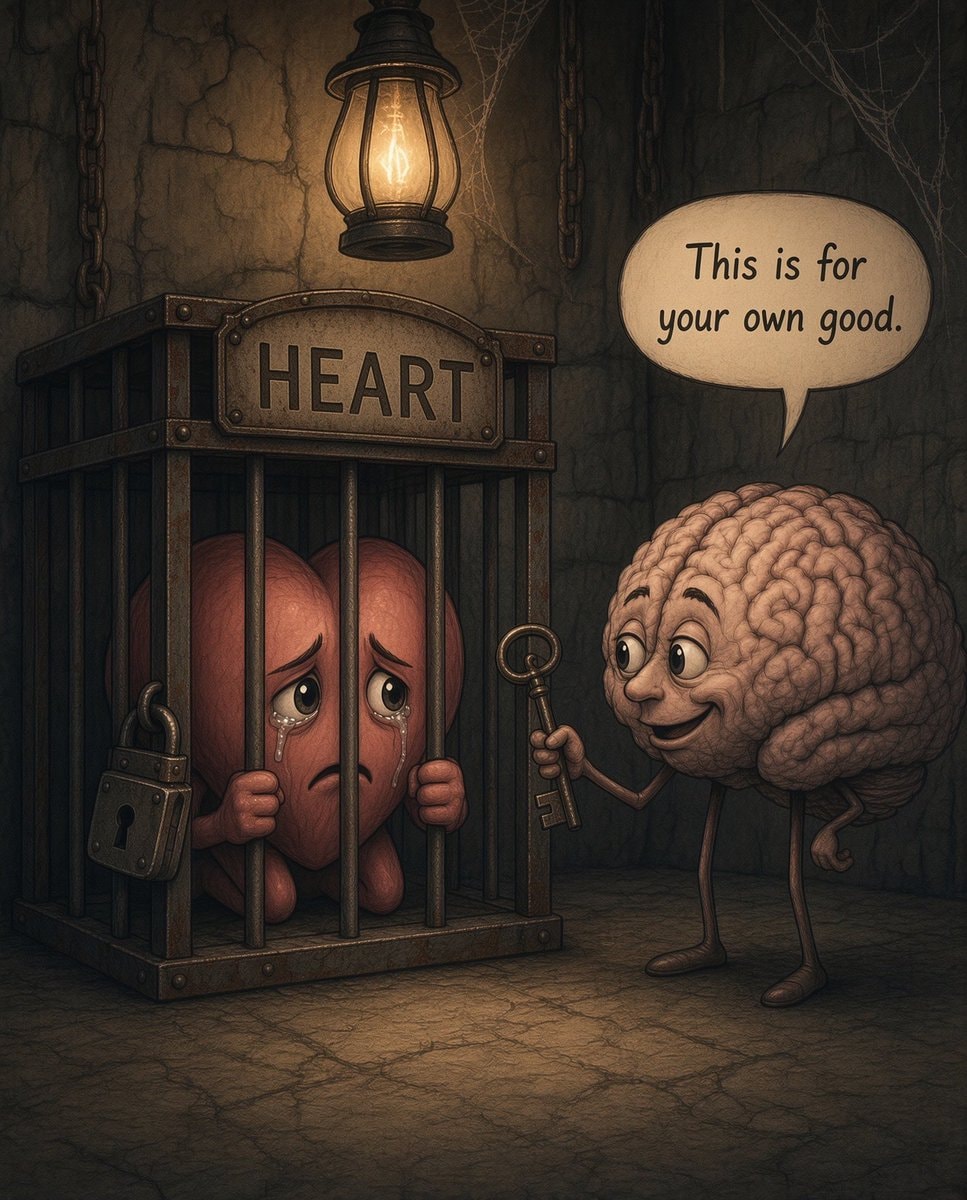
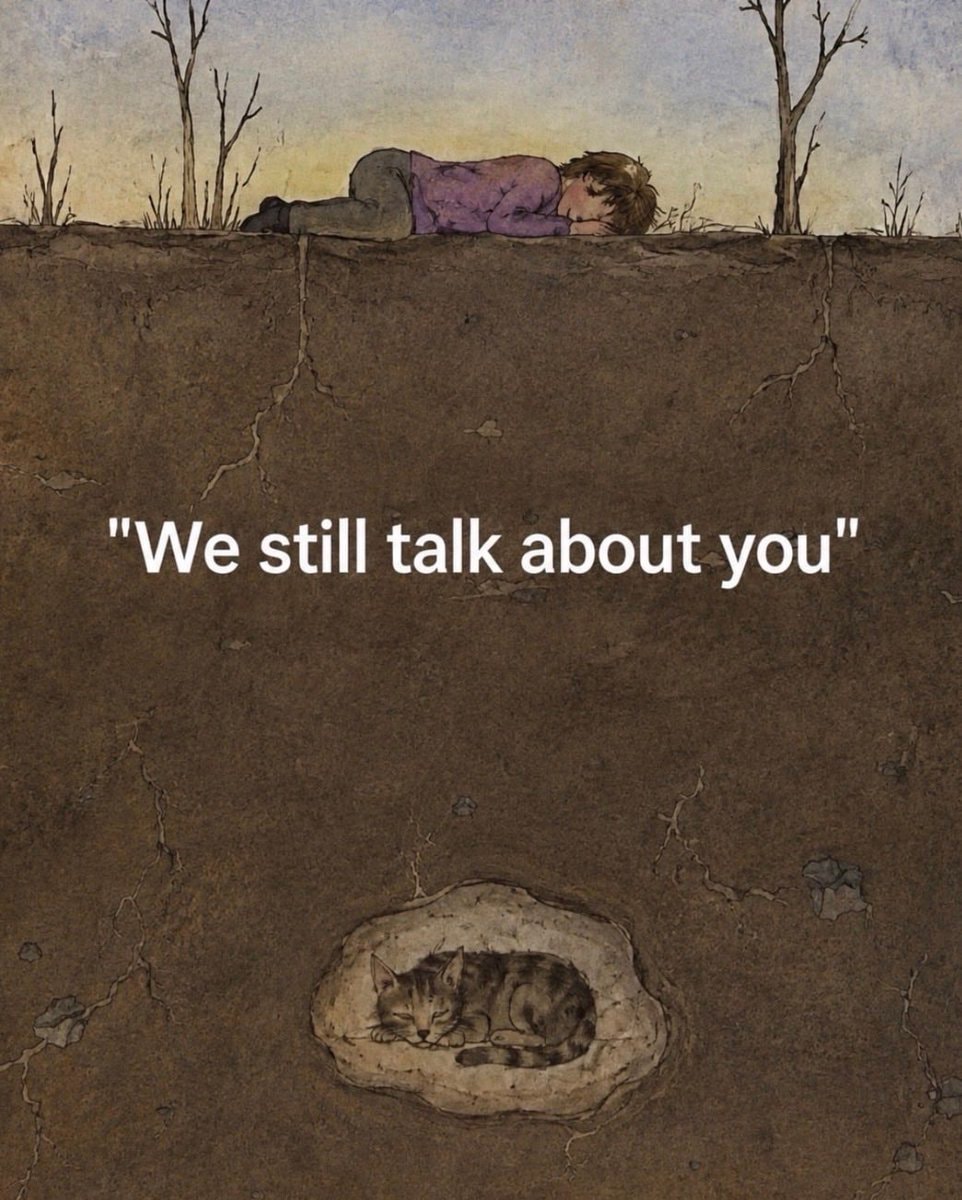
@katrina.karanIf a feeling isn't doing anything for your health or your happiness, it doesn't need a seat at the table #MentalHealth
Ver publicação original@katrina.karanIf a feeling isn't doing anything for your health or your happiness, it doesn't need a seat at the table #MentalHealth
Ver publicação originalFoto de @katrina.karan· Sep 22, 2026· Mental Health
The image is a screenshot of a research paper titled "Repetitive negative thinking is associated with cognitive function decline in older adults: a cross-sectional study." The paper focuses on the relationship between repetitive negative thinking and cognitive decline in older adults. The abstract and keywords are visible, detailing the study's background, methods, results, and conclusion. The overall style is academic and informative. A small "Check for Updates" button is visible in the top right corner. ON-SCREEN TEXT: RESEARCH, Open Access, Repetitive negative thinking is associated with cognitive function decline in older adults: a cross-sectional study, Niansi Ye¹,², Ling Peng³, Bei Deng¹,⁴,⁵, Hui Hu¹,⁴,⁵, Yunrui Wang¹,⁴,⁵, Taoyun Zheng¹,⁴,⁵, Yating Ai¹,⁴,⁵, Xueting Liu¹,⁴,⁵, Shi Zhou¹,⁴,⁵ and Yucan Li¹,⁴,⁵, Abstract, Background Psychological problems such as depression and anxiety increase the risk of cognitive impairment in older adults. But mechanisms on the effect
@katrina.karanIf a feeling isn't doing anything for your health or your happiness, it doesn't need a seat at the table #MentalHealth
Ver publicação originalFoto de @katrina.karan· Sep 22, 2026· Mental Health
The image is a screenshot of a research paper titled "Repetitive negative thinking is associated with cognitive function decline in older adults: a cross-sectional study." The paper focuses on the relationship between repetitive negative thinking and cognitive decline in older adults. The abstract and keywords are visible, detailing the study's background, methods, results, and conclusion. The overall style is academic and informative. A small "Check for Updates" button is visible in the top right corner. ON-SCREEN TEXT: RESEARCH, Open Access, Repetitive negative thinking is associated with cognitive function decline in older adults: a cross-sectional study, Niansi Ye¹,², Ling Peng³, Bei Deng¹,⁴,⁵, Hui Hu¹,⁴,⁵, Yunrui Wang¹,⁴,⁵, Taoyun Zheng¹,⁴,⁵, Yating Ai¹,⁴,⁵, Xueting Liu¹,⁴,⁵, Shi Zhou¹,⁴,⁵ and Yucan Li¹,⁴,⁵, Abstract, Background Psychological problems such as depression and anxiety increase the risk of cognitive impairment in older adults. But mechanisms on the effect
Ainda não há comentários. Seja o primeiro!




Ainda não há comentários. Seja o primeiro!