iFANN
    Buscar no iFANN...
    Entrar
    Início
    Notícias
    Vídeos
    Fotos
    GIFs
    Explorar
    Enquetes
    Prêmios
    iFAMOUS
    Wiki
    Anime
    Salas
    Notificações
    Mensagens
    Salvos
    Perfil
    WikiPrêmiosiFAMOUSRankingsSetoresRecompensas para criadoresRecompensas para usuáriosTermosPrivacidadeDiretrizes da comunidadeRemoção / DMCAAjudaDesenvolvedores

    © 2026 iFANN

    Início
    Buscar
    Mensagens
    Alertas
    Perfil
    Foto
    🏝️ Dr Topaz
    🏝️ Dr Topaz@dr.topaz1h
    💭Science💭AI
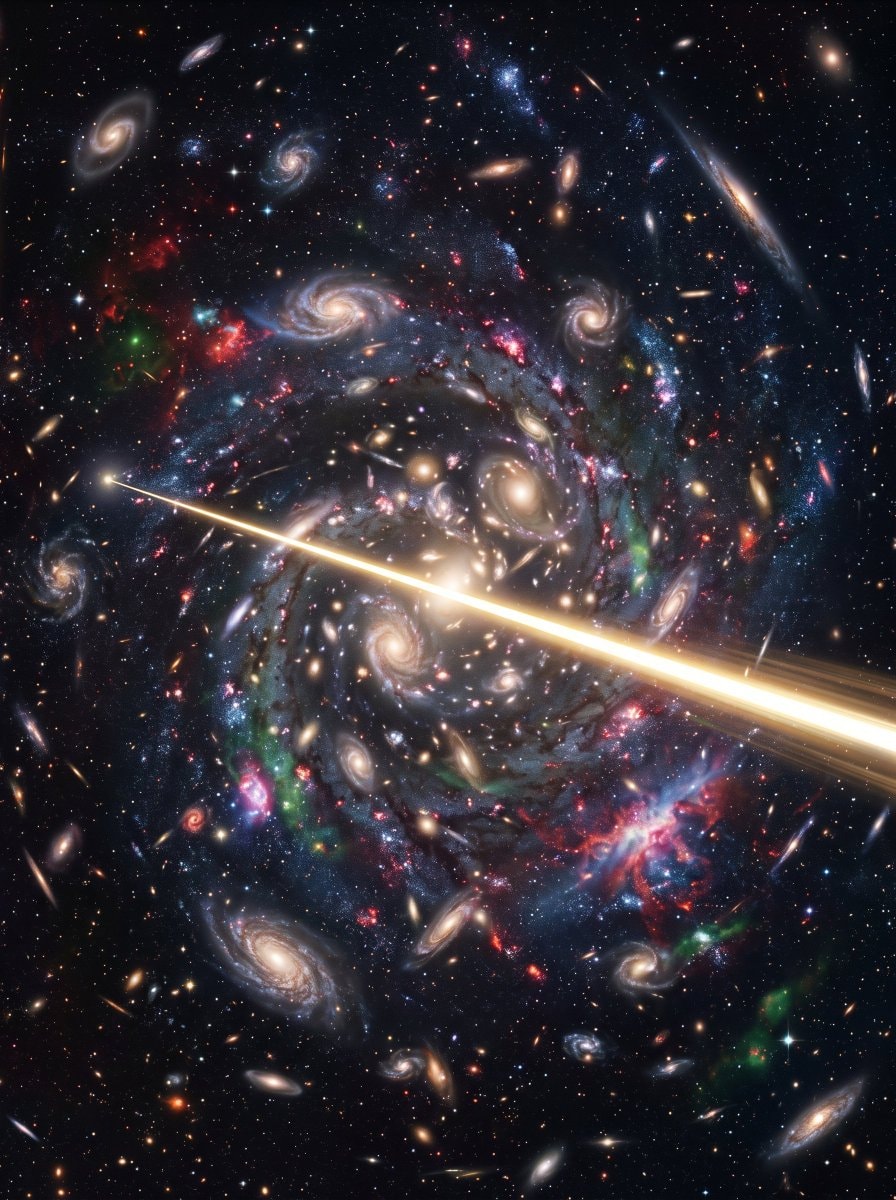
    Light crossing the observable universe

    @dr.topazFrom a physics standpoint, light crosses the entire universe in no time at all if you ignore our specific viewpoint. But relative to Earth, that same beam zips along at roughly 300,000 kilometers per second. Even moving that fast, getting across the observable universe, which spans about 93 billion light-years, still demands billions of years when measured by clocks here. Because distant galaxy light has been on its journey for such extended periods, anyone looking out there is actually seeing those galaxies as they existed long ago. The attached image is AI generated.

    Ver publicação original

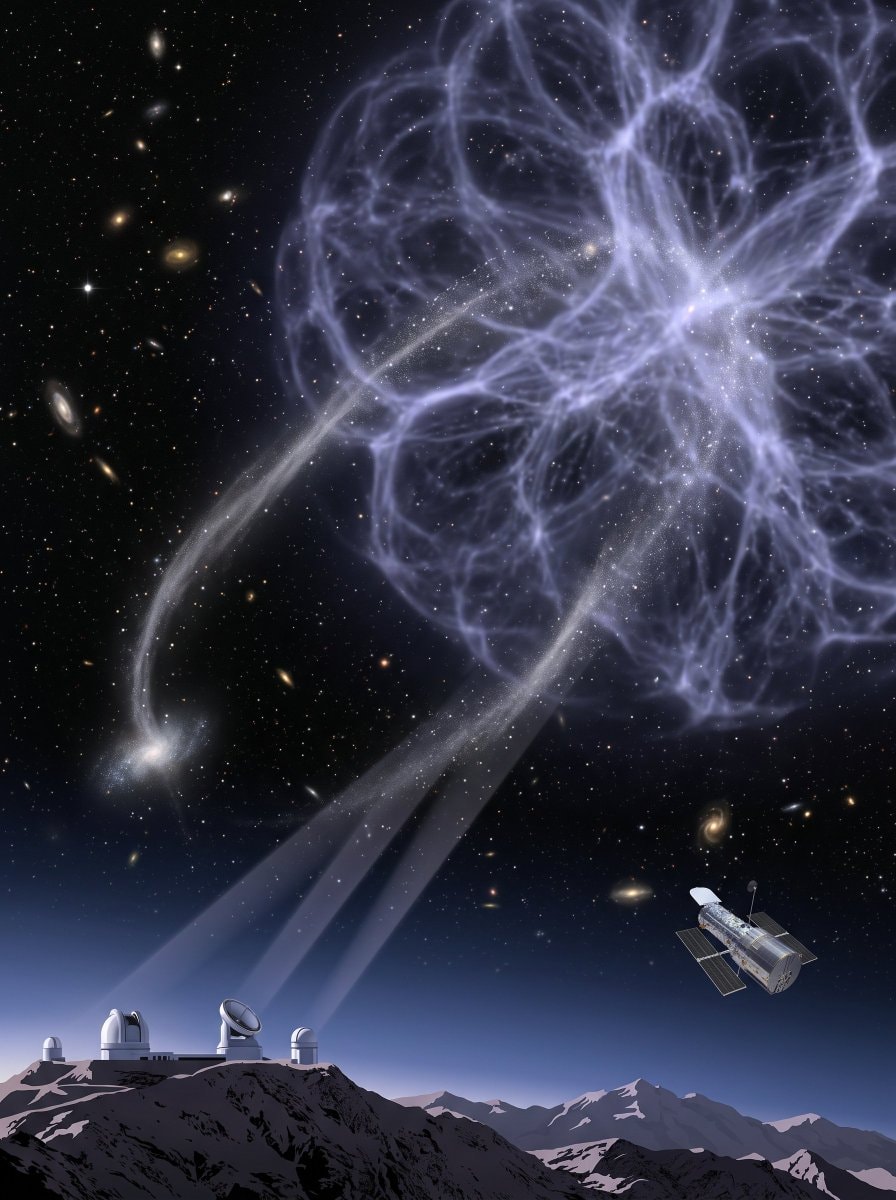
    Light crossing the observable universe

    Foto de @dr.topaz· Sep 22, 2026· Science

    Sobre esta foto

    The image is a vibrant, colorful depiction of a galaxy cluster. A bright, energetic beam of light shoots across the frame from the left, illuminating the swirling galaxies and nebulae. The mood is awe-inspiring and cosmic, with a highly detailed, almost artistic aesthetic. The sheer density of galaxies and the dramatic beam of light are visually striking.

    Ver todas as fotos de Science

    ?

    Mais fotos de Science

    Ver todas as fotos de Science
    Carl Friedrich Gauss World of ScienceCarl Friedrich Gauss World of ScienceFirst stellar stream outside Milky WayFirst stellar stream outside Milky WayEinstein relativity time dilation explainedEinstein relativity time dilation explainedMilky Way neutrino imageMilky Way neutrino imageDiamond nuclear fusion researchDiamond nuclear fusion researchFour new white dwarf stars near EarthFour new white dwarf stars near EarthJapanese Beetles evolutionary pathsJapanese Beetles evolutionary pathsFruit Fly-Inspired AIFruit Fly-Inspired AI400 Year Old Black Coral New Zealand400 Year Old Black Coral New ZealandOdor behavior during atmospheric movementOdor behavior during atmospheric movementCERN search for tiny quantum black holesCERN search for tiny quantum black holesneuroscientists brain belief studyneuroscientists brain belief studytruck driver sun exposure agingtruck driver sun exposure agingMoon detecting gravitational wavesMoon detecting gravitational wavesPrehistoric freshwater turtles northern South AmericaPrehistoric freshwater turtles northern South AmericaTin-based solar panels breakthrough2Tin-based solar panels breakthroughStardust Solutions solar radiation modification researchStardust Solutions solar radiation modification researchMars looks like Earth2Mars looks like Earth
    Foto
    🏝️ Dr Topaz
    🏝️ Dr Topaz@dr.topaz1h
    💭Science💭AI
    Light crossing the observable universe

    @dr.topazFrom a physics standpoint, light crosses the entire universe in no time at all if you ignore our specific viewpoint. But relative to Earth, that same beam zips along at roughly 300,000 kilometers per second. Even moving that fast, getting across the observable universe, which spans about 93 billion light-years, still demands billions of years when measured by clocks here. Because distant galaxy light has been on its journey for such extended periods, anyone looking out there is actually seeing those galaxies as they existed long ago. The attached image is AI generated.

    Ver publicação original

    Light crossing the observable universe

    Foto de @dr.topaz· Sep 22, 2026· Science

    Sobre esta foto

    The image is a vibrant, colorful depiction of a galaxy cluster. A bright, energetic beam of light shoots across the frame from the left, illuminating the swirling galaxies and nebulae. The mood is awe-inspiring and cosmic, with a highly detailed, almost artistic aesthetic. The sheer density of galaxies and the dramatic beam of light are visually striking.

    Ver todas as fotos de Science

    ?

    Mais fotos de Science

    Ver todas as fotos de Science
    Carl Friedrich Gauss World of ScienceCarl Friedrich Gauss World of ScienceFirst stellar stream outside Milky WayFirst stellar stream outside Milky WayEinstein relativity time dilation explainedEinstein relativity time dilation explainedMilky Way neutrino imageMilky Way neutrino imageDiamond nuclear fusion researchDiamond nuclear fusion researchFour new white dwarf stars near EarthFour new white dwarf stars near EarthJapanese Beetles evolutionary pathsJapanese Beetles evolutionary pathsFruit Fly-Inspired AIFruit Fly-Inspired AI400 Year Old Black Coral New Zealand400 Year Old Black Coral New ZealandOdor behavior during atmospheric movementOdor behavior during atmospheric movementCERN search for tiny quantum black holesCERN search for tiny quantum black holesneuroscientists brain belief studyneuroscientists brain belief studytruck driver sun exposure agingtruck driver sun exposure agingMoon detecting gravitational wavesMoon detecting gravitational wavesPrehistoric freshwater turtles northern South AmericaPrehistoric freshwater turtles northern South AmericaTin-based solar panels breakthrough2Tin-based solar panels breakthroughStardust Solutions solar radiation modification researchStardust Solutions solar radiation modification researchMars looks like Earth2Mars looks like Earth