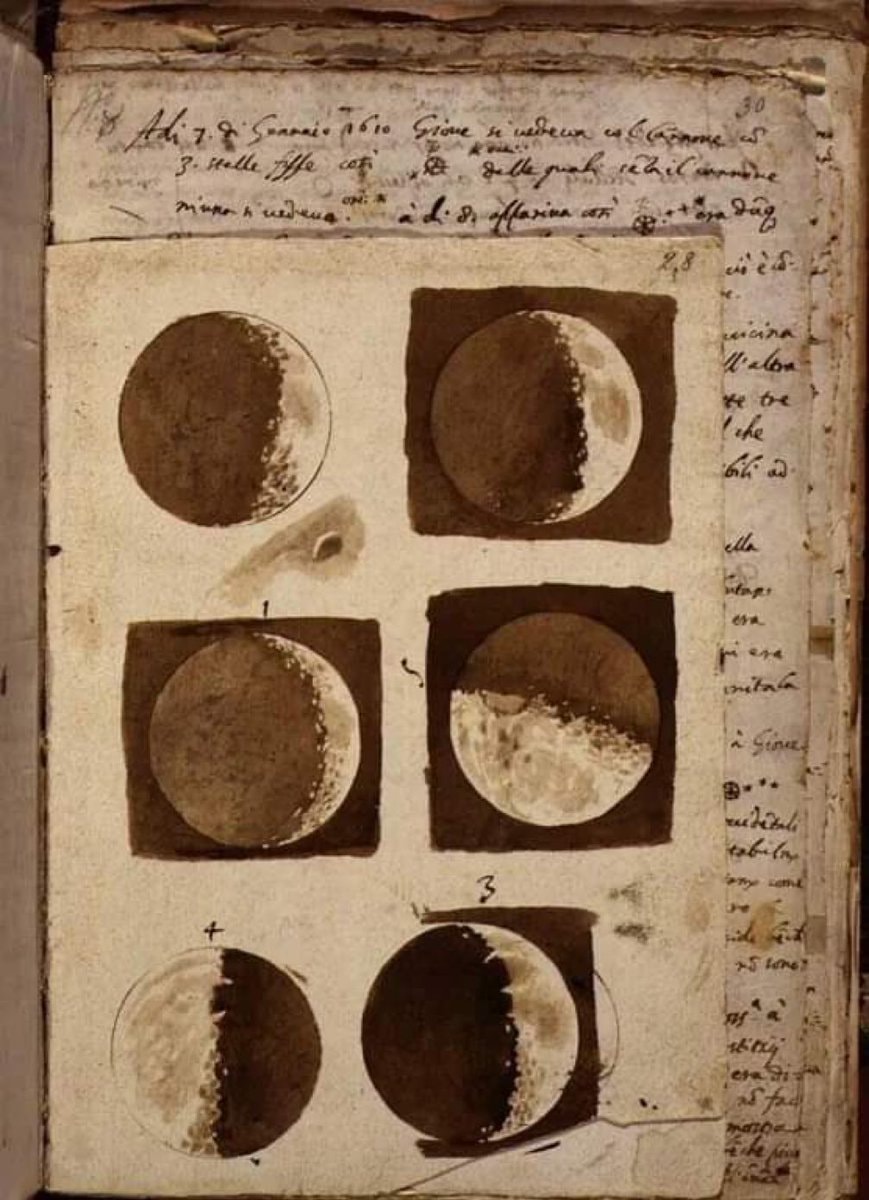
@luciaceeGalileo Galilei's earliest drawings of the moon, made in 1609 after viewing it through his telescope, have been preserved. The sketches reveal his detailed observations of lunar craters and phases.
Ver publicação original@luciaceeGalileo Galilei's earliest drawings of the moon, made in 1609 after viewing it through his telescope, have been preserved. The sketches reveal his detailed observations of lunar craters and phases.
Ver publicação originalFoto de @luciacee· Jun 15, 2026· Science
An aged open book displays six hand-drawn moon phases in sepia ink, each circle set inside a square frame and labeled with small handwritten numbers and symbols. The moons show varying degrees of illumination from nearly full to thin crescents, rendered with textured shading and ink washes. The surrounding pages are filled with dense cursive Italian script dated 1610, including the heading “Adi 7. Gennaro 1610” at the top. The paper is yellowed and worn at the edges, with faint stains and creases visible across the spread.
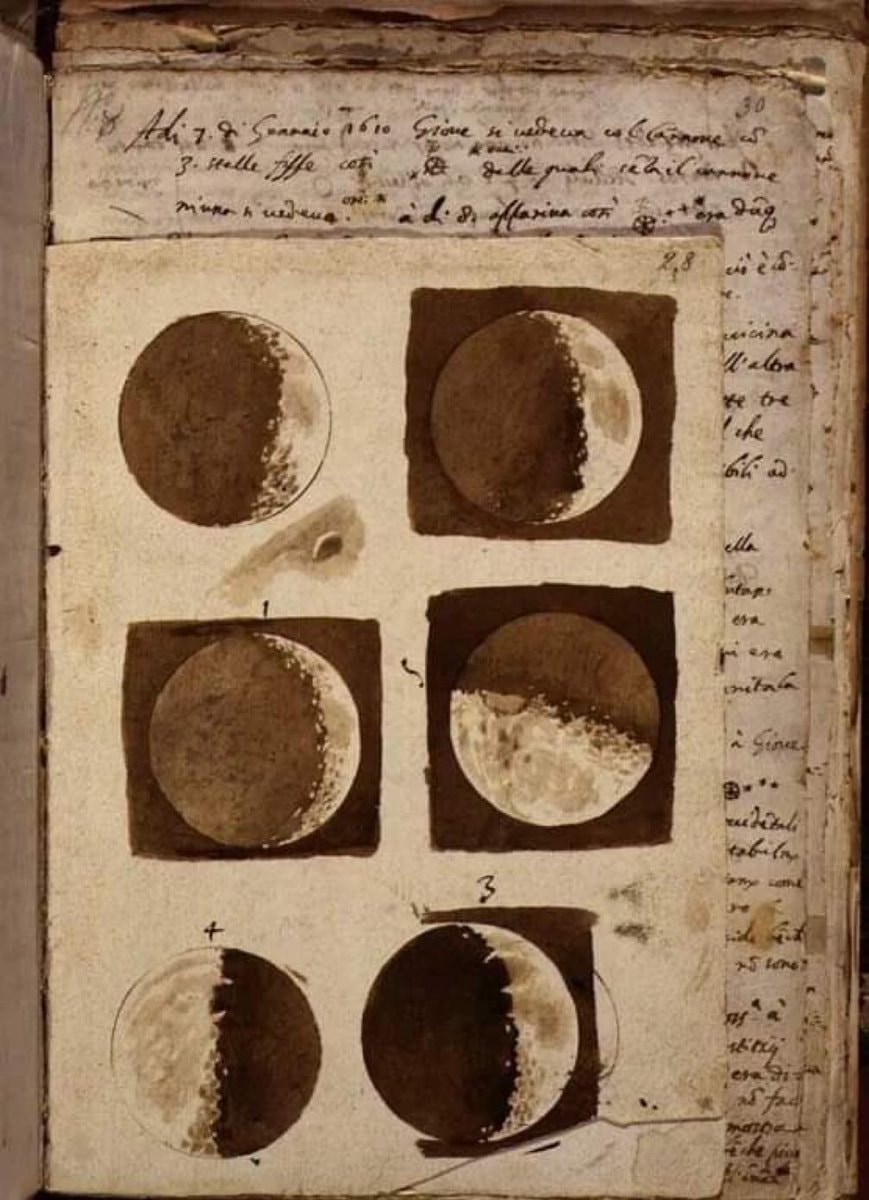
@luciaceeGalileo Galilei's earliest drawings of the moon, made in 1609 after viewing it through his telescope, have been preserved. The sketches reveal his detailed observations of lunar craters and phases.
Ver publicação originalFoto de @luciacee· Jun 15, 2026· Science
An aged open book displays six hand-drawn moon phases in sepia ink, each circle set inside a square frame and labeled with small handwritten numbers and symbols. The moons show varying degrees of illumination from nearly full to thin crescents, rendered with textured shading and ink washes. The surrounding pages are filled with dense cursive Italian script dated 1610, including the heading “Adi 7. Gennaro 1610” at the top. The paper is yellowed and worn at the edges, with faint stains and creases visible across the spread.
Ainda não há comentários. Seja o primeiro!
Ainda não há comentários. Seja o primeiro!